
SemiAnalysis said in a recent internal podcast that Anthropic has already completed training for Mythos 2 but has kept the model from public release. According to the discussion, the company is now using data generated by Mythos 2 to keep pushing ahead on Mythos 3.
In the podcast, analysts Dylan Patel and Jordan Nanos argued that the strongest systems inside major AI labs are not necessarily the ones the public sees. Nanos said the contrast between Mythos and Fable made that gap visible, adding: 「I can’t really use Mythos. I can only use Fable, and sometimes I have to ask very politely just to use it.」
The program said Anthropic retains a more capable internal model called Mythos, with access limited to companies involved in the 「Glass Wing Project.」 In that account, Mythos represents Anthropic’s strongest technical system, while the public-facing Fable is a downgraded version released only after capability limits and additional filters were applied.
Patel says Anthropic now faces the kind of restrictions it once called for
Patel said in the podcast that Anthropic spent years calling for tighter AI oversight and is now running into release constraints itself. He said that, to his knowledge, Mythos 2 has finished all training but cannot be launched.
The report tied that outcome to Anthropic’s long-running emphasis on AI safety and stricter regulation. It said executives led by Dario Amodei had spent years promoting tougher oversight and warning about AI risks.
The podcast also said Mythos 2 showed strong performance in code generation, logical reasoning, and cyber offense and defense, which triggered the highest level of alarm. According to the report, Anthropic devoted hundreds of millions of dollars in compute to the model, which remains locked inside the company.
The release freeze raises questions about the feedback loop
Patel said the main problem with not shipping a model is not just slower monetization. He framed the bigger issue as the internal feedback loop. In his words: 「The thing that matters right now is the internal feedback loop. Are they preventing themselves from using internal Mythos 2 to make Mythos 3 stronger? Or are they preventing themselves from using Astra to build the next generation of Astra Plus One?」
The discussion described a familiar cycle that has driven model gains in the past: launch a model, collect large volumes of real user feedback, then use that data to train the next generation. In the podcast’s framing, if Mythos 2 and Astra are kept out of the real world, that cycle weakens.
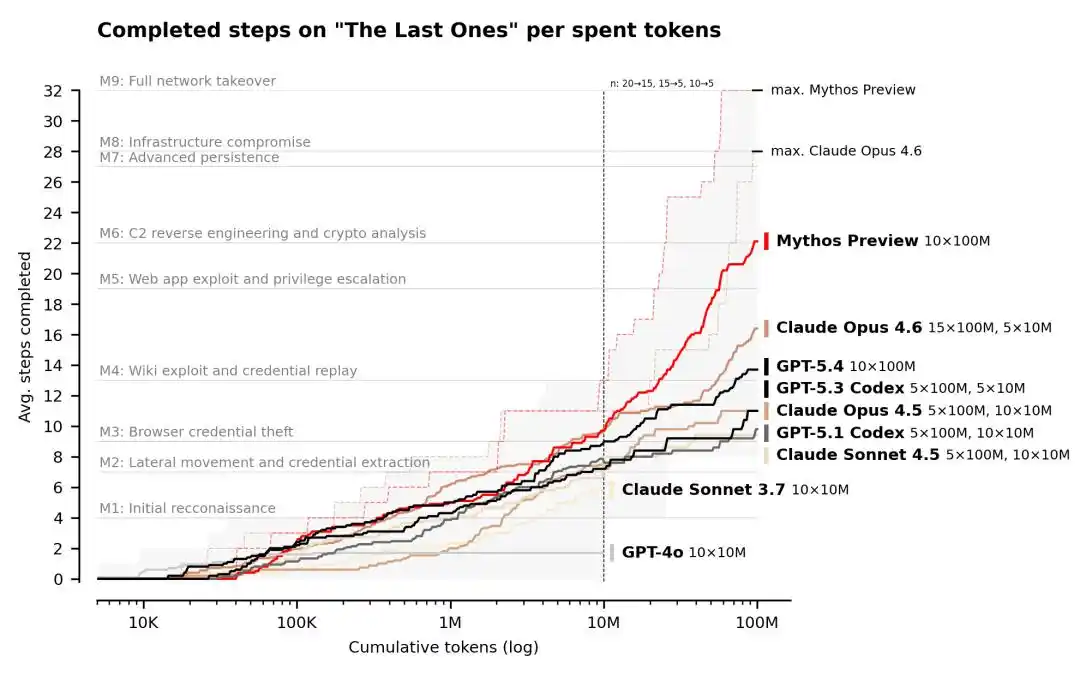
At the same time, Patel said Anthropic has not stopped advancing Mythos 3. He said the company has shifted from rapid public launches toward more secretive internal system improvements, and is using Mythos 2 to generate data and write code in support of the next model.
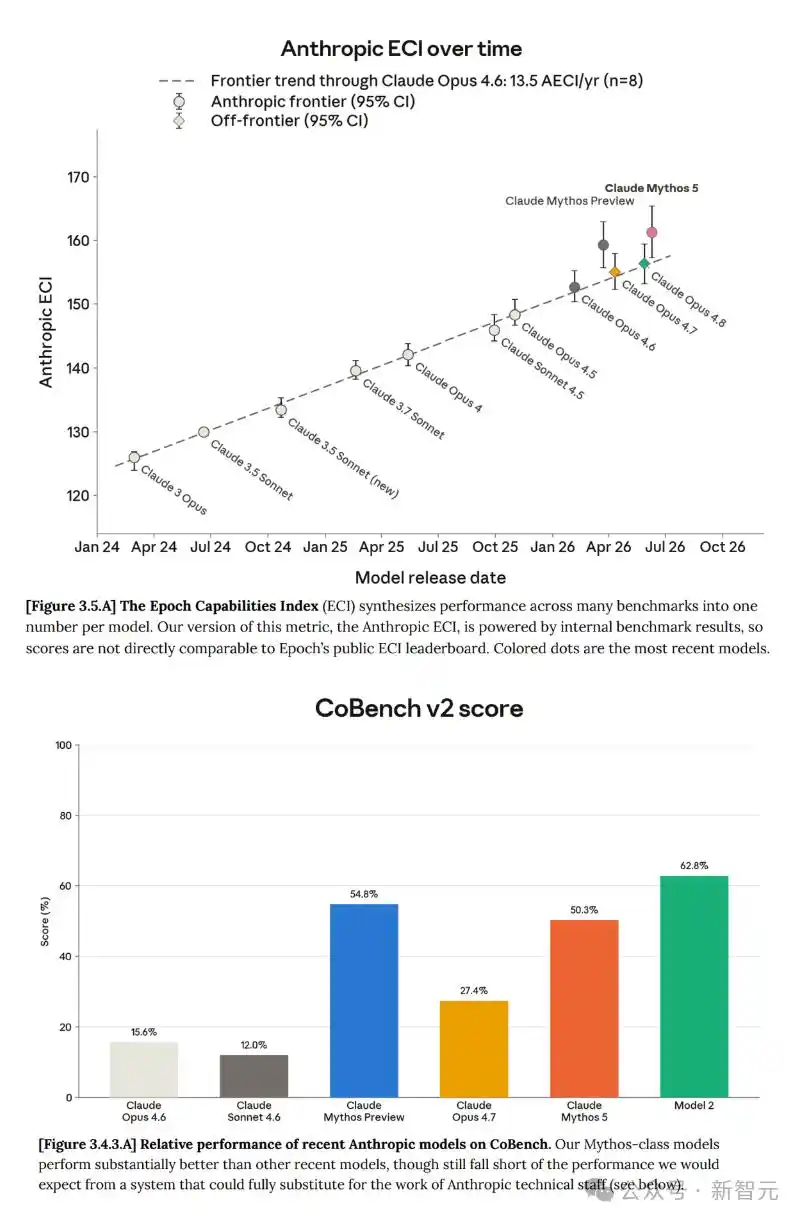
Anthropic had previously disclosed a stronger internal model called Model 2
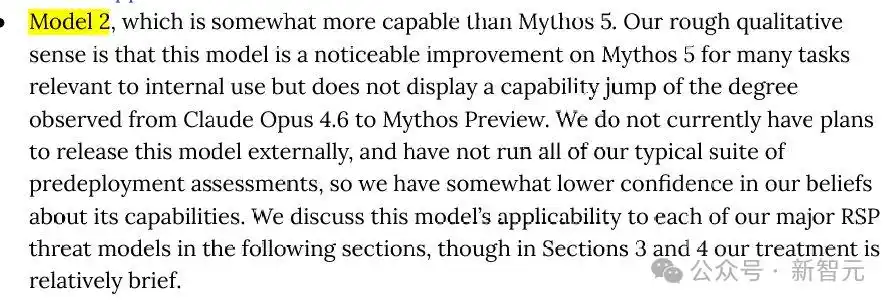
The report said Anthropic previously acknowledged in a risk report that it was running an internal model codenamed Model 2, which was described as stronger than Mythos 5, with no current plan to release it publicly.

It also cited benchmark results for that model: 162.79 on AEC and 62.8% on CoBench. The article used those figures to argue that even if the public-facing feedback loop slows, Anthropic is still redirecting compute into internal model iteration.
The piece grouped that process into three layers of recursion. First came data recursion, where stronger models produce training data for the next generation. Second came labor recursion: the article said most of Anthropic’s code production now comes from Claude, with development speed approaching a 2x warning line. Third came evaluation recursion, with stronger models handling red teaming, peer review, and sparring for later systems.
It also said Anthropic’s internal evaluations have started to 「saturate,」 making it harder to measure how much progress is still happening, even as the company has seen 「early signs of acceleration.」

OpenAI was also described as holding back stronger internal models
Beyond Anthropic, Nanos used the podcast to comment on OpenAI. He said the model referred to externally as 「5.6 Sol」 is not the biggest model OpenAI has trained, and that its scale is 「nowhere near the 4.5T range.」 He added that OpenAI almost certainly has a much larger model hidden somewhere out of public view.
The article also pointed to OpenAI’s promotion of Astra, a multimodal AI assistant that had been heavily marketed in recent months, while suggesting that public release has been more difficult than expected. Patel said in the podcast that OpenAI had talked up Astra’s capabilities before finding itself unable to release the model.
The report cited remarks from OpenAI Codex lead Thibault Sottiaux indicating that Codex will connect to Astra. Astra had previously shown strong programming ability, according to the article.
It also said OpenAI’s recent internal evaluations found clear gains in agent coding and cybersecurity, to the point that the company could not temporarily rule out Astra having reached 「Critical」 cybersecurity capability. OpenAI then paused some Astra internal activity that did not meet updated safety requirements.
The article added that OpenAI president Greg Brockman said the company is building AI models capable of writing 「superhuman-level security code」 to help institutions protect infrastructure from AI-driven cyberattacks.
Debate grows over Anthropic’s incentives
After the SemiAnalysis claims circulated, social platforms also filled with discussion about Anthropic’s incentives. The article cited one widely supported view: Anthropic may want the government to regulate frontier models so it has a clear reason not to release its most capable systems, while keeping them for internal use.
The report said that if Anthropic’s real aim is to use frontier intelligence for areas such as biopharma or fully automated code generation, then consumer subscriptions may matter less than high-value internal applications.
It closed by saying that the real frontier systems — Mythos 2, Astra, and the still-in-development Mythos 3 — may be advancing far beyond what ordinary users can actually access.
Reference links
- https://x.com/firesidealpha/status/2089391264878002260
- https://x.com/firesidealpha/status/2078532739343753400
- https://x.com/gdb/status/2089326994714763665
The original Chinese article was published by the WeChat account 「Xinzhiyuan」 and credited to ASI Apocalypse.