

Google’s Gemini lineup is facing new pressure after Gemini 3.5 Pro, a model the company said at Google I/O in May was coming the next month, still had not been released by mid-August. SemiAnalysis now says the model has likely been canceled, while Google’s public line is that Gemini 3.5 Pro remains in closed testing with limited partners and has no confirmed launch month. The company has also said Gemini 4 has entered pre-training.
A flagship model that never arrived
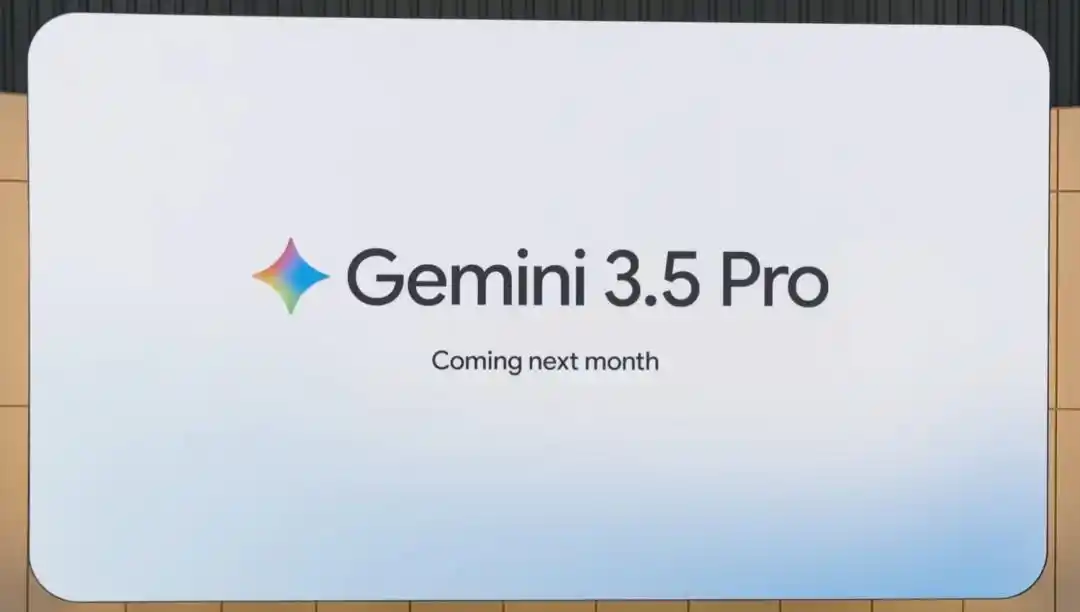
At Google I/O in May, the company showed a keynote slide that read: Gemini 3.5 Pro — Coming next month. The model was widely seen as a key part of Google’s attempt to push back to the front of the AI race, particularly as OpenAI and Anthropic kept raising the bar for model performance.
Instead of Gemini 3.5 Pro, Google later rolled out 3.6 Flash, 3.5 Flash-Lite, and 3.5 Flash Cyber. The Pro model did not appear. Google’s stated position is that Gemini 3.5 Pro is still being tested in a closed program with restricted partners and that no specific launch month has been set. At the same time, Gemini 4 has already moved into pre-training.
SemiAnalysis, an independent business research firm focused on semiconductors and AI, has offered a more blunt assessment: Gemini 3.5 Pro has quietly been scrapped.
Flash models filled the gap
The report says Google’s Pro line has long been its flagship series, and Gemini 3.5 Pro had been expected to carry much of the company’s high-end model push. During the first three quarters of last year, Google’s Gemini 3 Pro and Nano Banana Pro drew strong reactions.
The article cites an internal OpenAI memo from last October that was reported by The Information. In that memo, Sam Altman wrote: 「Google’s recent AI progress may create some temporary economic headwinds for our company. We know we have work to do, but we are catching up quickly.」
This year, though, Gemini’s momentum appears to have slowed. With Gemini 3.5 Pro still missing after being announced for the following month, outside observers have begun to question whether the model failed to meet Google’s original expectations. SemiAnalysis estimates that Gemini 3.5 Pro was roughly at the level of Anthropic’s Claude Opus 4.5, a model that the article says was released in late November last year.
As an interim measure, Google introduced more Flash models, including 3.6 Flash, 3.5 Flash-Lite, and 3.5 Flash Cyber. Based on the public evaluations cited in the report, the Flash family has leaned more toward speed, cost, and deployment efficiency. In complex reasoning, coding, and agent tasks, it still trails Muse Spark 1.2, Grok 4.5, and open-source industry models. Depending on the ranking method, Gemini 3.6 Flash currently sits eighth or ninth.
SemiAnalysis went further, saying: 「We believe Gemini 4 will also struggle to reverse the decline.」

Brin returns to the center of Gemini discussions
As pressure has built around Gemini, Google has also been reshaping leadership around its AI operations. The report says Nobel Prize winner Demis Hassabis has stepped down as CEO of Google DeepMind, handing over full day-to-day management of the London lab and his role overseeing Gemini commercialization. He is now DeepMind chairman and Alphabet’s chief scientist.
Koray Kavukcuoglu, previously DeepMind CTO and Alphabet’s chief AI architect, has been promoted to senior vice president at DeepMind. The organization no longer has a separate CEO, and Kavukcuoglu now reports directly to Sundar Pichai.
The article also says Jeff Dean, Google employee No. 30, a 27-year veteran, and the company’s chief scientist, left to start a new venture with four senior AI figures. Noam Shazeer, one of the key inventors behind the Transformer architecture and a Gemini co-lead, has joined OpenAI.
For the last several years, Google’s AI strategy has largely been driven by Google DeepMind after the merger of Google Brain and DeepMind. The report says Hassabis’ reassignment has widely been interpreted inside the company as a sign of dissatisfaction with a strategy that gave priority to long-cycle foundational research. In an internal memo from the first half of 2026, Sergey Brin directly criticized Gemini for lagging behind Claude and GPT in coding and enterprise use cases.

Financial Times reported that Brin has now resumed deep involvement in Gemini strategy discussions and has become one of the important voices shaping Google’s AI direction internally. He has not taken a new formal management title, but the level of involvement marks a major return to Google’s core AI business after years away from day-to-day operations.
From stepping back in 2019 to writing code again
Brin and fellow Google co-founder Larry Page stepped back from daily management at Alphabet in 2019. Both remained on the board, but no longer held direct operating roles at Google. According to the report, their occasional visits to Alphabet’s Silicon Valley offices were mostly tied to updates on the company’s so-called Other Bets projects.
The AI 2.0 wave changed that. In January 2023, less than two months after ChatGPT was released, Google brought Page and Brin back into a series of senior meetings to respond to the growing challenge from OpenAI. By February that year, Brin had started personally editing LaMDA code, a move that was read at the time as a clear sign of urgency inside Google.
Under that pressure, Google accelerated work on the Gemini family. By December, Brin’s name had appeared among the key contributors to the Gemini large model. The report says he was coding 「almost every day」. Stability AI founder Emad Mostaque backed up that account, saying: 「He was asking me about VAE architectures and deep diffusion.」
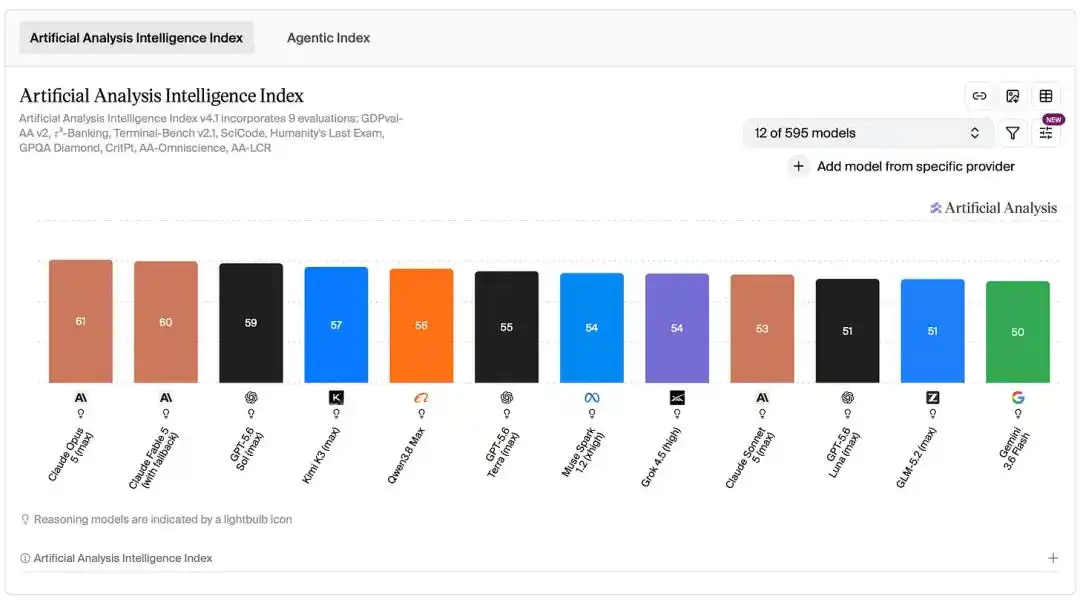
Competition only intensified from 2024 onward, with OpenAI, Google, and Anthropic each taking turns at the front. In 2025, Google earned strong reviews for the Gemini 3 series and Nano banana. This year, however, the company has yet to show a major new Gemini model, and older models have also drawn criticism.
In April this year, as Anthropic pushed Mythos, Brin personally led an emergency strike team inside DeepMind focused on AI coding. The article says there is little sign so far that the effort has changed the broader picture, at least based on the signals Google is sending now.
Staff concerns are also surfacing
The report says that after Jeff Dean’s departure and Hassabis’ reassignment, some DeepMind employees, especially those based in London, have grown concerned that the lab’s research culture will come under greater pressure from commercial goals. Some have already resigned or are actively exploring outside opportunities.
That leaves Google dealing with more than one missing model. The issue now also touches organizational structure, research priorities, and how the company balances long-term science with product competition.

Compute allocation has become part of the debate
The article argues that a bigger challenge may lie in compute rather than launch timing. AI competition has become an infrastructure race. Training a frontier model now requires not just strong algorithms, but also access to large-scale compute reserved well in advance. OpenAI, Anthropic, and Meta are all increasing their compute investments to secure training capacity for the years ahead.
On paper, Google should have an advantage. It has its own TPU stack and extensive data center resources. As competition shifts from raw model capability to a broader contest over engineering systems, organizational efficiency, data loops, and compute access, Google would seem to be in a strong position.
SemiAnalysis argues otherwise. Its view is that Google has not given enough priority to its own frontier model teams when allocating resources. As one example, the firm says Google has continued to provide TPU support to Anthropic. It forecasts that more than 20% of TPU shipments between the third quarter of 2026 and the fourth quarter of 2027 will be sold directly to Anthropic.
The article adds that this figure does not include the substantial TPU capacity already leased to Anthropic through Google Cloud, nor any future expansion of that relationship.

That creates a difficult split. Google wants Gemini to become a leading global model, yet its cloud business is also supplying core infrastructure to a rival. From a commercial standpoint, cloud revenue and a larger AI ecosystem both carry value. In the race for frontier models, though, compute remains one of the most important strategic assets.
A small search-page test added another signal
The report ends with a symbolic detail circulating in overseas online communities: screenshots claiming Google is testing a homepage for a small group of users that no longer includes a standalone Google Search button.
Alongside work on frontier AI models, Google has already started adjusting its most important product surface. The article raises the question of whether Gemini-style generative AI, conversational tasks, multimodal creation, and document processing are becoming the company’s next core entry points. It does not offer a firm answer.