

Shenzhen is becoming a shared source of IPO gains for cities across China, according to an article from the WeChat account Zhengjieju that was republished by MarsBit.
The article opens with Changxin Technology’s listing, describing it as one of the most watched events in China’s capital market recently. It says Hefei drew wide attention after posting large gains from its investment in Changxin Technology. But while Hefei benefited from one company, the piece argues that Shenzhen is pulling in returns for a much broader group of cities through a steady pipeline of newly listed companies.
So far this year, Shenzhen has added 26 domestic and overseas listed companies, ranking first among large and mid-sized Chinese cities, the article says. It adds that state-owned capital and industry funds from around the country appear on the shareholder lists of those 26 companies, and that earlier equity investments have translated into major gains as the companies went public. Zhengjieju describes that pattern as a new model for regional development and links it to the idea of shared prosperity ahead of the 2026 APEC Economic Leaders’ Meeting in Shenzhen.
Dapu Micro brought early investors large paper gains
One example is Dapu Micro, an AI storage chip company that listed on ChiNext on April 16 at RMB 46.08 per share. The article says the stock continued to rise after listing and that the company’s market value now exceeds RMB 200 billion.
Dapu Micro is headquartered in Longgang, Shenzhen, and was founded in 2016. The article describes it as one of the few Chinese semiconductor storage product suppliers with in-house, full-stack enterprise SSD capabilities spanning controller chips, firmware algorithms and modules, along with mass shipment capacity.
Local state capital in Shenzhen was among the first to benefit on paper. In May 2019, the Longgang district guidance fund invested RMB 20 million in Dapu Micro at a pre-money valuation of RMB 500 million and held 3.33% after the deal, the article says. By the time of the IPO, the fund still owned 5.6991 million shares with a market value above RMB 2 billion, implying paper gains of more than 100x.
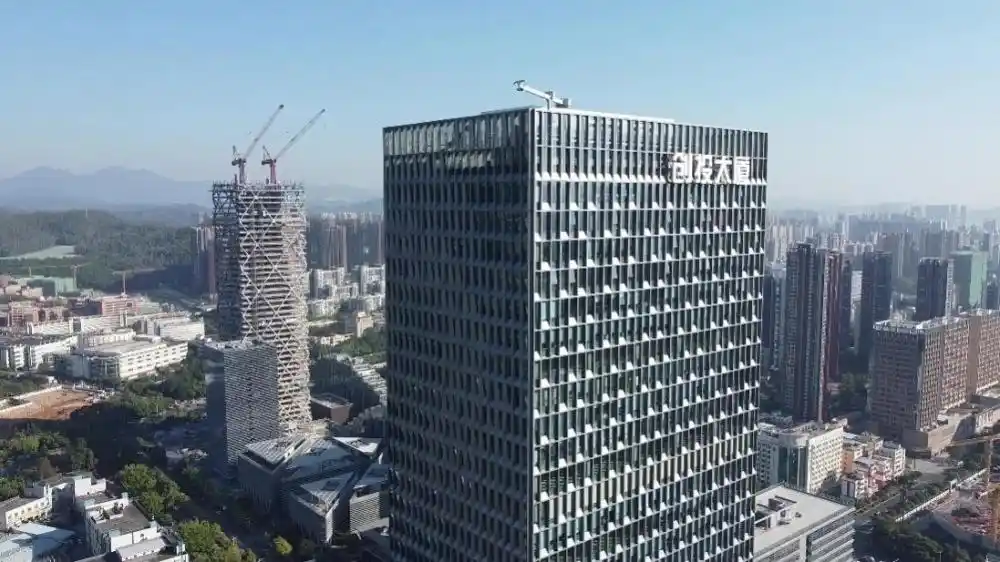
The article says the largest state-owned shareholder in Dapu Micro was not from Shenzhen but from Nanjing. In June 2020, Nanjing Qilin Venture Capital, a state-backed platform under Nanjing Qilin Sci-Tech Park, invested RMB 80 million for a 5.18% stake. Based on the latest valuation cited in the piece, its paper gain exceeded RMB 10 billion, with a return close to 100x.
Zhengjieju also names several state-backed funds from western China that invested early and later saw outsized gains, including Guozhong Green Development from Guizhou, the Guangxi Land-Sea New Corridor Fund, Chengdu Bihong Venture Capital, Xi’an Guozhong Private Equity, and Guizhou Jinchan No. 1 Fund.
HKC listing also generated gains for multiple cities
The article says Dapu Micro was not a one-off case.
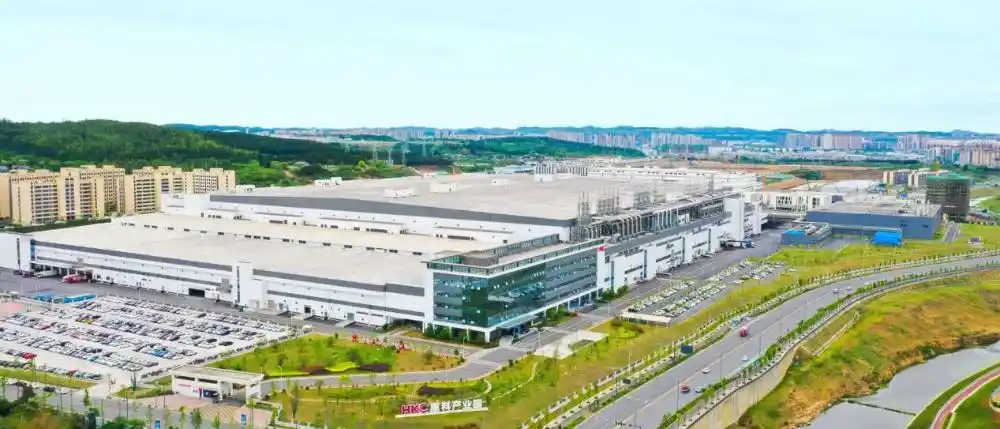
On June 26, semiconductor display company HKC Corp. listed on the main board of the Shenzhen Stock Exchange. The company is based in Bao’an, Shenzhen. The article says HKC ranks among the global top five by shipment area in TV panels, monitor panels and smartphone panels.
HKC was issued at RMB 10.12 per share. Its stock rose 315% on the first trading day, and the company’s market value is now close to RMB 200 billion, according to the article.
The prospectus showed strategic stakes from state-owned investors in Mianyang, Chuzhou, Gui’an, Chongqing and Changsha, the article says. It then breaks down the positions city by city:
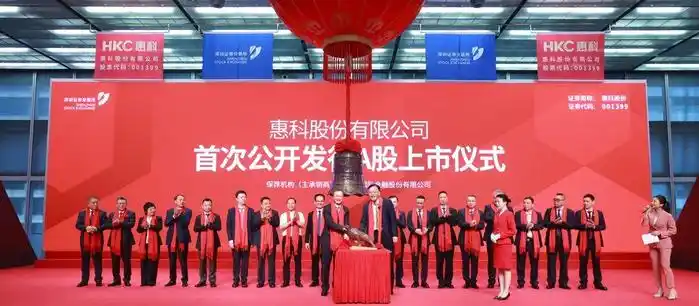
- Mianyang: Mianyang Investment Group invested about RMB 3.65 billion in total and became HKC’s largest state-owned shareholder, with paper gains of more than RMB 9 billion.
- Liuyang, Changsha: Hunan Jinyang Investment Group, the state-owned investment platform of Liuyang Economic Development Zone, together with Liuyang Urban Construction, invested RMB 1.88 billion in total and booked paper gains of more than RMB 6 billion.
- Chongqing: Chongqing Ping An Fund converted RMB 1.455 billion of debt into equity and recorded paper gains of more than RMB 5 billion.
- Gui’an: Gui’an New Area Industrial Development Company and Sci-Tech City Fund invested RMB 3 billion in total and posted paper gains of nearly RMB 2 billion.
- Chuzhou: A stake contribution valued at RMB 1.5 billion later translated into paper gains of more than RMB 2 billion.
The article notes that returns differed because entry timing, acquisition cost and investment structure varied. Even after a recent sharp pullback in the share price, it says, these state-backed investors still retained paper returns above 3x.
Other Shenzhen listings also drew outside state capital
The article adds that Dapu Micro and HKC are not the only examples. Other Shenzhen companies that listed in the first half of the year also had shareholders from state-owned funds outside the city.
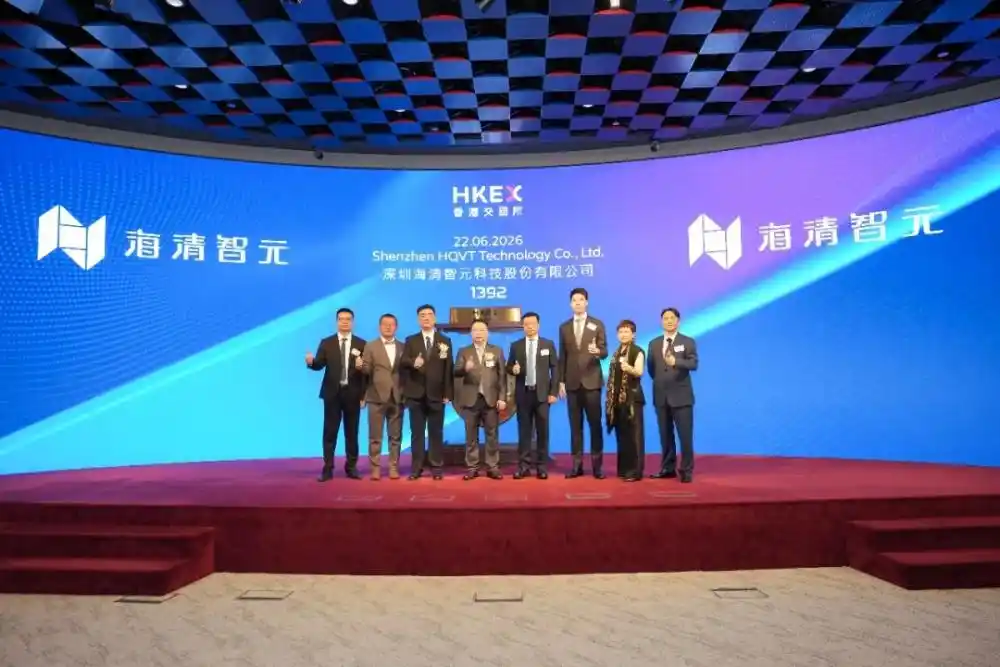
Industrial AI company Haiqing Zhiyuan, which listed in Hong Kong on June 22, counted industry funds from Chongqing and Suzhou among its shareholders, according to the piece.
Xingyuan Material, a lithium battery separator producer that completed its A+H structure on June 23, also brought gains to state-backed investors from Changzhou and Hefei through early investments, the article says.
As Shenzhen companies came to market in clusters, cities across China joined in the capital gains, in the article’s telling.
Why outside cities are betting on Shenzhen companies
Zhengjieju gives two main reasons.
First, Shenzhen is producing a large number of listed companies, and most of them sit in strategic emerging industries and future industries. The article says that of the 20 new domestic and overseas listings added by Shenzhen in the first half of the year, more than 90% belonged to strategic emerging sectors or future industries. It names semiconductors, industrial AI, new displays and new energy materials as examples. For state-backed investors elsewhere, the article says, those hard-tech assets are scarce and attractive.
Second, Shenzhen offers a strong environment for incubating technology companies. In June, the China Securities Regulatory Commission said it would support Shenzhen and four other cities in building the country’s first batch of practical models for technology finance in the capital market, the article says. By mid-June, Shenzhen had 611 listed companies with a combined market value near RMB 20 trillion.
The article cites data showing that Shenzhen has built a full-cycle capital support system through government guidance funds at the RMB 100 billion scale and an angel fund-of-funds also at the RMB 100 billion scale. More than 500 funds are active, with over 90% of capital directed to the city’s “20+8” industrial clusters.
It says Shenzhen Capital Group, which manages the Shenzhen municipal government guidance fund, has invested in more than 3,500 projects and supported 408 companies in going public. Shenzhen’s angel fund-of-funds, described in the article as China’s first angel fund-of-funds above RMB 10 billion, has backed 1,138 startup projects in eight years and helped cultivate six unicorns valued above $1 billion and three listed companies.
The article also argues that Shenzhen’s industrial chain is unusually complete. It says companies can find upstream and downstream resources in the city across chip design, hardware manufacturing and sales channels, which raises the efficiency of turning research into commercial output. That, in turn, supports faster iteration, stronger listing certainty and higher return potential than in many other cities, the piece says.
Investors also wanted factories and supply chains, not just financial returns
The article says the appeal for outside cities goes beyond paper gains. Strategic investment can also help bring manufacturing projects to the investor’s home base.
HKC is presented as the clearest case. Mianyang Investment Group put in about RMB 3.65 billion and became HKC’s largest state-owned shareholder. Around the same period, HKC’s 8.6-generation panel production line landed in Mianyang in 2018 with total investment of RMB 24 billion, the article says. Construction to production took just 549 days, followed by display module and upstream advanced materials projects.
The article says HKC helped Mianyang attract more than 10 supporting upstream and downstream projects. Over the past three years, the city brought in more than 20 new display industry projects with total investment above RMB 40 billion, forming a supply chain that runs from raw materials and components to panel manufacturing, system integration and end-use applications.
Chuzhou and Liuyang in Changsha followed a similar path, according to the article. Chuzhou City Investment Group used equity in the Chuzhou HKC plant, valued at RMB 1.503 billion, to buy into the parent company. The Chuzhou HKC G8.6 line started production in 2019 with total investment of RMB 24 billion and was described as the largest single industrial investment project in the city’s history.
In Liuyang, entities linked to Changsha invested RMB 1.88 billion in HKC. The Changsha HKC G8.6 line started production in 2021 with total investment of RMB 28 billion and was listed in Hunan’s “Five 100s” major industrial project program, the article says.
In the article’s framing, those moves delivered two gains at once: equity appreciation and industrial clustering.
A different route as subsidy-led competition faces tighter limits
The piece contrasts this model with the investment-at-all-costs approach that shaped city-level competition for years. It says many local governments used low land prices, heavier subsidies and preferential tax policies to lure projects, sometimes beyond what local finances could support. That kind of competition increased fiscal pressure and fragmented the national market, while raising the risk of duplicated buildouts and excess capacity, the article says.
It then points to the Fair Competition Review Regulations, which took effect in August 2024 and explicitly banned tax breaks and differentiated subsidies without legal basis. In Zhengjieju’s reading, the old playbook of paying up for projects is becoming harder to sustain, leaving all cities at the same starting line.
Against that backdrop, the article presents investment in Shenzhen tech companies as a different answer, especially for smaller cities. Instead of trying to build local champions from scratch in sectors where they lack advantages, the article says, they can invest through equity, share in the growth of Shenzhen companies, and use investment agreements to attract production capacity.
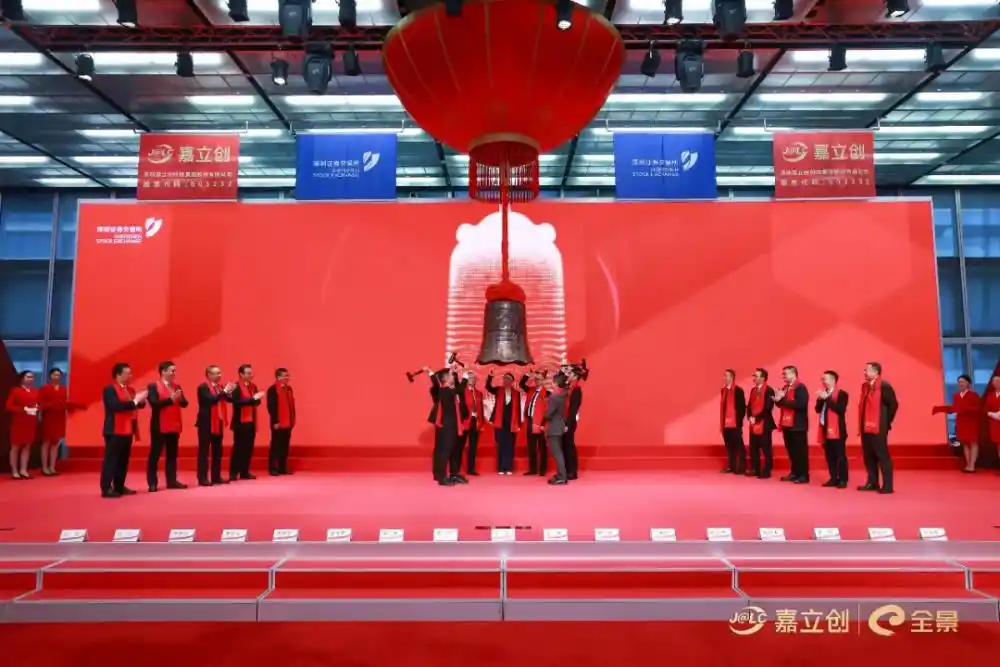
It also mentions JLC, located in Futian, Shenzhen, which listed on the Shenzhen Stock Exchange main board on Aug. 4.
For Shenzhen, the article says, inflows of capital from around the country give local tech companies more funds for research and market expansion. As production capacity spreads to other cities, Shenzhen can focus more heavily on higher value-added areas such as R&D, headquarters functions and capital markets.
The article uses Yuehai Subdistrict in Shenzhen’s Nanshan district as a shorthand for that role, noting that the area hosts Tencent, ZTE and DJI and is often called “China’s most powerful street.”
For the companies themselves, the article says, Shenzhen can remain the R&D base while manufacturing scales nationwide, creating a division of labor summarized as “R&D in Shenzhen, manufacturing across China.” Zhengjieju describes the broader pattern as “Shenzhen incubates, the whole country invests, multiple cities host projects, and gains are shared.” It argues that equity ties built on market terms are replacing the administrative push-and-pull of subsidies.
The article ties that framework to APEC
Zhengjieju also connects the city-to-city model to APEC’s stated principles. The article says APEC has long emphasized openness, inclusiveness, mutual benefit and win-win cooperation, using connectivity to support shared prosperity. In that framing, APEC promotes open cooperation between economies, while Shenzhen offers a version of coordinated coexistence between cities.
The article says the 33rd APEC Economic Leaders’ Meeting will be held in Shenzhen in November this year, adding that the process has entered “Shenzhen time.” It argues that the city’s development path, from a border town to an innovation hub, helps explain why it is hosting for a third time.
The original piece was published by the WeChat account Zhengjieju, ID: zhengjieclub, with authorship credited to Zhengjieju.