

SK Hynix debuts on Nasdaq with a $26.5 billion offering
SK Hynix started trading on Nasdaq on July 10 Beijing time. Its shares climbed more than 18% at one point during the session, and the company finished with a market capitalization of $1.22 trillion, equivalent to about RMB 8.3 trillion.
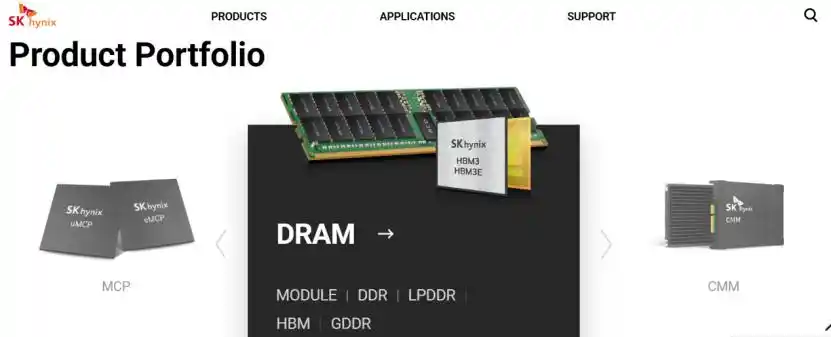
The company raised $26.5 billion through an American depositary receipt, or ADR, offering. According to the source article, that topped Saudi Aramco’s $25.6 billion U.S. listing in 2019, making it the largest U.S. IPO by a foreign company. It ranked second globally on the all-time IPO list, behind only SpaceX, which completed its listing last month.
From Hyundai Electronics to SK Hynix
The company’s roots go back to 1983, when South Korea’s Hyundai Group established Hyundai Electronics and entered the semiconductor business. Two years later, it mass-produced 256K DRAM, and in 1996 it listed on the Korea Exchange.
In 1999, Hyundai Electronics acquired LG Semiconductor. The deal quickly expanded its scale and briefly lifted its DRAM market share above Samsung’s, but it also brought debt burdens that later became a major problem. When the global memory industry entered a downturn in the early 2000s and DRAM prices fell sharply, Hyundai Electronics ran into a funding crisis and came close to collapse.
In 2001, its memory business was separated and became Hynix Semiconductor, placed under the management of a creditor group led by South Korean state-owned banks. Hynix then spent about a decade in a prolonged slump, with repeated market talk about liquidation. In 2011, SK Group decided to buy the company, a move the article says was controversial at the time. Standard & Poor’s even assigned a negative outlook. In 2012, the company was renamed SK Hynix.
An HBM bet that paid off in the AI cycle
After the takeover, SK Hynix focused on HBM, or high bandwidth memory. The article says the company had already concluded in 2009 that through-silicon via technology and wafer-level packaging could overcome key memory performance limits, and it began developing the products on that basis.
In 2013, SK Hynix and AMD launched the first commercial HBM product. It was an early lead, but the market response was limited because high-performance computing had not yet matured enough for broad HBM adoption.
The company kept spending. It applied mass reflow molded underfill technology to HBM2E, then developed MR-MUF technology for HBM3 and HBM3E to improve thin-die stacking, heat dissipation and production efficiency. The inflection point came in 2022. As ChatGPT triggered a broader AI buildout, Nvidia emerged as a major winner in GPUs, and SK Hynix entered the supply chain for Nvidia’s H100 chips through HBM3.
The article says SK Hynix now holds 58% of the global HBM market, the largest share in the industry.
Margins, stock gains and employee bonuses
The report says SK Hynix released its fiscal 2026 first-quarter results in April. Revenue reached KRW 52.5763 trillion, operating profit came in at KRW 37.6103 trillion, and net profit totaled KRW 40.3459 trillion. Its operating margin was 72%, while net margin was 77%.
For comparison, the article cites Nvidia’s gross margin at 74.9% and operating margin at 65.6% in the same period. SK Hynix said, “Although the first quarter is usually a seasonal off-season, market demand remained strong, driven by expanding investment in artificial intelligence (AI) infrastructure. The company sustained its earnings uptrend by increasing sales of high value-added products such as high bandwidth memory (HBM), high-capacity server DRAM modules, and enterprise solid-state drives (eSSD).”
Its share price rose sharply as well. The article says SK Hynix shares listed in South Korea were up more than 634% this year. In May, its market capitalization passed $1 trillion for the first time, making it the second South Korean company after Samsung Electronics to reach that level.
The piece also says Nvidia, Google and Amazon, whose combined market value exceeds $10 trillion, have not only placed orders with SK Hynix but also offered to invest in a new production line and help fund expensive manufacturing equipment purchases.
Employees have benefited too. In September last year, SK Hynix scrapped its previous bonus cap of no more than 1,000% of base salary. Under a new labor agreement, 10% of annual operating profit is allocated to the bonus pool with no upper limit, covering all non-outsourced employees under a broad-based distribution system.
At the start of this year, the company announced performance bonuses for fiscal 2025. According to the article, 33,000 employees received an average bonus of KRW 140 million, or more than RMB 600,000. Estimates from Macquarie and other international consulting firms put average 2026 bonus income at KRW 670 million, or about RMB 3.12 million, if current earnings expectations hold.
China’s memory sector moves toward its own IPO window
The article cites JPMorgan as forecasting that the global memory market will reach $1.7 trillion by 2028. DRAM revenue is projected to rise from $143 billion last year to $636 billion in 2026, then to $1.237 trillion in 2028. NAND revenue is expected to increase from $71 billion to $454.5 billion over the same span.
UBS, in a recent report referenced by the article, said AI demand is still growing and negotiations over long-term supply agreements, or LTAs, are continuing. It expects the memory cycle to strengthen further, with structural undersupply lasting at least until mid-2028.
Back in China, an IPO for CXMT is drawing attention. According to the Shanghai Stock Exchange website, CXMT will open its new-share subscription on July 16. The article says some institutions estimate its valuation could reach RMB 3 trillion. Based in Hefei, CXMT was founded by GigaDevice founder Zhu Yiming and is described as China’s largest integrated DRAM developer, designer and manufacturer. In the first quarter, its global DRAM market share was about 7.7% to 8%, ranking first in mainland China and fourth worldwide. U.S. semiconductor research firm SemiAnalysis expects CXMT to overtake Micron by the end of 2026 and become the world’s third-largest DRAM supplier.
Yangtze Memory Technologies, or YMTC, has also started IPO counseling and filing procedures. Public information cited by the article shows that its parent, Changcun Group, was valued at about RMB 160 billion after completing a shareholding reform in September 2025. Market estimates mentioned in the piece put YMTC’s post-listing valuation at RMB 500 billion to RMB 800 billion, with some expectations above RMB 1 trillion.
The article also mentions Shenzhen’s so-called “memory five tigers” — Longsys, Dapu Micro, Biwin Storage, Demingli and Shannon Xinchuang — saying their combined market capitalization has reached the trillion-yuan level in this cycle.
Gap with global leaders remains
The piece ends on a more cautious note. CXMT stated in its prospectus that there is still a gap between its process technology and that of Samsung Electronics, SK Hynix and Micron Technology. It also said its product mix is still being optimized and its gross margin remains below the top three global players.
The original Chinese article was published by the WeChat account Touzijie (ID: pedaily2012) and written by Liu Bo.