


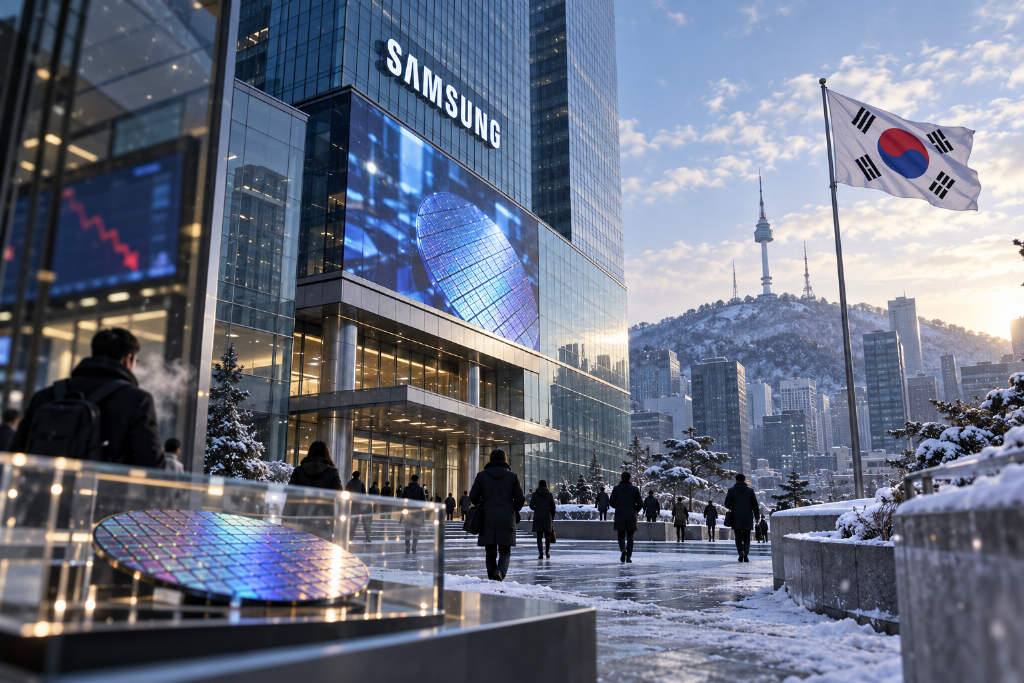
South Korea’s top finance official says the semiconductor boom is not finished, even after chip stocks got hammered this week. He thinks the upcycle can keep going until at least 2027.
Lee Hyoung-il, deputy prime minister and minister of economy and finance, said this in a CNBC interview on Oct. 17 while attending the International Monetary Fund and World Bank annual meetings in Bangkok. “Our current view is that this growth phase can continue at least into next year, because the supply-demand gap in semiconductors is still very large and supply is still being expanded.” That was his message, plain enough.
Lee was nominated by President Lee Jae-myung as deputy prime minister and finance minister in a cabinet reshuffle on Aug. 30. Before that, he served as first vice minister of economy and finance.
Chip stocks led a sharp market decline
CNBC reported that semiconductor shares slid this week as investors fretted over higher interest rates and competition from Chinese companies. South Korean stocks such as SK Hynix and Seoul Semiconductor were caught in the sell-off, along with major U.S. chipmakers including Nvidia.
By the figures cited in the report, the Korea Composite Stock Price Index, or KOSPI, dropped 7.57% in a single day on Oct. 15 and marked a seventh consecutive daily loss. SK Hynix sank 31% across seven trading days. Samsung Electronics, meanwhile, fell about 24% from Oct. 2.
Lee said semiconductor stocks have caused big swings in South Korea’s equity market this year because the chip industry makes up a bigger share of the national economy than it does in many other countries. Even with all that market chaos, he said the South Korean economy remains “solid.”
Chip cycle boosts tax revenue and exports
Lee also said the chip boom has pushed up tax revenue. And this year’s tax intake is expected to beat the government’s earlier forecast, which would leave public finances in better shape.
The Korea Times said data released on Oct. 1 by South Korea’s Ministry of Trade, Industry and Energy showed semiconductor exports jumped 263% year over year in September to $60.3 billion. That was the first time the monthly total moved past $60 billion. Total exports for the month climbed 83.5% to $120.9 billion, also a record high for a single month.
Local warnings point to a different outlook
But not everyone in South Korea sees it the same way. CNBC cited an Oct. 15 column in Maeil Business Newspaper that told the government to get ready early for an AI boom cooldown. The piece quoted two experts who expect a “new flood of supply” in semiconductors and said the memory market could turn into a “red ocean” by 2029.
The report said an earlier Maeil Business Newspaper warning about a memory oversupply in 2029 gained traction after Elon Musk reposted related discussion and said China would produce large amounts of RAM in 2028.
So for now, South Korea’s official position and parts of its domestic commentary remain split on how much longer the current semiconductor cycle can last, even as chip stocks whip around and export and tax numbers stay strong.