
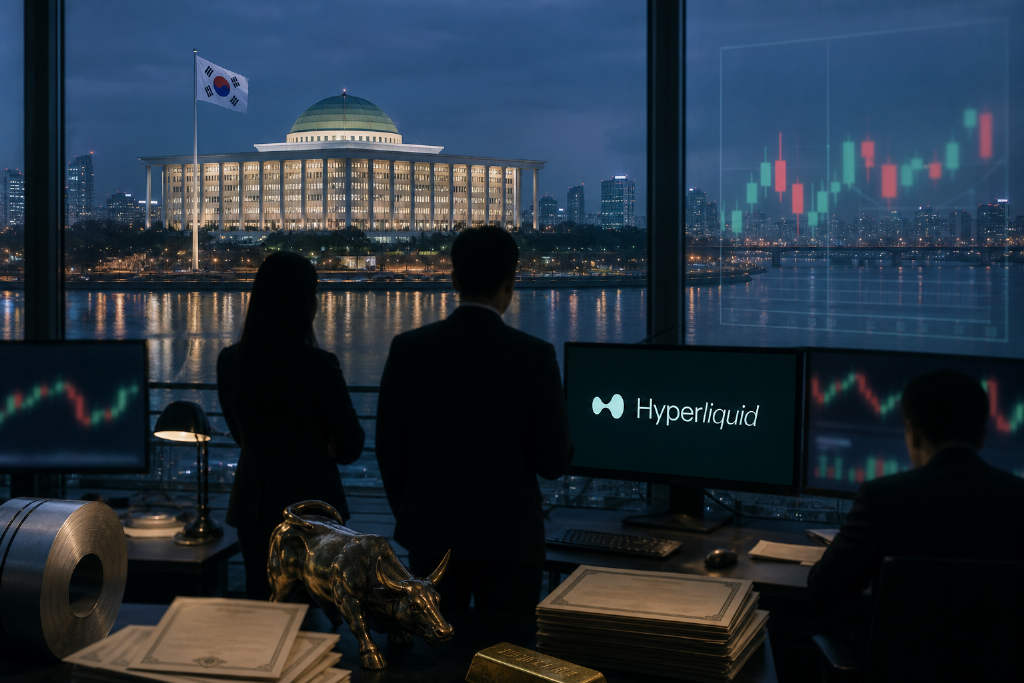
Crypto exchanges are moving beyond digital assets and using perpetual futures to list products tied to equities, commodities, and other traditional assets. According to a report by Tiger Research, offshore perpetuals linked to Korean stocks have reached about KRW 307 trillion in cumulative trading volume within a matter of months, shifting part of the trading and price formation process for Korean assets outside the country.
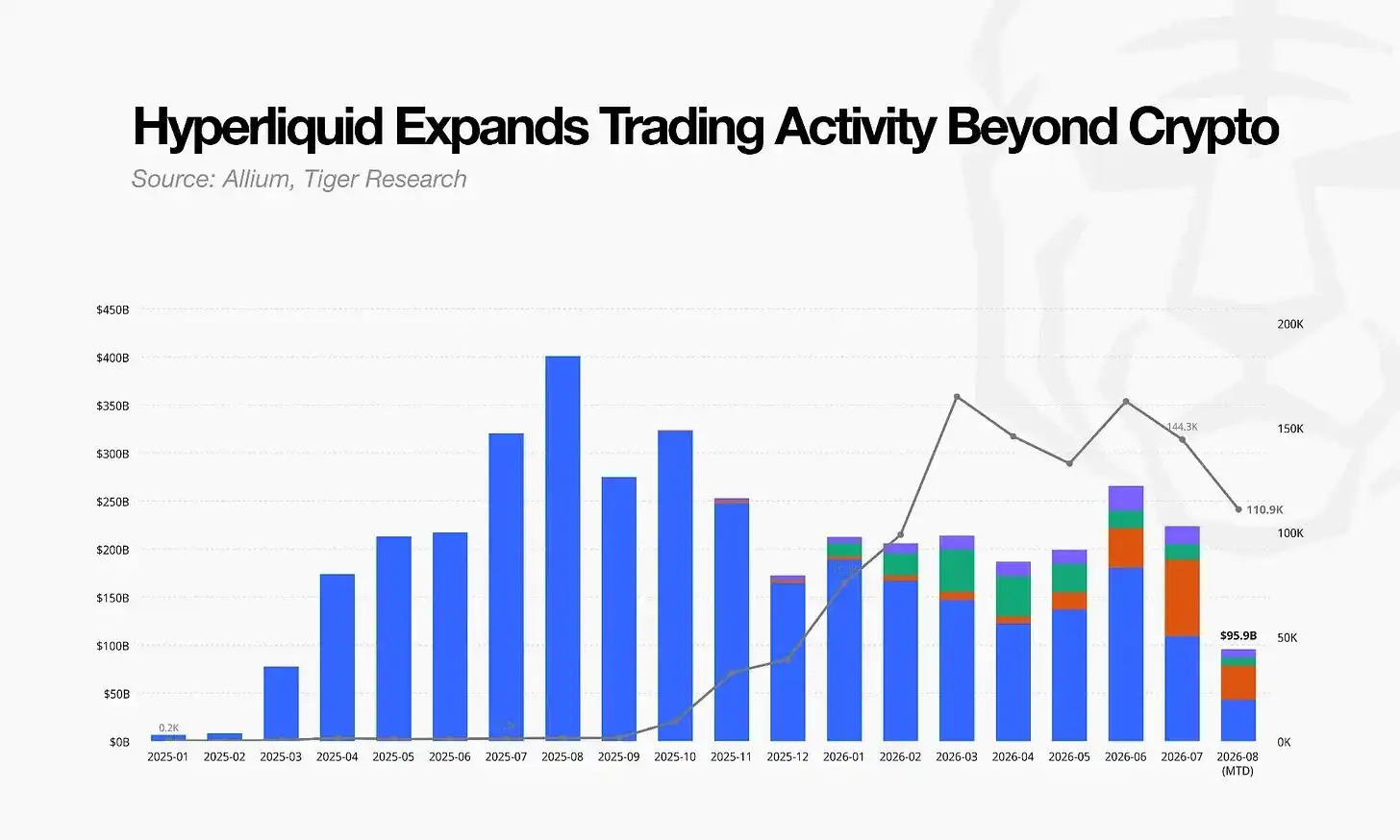
Perpetual futures are expanding into traditional assets
The report says crypto exchange activity is no longer dominated only by Bitcoin and Ethereum. Products tied to stocks, commodities, and other traditional assets are growing quickly. On decentralized exchange Hyperliquid, the share of trading linked to traditional assets kept rising through 2026, and the number of users trading those contracts also increased.
Perpetual futures sit at the center of that shift. Unlike traditional futures, they do not expire and do not require physical delivery. Investors can get price exposure without holding the underlying asset. That structure makes it easier for exchanges to list contracts tied to stocks and commodities, giving crypto venues a workable route into traditional markets.
Korean equity trading is moving offshore
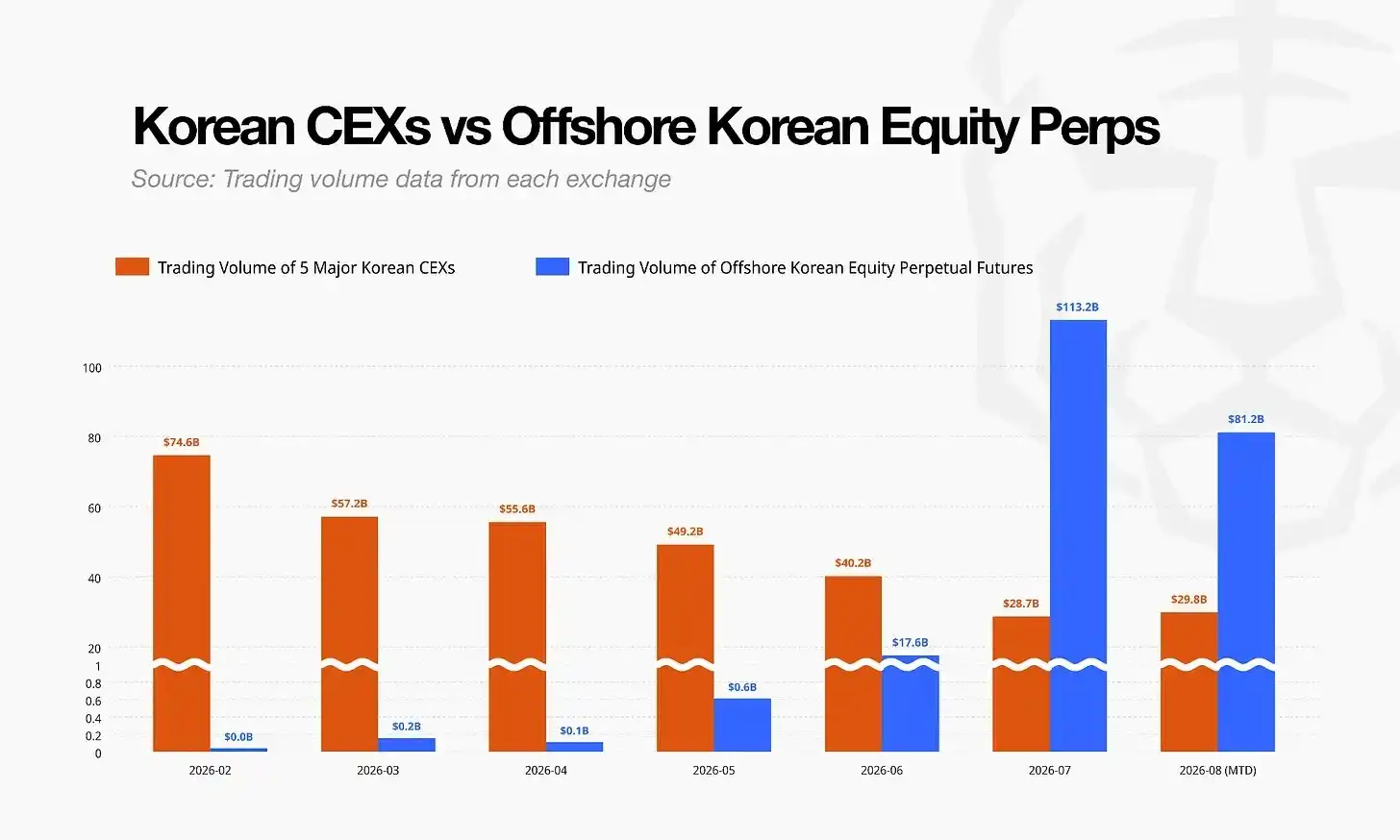
South Korea is already in the middle of this transition. Offshore crypto exchanges are actively listing perpetuals tied to major Korean names including Samsung Electronics and SK Hynix. Those contracts trade at night and on weekends and offer higher leverage, giving both Korean investors and global capital a way to take Korean equity exposure outside local market hours.
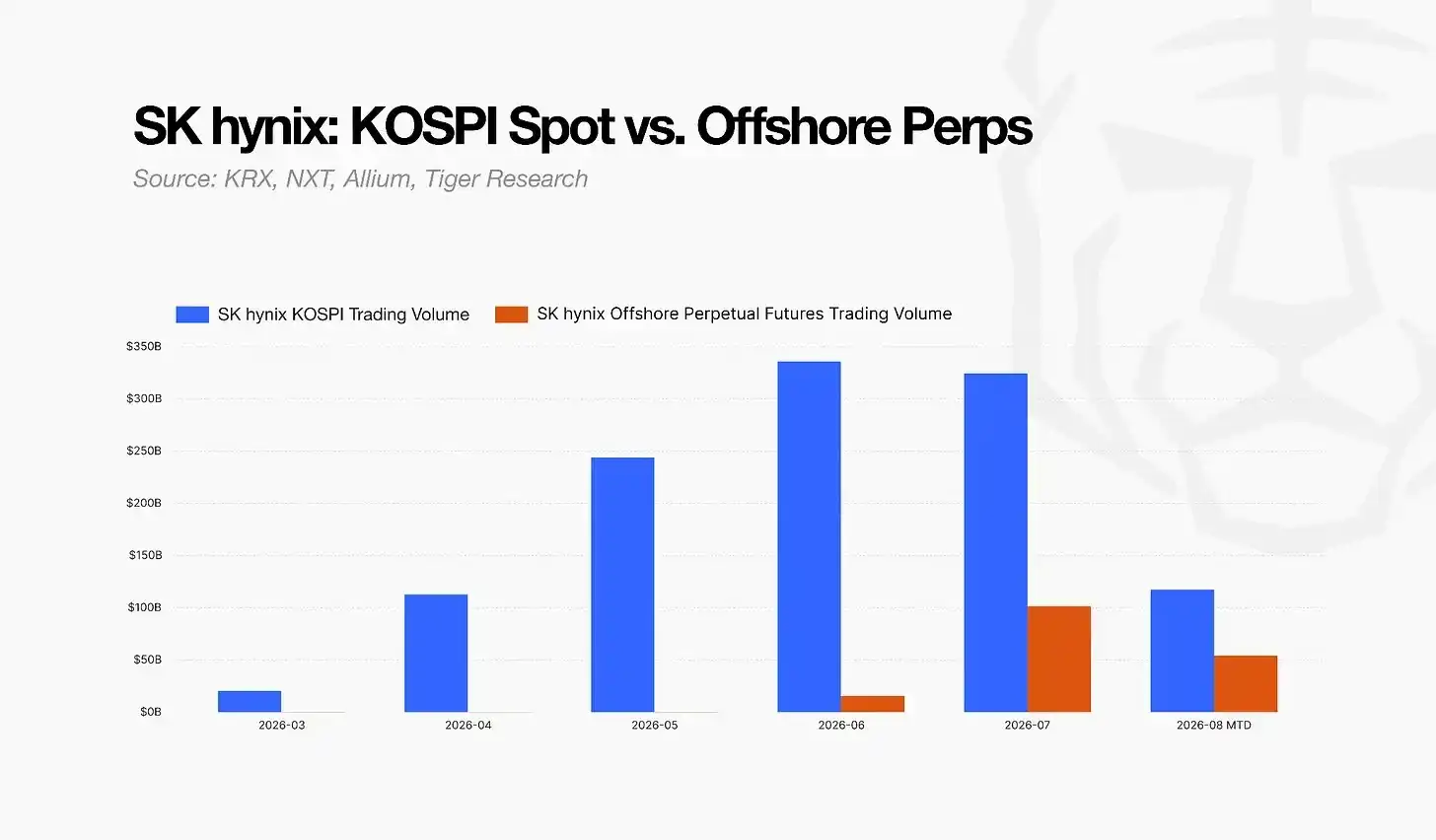
Tiger Research says cumulative volume in Korean stock-linked perpetuals reached about KRW 307 trillion from February to August 2026. In August alone, volume hit KRW 166 trillion, nearly four times the KRW 42 trillion recorded by South Korea’s five largest domestic crypto exchanges in the same period. In only a few months, the offshore perpetual market tied to Korean stocks grew larger than the country’s main domestic crypto market.
Derivatives are already larger than the related ETF in some products
In some cases, perpetual futures volume is already far above the related ETF. In August 2026, perpetual contracts tied to KORU, a U.S.-listed 3x leveraged Korean ETF, traded about $24.1 billion. The KORU ETF itself traded $8.9 billion over the same period. The perpetual market was about 2.7 times larger.
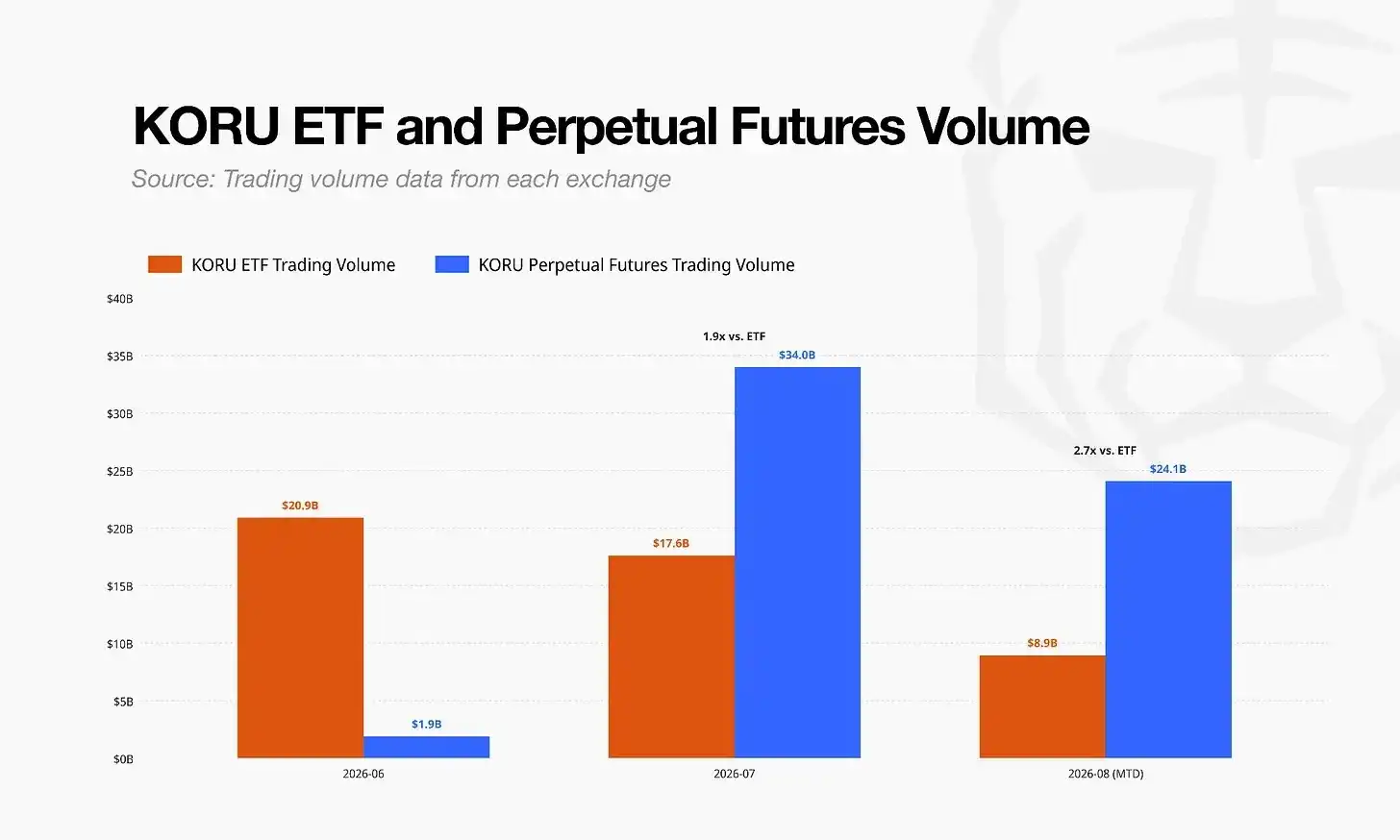
The report says that once derivatives trading becomes larger than the referenced market, offshore venues can play a bigger role in price discovery. Price formation then starts to depend not only on spot or ETF trading, but increasingly on the derivatives venue itself.
Offshore derivatives can feed back into spot markets
Tiger Research argues that offshore derivatives no longer simply follow spot moves. Market makers that provide liquidity for perpetuals hedge their exposure by buying and selling the related stocks or ETFs. The higher the derivatives turnover, the larger the hedging flow. During sharp price swings, that transmission can become stronger and reach the spot market directly.
The report describes the structure as a possible “tail wagging the dog” setup: instead of spot leading derivatives, derivatives can start driving spot. For large-cap names such as SK Hynix, spot turnover is still clearly bigger, so the effect remains limited for now. Even so, the gap between derivatives and spot volume is narrowing quickly.
Offshoring is not unique to South Korea
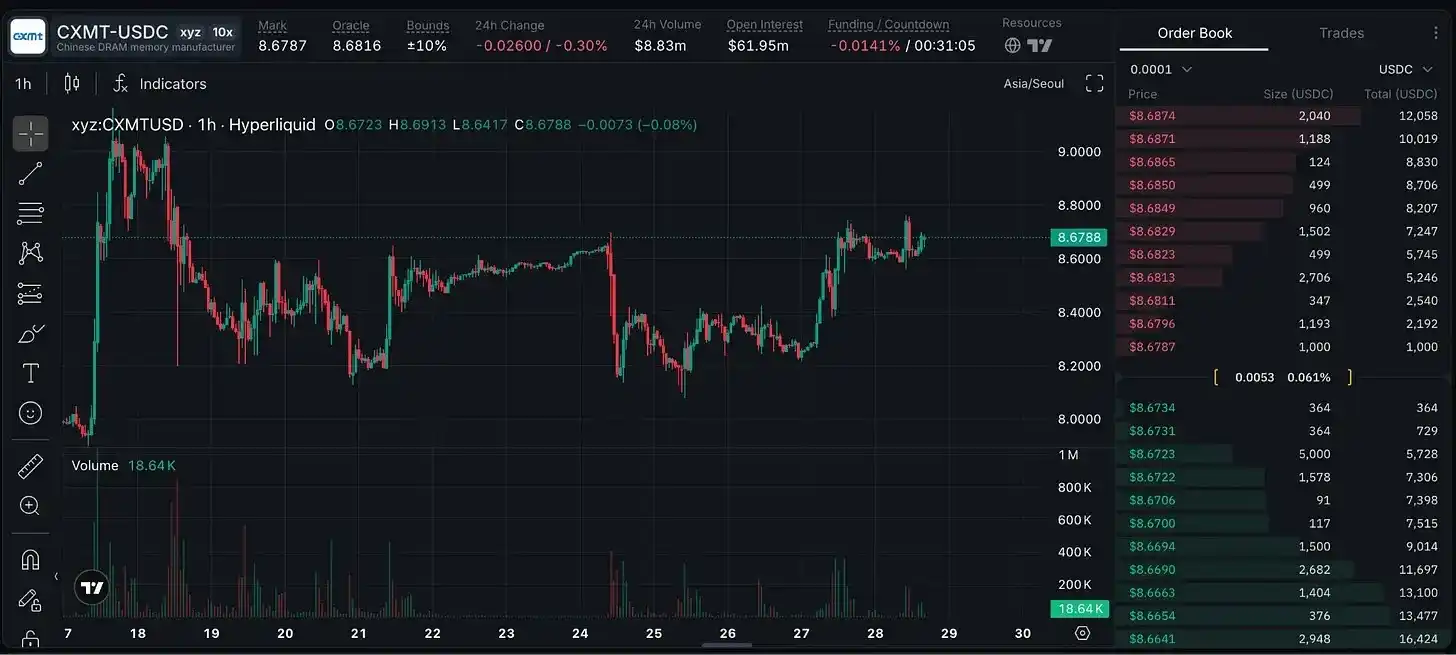
The report says offshore trading in Korean equities is part of a broader change. Perpetual futures are spreading quickly across stocks and indexes in markets including South Korea, Japan, and China, and the universe now extends beyond listed companies. Offshore venues have listed perpetuals tied to private companies such as Anthropic and also launched products tied to ChangXin Memory Technologies, or CXMT, a Chinese memory chip company that has not yet listed publicly.
Assets that were once difficult to trade through conventional securities markets are entering the perpetual futures market, blurring older boundaries around what investors can access.
Participants, liquidity, and collateral are changing as well
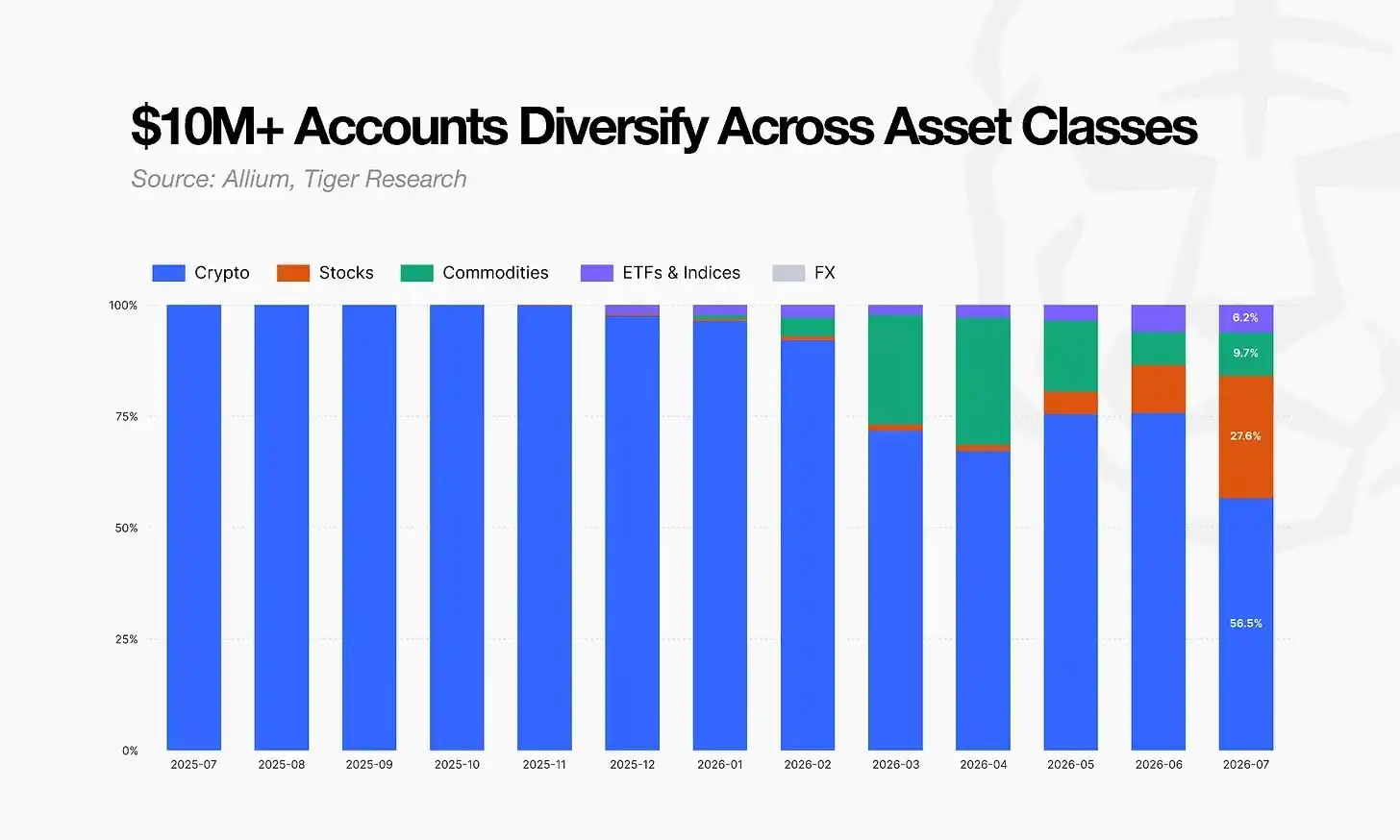
The participant base is shifting. On Hyperliquid, the share of accounts with more than $10 million in assets that trade stocks, commodities, and other traditional assets has risen quickly, according to the report. The Wall Street Journal has also reported that professional Wall Street traders use perpetual futures outside regular trading hours and on weekends. What started as a market dominated by crypto traders is now drawing in professional traders and investors managing larger pools of capital.
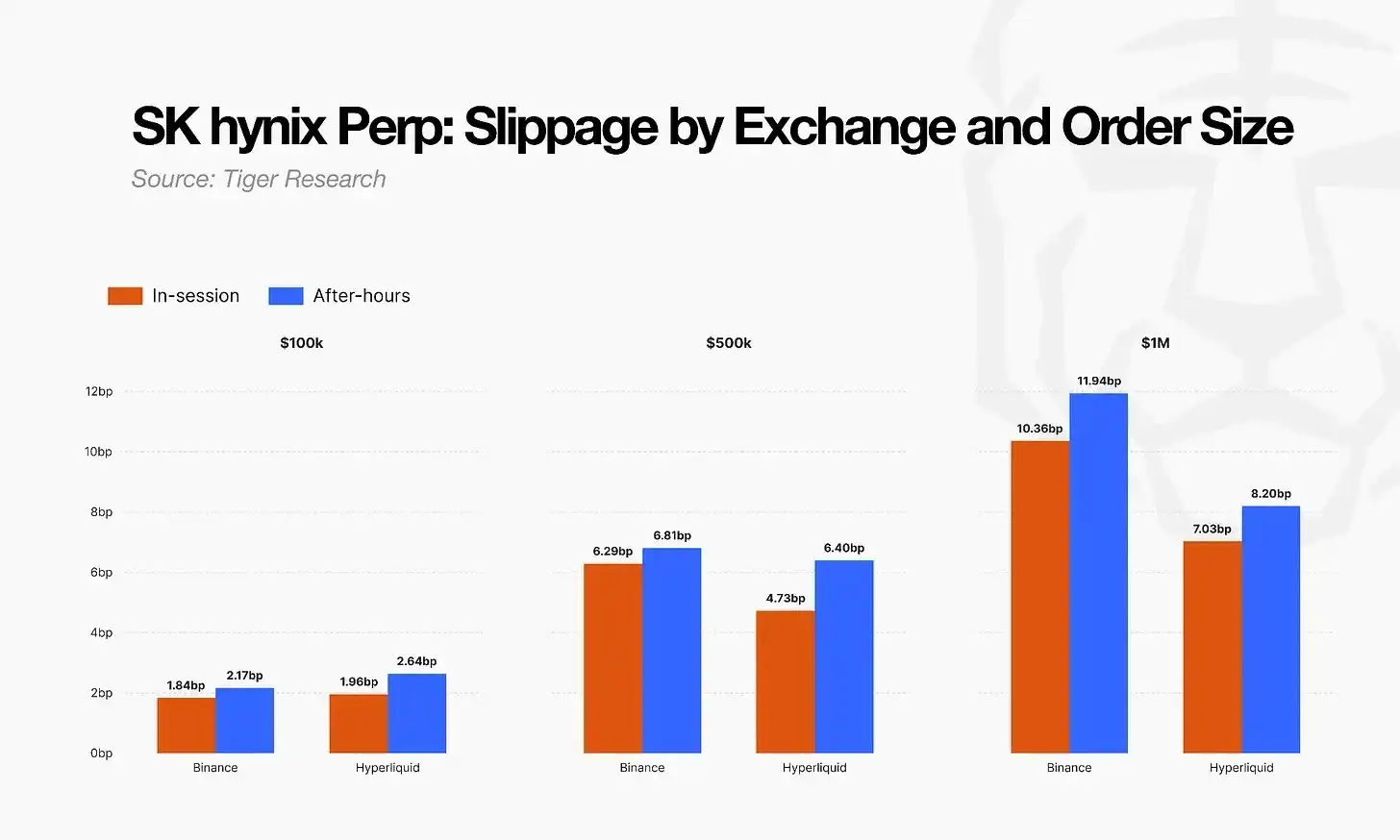
Liquidity is also becoming more meaningful on its own. Based on a recent 15-day average, a $1 million trade in SK Hynix perpetuals would face slippage of only single-digit basis points. Slippage stayed relatively low even outside regular market hours. The report says that suggests the market is no longer just extending trading hours. It is building standalone liquidity.
The funding side is changing too. Some global exchanges now accept tokenized U.S. Treasuries as collateral, including BlackRock’s BUIDL and Hashnote’s USYC. Over the past year, cumulative USYC inflows to exchanges totaled about $2.75 billion. The report notes that not all of that is necessarily used as derivatives margin, but institutions can now hold Treasury-like assets they already understand and post them as collateral when needed.
What South Korea would need to participate
The report says South Korea may be able to limit local investors from trading these products, but it will have a much harder time slowing the growth of the offshore market itself. Some global exchanges, including Binance, restrict perpetual futures trading for accounts identified through KYC as Korean users. Even so, the market for Korean stock-linked contracts can keep expanding through overseas investors and global capital.
That leaves South Korea with a broader question. If the country wants to turn this market growth into an opportunity for its own financial sector, limiting domestic demand will not be enough. The report says local crypto exchanges do have a starting point. They may not be able to list stock-linked perpetuals directly in the near term, but they already have experience operating 24-hour digital asset markets and have built sizable user bases.
Still, trading infrastructure alone is not enough. Tiger Research says South Korea needs three pieces in place:
- broader corporate access to domestic crypto exchanges so professional capital used for market making, hedging, and arbitrage can enter the market;
- a formal regulatory framework for derivatives such as perpetual futures, which would support products tied to a wider range of assets;
- KRW-denominated payment and settlement infrastructure, including tools such as won stablecoins, to lower access barriers for overseas investors and make capital movement easier.
The key question is how much of the market Korea can retain
The report ends by arguing that these are not separate regulatory issues. They are connected parts of the framework needed to run this type of market. Trading tied to Korean assets is already growing quickly offshore. The central question is no longer only how to restrain that growth, but how large a role South Korea’s financial industry can still secure within it.
Written by Tiger Research
Translated by AididiaoJP, Foresight News