
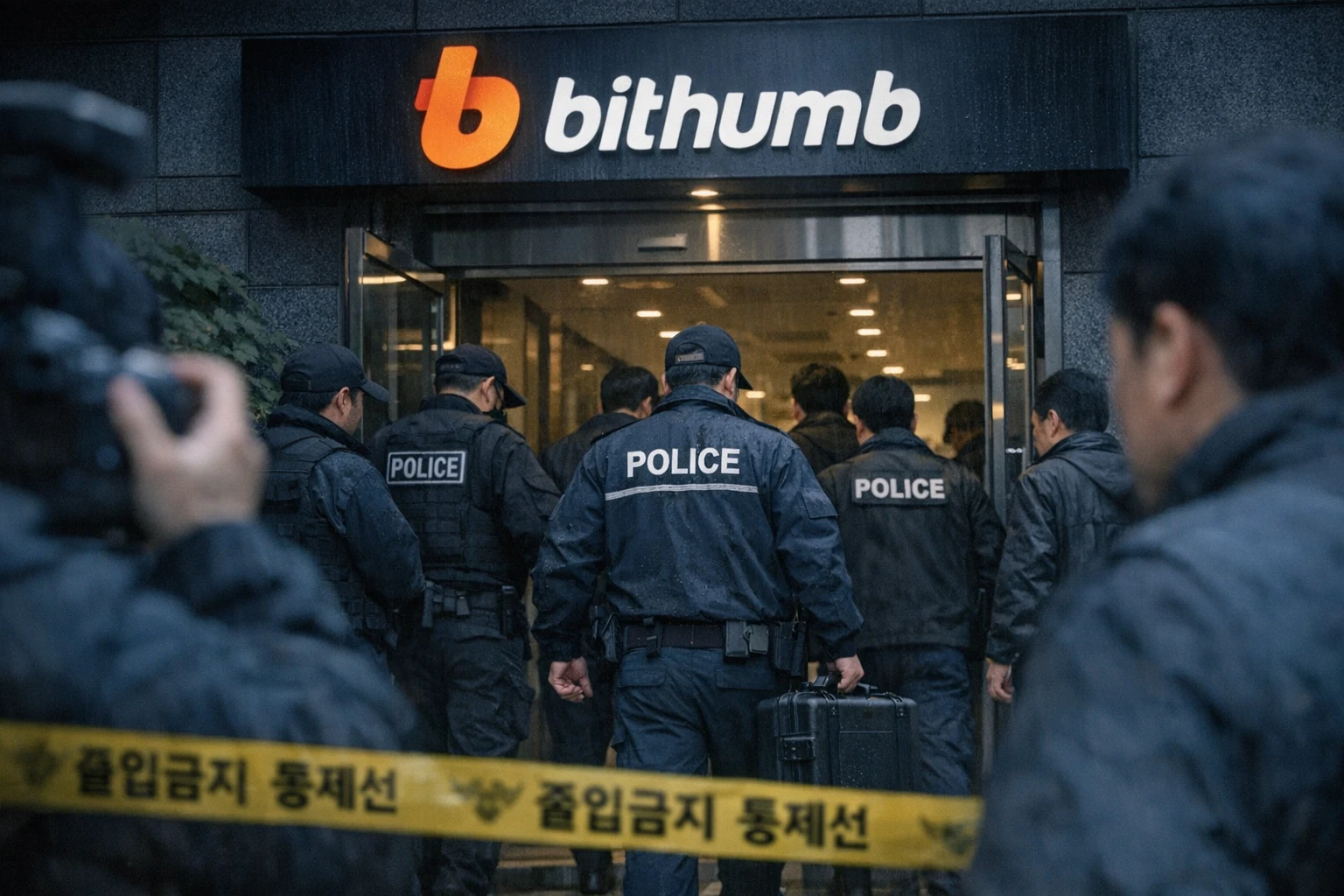
South Korean police have searched Bithumb headquarters as part of an investigation into whether independent lawmaker Kim Byung-gi used his political influence to help his son secure positions at crypto companies. According to local outlet News1, Kim's son joined Bithumb in January 2025 and worked there for about six months. Investigators are examining whether the hiring process involved outside pressure or preferential treatment.
The probe extends beyond Bithumb to Dunamu
The case is not limited to Bithumb. Reports say Kim is also suspected of trying to arrange roles for his son at other crypto firms, including Dunamu, the operator of Upbit. The issue has drawn extra scrutiny because Kim sits on the National Assembly's Political Affairs Committee, which directly oversees South Korea's financial regulators.
The controversy widened last month after local media reported that Kim repeatedly questioned Dunamu executives during committee sessions. That led to criticism over whether those remarks amounted to political shielding. Police had already summoned executives from several crypto exchanges as witnesses in February, then carried out separate search and seizure operations at Bithumb headquarters and Bithumb Financial Tower in March. Interviews with Bithumb-related figures continued in April.
Kim questioned six times over 13 allegations
By April, Kim had been questioned six times and faced inquiries over 13 allegations. Those include nomination bribery, improper favors tied to his son's employment, and requests related to a university transfer. Police have not announced whether more summonses will follow. After his sixth appearance, Kim said publicly that he believed he would ultimately clear his name.
Bithumb was already fined $24.5 million over AML failures
The exchange is dealing with a separate regulatory blow this year. In March, South Korean financial authorities imposed a $24.5 million fine on Bithumb and ordered a partial six-month business suspension after a 2025 inspection found major weaknesses in its KYC and AML procedures. The sanctions included restrictions on new user registrations.
Bithumb later sought court relief, and in late April a South Korean court temporarily halted enforcement of the suspension while litigation continues. At the same time, lawmakers are reviewing amendments to the Virtual Asset User Protection Act that could require exchanges to compensate users for losses without conditions.
Political influence and compliance failures converge
The case brings two pressures in South Korea's crypto sector into one frame. One is the possibility of political intervention in businesses under regulatory oversight. The other is the industry's compliance weakness. The source notes that after the Virtual Asset User Protection Act took effect in 2024, exchange-related violations continued to surface. As of early June this year, South Korea's five largest exchanges had recorded 57 incidents over the past six years, with compensation totaling 7 billion won.