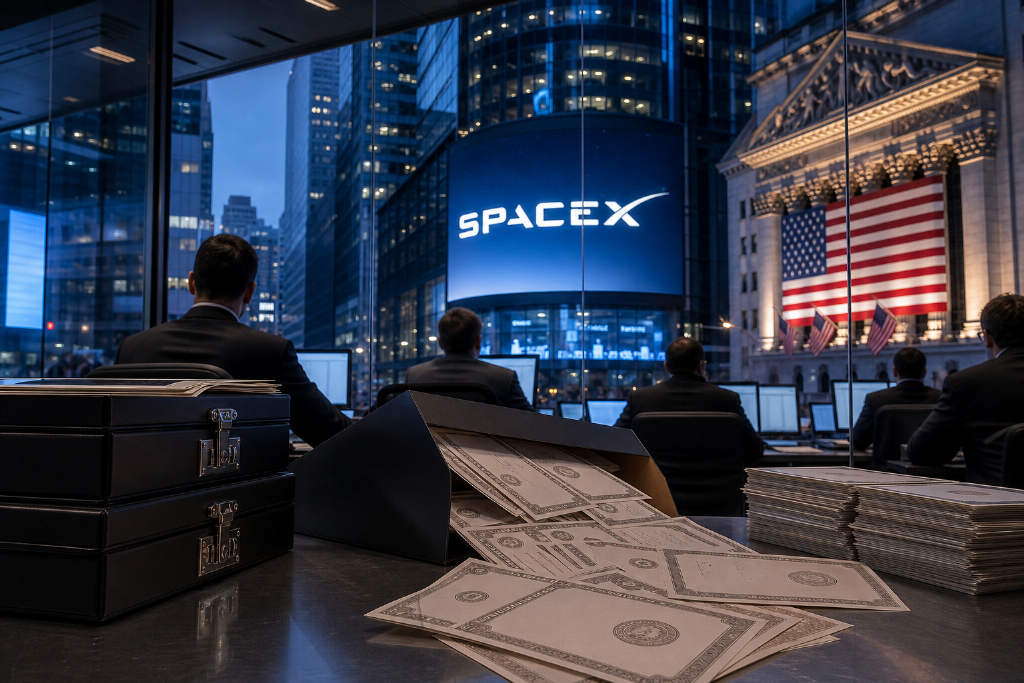
SpaceX shares climbed back above the $135 IPO price on September 1, according to BlockBeats, as fears of a post-lockup selloff failed to materialize. The concern had been that employees and early investors would dump stock once lockup restrictions expired, but the price moved higher instead. The initial rally was partly driven by a scarcity narrative, and that narrative is now shifting toward a question of sustained demand as more shares become tradable. The first major unlock released roughly 912 million shares, and roughly 3 billion additional shares could become eligible for trading by the end of the year. Wall Street, meanwhile, is moving to fold SpaceX into its institutional framework. Multiple banks issued price targets after the quiet period ended, with a median around $225 and a range of roughly $190 to $800. Goldman Sachs sits around $205, JPMorgan around $225 and Morgan Stanley around $300. Analyst coverage, valuation models, liquidity and potential index inclusion are all taking shape, turning SpaceX from a scarce asset into a regular security that institutions must weigh against Nvidia, Microsoft, Amazon and Google. The current valuation already bakes in expectations for rapid growth in Starlink, Starship, AI infrastructure and orbital computing. As supply increases, the scarcity premium is expected to fade, leaving fundamental delivery and institutional absorption of new shares as the key test for further upside.
SpaceX shares have moved back above the $135 IPO price as of September 1, according to BlockBeats. Heading into the unlock window, there were concerns that employees and early investors would dump stock once lockup restrictions expired. That mass selling did not materialize. Instead, the price went higher.
The stock's early post-listing gains were built partly on a scarcity narrative. Now that lockups are releasing more shares, market attention is shifting from whether the stock is scarce to who will keep buying it. The first major unlock has freed roughly 912 million shares, and another 3 billion shares could become eligible for trading by the end of this year.
Wall Street builds an institutional framework
Wall Street, meanwhile, is moving quickly to fit SpaceX into its institutional framework. Several banks have published price targets after the quiet period ended. The median sits around $225, with individual targets ranging from roughly $190 to $800. Goldman Sachs is around $205, JPMorgan around $225 and Morgan Stanley around $300.
As analyst coverage, valuation models, liquidity and potential index inclusion take shape, SpaceX is shifting from a scarcity asset into a regular security that institutions must weigh against holdings in Nvidia, Microsoft, Amazon and Google.
Scarcity premium fades
SpaceX's current valuation already bakes in expectations for rapid growth across Starlink, Starship, AI infrastructure and orbital computing. With more supply coming to market, the scarcity premium should continue to erode. Whether the share price can keep climbing now depends on fundamental delivery and on whether institutional capital can keep absorbing the new supply.
This article was originally published by Bit.Fan. For more cryptocurrency news and market insights, visit www.bit.fan. Disclaimer:
The market information, project data, and third-party content displayed on this platform are for industry information sharing only and do not constitute any form of investment advice or return commitment.
Cryptocurrency trading carries high risks. Users should fully assess their risk tolerance and make independent decisions. All profits, losses, and legal responsibilities are borne by the users themselves.