Spout, a tokenized U.S. stock-backed lending platform, said it has completed a $2 million strategic round. Participating investors included Draper Dragon, Anchorage, Flow Traders, Taisu Ventures, Vessel VC, Solayer Labs, 2Square Capital, Bering Waters, Solana Labs, Solana co-founder Toly, and former CFTC Chairman Chris Giancarlo, among others.
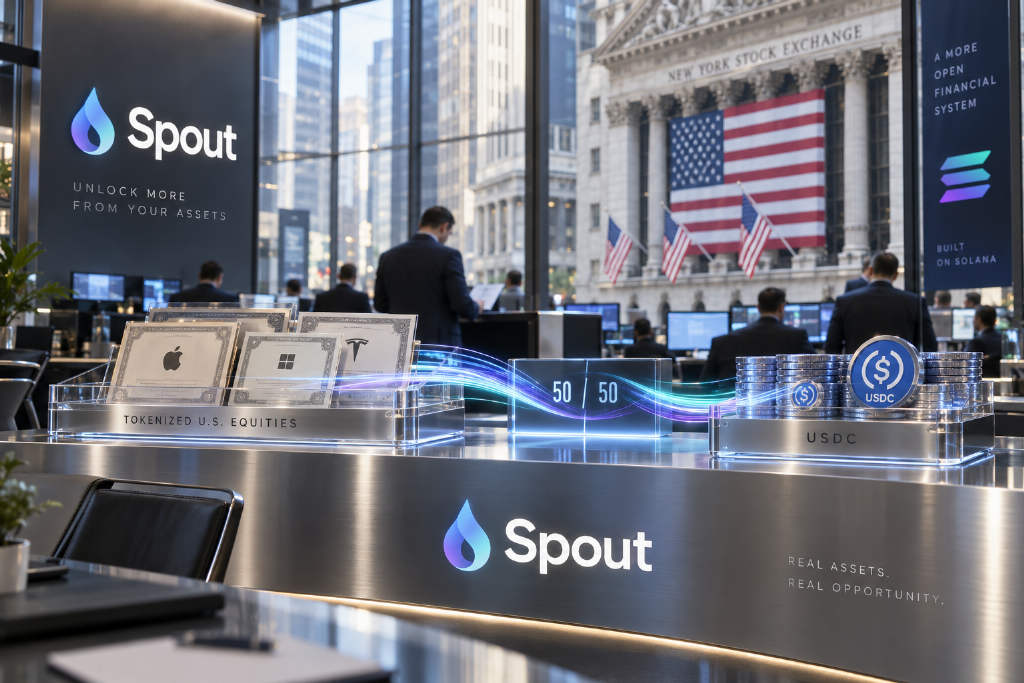
The company also disclosed how its product is structured. Users can pledge tokenized U.S. stocks as collateral and borrow USDC at a fixed 50% loan-to-value ratio. During the life of the loan, borrowers are not charged interest.
According to Spout, lender returns come from option premium generated by selling covered calls each week against the collateral, rather than from interest paid by borrowers. The disclosure lays out a lending model tied to tokenized equities and an options-based yield mechanism.
Spout, a tokenized U.S. stock-backed lending platform, said it has completed a $2 million strategic financing round, according to ChainCatcher.
Investors in the round included Draper Dragon, Anchorage, Flow Traders, Taisu Ventures, Vessel VC, Solayer Labs, 2Square Capital, Bering Waters, Solana Labs, Solana co-founder Toly, and former Commodity Futures Trading Commission, or CFTC, Chairman Chris Giancarlo, among others.
How the lending product works
Based on the mechanism disclosed by Spout, users can post tokenized U.S. stocks as collateral and borrow USDC at a fixed 50% loan-to-value ratio. Borrowers are not charged interest while the loan remains outstanding.
Where lender returns come from
Spout said lender yield does not come from borrowing costs paid by users. Instead, returns are generated from option premiums collected through weekly covered call sales against the collateral.
This article was originally published by Bit.Fan. For more cryptocurrency news and market insights, visit www.bit.fan. Disclaimer:
The market information, project data, and third-party content displayed on this platform are for industry information sharing only and do not constitute any form of investment advice or return commitment.
Cryptocurrency trading carries high risks. Users should fully assess their risk tolerance and make independent decisions. All profits, losses, and legal responsibilities are borne by the users themselves.