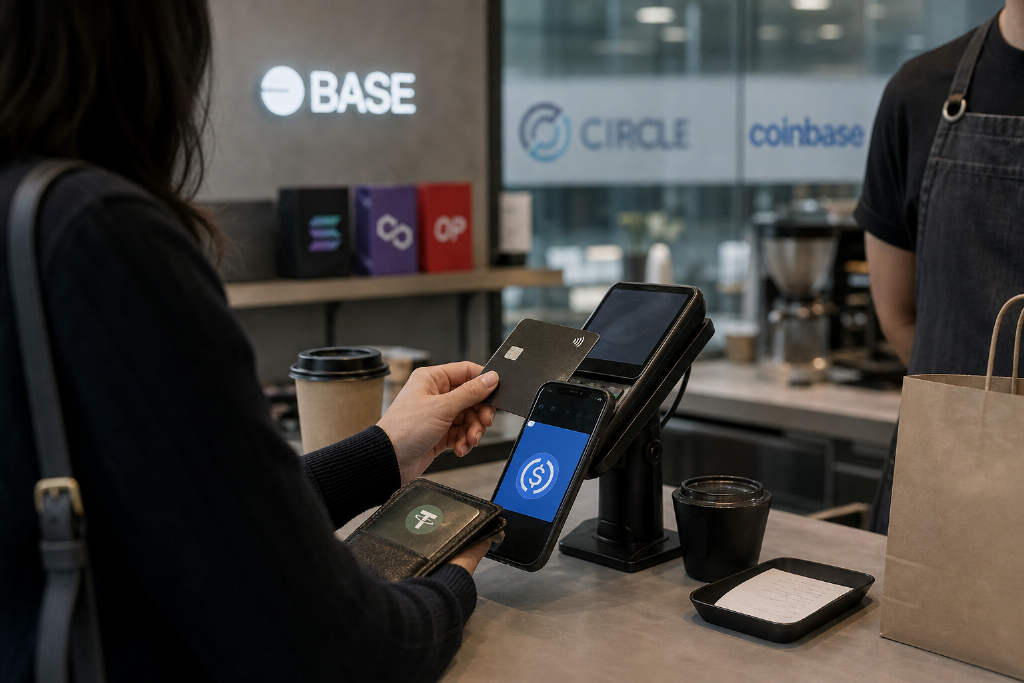
Stablecoin-linked cards tied to USDC and USDT have reached $13.8 billion in cumulative load volume as of August, up by nearly $10 billion over the past 12 months, according to an Odaily report citing Bitcoin.com News. The data points to a shift in how these assets are being used, with balances moving away from trading accounts and into everyday payments. USDC currently leads tracked card spending, while USDT is catching up. The report says the two tokens are following different usage paths: USDC has gained more from fintech integrations and payment infrastructure, while USDT remains more active in exchange activity, remittances and emerging markets. Settlement activity is also spread across multiple chains rather than concentrated on one network. Base ranks first at about $1.2 billion, followed by Solana at $635 million, Polygon at $544 million and Optimism at $509 million. Arbitrum, Scroll, Ethereum and Stellar were also cited as carrying notable activity. The report adds that stablecoin cards still rely on traditional payment rails such as Visa and Mastercard, with competition now centered on custody, foreign exchange costs, cashback and capital efficiency. It also says Circle renewed its USDC partnership with Coinbase on existing terms and ruled out a dividend arrangement.
Stablecoin-linked cards associated with USDC and USDT have reached $13.8 billion in cumulative load volume as of August, according to Odaily, citing Bitcoin.com News. That total is up by nearly $10 billion over the past 12 months.
The report says stablecoin cards are shifting USDC and USDT away from trading balances and into everyday spending. In tracked card spending, USDC currently holds the lead, while USDT is gaining ground.
USDC and USDT are being used in different ways
The two stablecoins are following different adoption paths. USDC has benefited more from fintech integrations and payment infrastructure. USDT, by contrast, is more active across exchanges, remittances and emerging markets.
Settlement activity is spread across several chains
On-chain settlement is distributed across multiple networks rather than centered on a single chain. Base ranks first at about $1.2 billion, followed by Solana at $635 million, Polygon at $544 million and Optimism at $509 million.
Arbitrum, Scroll, Ethereum and Stellar were also named as networks carrying notable activity.
Competition is shifting to product economics and operations
The report notes that stablecoin cards still depend on traditional payment networks including Visa and Mastercard. The main battleground has shifted to custody, foreign exchange costs, cashback and capital efficiency.
It also says Circle renewed its USDC partnership with Coinbase on existing terms and excluded any dividend arrangement.
This article was originally published by Bit.Fan. For more cryptocurrency news and market insights, visit www.bit.fan. Disclaimer:
The market information, project data, and third-party content displayed on this platform are for industry information sharing only and do not constitute any form of investment advice or return commitment.
Cryptocurrency trading carries high risks. Users should fully assess their risk tolerance and make independent decisions. All profits, losses, and legal responsibilities are borne by the users themselves.