
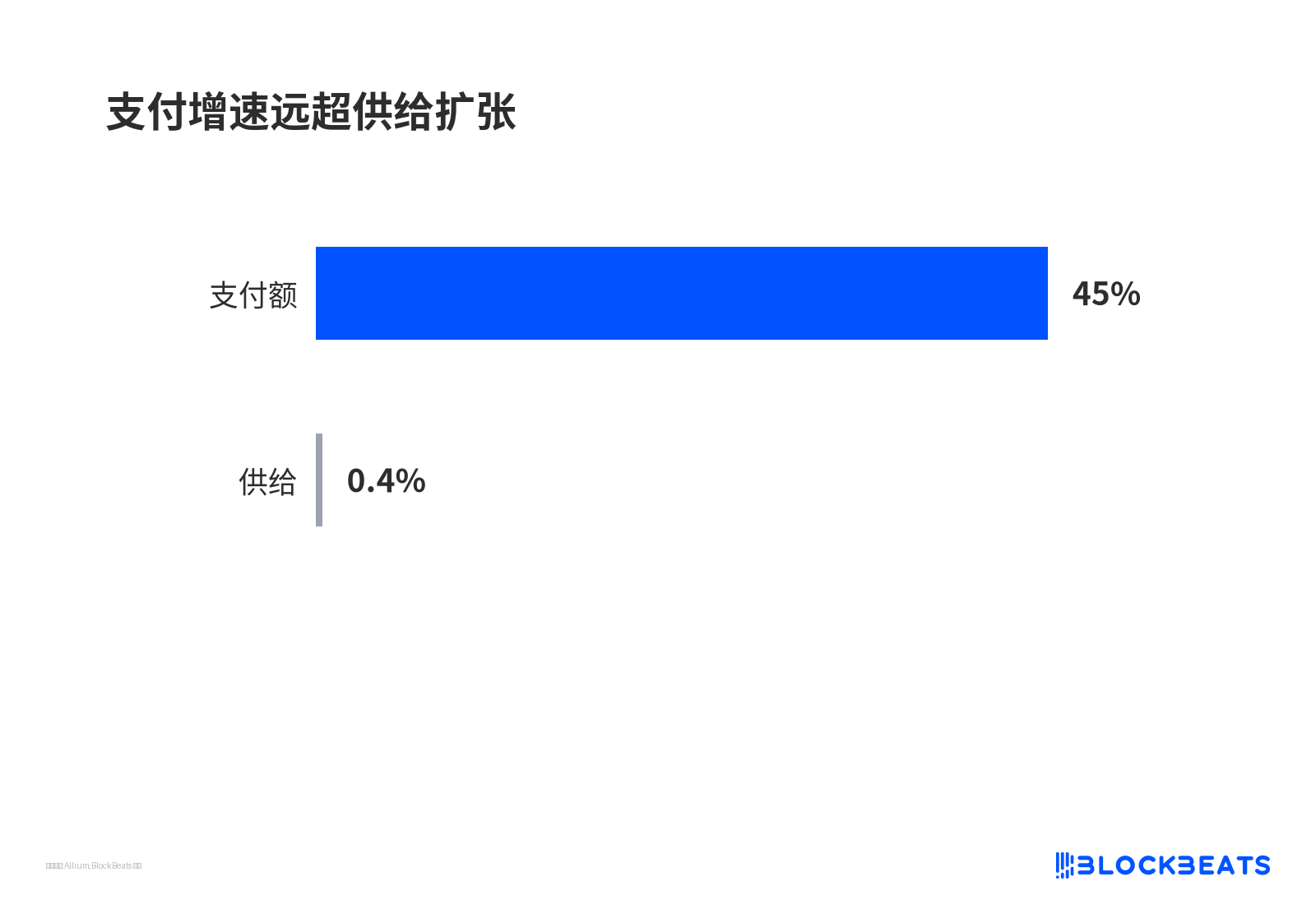
Stablecoin payment volume hit $482 billion in the first nine months of 2026, up 45% from a year earlier, while supply rose only 0.4% to about $305 billion, according to a report released by onchain data firm Allium on Oct. 15. Payment volume climbed even as supply barely moved, a sign that stablecoins are being used more actively rather than simply sitting onchain.
That same week, Mastercard rolled out its Stablecoin Security API, Visa used Mesh to connect wallet balances to roughly 175 million merchants, and Stripe expanded its multicurrency stablecoin card to more than 65 countries. The push from payment companies is getting louder, but the layer they are trying to monetize is not issuance. It is acceptance, conversion and risk control.
Only a small slice of the $482 billion came from shopping
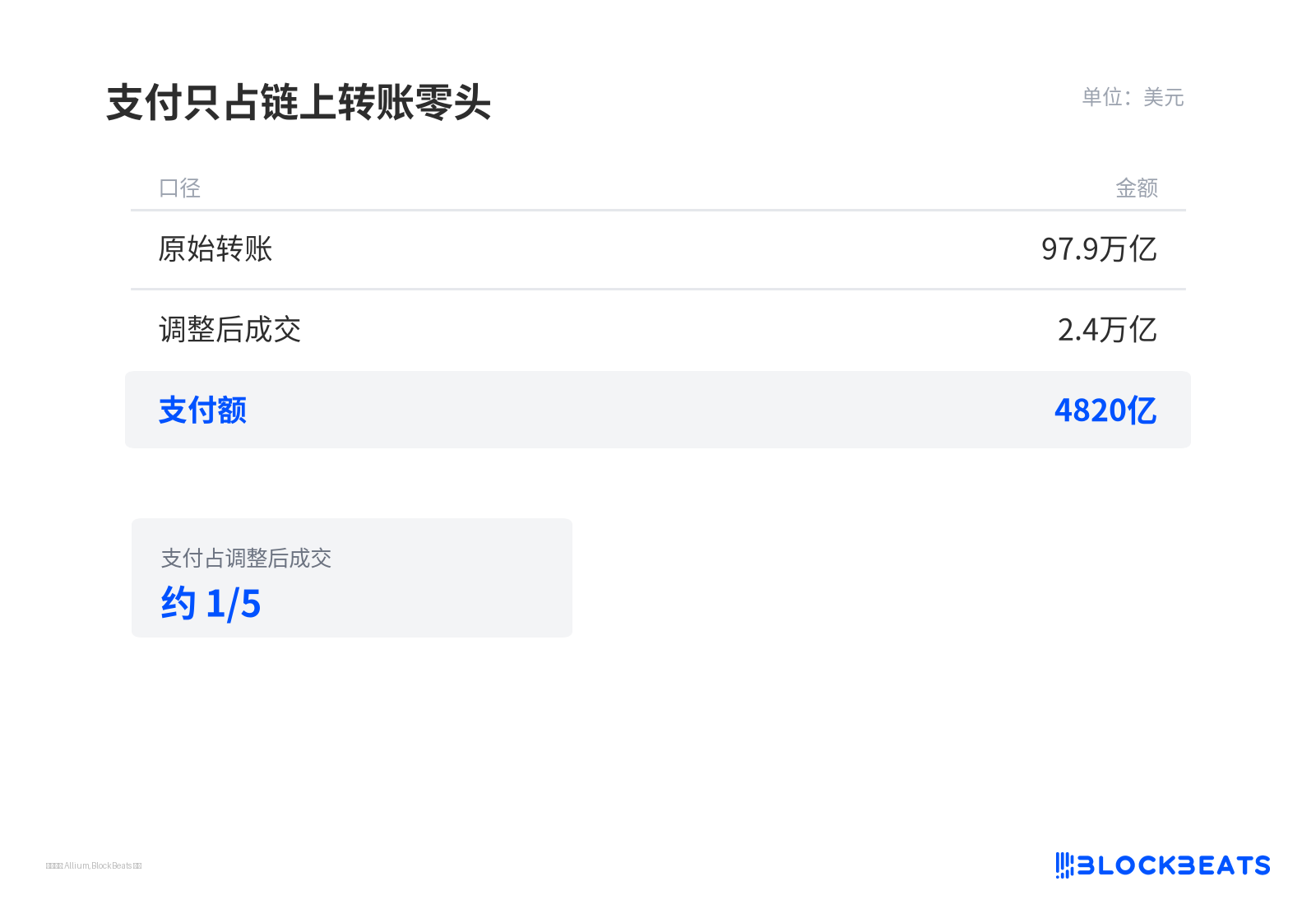
Allium measured payment volume, not merchant acquiring volume in the way Visa reports it in earnings. The firm started with $97.9 trillion in raw stablecoin transfers, then removed exchange, DeFi and infrastructure transfers. That left about $2.4 trillion in adjusted transaction volume, or just 2.5% of the original total. Payments accounted for about one-fifth of that adjusted figure, producing the $482 billion number.
Most stablecoin transfers onchain, then, still belong to internal financial circulation. Only a limited share reaches payment use cases.
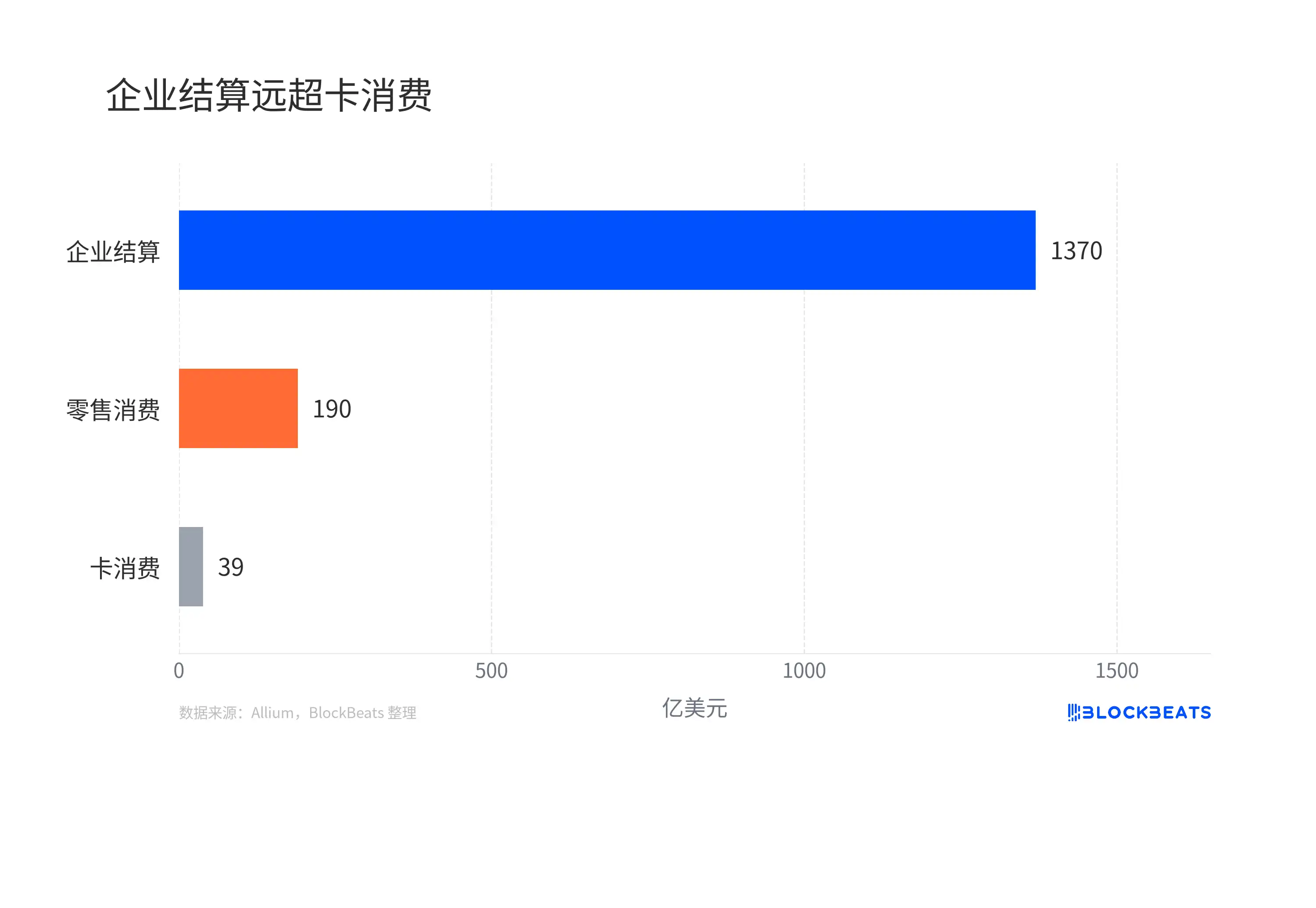
Everyday consumer spending is a smaller subset still. Stablecoin card spending totaled $3.9 billion in the first nine months of the year, up about 10x, but that was only around 0.03% of Visa’s roughly $4 trillion in quarterly payment volume.
Under Allium’s classification, enterprise collections made up 58% to 64% of payment volume from January through August. Business-to-business settlement came to about $137 billion to $153 billion, while retail consumption was only about $19 billion. The main arena is not card swipes at stores. It is corporate settlement.
Supply stayed flat, so growth came from faster turnover
With supply almost unchanged, the rise in payment volume points to velocity.
The same pool of roughly $305 billion in tokens can support a larger payment total if it changes hands more often. Allium said the number of payment transactions rose 71% to 1.04 billion, while average ticket size fell from $544 to $462. In September alone, stablecoin payment volume reached $72 billion. Third-quarter volume was up 51% year over year.
Most of that acceleration took place in USDT and on the Tron network. USDT accounted for 84.2% of payment volume, and Tron contributed about two-thirds. The pattern looks closer to more frequent settlement by businesses, cross-border merchants and payroll distributors than to ordinary consumer checkout activity.
That also leaves the number sensitive to a slowdown in business settlement or cross-border flows. For issuers such as Circle, payment growth does not automatically translate into more issuance revenue if supply is not expanding again.
Visa, Mastercard and Stripe are targeting the fee layer
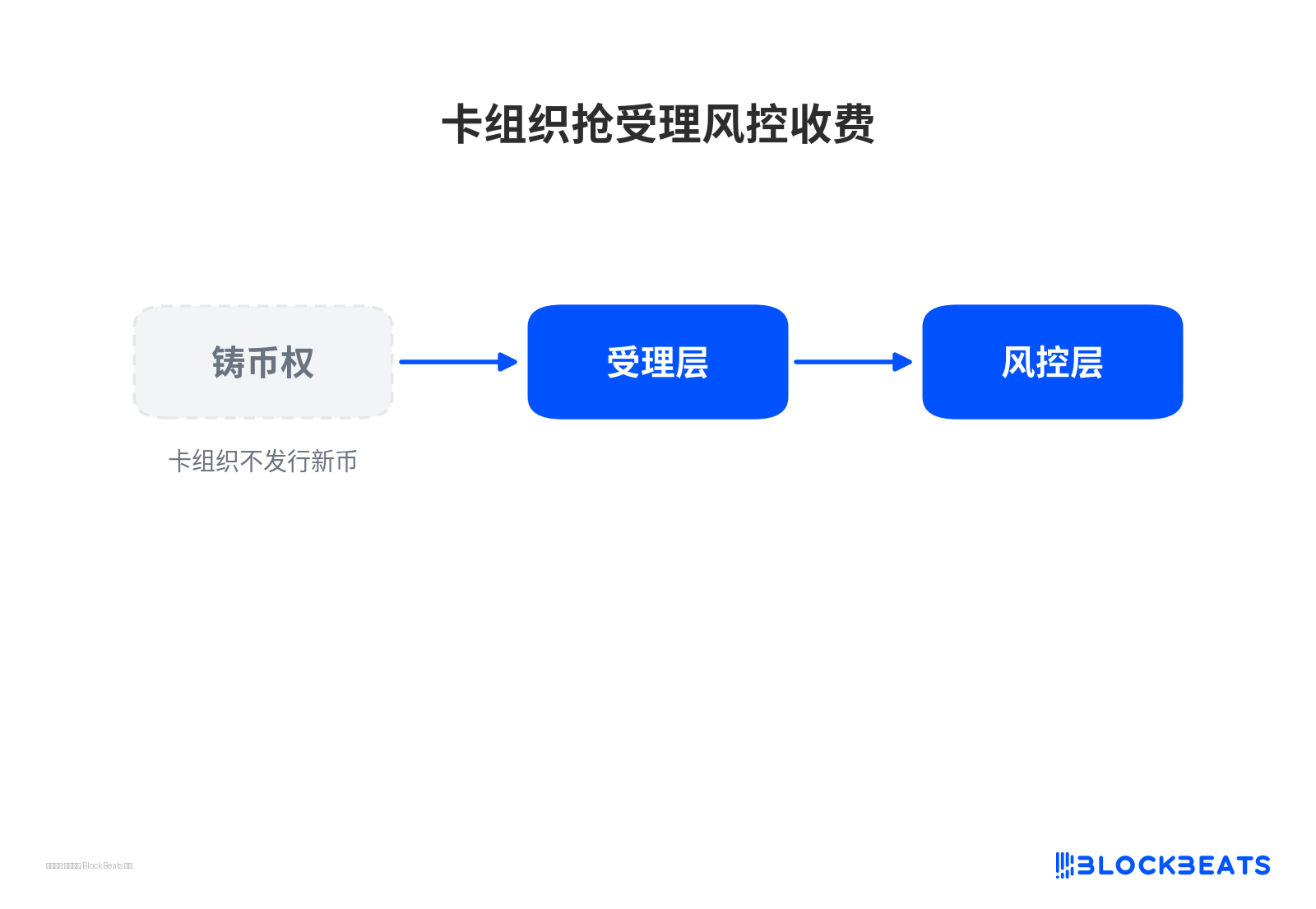
Card networks see an opening in stablecoins, but the revenue pool they are pursuing sits in acceptance, conversion and risk management rather than coin issuance.
Mastercard on Oct. 19 launched Stablecoin Security, an API that adds risk intelligence to existing stablecoin flows. It is being introduced first in North America, with global commercial availability targeted for 2027. Mastercard executive Ann Johnson framed the product around risk controls and compliance, not around launching another token.
Visa is working on the acceptance layer. Mesh CEO Bam Aziz described the issue as the "last mile": users already hold stablecoins in wallets, but they still need a direct spending outlet. Through the partnership with Visa, participating wallets can convert stablecoin balances into Visa credentials and spend at about 175 million merchants, while merchants continue to receive local fiat currency.
The launch date and the list of supported wallets have not been disclosed. Stripe and Plasma are following a similar model with a multicurrency stablecoin card, reconnecting onchain balances to the existing merchant acceptance network and charging for conversion, risk checks and settlement. None of the three is trying to control minting. They are building connections and charging along the way.
Remittance firms are issuing tokens, but scale is still limited
Western Union and MoneyGram are also trying to bring stablecoins into their own systems.
Western Union’s USDPT is issued by Anchorage and runs on Solana. It launched in May and had an onchain circulating supply of about $17.5 million in October. MoneyGram’s MGUSD is based on Stellar, and the company’s updated global app in October combined remittances, cash pickup and stablecoins. Both companies are trying to keep customer balances inside their own wallets and cards, reducing reliance on correspondent banks and traditional remittance rails.
Even so, the scale remains marginal. USDPT is tiny relative to the roughly $305 billion stablecoin supply, and MoneyGram has not disclosed a comparable onchain figure for MGUSD. Western Union’s stock is down about 70% over five years, and its app active users fell year over year in September. Issuing a token has not removed the pressure on its core business. For now, the clearest conclusion is that these moves are defensive positioning, not proof that remittance incumbents have already protected their market through proprietary stablecoins.
Onchain settlement is speeding up, but replacing card spending is still a separate claim
The evidence so far supports a narrower reading. Stablecoin turnover is rising, and the incremental activity is concentrated in business settlement, cross-border transfers and payroll. Card spending remains a small fraction. The products announced this week by Visa, Mastercard and Stripe are aimed at acceptance, conversion and risk-control fees, and they arrived after the period covered by Allium’s data. They do not explain the 45% increase in payment volume.
There is also uncertainty in the measurement itself. Allium’s payment labels are based on rule-based inference rather than merchant receipts, so misclassification risk could affect the quality of the $482 billion figure. Actual transaction volume for the newly announced products, wallet adoption rates and the scale of MGUSD have not been disclosed. The federal rules under the U.S. GENIUS Act, the federal stablecoin bill, are still being finalized, and the compliance framework is taking shape without a fully settled effective timeline.
If fourth-quarter stablecoin card spending remains in the low billions, USDPT and MGUSD fail to reach meaningful scale, and Allium’s payment volume continues to be driven mainly by business settlement turnover in USDT on Tron, then this phase is still best described as faster onchain settlement. A broader shift in fee capture would require native wallet payments and card spending to scale materially.