

Stacks turned miner BTC bids for block production into the payment engine for a new Bitcoin bond in the third quarter of 2026. Genesis Bond, the network’s first such product, went live on Sept. 10 with 230 BTC paired with 3.57 million STX.
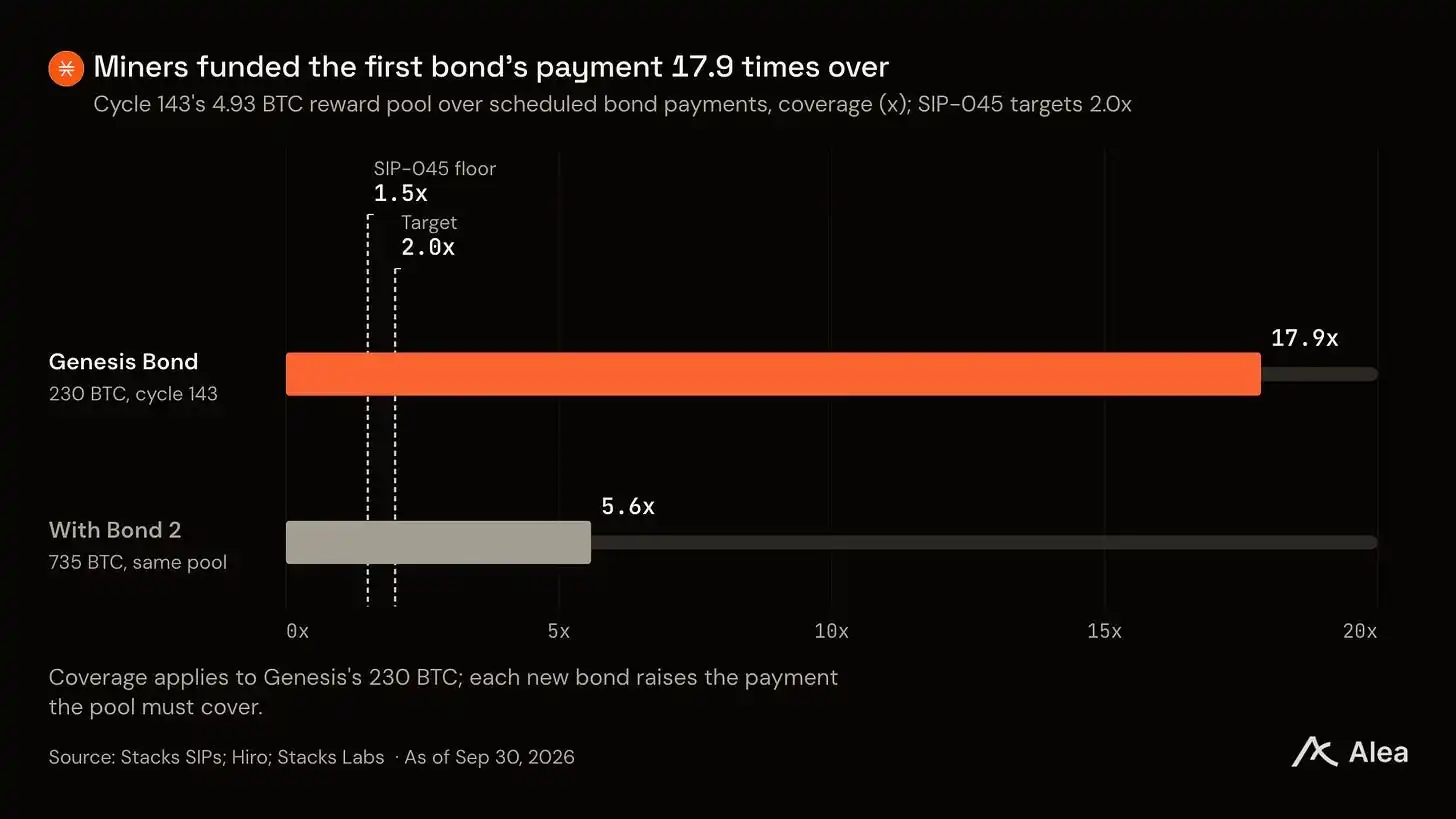
In its first full payout cycle, BTC committed by miners covered bond distributions by 17.9x. That was far above the 2x safety target set out in SIP-045. The report argues that this surplus is what gives the structure room to scale.
The piece was written by Alea Research and translated by TechFlow. It frames the launch as a response to a long-standing gap in the Bitcoin ecosystem: the lack of native low-risk yield-bearing assets and structured fixed-income products. Under Proof of Transfer, or PoX, BTC sent by miners to compete for block packaging rights becomes the senior source of payments to bondholders.
Institutional participation and key third-quarter figures
Genesis Bond drew participation from 21Shares, HashKey Cloud, UTXO Management and Sypher Capital. Miner-funded BTC provided 17.9x coverage for the first coupon distribution.
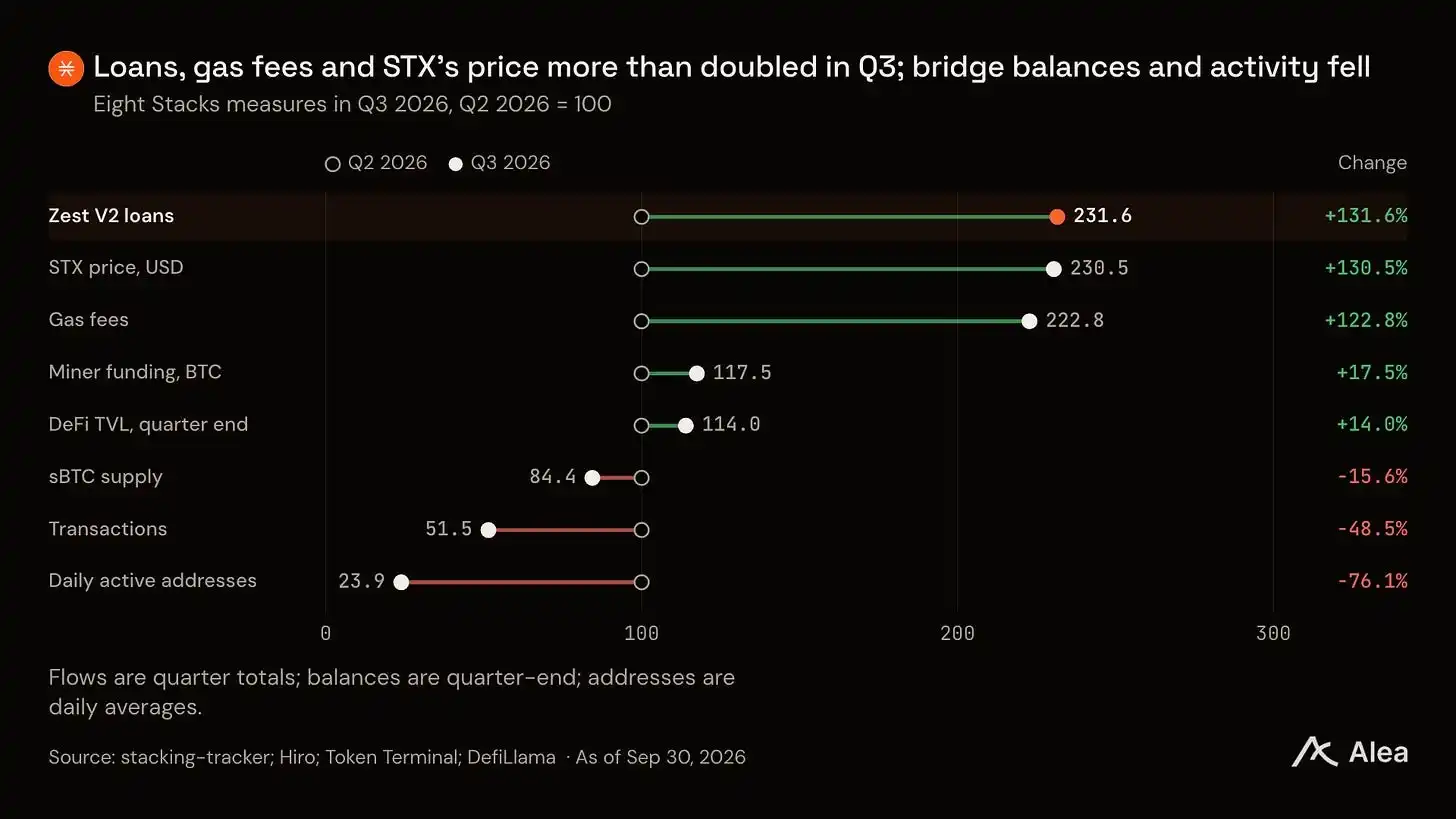
After the PoX-5 consensus mechanism restored a 1,000 STX block reward per tenure on July 30, total miner bids rose 17% from the prior period to 24.15 BTC.
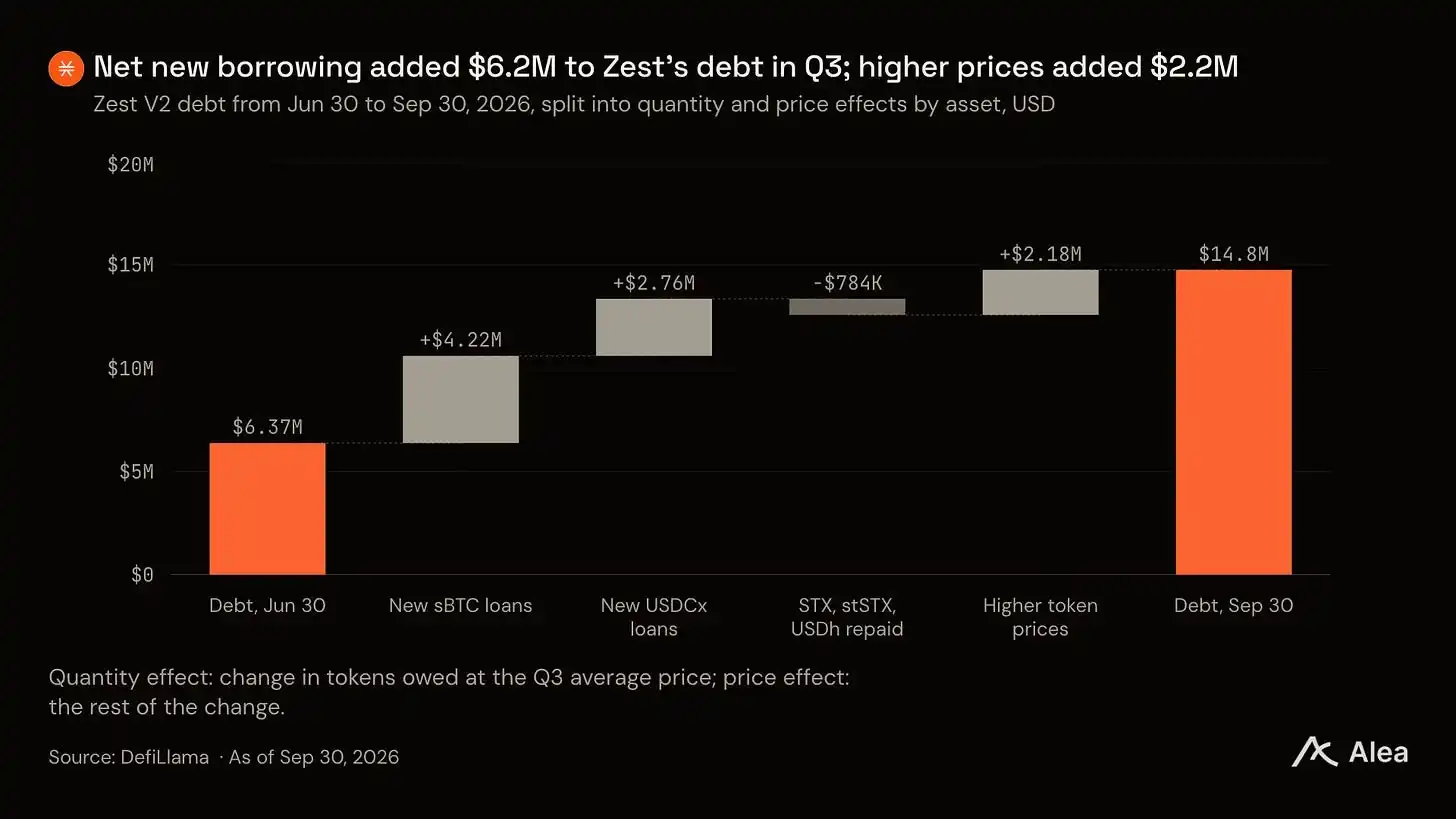
Zest V2’s outstanding loan book jumped 132% in the third quarter to $14.75 million. By the end of the quarter, it accounted for 81% of DeFi total value locked on Stacks.
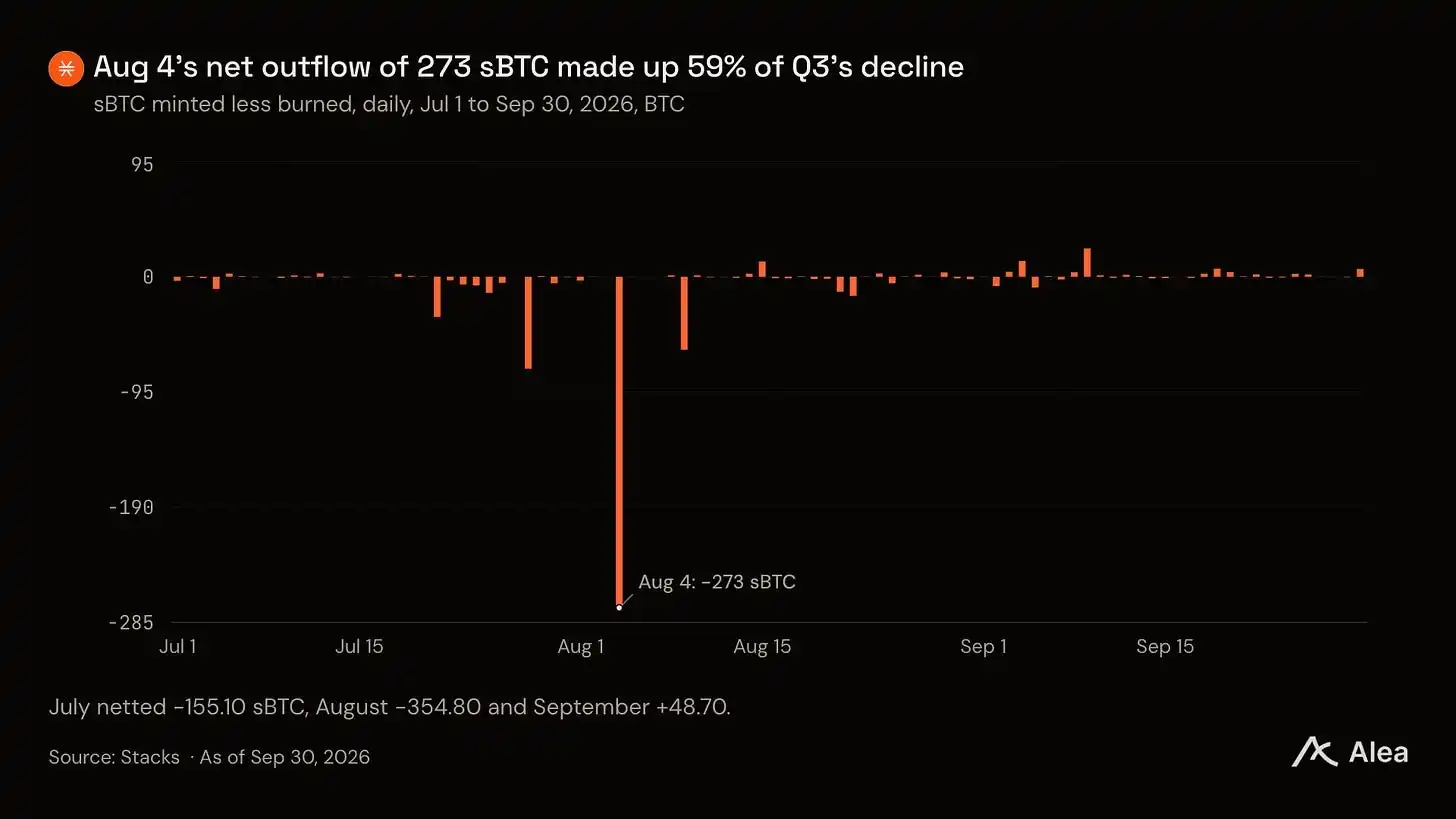
sBTC circulating supply fell 15.6% in the third quarter to 2,487 BTC. One day alone, Aug. 4, represented 59% of the quarter’s total burn-driven decline.
Since the June 30 close, STX gained 61.5% against BTC. After Binance added a monitoring tag for STX on July 24, the pair fell to a quarterly low of 185 sats on Aug. 19 before rebounding.
How the miner pool pays bondholders first
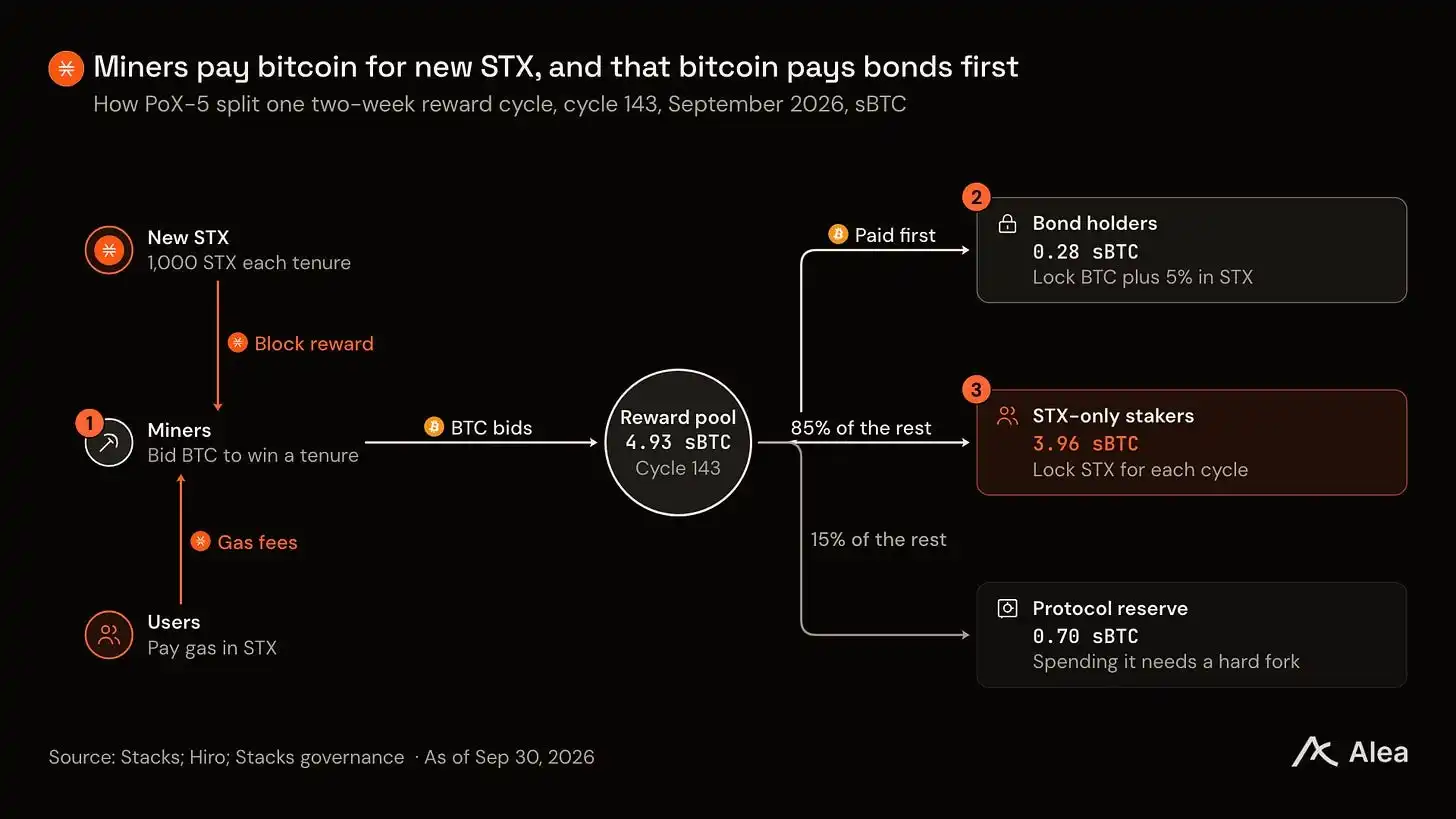
Under PoX, miners bid BTC to win the right to produce Stacks blocks and receive 1,000 newly issued STX per tenure. Those bids form the reward pool for each cycle.
SIP-045 gives bondholders first claim on interest payments. Of the remaining funds, 85% goes to standard STX stackers and 15% is directed to the protocol treasury reserve.
A bond with a face value of 1 BTC requires STX collateral worth 0.05 BTC. The term is six months, the target yield is 3% annualized and paid in BTC, and distributions are split into 24 equal weekly payments.
Holders can place BTC in a native Bitcoin timelock contract or stake sBTC directly. In cycle 143, the total reward pool was 4.93 sBTC. Bonds used 0.28 sBTC, pure STX stackers received 3.96 sBTC, and the protocol reserve took 0.70 sBTC.
Capacity model points to 2,534 BTC at Sept. 30 pricing
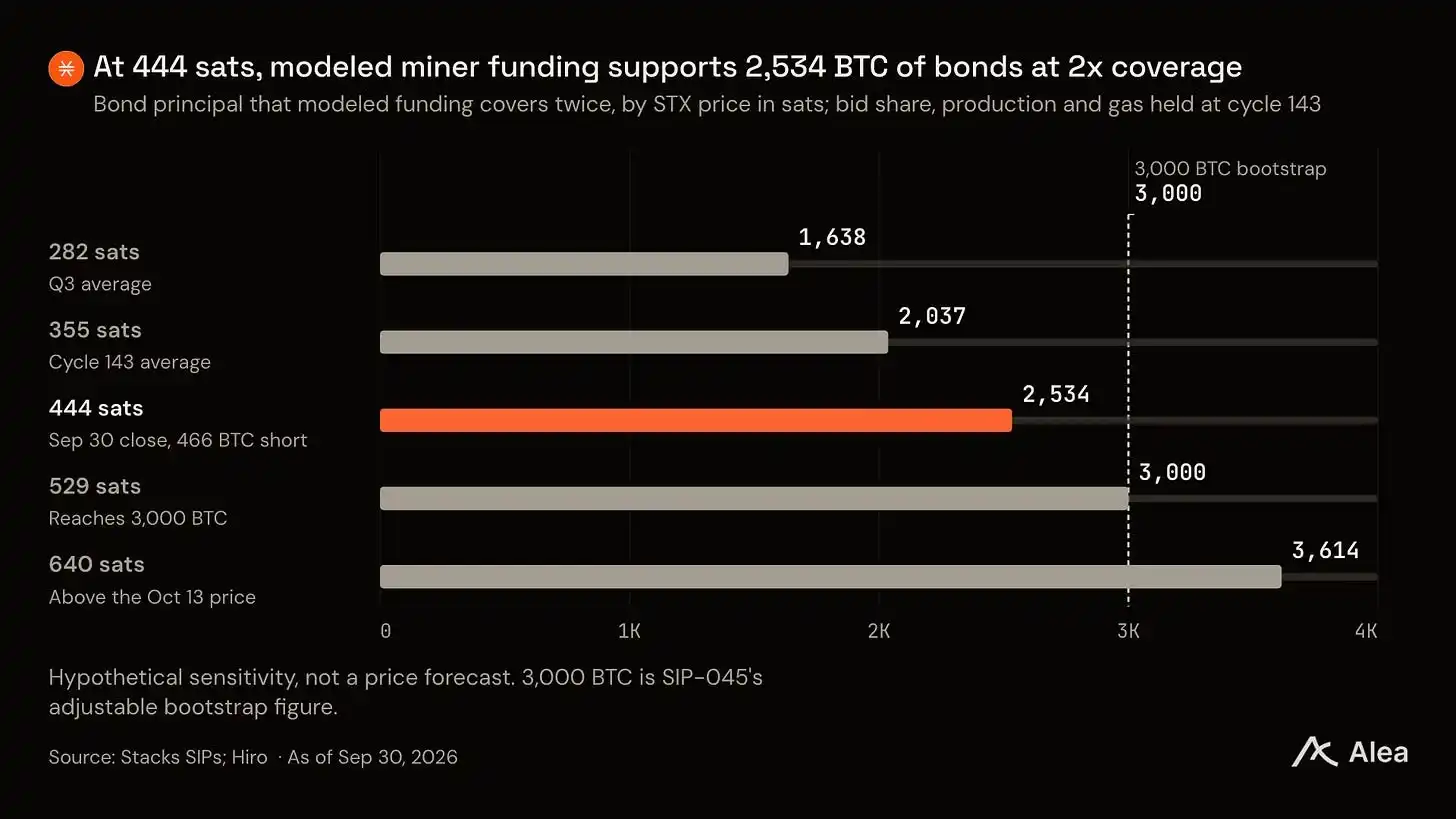
The report says bond capacity depends directly on the STX/BTC exchange rate in sats because miners pay in native BTC to obtain STX rewards. If miners bid at 64.4% of the block reward value, a model using the Sept. 30 price of 444 sats produces 6.08 BTC of funding supply every two-week cycle.
At a 2x safety coverage ratio, that amount would support total bond issuance of 2,534 BTC, or about 11 times the size of Genesis Bond. To reach the 3,000 BTC launch scale envisioned in SIP-045 at the same coverage level, STX would need to trade at about 529 sats.
Bond 2 was fully subscribed for its entire 505 BTC allocation on Oct. 12, locking more than 6.7 million STX. Together with Genesis Bond, that brought total BTC locked in bond structures to 735 BTC.
In cycle 144, which settled on Oct. 8, the funding pool distributed 7.73 BTC, up 58% from cycle 143. At a 2x coverage standard, that level of funding would support roughly 3,220 BTC of bonds.
Securitized BTC starts feeding lending and leverage
The liquid token stBTC launched on Sept. 3, and the first 150 BTC issuance sold out in less than 24 hours. Holders deposited the asset into the Zest lending market that same week as collateral.
Zest’s leveraged vault can turn 20 BTC of principal into about 92 stBTC of exposure. In the report’s framing, the same Bitcoin position can earn fixed bond income while also serving as a liquid asset for on-chain credit expansion.
Zest V2’s outstanding debt rose 132% in the third quarter to $14.75 million. Of the $8.38 million net increase, $6.2 million came from new borrowing and $2.18 million came from token price appreciation.
As of Sept. 30, lending made up 92.1% of Stacks’ $88.9 million in total DeFi TVL. Zest V2 alone represented 81%. Since launch, Zest has processed more than 1,500 liquidations without any bad-debt losses, according to the report.
sBTC supply stabilizes after a third-quarter decline
sBTC circulating supply fell 15.6% in the third quarter to 2,487 BTC. On Aug. 4, net burns reached 273 sBTC in a single day, equal to 59% of the quarter’s total outflow.
Supply turned positive in September, with a net increase of 49 sBTC, making it the only month in the quarter with net minting. In October, Bond 2 attracted 483 BTC through StackingDAO’s liquid staking route, which the report identifies as the main path for converting sBTC into bond exposure.
STX outperformed BTC by 61.5% in the quarter
In U.S. dollar terms, STX rose 130.5% in the third quarter, ahead of Bitcoin’s 42.7% gain, and ended the quarter at 444 sats.
Over the 90-day period through Sept. 30, STX posted a beta of 1.50 versus BTC, with a correlation coefficient of 0.53.
Next milestones: Bond 3, Stack Sats and Epoch 4.1
Bond 3 is planned for around Nov. 10 through StackingDAO, Xverse and Esbee DAO. In self-custody mode, the minimum single deposit will be 50 BTC.
The Stack Sats incentive program will continue through Dec. 10. Epoch 4.1 is scheduled for deployment in early December and will make Clarity 7 the default runtime for all new smart contracts.
By the end of the third quarter, the 230 BTC Genesis Bond had achieved 17.9x payout coverage, and Bond 2 filled its 505 BTC allocation within days. At current price levels cited in the report, the miner funding pool could support more than 2,534 BTC of bond issuance.



