

Bitcoin Magazine reported that the Starknet Foundation has completed what it called the first post-quantum-resistant Bitcoin transaction on Bitcoin mainnet. The transaction was mined this week and, according to the report, required no soft fork, no hard fork, and no upgrade to Bitcoin’s core protocol.
Damian Chen, vice president of growth at the Starknet Foundation, demonstrated the approach on Thursday at Bitcoin Asia in Hong Kong. He said the setup can be used to protect Bitcoin funds that could become vulnerable to future quantum attacks without requiring a network-wide fork.
Chen said, 「This is a monumental moment. This is the first post-quantum-resistant Bitcoin transaction on bitcoin mainnet today. It required no soft forks; it required no hard forks; it required no core protocol upgrades, and it’s live today.」
A method built around signature grinding
The transaction used a method created by StarkWare researcher Avihu Levy, according to the report.
The idea starts with how Bitcoin transactions are handled before confirmation. Transactions briefly sit in a public queue, and during that period they expose cryptographic material that a sufficiently powerful quantum computer could use to forge a signature and steal funds before confirmation.
Instead of accepting the first valid signature, Levy’s method generates millions of signature candidates until it finds one with a specific structural property. Bitcoin Magazine said that property prevents the vulnerable material from being exposed while the transaction is waiting in the mempool.
The process is described as signature grinding. It is intentionally computationally expensive, with a single transaction taking hours to produce. In the account presented by the report, that cost is part of what makes the method resistant to quantum shortcuts.
QSB pitched for institutional use
Chen referred to the approach as quantum-safe Bitcoin transactions, or QSB, and presented it as relevant for institutions. He said that even if an attacker had a fund’s private keys, that still would not be enough to carry out a fraudulent transfer.
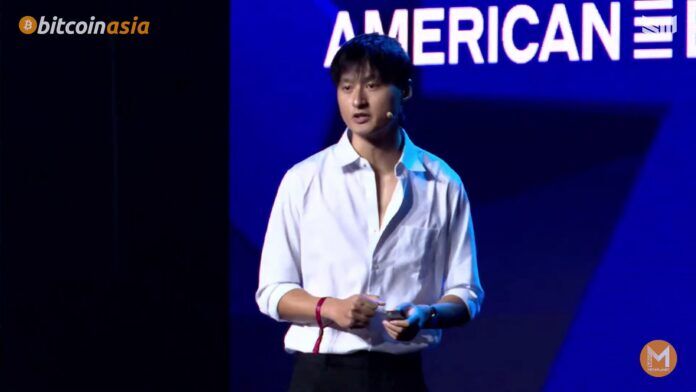
Chen said, 「QSB introduces a new hash authorization, and so an attacker with a sufficiently capable computer, even if they have your exposed public key, even if they derive your private key from your public key, even if they try to use that to authorize a spend to move your coins out of your wallet, those things are not enough for them to do so.」
Not recognized by standard nodes
Bitcoin Magazine noted that ordinary Bitcoin nodes do not currently recognize this non-standard transaction format. As a result, it could not be broadcast into the public mempool and instead had to be handed directly to a miner willing to accept it.
The QSB transaction was mined by MARA’s Slipstream service, the report said.
Broader debate over quantum risk continues
Quantum researchers have warned that Bitcoin software will eventually need upgrades to deal with quantum computing. The report said some crypto venture capital firms have urged action, while leading Bitcoin developers have argued that many of today’s quantum computers remain limited in capability and have so far demonstrated only trivial computations.
At the same time, those developers have said progress could arrive unexpectedly, much as advances in artificial intelligence did, and have started working on possible solutions.
Chen added, 「The question to me has never been when will quantum arrive. We all know quantum will arrive at one stage, but the question to me has always been, how long will it take for you to be ready when quantum does arrive?」
The article first appeared in Bitcoin Magazine and was written by Mathew Di Salvo.