
STRC De-pegging Accelerates: From 11% to 25% in One Week
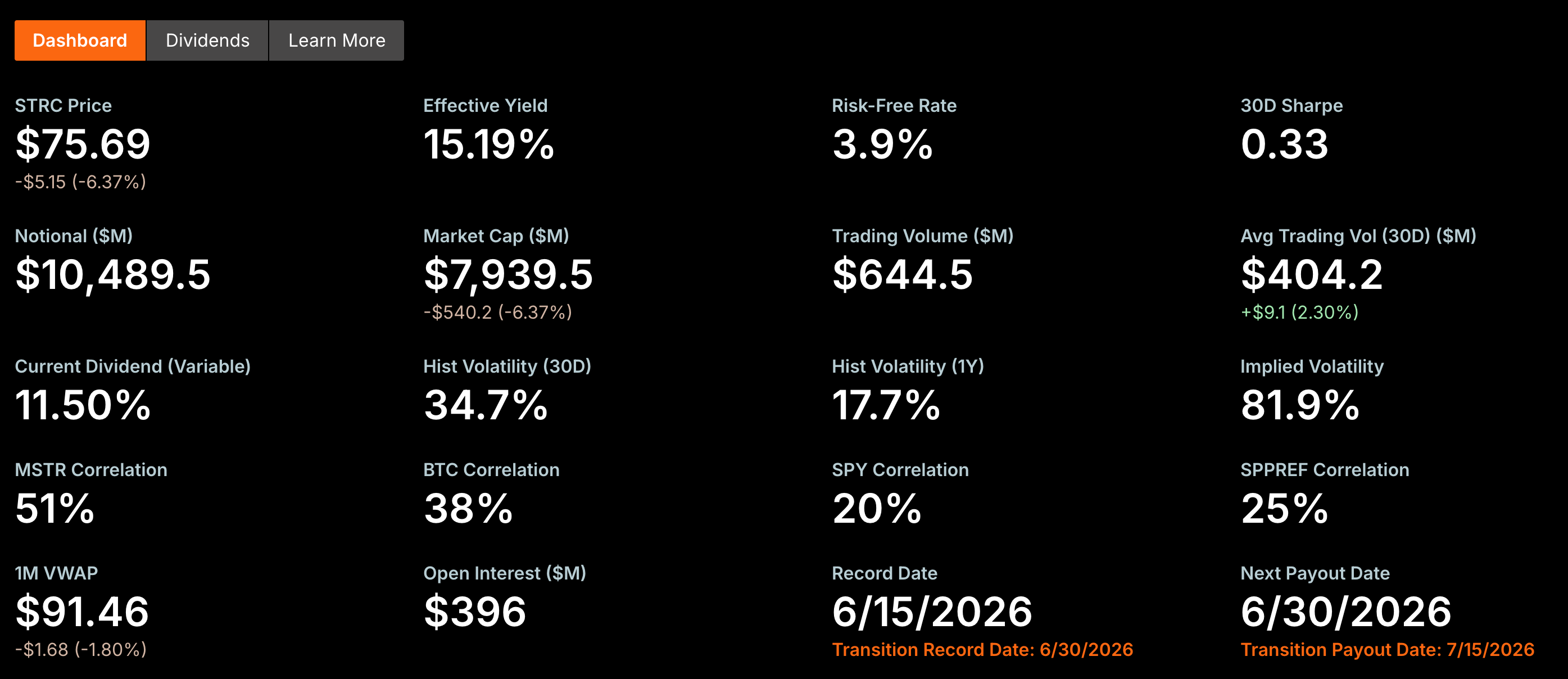
Strategy's perpetual preferred stock STRC has experienced a sharp devaluation, falling below $80 for the first time during yesterday's US trading session. The price hit a low of $73.62 before closing at $75.69, representing a nearly 25% discount from its $100 par value. This marks a significant acceleration from last week's 11% de-pegging level.
How STRC Functions as Strategy's Cheapest Funding Engine
STRC is the cornerstone of Strategy's business model, which relies on continuous market funding to purchase Bitcoin, then uses the growing BTC holdings to strengthen market expectations and sustain further funding. Unlike common stock (which dilutes shareholders) or convertible bonds (which create debt), STRC is a perpetual preferred stock with no maturity and no dilution of common equity holders. It only requires fixed dividend payments, making it the lowest-cost, most efficient funding tool. Michael Saylor once claimed STRC was "designed by AI, not humans."
The security was engineered to trade around $100 through dynamic dividend rate adjustments. As long as the secondary market price remains stable near par, Strategy can continuously issue new shares at near face value. However, once de-pegging persists—as seen now with secondary pricing at $75.69—no rational investor would participate in a new issuance at $100. Strategy must either raise the dividend rate to attract capital (already proven limited) or accept discounted issuance, both of which reduce funding efficiency.
Massive Dividend Burden: Over $1.2 Billion Annual Cash Drain
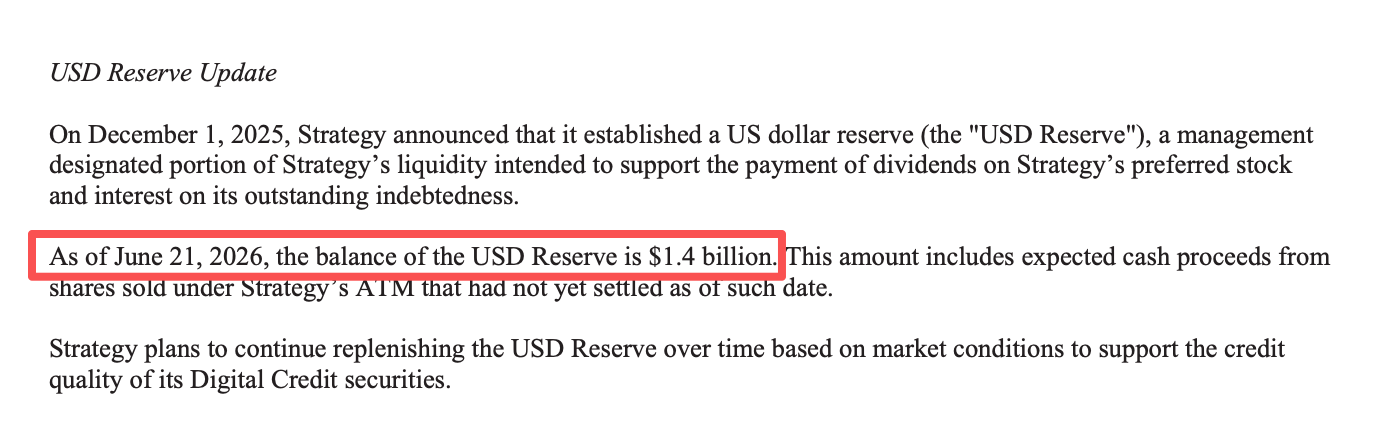
According to Strategy's latest official disclosures, total STRC outstanding has reached approximately $10.49 billion with a current dividend rate of 11.5%, equating to over $1.2 billion in annual cash dividend obligations. Including other preferred stocks (STRD, STRK, STRF), total annual preferred dividend payments rise to roughly $1.7 billion. In its June 21 common stock filing, Strategy reported cash reserves of about $1.4 billion—sufficient to cover less than one year of preferred dividends. Even if all new investments are halted, cash may be fully consumed within 12 months solely by dividend payments.
Three Financing Options and Their Costs
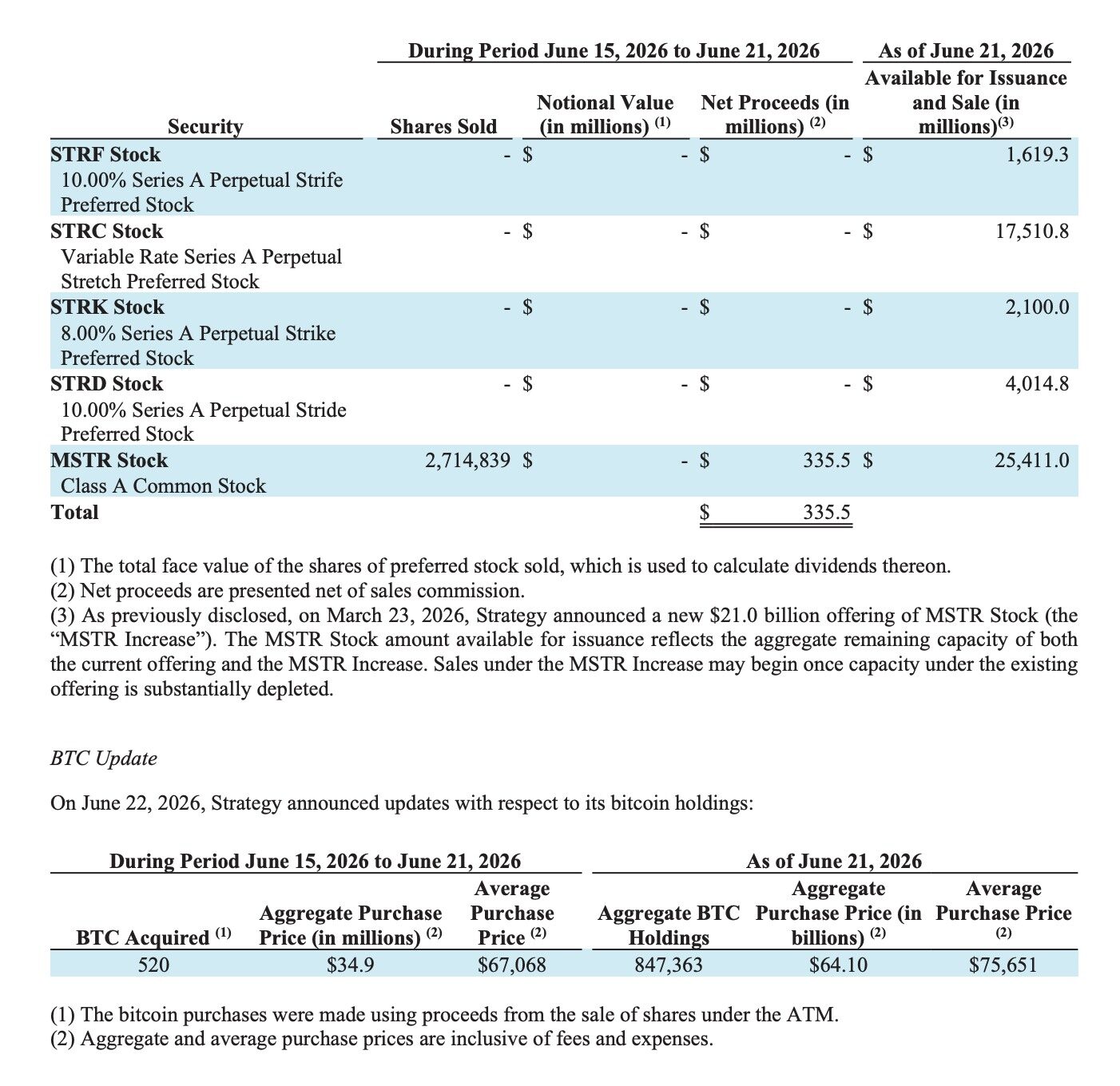
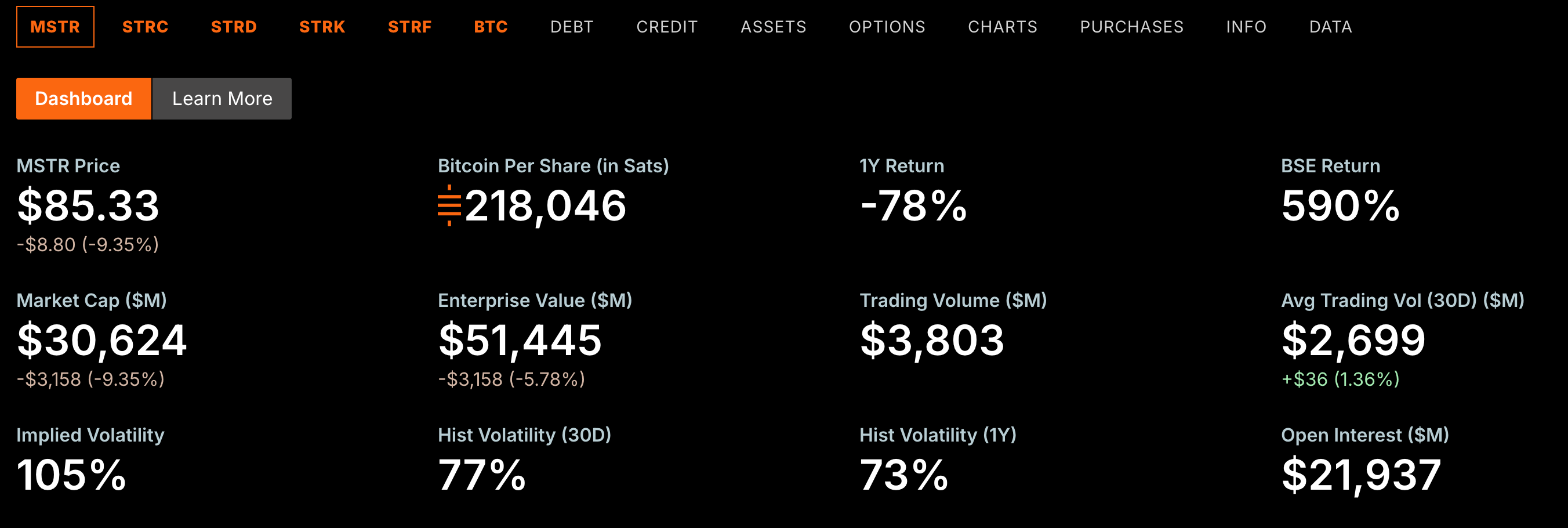
To address the cash crunch, Strategy has three theoretical paths. First, issuing common stock via its ATM program: the most direct method, but with significant dilution. The latest week's data shows Strategy sold 2,714,839 MSTR shares raising $335.5 million, yet only bought 520 BTC (worth $34.9 million), using the rest to replenish cash reserves. BTC per share has fallen from a peak of 220,900 sats to 218,046 sats.

Second, issuing more debt: while convertible bonds funded early BTC accumulation, expanding debt amid falling cash and rising dividends would increase financial burden and limit future flexibility. Third, selling BTC: the company claims its Bitcoin holdings can cover 32 years of dividends. However, selling just 32 BTC earlier this month triggered a sharp market drop. Further sales would crash BTC prices as Strategy holds 847,363 BTC (~4% of circulating supply).

Institutional Buying Dries Up: Bitcoin's Largest Marginal Buyer Turns Bearish
Strategy has historically been Bitcoin's most consistent institutional buyer. With the STRC channel blocked and common stock proceeds diverted to cash reserves, the net new buying pressure entering Bitcoin is shrinking. The same $335.5 million ATM raise now puts only ~$35 million into BTC versus potentially hundreds of millions before. If STRC fails to re-peg long-term, Strategy will rely on common stock dilution indefinitely, squeezing BTC allocation further. In a worst case, the company might be forced to sell Bitcoin, transforming from the largest marginal buyer into a potential seller—a sword hanging over the market.