
STRC De-Peg Worsens: Drops Below $80, Funding Channel Blocked
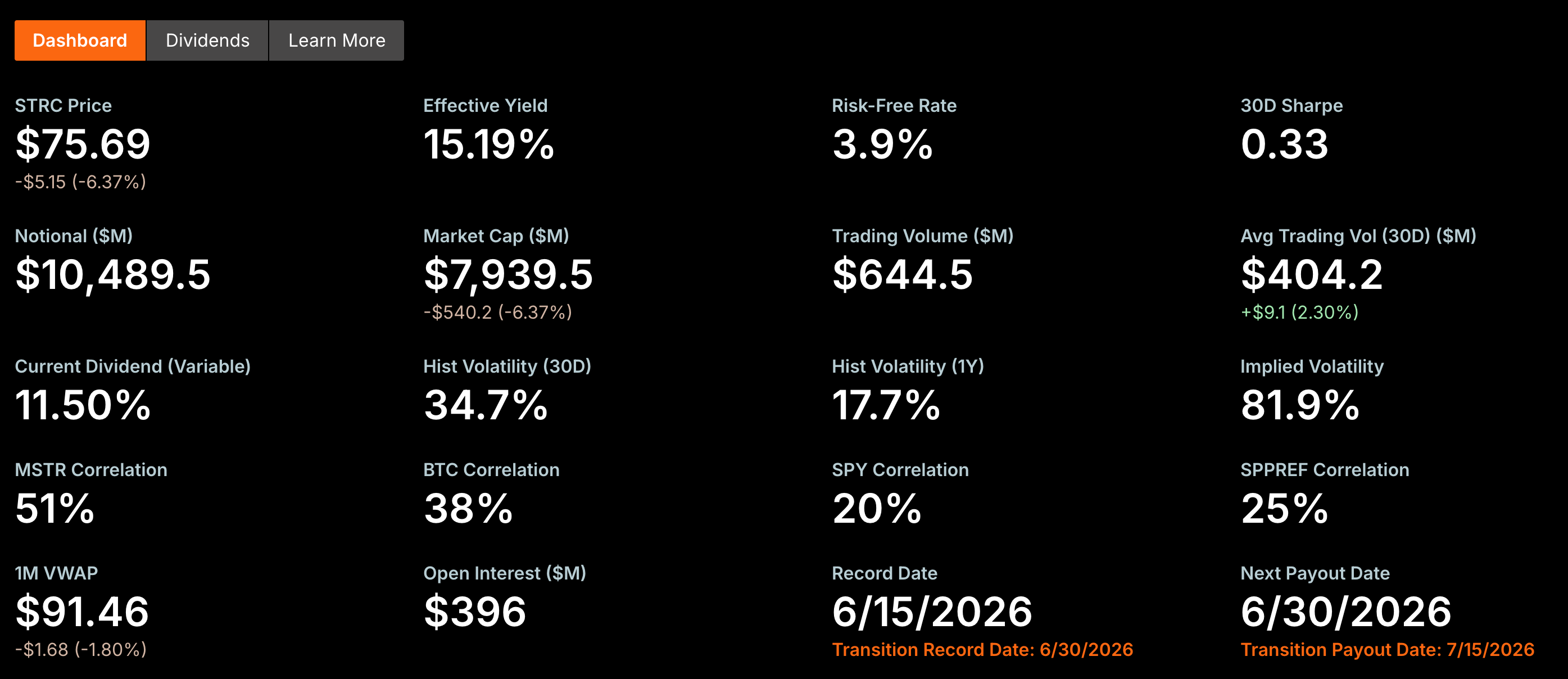
Strategy's preferred stock STRC is experiencing an unprecedented de-peg crisis. During U.S. stock trading yesterday, STRC fell below $80 for the first time, hitting a low of $73.62 before closing at $75.69 — nearly 25% below its $100 par value. Marketed by CEO Michael Saylor as an "AI-designed product," STRC is a perpetual preferred stock with no maturity, no dilution of common shareholders, and only fixed dividend payments. It was once Strategy's cheapest and most efficient fundraising tool. However, with the secondary market price far below par, investors have no incentive to subscribe to new issuances at near $100, effectively shutting down this funding channel.
Cash Dividend Pressure Mounts: Book Cash Covers Less Than One Year
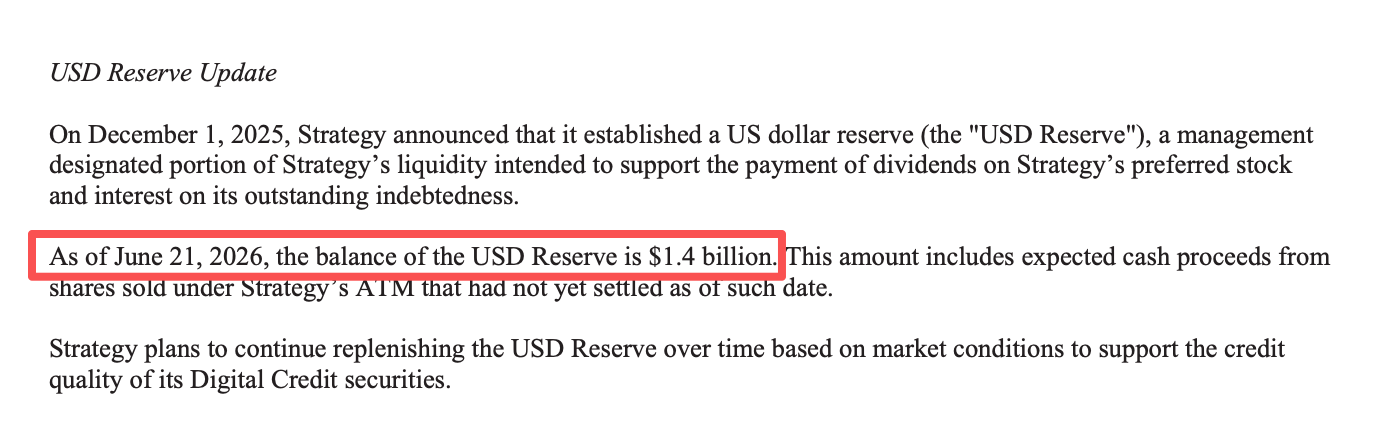
The immediate consequence of the de-peg is a crushing cash dividend burden. According to Strategy's latest disclosure, STRC issuance reached approximately $10.49 billion with a current dividend yield of 11.5%, representing over $1.2 billion in annual cash dividends alone. Including other preferred stocks (STRD, STRK, STRF), total annual dividend obligations climb to about $1.7 billion. Based on the company's June 21 common stock filing, cash reserves stand at only ~$1.4 billion — barely enough to cover one year of dividends. Without new capital, Strategy risks defaulting on dividend payments.
Three Funding Paths: The Dilemma of Common Equity, Debt, and BTC Sales
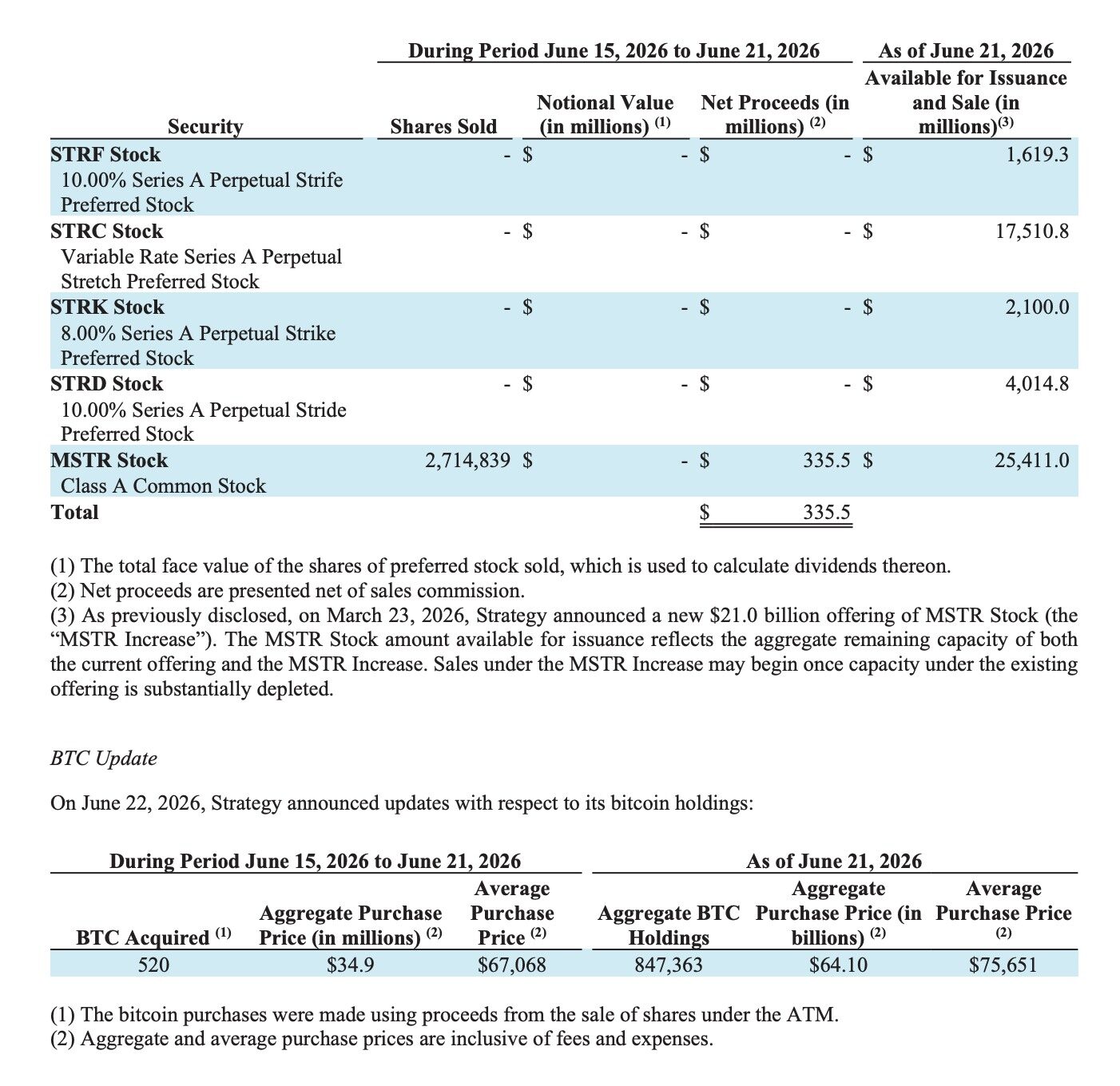
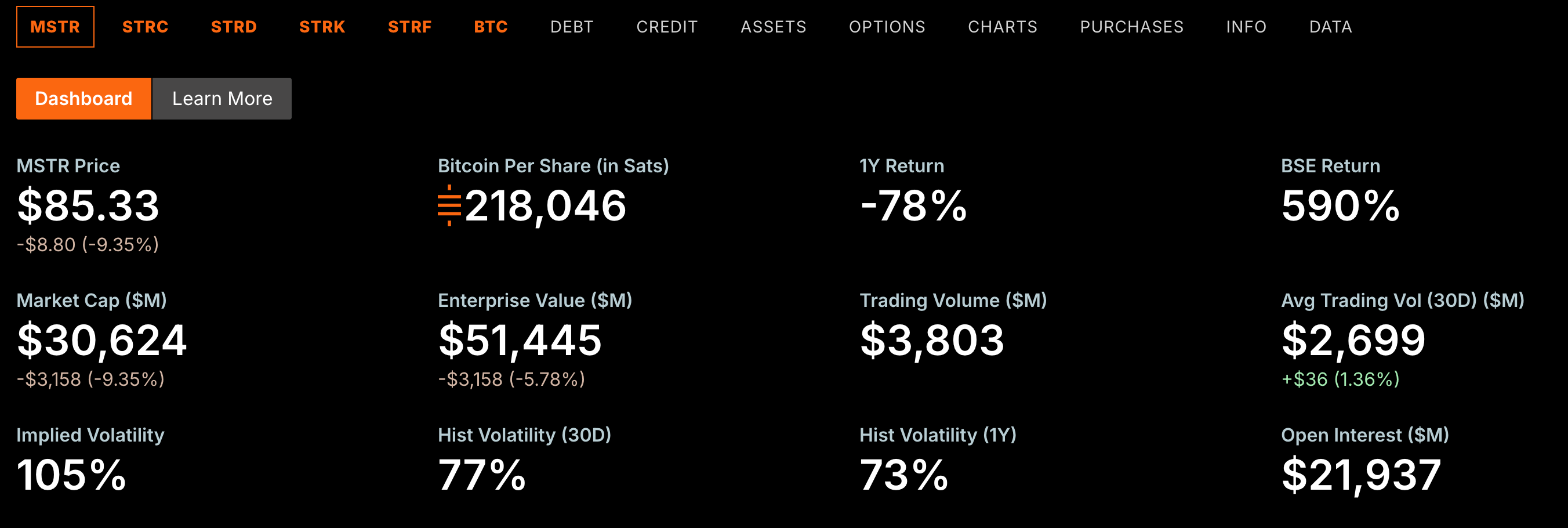
To address the cash crunch, Strategy has three theoretical options. First, issuing common stock via its ATM program. But continuous dilution erodes BTC per share, which has already dropped from a peak of 220,900 Sats to 218,046 Sats. If proceeds no longer flow into BTC, the market's core expectation of growing BTC equity per share is undermined. Second, issuing more debt. Bonds carry rigid repayment obligations; adding leverage amid heavy dividend pressure strains the balance sheet further. Third, selling BTC. This is the quickest way to raise cash, but any significant sale would trigger panic. Earlier this month, Strategy sold just 32 BTC (billed as a "market desensitization test"), causing a sharp short-term price drop. As the largest single holder of BTC with over 847,363 coins (~4% of circulating supply), any large-scale liquidation would devastate BTC prices.
Current Strategy: Common Stock Funding Fills Cash Gap, But Flywheel Logic Has Shifted
Recent filings show Strategy has pivoted to common stock ATM sales. In the week ending June 22, the company sold 2.71 million MSTR shares for $335.5 million, but bought only 520 BTC (costing $34.9 million). The remaining funds went straight to cash reserves. In other words, only ~10% of the raised capital entered the bitcoin market. The once-reliable flywheel of "raise → buy BTC → strengthen expectations → raise again" has fundamentally changed: funds are now prioritized for dividend payments rather than BTC accumulation. If STRC remains de-pegged long-term, Strategy will be forced to rely on common stock issuance, diluting per-share BTC value while reducing new buy pressure. Worst of all, if MSTR's premium collapses due to excessive dilution, Strategy may have no choice but to sell its BTC hoard. What was once the most steadfast marginal buyer could become a sword hanging over bitcoin's price.