
STRC De-Pegging Deepens, Breaks Below $80
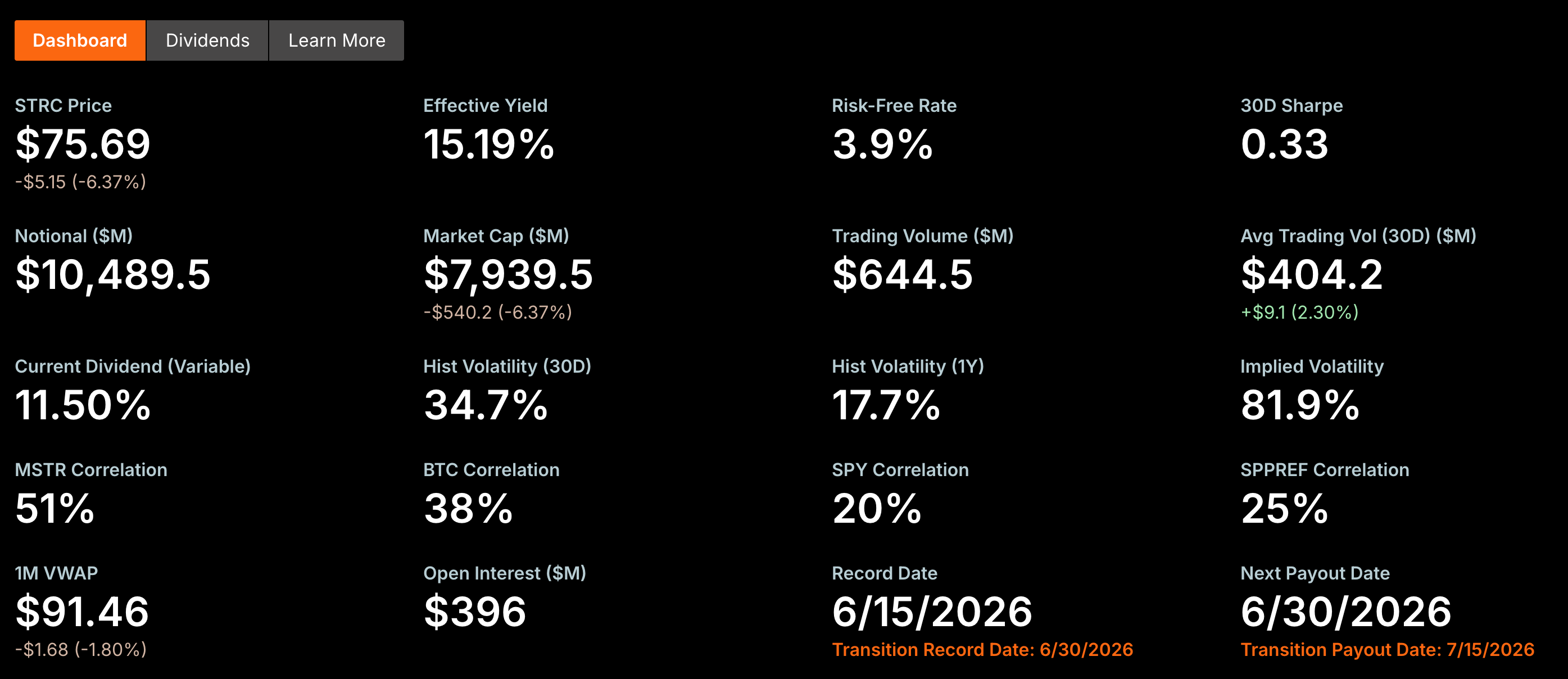
Strategy's preferred stock STRC is experiencing a severe price de-pegging. On June 26, STRC fell below $80 for the first time during U.S. trading hours, hitting a low of $73.62 and closing at $75.69 — nearly 25% below its $100 par value. Just a week earlier, the deviation was 11%, and the rapid deterioration has intensified market concerns.
STRC's Core Role: Strategy's Most Cost-Effective Financing Tool
STRC is a perpetual preferred stock with no maturity date, no dilution to common shareholders, and only fixed dividend payments. Strategy designed it to trade around $100 by dynamically adjusting the dividend rate. The original plan was simple: as long as the secondary market price stayed near $100, the company could continuously issue new STRC shares at close to par value, raising fresh capital to buy Bitcoin. STRC was the centerpiece of Strategy's flywheel — "raise → buy BTC → bolster expectations → raise again." Michael Saylor once boasted that STRC was "designed by AI; humans could not have created it."
Fatal Consequence of De-Pegging: Funding Channel Shuts Down
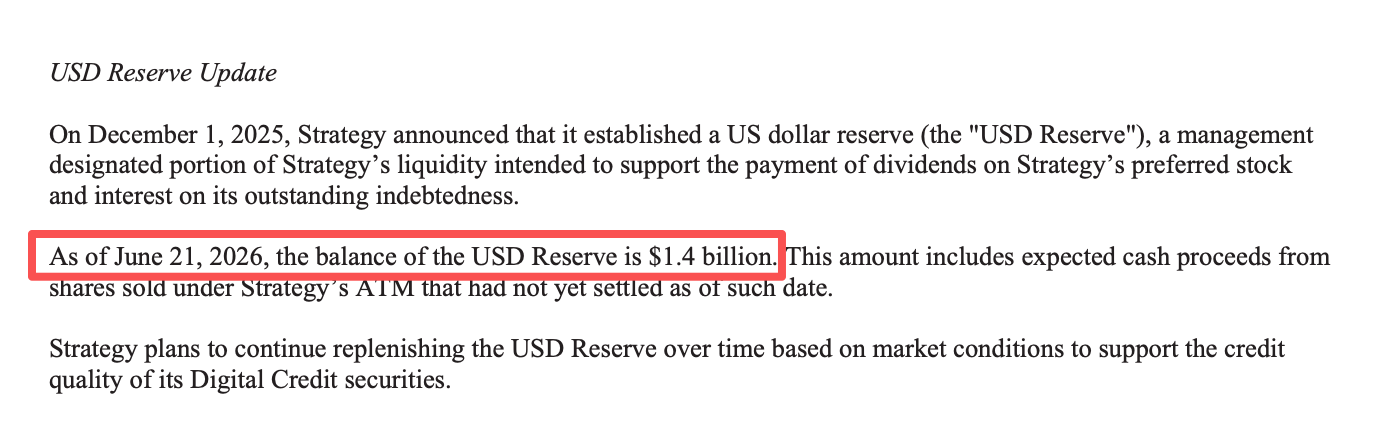
A sustained de-peg effectively kills this cheapest funding route. No investor would pay $100 for a new issue when the same security can be bought for $75 in the open market. Strategy can either raise the dividend rate sharply (which has limited appeal) or accept discounted issuance (breaking the $100 anchor). Either way, financing efficiency plummets. STRC issuance currently stands at approximately $10.49 billion, with a dividend rate of 11.5%, translating to over $1.2 billion in annual cash dividend obligations. Including other preferreds like STRD, STRK, and STRF, the total annual dividend burden reaches roughly $1.7 billion. Strategy disclosed cash reserves of about $1.4 billion on June 21, enough to cover less than one year of preferred dividend payments.
Three Ways to Raise Cash — All Costly
To sustain operations and avoid dividend default, Strategy has only three options, each with trade-offs. First, common equity issuance — selling MSTR shares via its ATM program. This dilutes BTC per share, especially if proceeds are used for cash reserves rather than BTC purchases. Second, issuing more debt — convertible bonds or other instruments impose fixed interest and principal repayment, adding financial strain given shrinking cash and rising dividends. Third, selling Bitcoin — the quickest way to replenish cash, but Strategy is the largest known corporate BTC holder (847,363 BTC, ~4% of circulating supply, worth over $50.7 billion). Any significant sale could trigger a market rout. Earlier this month, Strategy sold just 32 BTC (calling it a 'market desensitization test'), and the market saw a sharp short-term dip.

When Funding Becomes Life Support: MSTR's Buying Logic Is Reversing
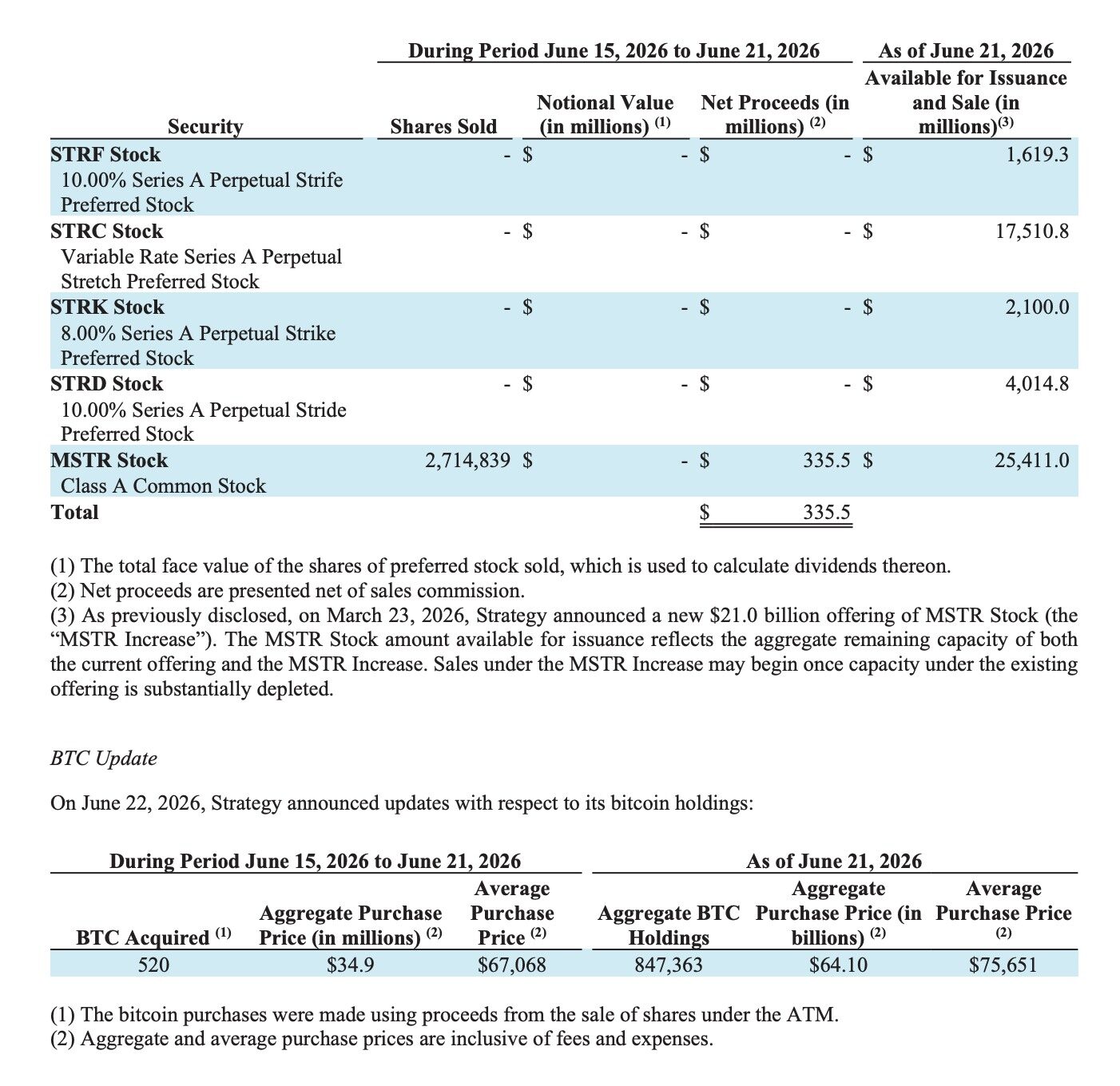
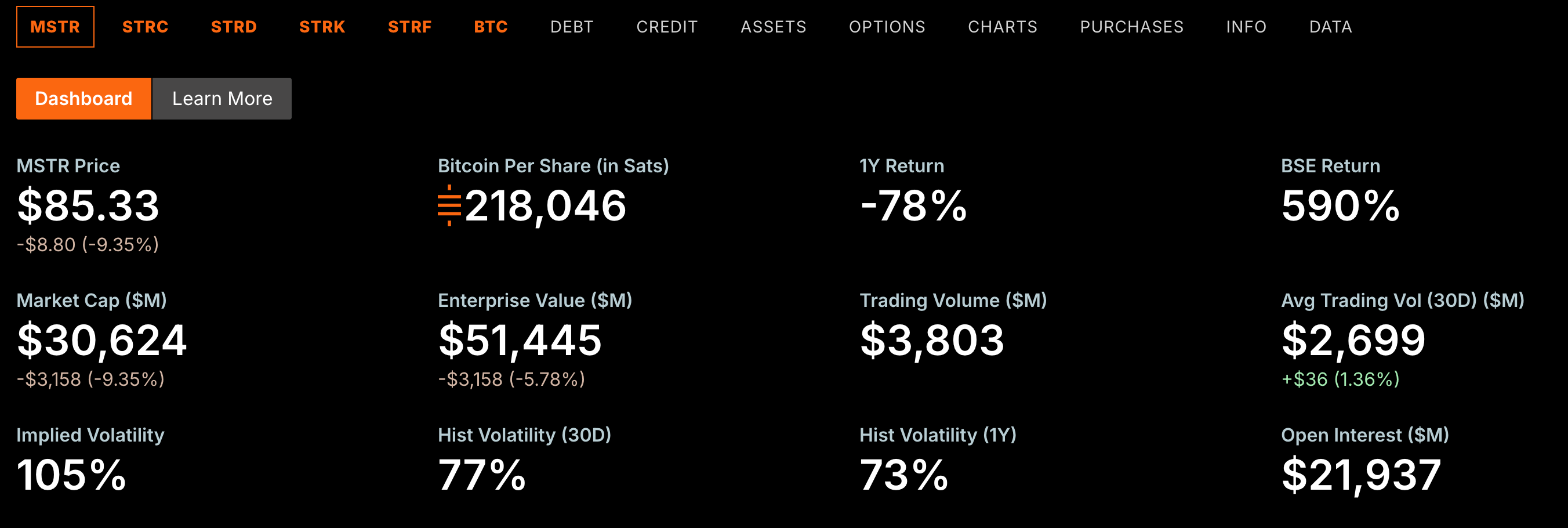
Based on recent filings, Strategy has opted for common equity issuance as the least disruptive route. In the week ending June 22, the company sold 2,714,839 MSTR shares via ATM, raising $335.5 million. Yet it only used $34.9 million to buy 520 BTC — roughly 10% of the proceeds. The rest went to bolster cash reserves from ~$1.1 billion to ~$1.4 billion. This pattern shows that Strategy is still raising capital, but the flow has shifted from 'buy Bitcoin' to 'buy time.' BTC per MSTR share has declined from a peak of 220,900 sats to 218,046 sats, diluting common shareholders. If STRC fails to re-peg for an extended period, Strategy will have to rely on common equity issuance for liquidity, further reducing the allocation to BTC purchases. In a worst-case scenario, severe dilution may force the company to sell Bitcoin. From the most consistent marginal buyer of Bitcoin to a potential seller, STRC's de-pegging is fundamentally altering the structure of institutional Bitcoin demand. If STRC cannot return to its $100 anchor, the era of relentless Bitcoin buying by Strategy may be over.