

STRC Breaks Below $80, De-pegging Approaches 25%
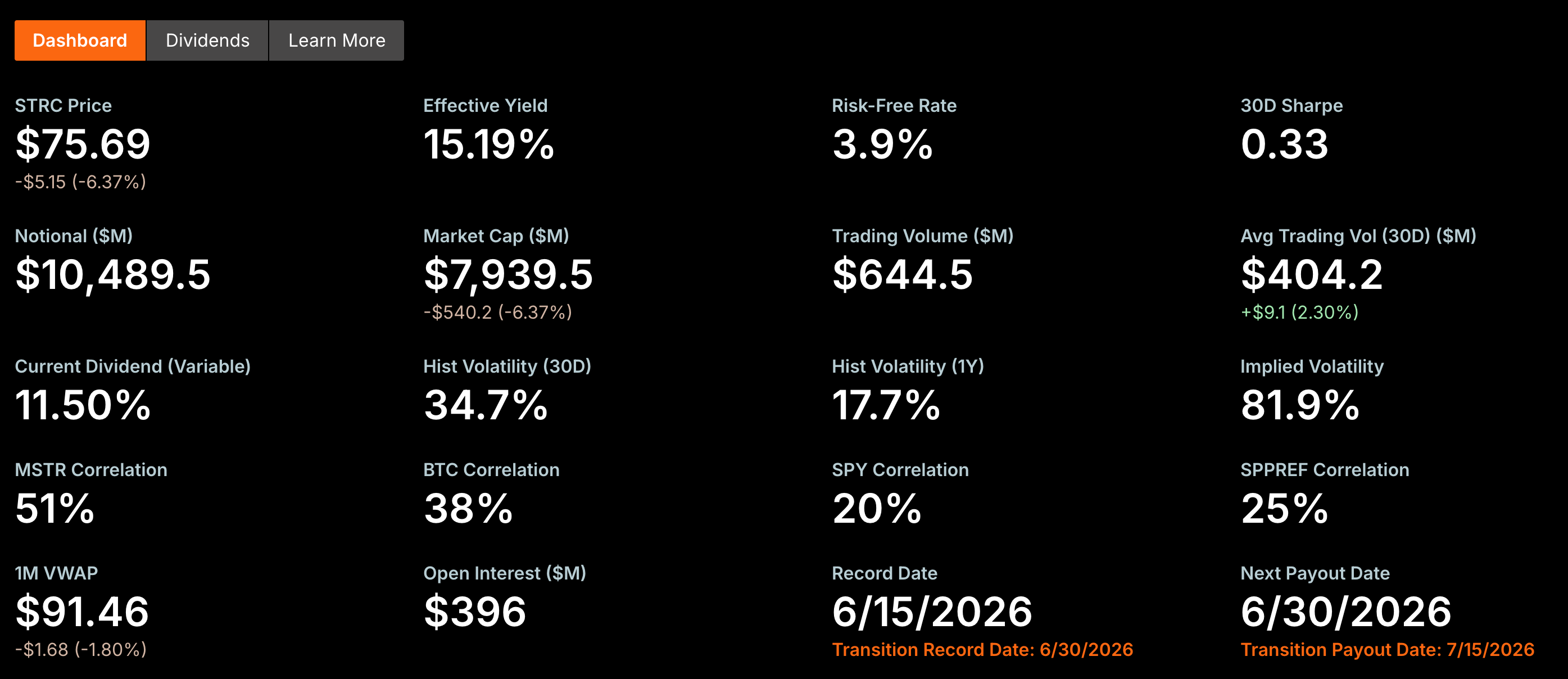
Strategy's perpetual preferred stock STRC continues its dramatic de-pegging. During Tuesday's U.S. trading session, STRC fell below $80 for the first time, touching a low of $73.62 before closing at $75.69. This represents a de-pegging of nearly 25% from its $100 par value. Just a week ago, the de-pegging was only 11%; the rapid deterioration signals a critical failure in Strategy's financing machine.
What is STRC? The Cheapest Funding Engine for Strategy
STRC is a perpetual preferred stock designed to provide Strategy with the most cost-effective and efficient capital. Strategy's business model relies on a continuous loop: raise funds, buy Bitcoin, use the growing BTC holdings to justify a higher stock price, then raise more funds. Unlike common stock, STRC does not dilute ordinary shareholders and has no maturity; it only requires fixed dividend payments. Michael Saylor once boasted that STRC was "designed by AI." The product was engineered to trade around $100 via adjustable dividend rates, allowing Strategy to issue new STRC near par value and channel proceeds into Bitcoin.
However, when the secondary market price falls persistently below $100, the financing channel becomes blocked. No investor would subscribe to new STRC at near $100 when they can buy in the open market at $75. Strategy's options—raising the dividend rate (which has proven unattractive) or accepting a below-par issuance (breaking the peg)—both result in significantly lower funding efficiency.
Cash Dividend Burden: Annual Payout Exceeds $1.2 Billion, Reserves Cover Less Than One Year
Beyond the financing channel problem, the real pressure comes from cash dividend obligations. According to official filings, total STRC issuance has reached approximately $10.49 billion, with a dividend rate of 11.5%, implying an annual cash dividend expense of over $1.2 billion. Including other preferred stocks such as STRD, STRK, and STRF, total annual preferred dividend payments climb to around $1.7 billion.
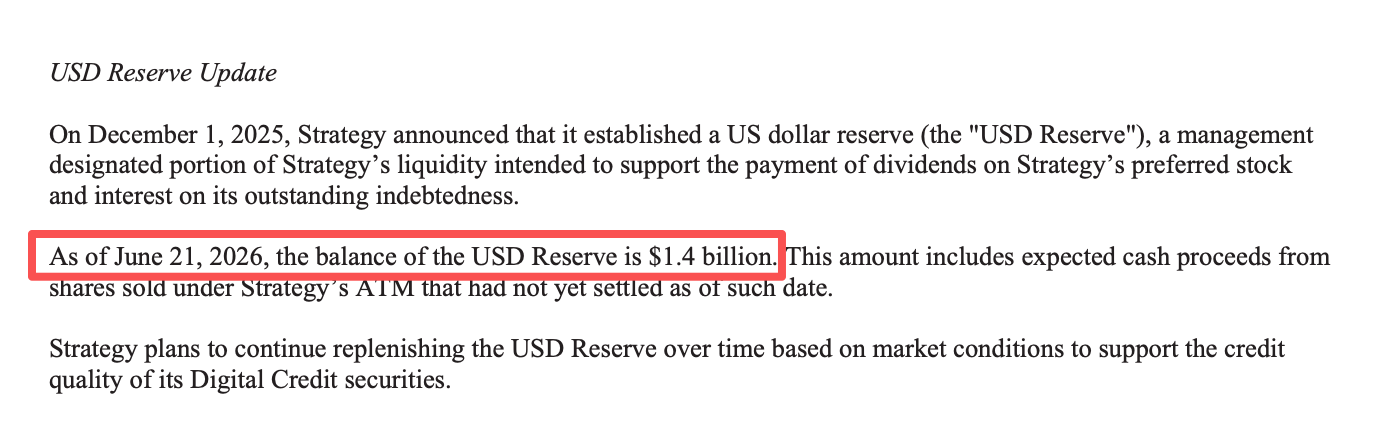
In a June 21 common stock offering filing, Strategy disclosed cash reserves of approximately $1.4 billion. At the current burn rate, these reserves would cover less than one year of preferred dividends. The company must continuously raise funds to avoid default.

Three Paths Forward: Dilutive Equity, Heavy Debt, or Selling Bitcoin
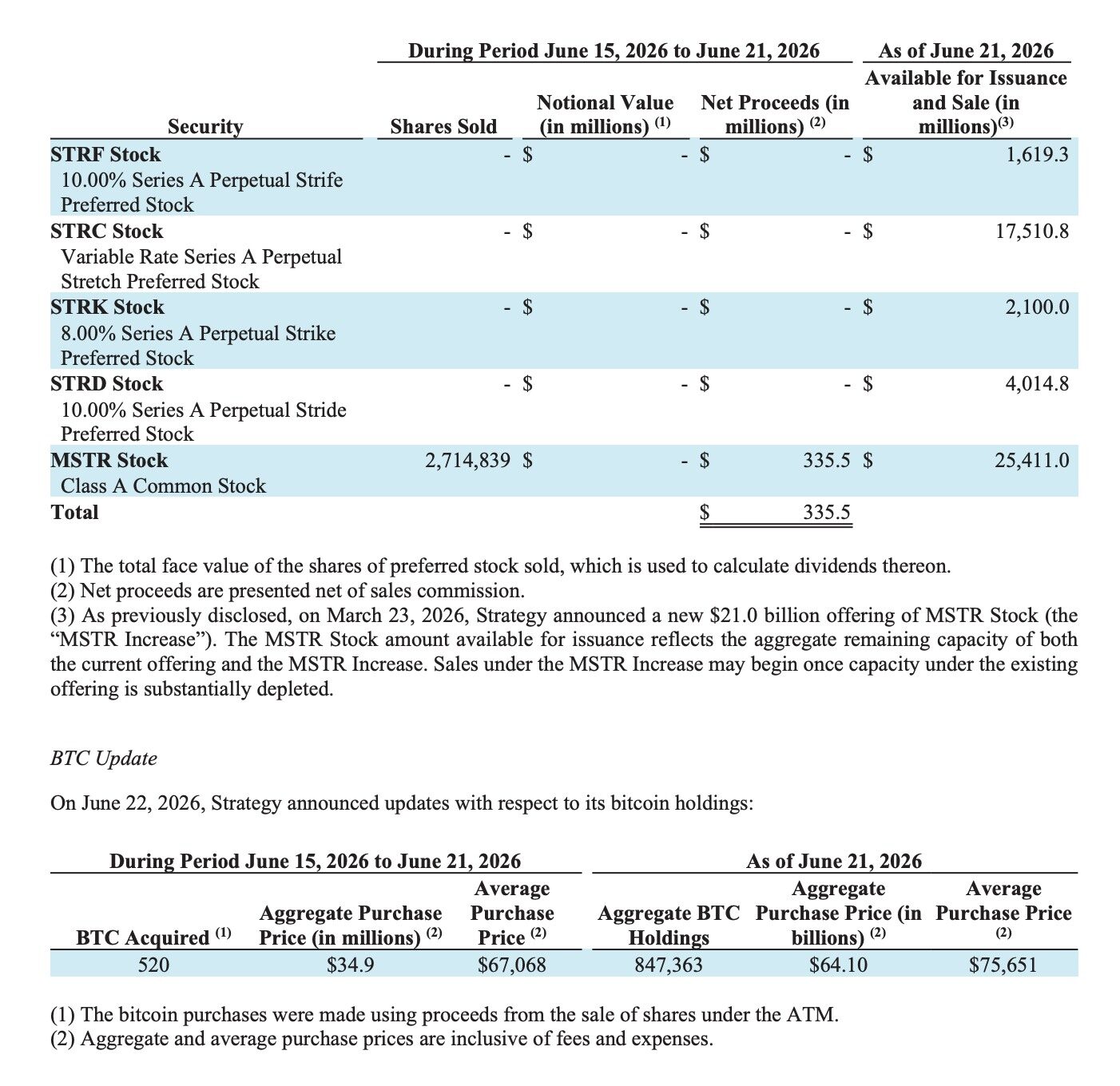
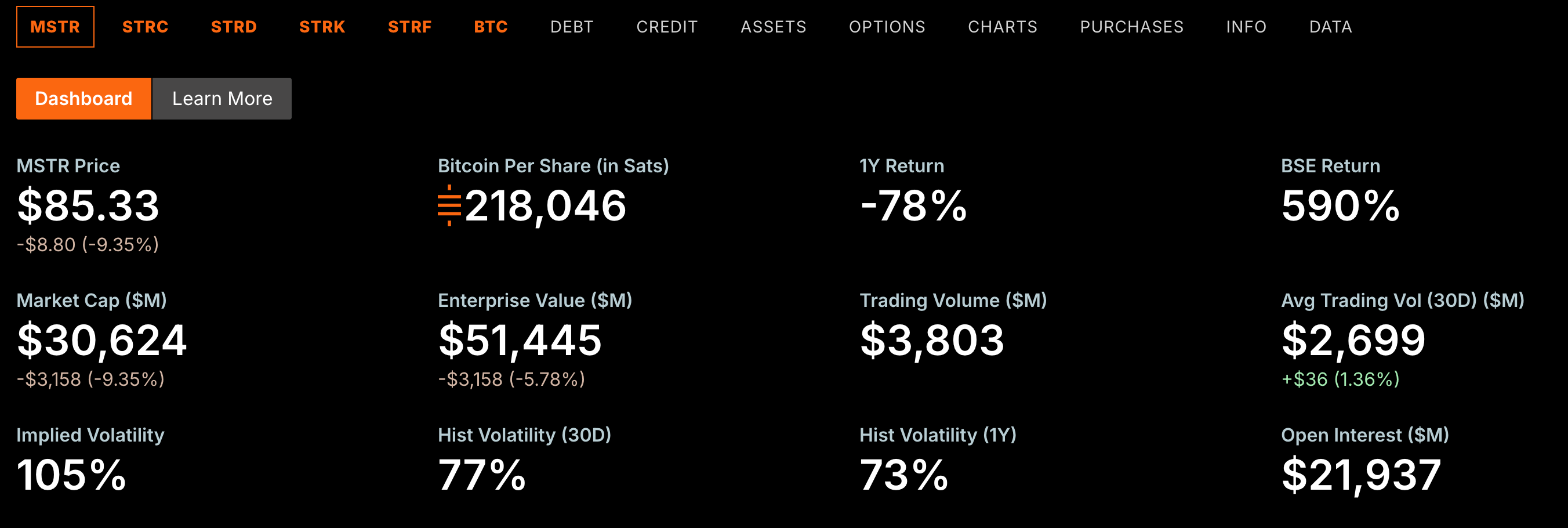
Strategy now has essentially three options. First, issuing common stock. Via an At-The-Market (ATM) program, Strategy can sell MSTR shares. While straightforward, this dilutes BTC per share. Official data shows BTC per MSTR share has fallen from a peak of 220,900 sats to 218,046 sats. If proceeds are used mainly to replenish cash rather than buy more Bitcoin, shareholder dilution will accelerate, undermining the premium that MSTR commands. Second, issuing more debt. With declining cash and rising dividend obligations, taking on more debt would increase financial leverage and compress future flexibility. Third, selling Bitcoin. This is the fastest way to raise cash but extremely dangerous. Earlier this month, Strategy sold 32 BTC in its first-ever disposal, citing a "market desensitization test." The sale triggered a sharp short-term drop in Bitcoin. As the largest corporate Bitcoin holder with 847,363 BTC (approximately 4% of circulating supply), any significant sell-off would severely pressure prices.

Current Move: Common Stock ATM Buys Time but Reduces BTC Purchases
Recent filings indicate Strategy has chosen the common stock route. In its latest 8-K filed June 22, the company sold 2,714,839 MSTR shares in one week, raising $335.5 million. However, only 520 BTC were purchased, costing $34.9 million—roughly 10% of the proceeds. The remainder was used to boost cash reserves from ~$1.1 billion to ~$1.4 billion. This means the same fundraising scale now channels far less buying power into Bitcoin.

If STRC fails to re-peg, the preferred stock channel will remain closed, forcing Strategy to rely on dilutive common stock offerings to cover dividends, further reducing capital available for Bitcoin purchases. For years, Strategy was the most consistent institutional buyer of Bitcoin; now it has become a sword of Damocles hanging over the market. The shift from diminishing buy-side to potential sell-side represents the most significant risk to the Bitcoin bull market narrative.