

STRC Continues to De-peg, Approaching $80
Strategy's preferred stock STRC has deepened its de-pegging. During US trading hours yesterday, STRC broke below $80 for the first time, hitting a low of $73.62 before closing at $75.69—a nearly 25% discount from its $100 par value. This is the most severe price deviation since STRC's issuance, following a previous 11% de-pegging just one week ago.
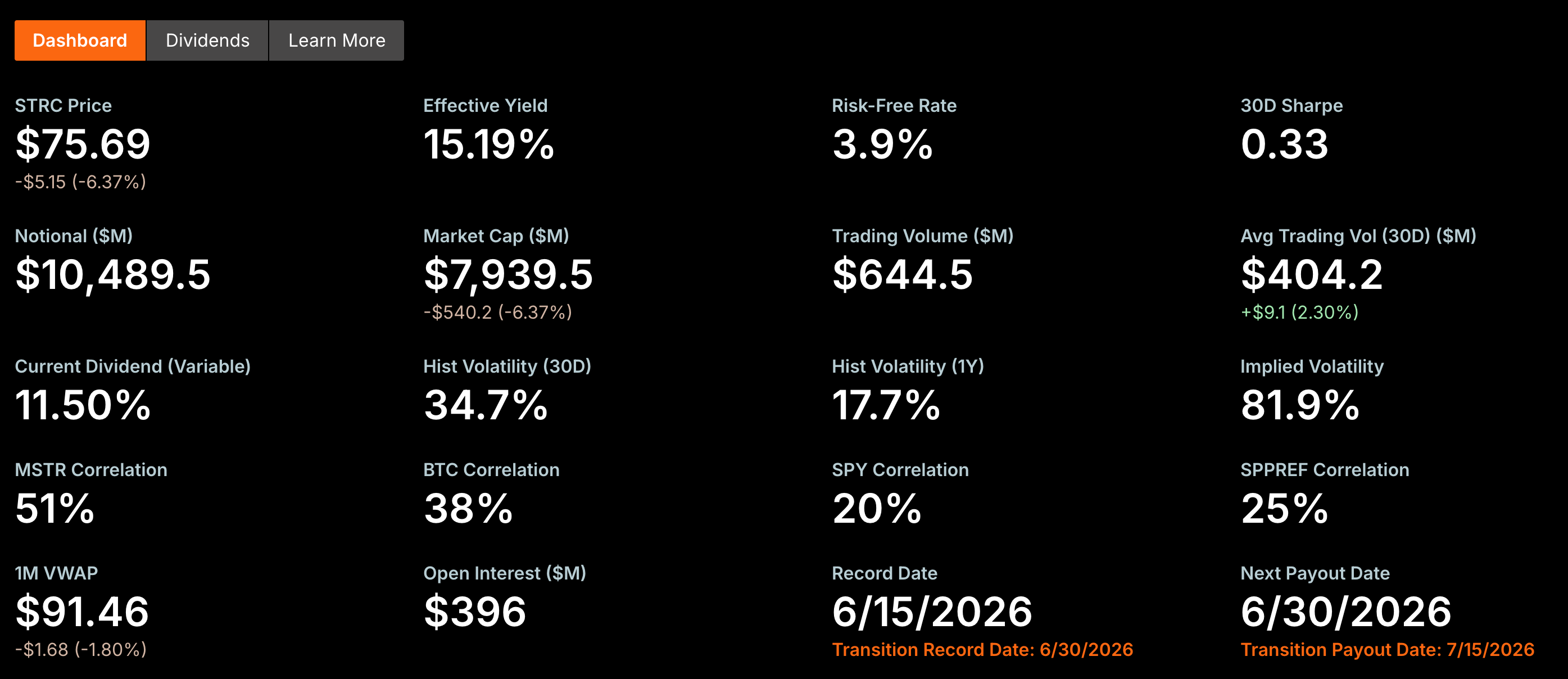
The decline is not an isolated event. Since its launch in 2025, Strategy attempted to keep STRC near par via dynamic dividend adjustments, but weakening demand for preferred shares and the company's mounting cash flow pressures have eroded secondary market liquidity, driving the price lower.
Why STRC Was Strategy's Best Funding Tool
As a perpetual preferred stock, STRC sits at the core of Strategy's business model: continuously raise funds to buy Bitcoin, then use growing BTC holdings to support future fundraising expectations—a virtuous flywheel. Compared to common stock (no dilution) and convertible bonds (no maturity repayment), STRC offers only fixed dividends, making it the cheapest and most efficient channel. Michael Saylor famously called STRC an "AI-designed product," highlighting its importance.
Ideally, STRC trades around $100, allowing Strategy to issue new shares near par and raise capital continuously. By the latest quarter, STRC issuance had grown to $10.49 billion, with most proceeds used to buy Bitcoin. This made Strategy the world's largest corporate Bitcoin holder.
STRC De-pegging Blocks the Funding Channel
STRC's core value is its ability to generate endless funding, but only if the price stays near par. With STRC at $75, no rational investor would pay $100 for new issuance. The channel is effectively blocked. Strategy has two options: raise the dividend rate to attract buyers (already at 11.5% and straining), or accept a discounted issuance (abandoning the target par). Both increase funding costs and reduce efficiency.
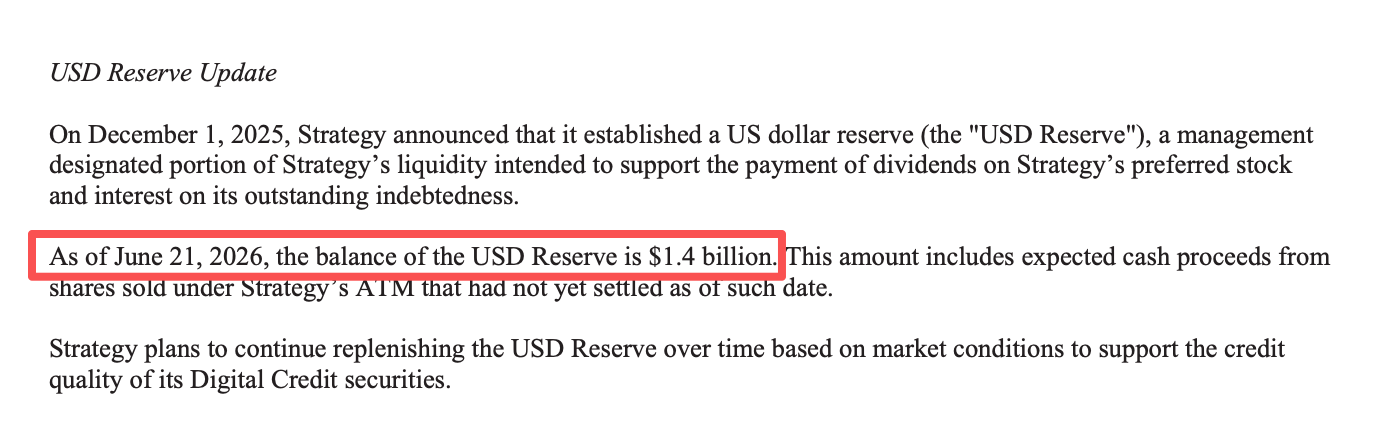
Worse, STRC's dividend obligations are massive. At $10.49 billion outstanding and an 11.5% annual dividend yield, STRC alone requires over $1.2 billion in cash per year. Adding other preferred stocks (STRD, STRK, STRF) pushes total annual dividend payments to approximately $1.7 billion. Strategy's cash reserve stands at only ~$1.4 billion (per the June 21 common stock filing), covering less than one year of preferred dividends. If STRC cannot resume fundraising, Strategy faces dividend payment default risk.

All Three Fundraising Paths Face Obstacles
Strategy has only three practical ways to raise cash:
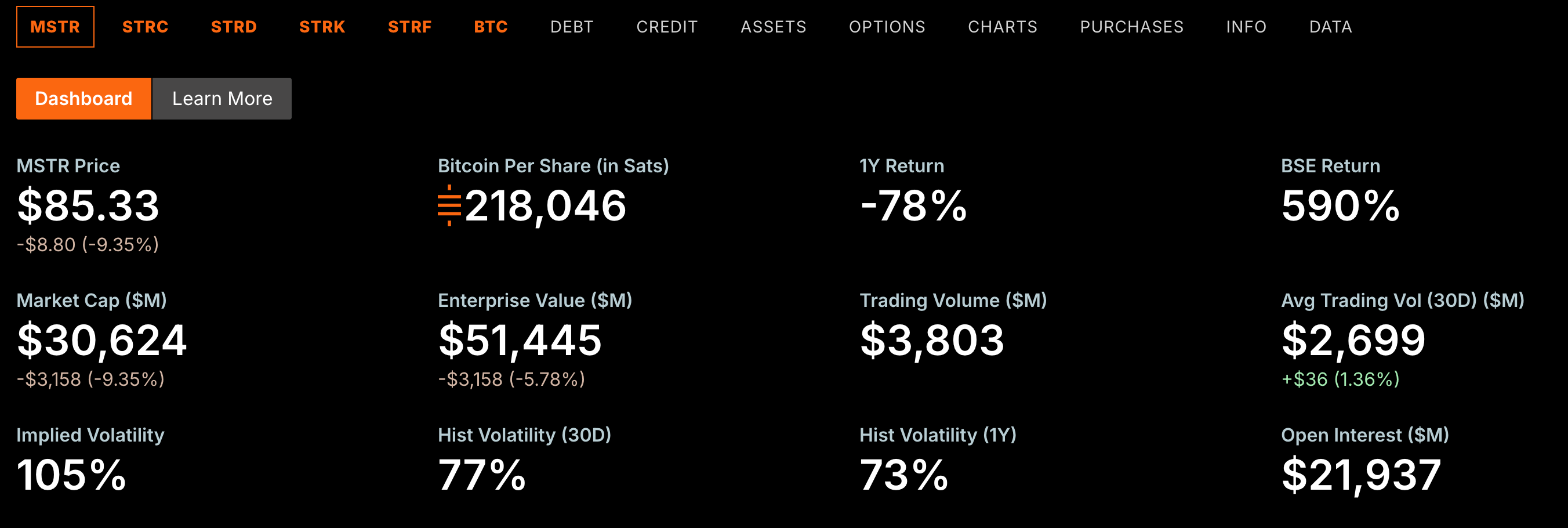
1. Issue common stock. Strategy is currently using an ATM program to sell MSTR common shares. But continuous dilution erodes BTC per share. Official data shows MSTR's BTC per share has dropped from a peak of 220,900 Sats to 218,046 Sats. If most new funds go to cash reserves instead of BTC purchases, BTC per share growth will stall or decline.
2. Issue debt. Strategy has used convertible bonds before, but debt carries rigid interest and principal obligations. With cash reserves shrinking and dividend payments rising, more debt would increase financial burden and limit future flexibility.
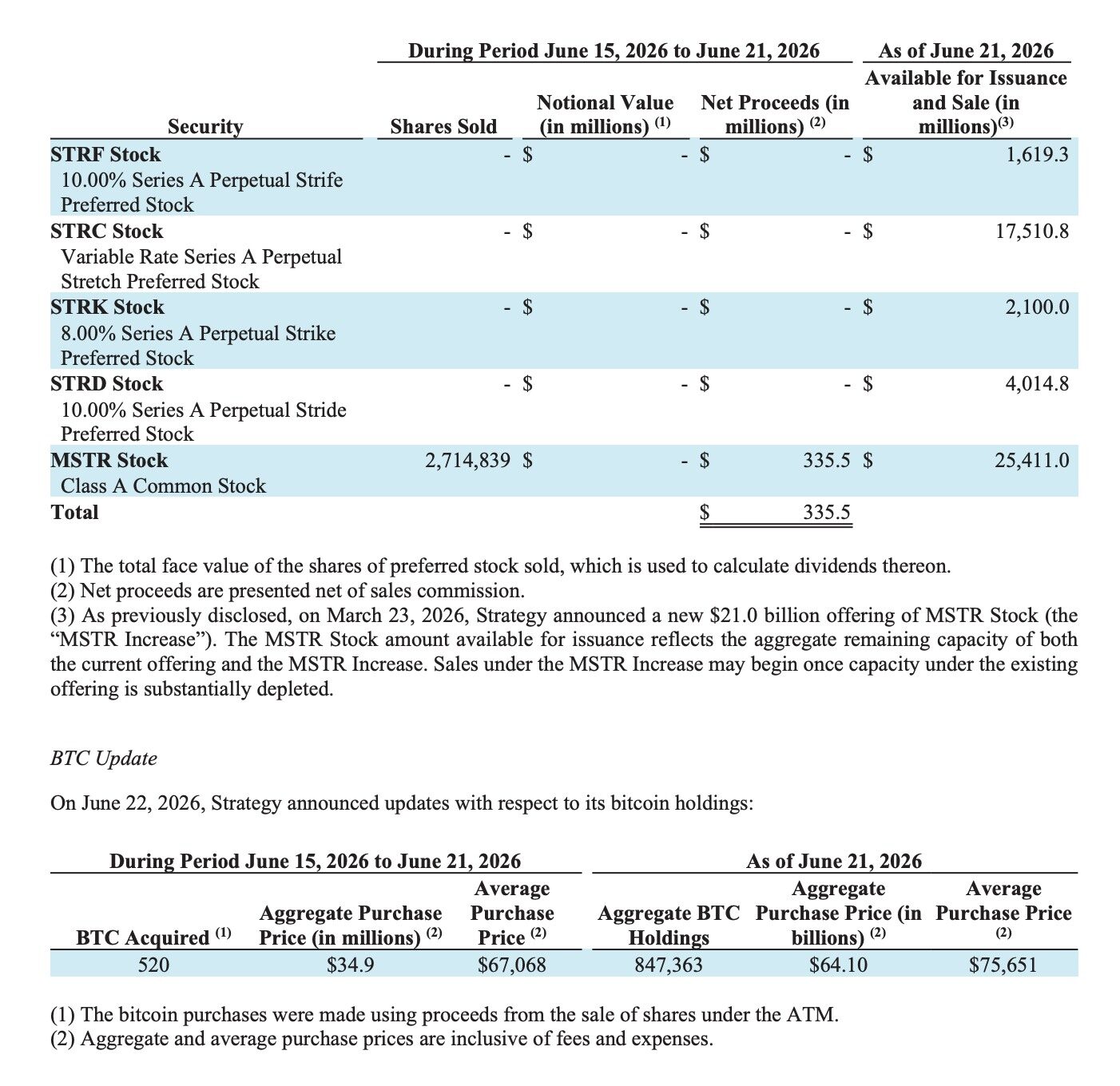
3. Sell BTC. The fastest way to raise cash. Strategy's official X account claimed its BTC hoard could cover 32 years of dividends, but selling even 32 BTC earlier this month caused a sharp market drop. As the largest single Bitcoin holder (847,363 BTC, ~4% of circulating supply, valued over $50.7 billion), any sell signal could trigger panic.

The Common Stock Trap and Bitcoin Market Crisis
Based on recent filings, Strategy has leaned toward common stock issuance. An 8-K filing on June 22 revealed that Strategy sold 2.7148 million MSTR shares in one week, raising $335.5 million. But it only bought 520 BTC for $34.9 million—just ~10% of proceeds went to Bitcoin, with the rest used to replenish cash reserves. The traditional "raise-buy" flywheel is breaking down.

When Strategy increasingly relies on common equity to plug cash gaps instead of buying BTC, the market's core expectation—continuous BTC equity growth for common shareholders—becomes unsustainable. The very foundation of MSTR's premium (rising BTC holdings) could weaken. If common stock dilution further depresses BTC per share, Strategy may even be forced to sell BTC. From diminishing buy-side power to potential sell-side risk, Strategy has transformed from Bitcoin's largest marginal buyer into a sword hanging over the market. Whether STRC can recover its peg will determine if that sword falls—and with it, the fate of the Bitcoin bull market.