

STRC Breaks Below $80, Depeg Reaches Nearly 25%
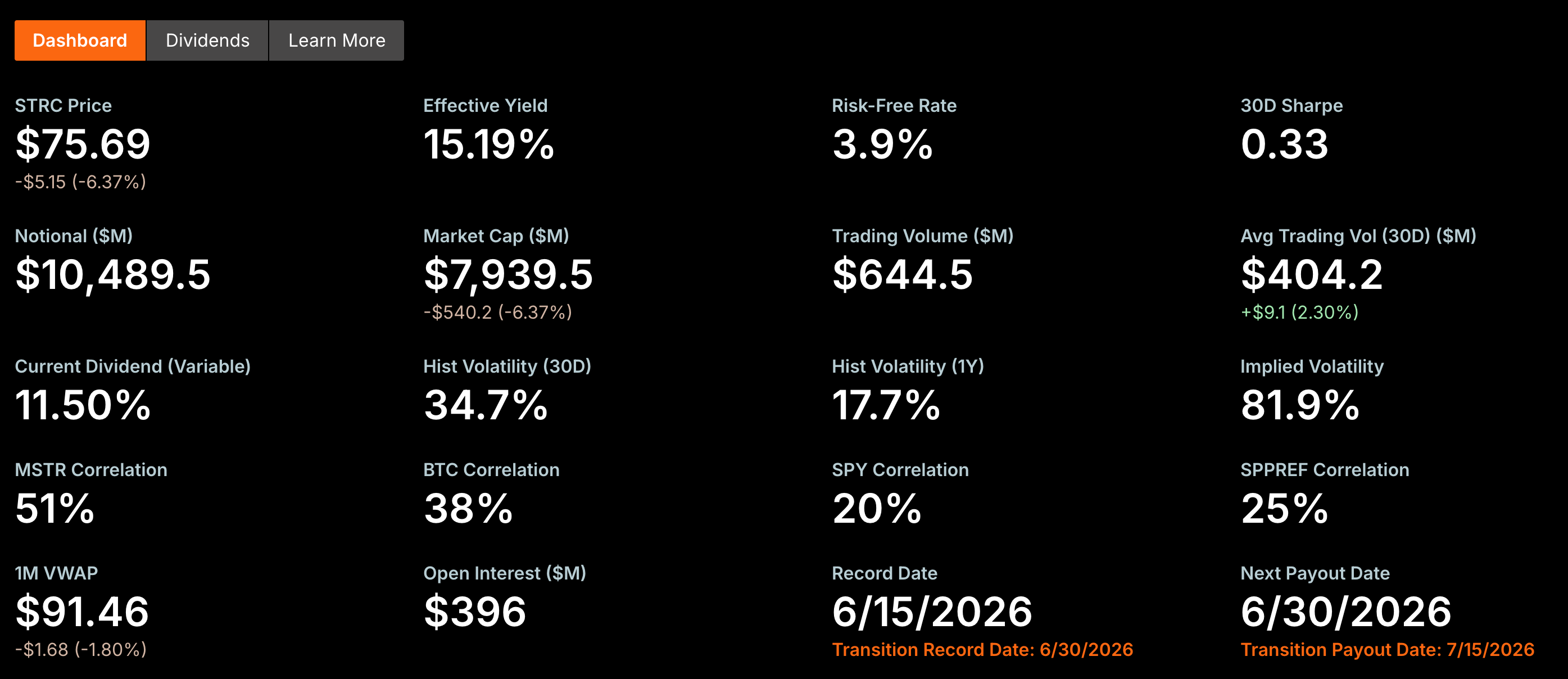
Strategy's preferred stock STRC continued its decline, breaking below $80 for the first time during Tuesday's U.S. stock session and hitting an intraday low of $73.62. Despite a slight recovery at close to $75.69, the price now stands approximately 24.3% below its $100 par value. This marks a sharp acceleration from last week's 11% depeg.
The rapid deterioration has far-reaching implications beyond Strategy's balance sheet. STRC was designed as the company's most efficient funding vehicle, and its malfunction threatens to break the positive feedback loop that has supported both Strategy's stock and Bitcoin prices for years.
STRC: Strategy's Cheapest Funding Pump
STRC is a perpetual preferred stock with no maturity date and no dilution of common shareholders. It only requires fixed dividend payments. Compared to issuing common stock (which dilutes equity) or convertible bonds (which add debt), STRC was hailed by Michael Saylor as an 'AI-designed perfect funding tool' — allowing the company to continuously issue new shares near par value and deploy all proceeds into Bitcoin.
The model relies on the secondary market price staying close to $100. When the price holds, Strategy can keep issuing new STRC at ~$100, creating a virtuous cycle: raise funds → buy Bitcoin → strengthen market expectations → raise more funds. STRC essentially acts as a perpetual motion funding pump: the market believes Strategy will keep buying BTC, so investors hold STRC for dividends, while the raised funds in turn support BTC price and reinforce confidence.
Depeg Kills the Funding Channel, the Pump Stalls
With STRC trading at $75, no rational investor would participate in a new issuance near $100 — buying in the secondary market is 25% cheaper. The funding function of STRC is effectively paralyzed. Strategy has two options: raise the dividend rate to attract capital (already proven ineffective at 11.5%) or accept discounted issuance (which means abandoning the par value anchor and further eroding confidence).
The blockage forces Strategy to seek more expensive funding sources, increasing financial costs and reducing the amount of BTC each dollar of funding can buy.
$1.7 Billion Annual Dividend Overhang, Cash Covers Less Than a Year
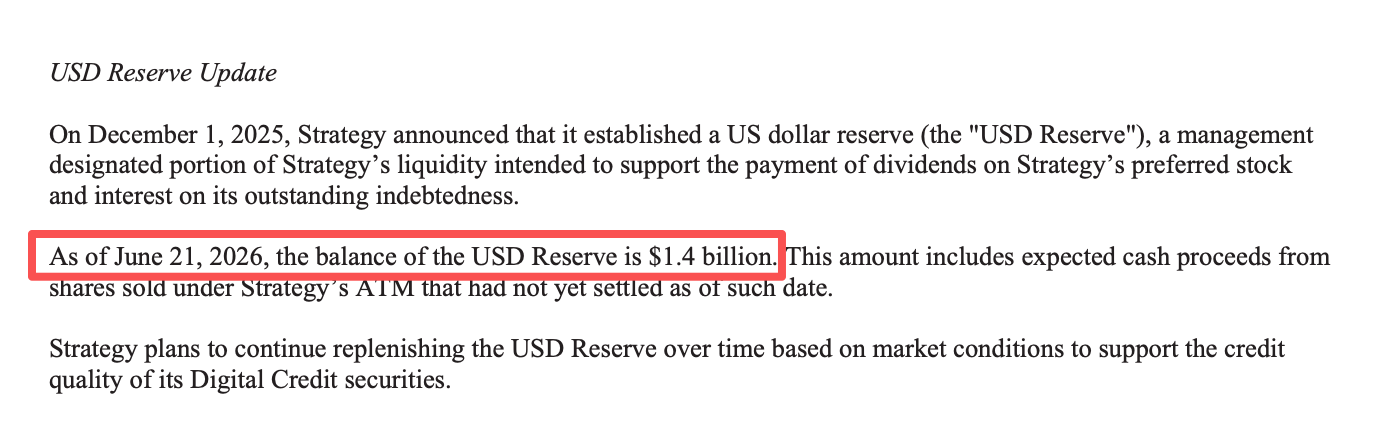
STRC's outstanding issuance has reached approximately $10.49 billion, bearing an 11.5% annual dividend rate — over $1.2 billion in cash outflows per year. Adding other preferred stocks (STRD, STRK, STRF), Strategy's total annual preferred dividend obligation stands at about $1.7 billion. According to the June 21 common stock filing, the company held roughly $1.4 billion in cash — enough to cover less than one year of dividends.
Even if Strategy stops all new Bitcoin purchases, its cash reserves would be depleted by dividends within 12 months. Without new funding, the company faces dividend default, which would permanently destroy STRC's market credibility.
Three Rescue Paths — Each a Double-Edged Sword
Strategy has only three viable options to raise cash:
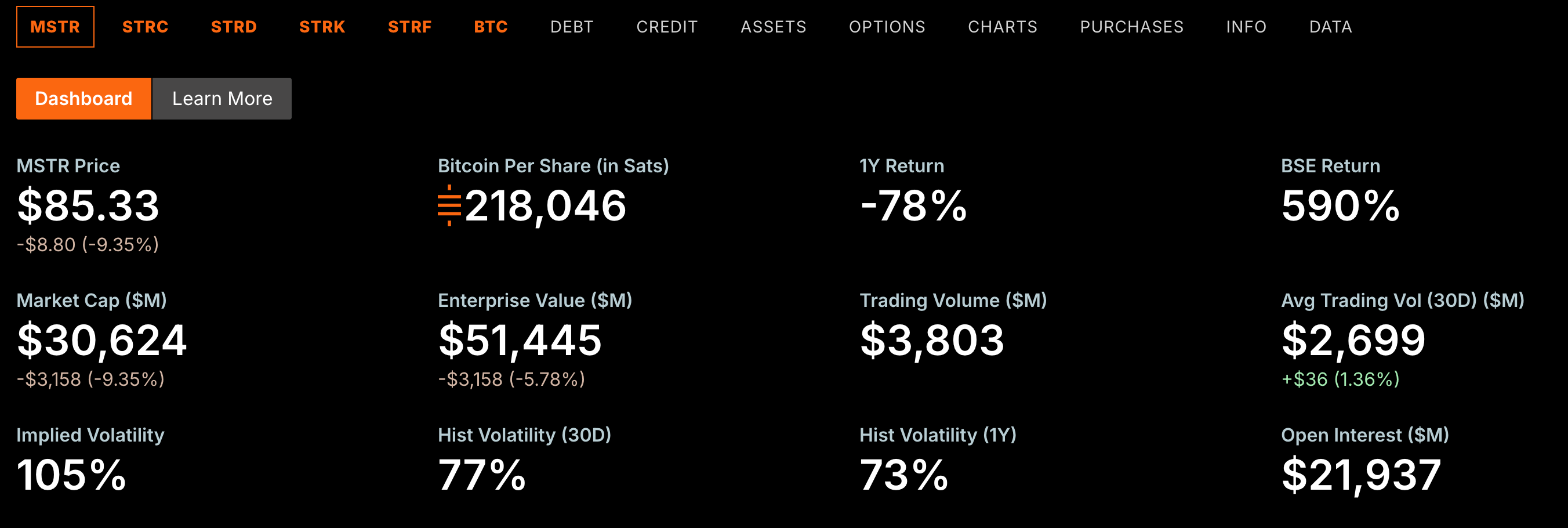
1. Issue common stock. The most direct method, currently being used via ATM programs. However, each issuance dilutes MSTR's BTC-per-share metric, which has already fallen from 220,900 sats to 218,046 sats. If dilution outpaces BTC accumulation, MSTR's premium over NAV will erode — the very foundation of Strategy's valuation.

2. Issue more debt. Convertible bonds were a key source of early BTC accumulation. But with declining cash and rising dividends, adding debt increases financial leverage and interest burden. Bond payments are rigid; any credit deterioration could spike financing costs.
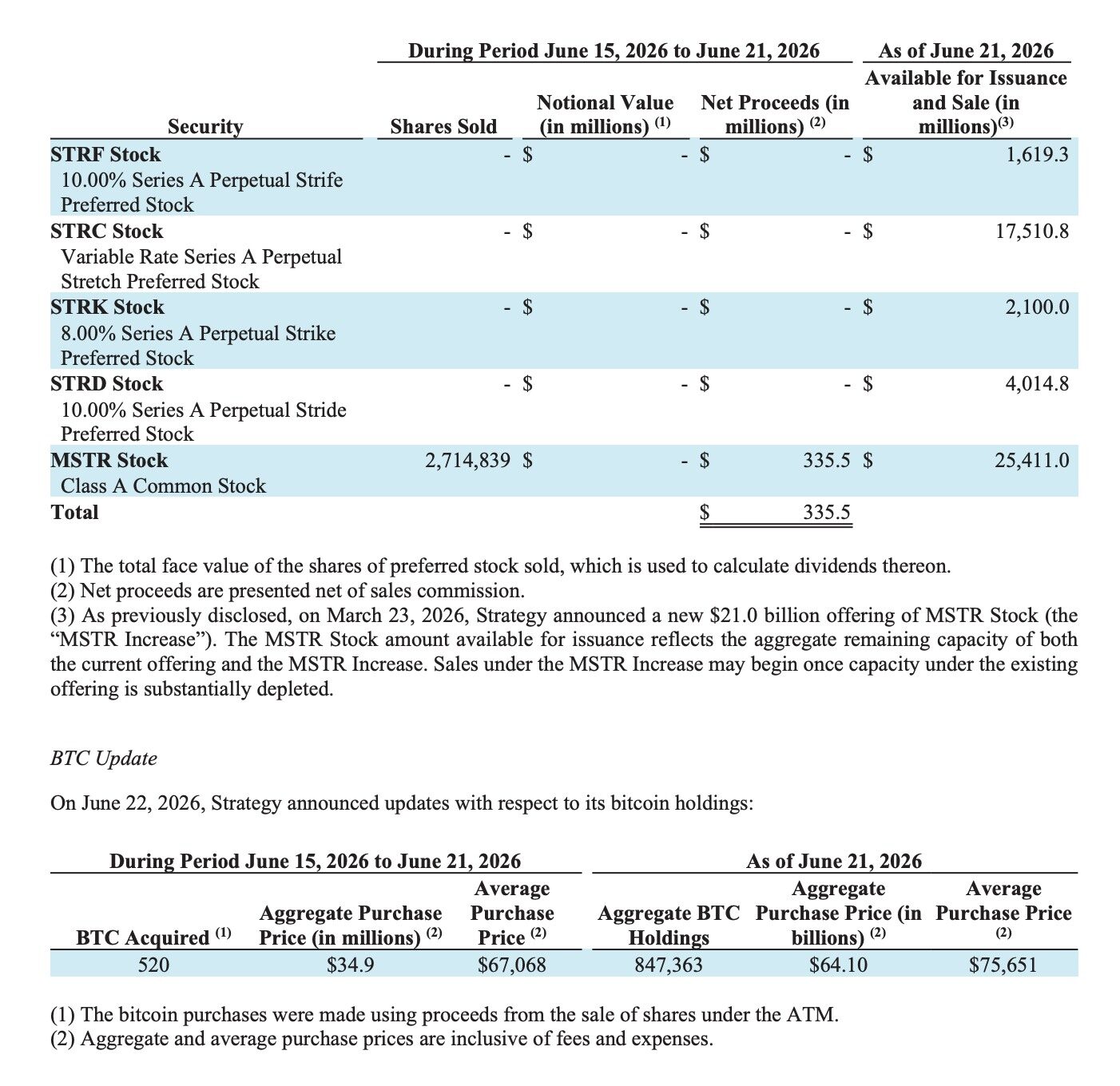
3. Sell Bitcoin. The fastest way to replenish cash, but the most dangerous. Earlier this month, Strategy sold just 32 BTC (framed as a 'market desensitization test'), triggering a sharp price drop. As the largest single BTC holder with 847,363 coins (~4% of circulating supply), any significant sale could crash the market, shrinking the value of its own 'reserve' in the process.
Current Choice: Common Stock Dilution, Funds No Longer Go to BTC
Since June, Strategy has relied on common stock ATM for three consecutive weeks. The latest 8-K filing shows the company sold 2,714,839 MSTR shares in one week, raising $335.5 million — but purchased only 520 BTC for $34.9 million. Over 90% of the proceeds went to replenish cash reserves, pushing them from ~$1.1 billion to ~$1.4 billion.

This marks a fundamental shift in Strategy's operating logic. Previously, the market expected nearly all fundraising to flow into BTC purchases, supporting prices. Now, most capital stays in cash, drastically reducing new buy-side pressure. If this pattern persists, Bitcoin loses its most consistent institutional buyer — historically adding $1.0-1.5 billion per quarter.
If STRC Doesn't Repeg, Bitcoin Bull Run Foundation Crumbles
Strategy's funding ability and Bitcoin's price are deeply intertwined. For years, Strategy has been the most important marginal buyer of Bitcoin (arguably unmatched), and its weekly buying pattern created strong positive feedback. The market internalized Saylor's relentless accumulation as a pillar of the bull thesis.

But STRC's depeg forces Strategy to finance through common stock, which dilutes equity and cannot be sustained indefinitely. As BTC-per-share declines, MSTR's premium will compress, further impairing Strategy's overall fundraising capacity. Worse, if common stock funding proves insufficient to cover dividend obligations, selling Bitcoin becomes the last resort — transforming the largest buyer into the largest seller, with catastrophic implications for BTC price.
As Odaily's analysis suggests: no STRC repeg, no Bitcoin bull run. The financing machine that powered the rally is breaking down. When the gears start grinding, the entire crypto market's risk appetite may reverse.