
Current STRC Depeg: Below $80, Funding Window Closed
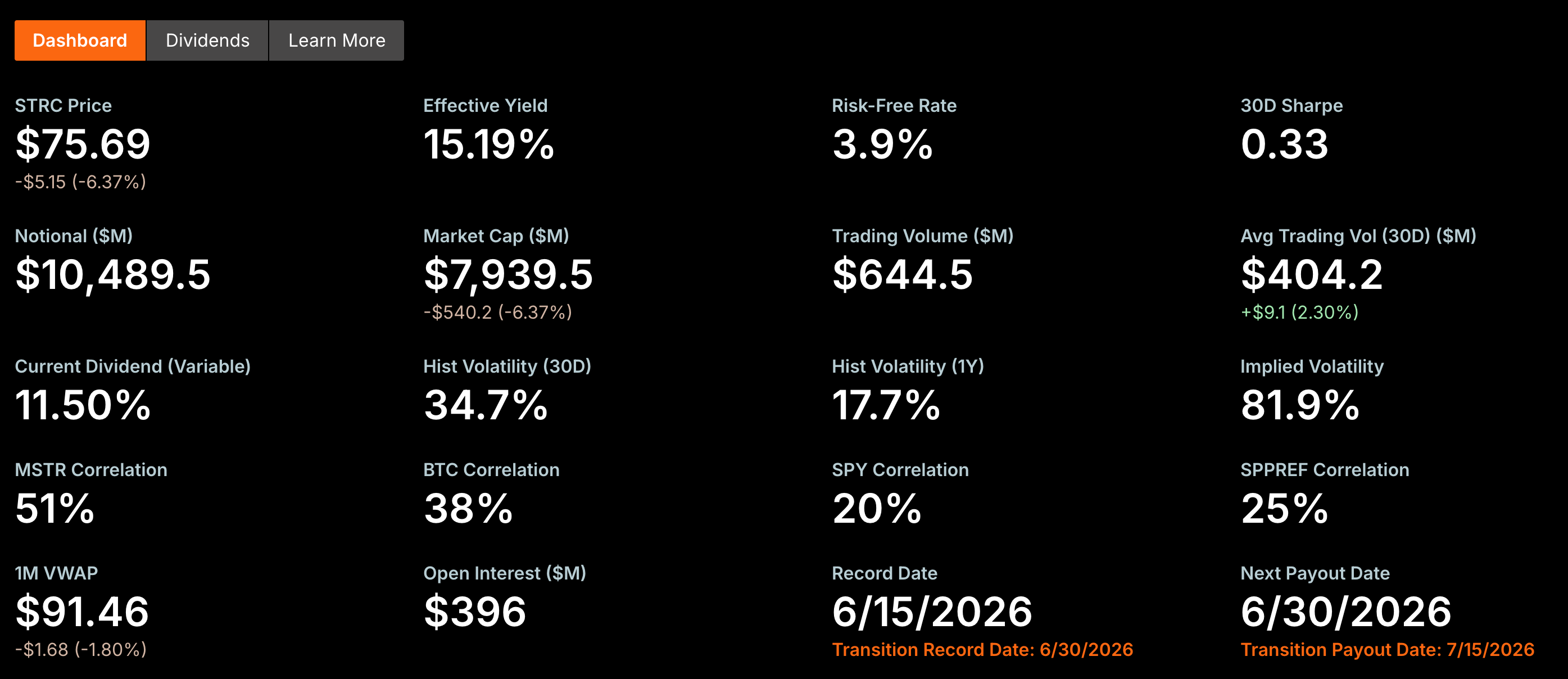
Strategy's preferred stock STRC has seen its depeg worsen dramatically. On June 28, the stock fell below $80 for the first time, hitting an intraday low of $73.62 before closing at $75.69—roughly 25% below its $100 par value. Just a week earlier, the depeg was only 11%; the rapid deterioration signals a severe loss of market confidence.
What STRC Really Is: Strategy's 'Perfect' Financing Tool
STRC is a perpetual preferred stock with no maturity date and no dilution of common shareholders, requiring only fixed dividend payments. Michael Saylor once called it "a product designed by AI, not by humans." Strategy's business model relies on a positive feedback loop: raise funds → buy Bitcoin → strengthen market expectations → raise more funds. STRC was designed to be the linchpin of this machine, with a dynamic dividend rate to keep it trading near $100, allowing the company to issue new shares at par. But once the price deviates significantly, no rational investor would subscribe to a new issuance at $100 when secondary market offers STRC at $75. The funding channel is effectively dead.
The Lethal Consequence: Cash Flow Black Hole and Dividend Default Risk
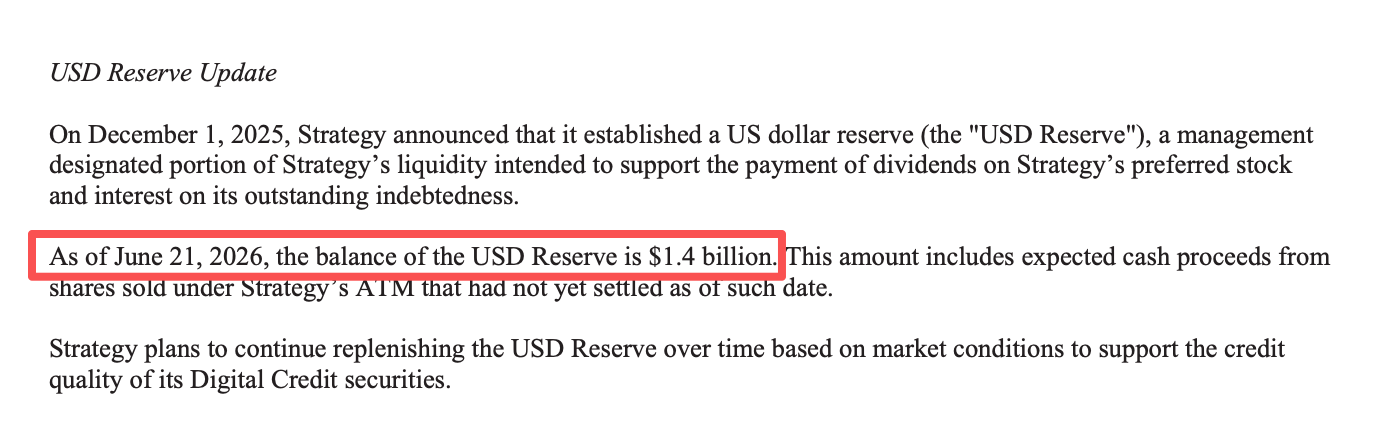
As of the latest filing, STRC's outstanding issuance totals approximately $10.49 billion at par, with a current dividend yield of 11.5%. This translates to annual cash dividend obligations exceeding $1.2 billion for STRC alone. Combined with other preferreds (STRD, STRK, STRF), total annual preferred dividends reach about $1.7 billion. Yet Strategy's cash reserves stand at only ~$1.4 billion, meaning the company can barely cover preferred dividends for 12 months without additional funding. Avoiding default requires continuous cash replenishment.
Three Options, All Costly
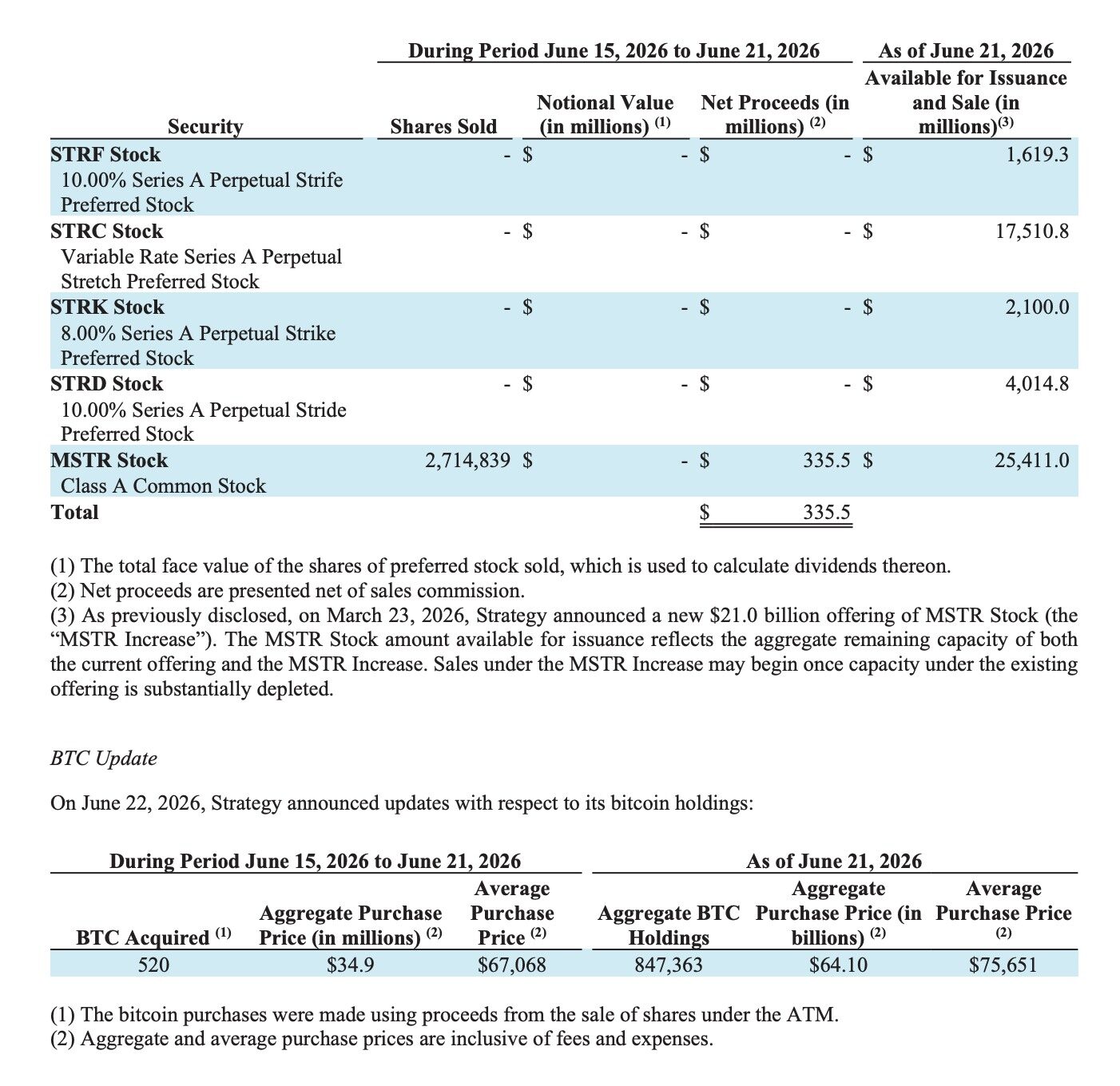
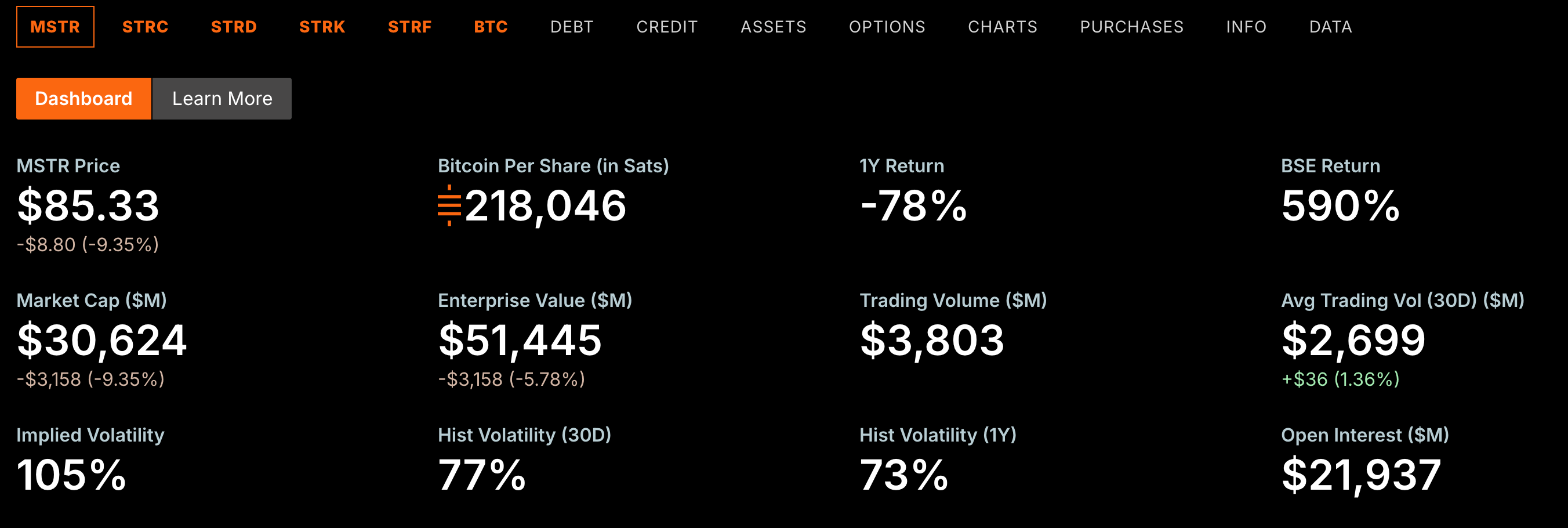
Strategy has three potential paths: Common stock issuance—the current choice. In its latest ATM offering, Strategy sold 2,714,839 MSTR shares in one week, raising $335.5 million, but only $34.9 million was used to buy 520 BTC (average $67,068); the rest went to cash reserves. BTC per MSTR share has dropped from a peak of 220,900 sats to 218,046 sats, diluting equity holders. Debt issuance—with cash already strained, adding more debt increases financial burden. Selling Bitcoin—Strategy holds 847,363 BTC (~4% of circulating supply), enough to cover 32 years of dividends per its own estimates. But early this month, a sale of just 32 BTC caused a sharp market dip. Larger sales would have severe price impact.

Impact on Bitcoin: From Largest Buyer to Potential Seller
Strategy has been the single most consistent institutional buyer of Bitcoin. But now, with common stock proceeds flowing to cash reserves rather than BTC, marginal buying power has collapsed. If STRC cannot re-peg, Strategy will be forced to rely on common equity dilution or even BTC sales. This transforms the narrative from 'constant accumulation' to 'potential distribution'—a massive psychological and physical overhang. The STRC depeg is no longer just a corporate finance issue; it is the defining variable for whether the Bitcoin bull market can continue.