
STRC Deviation Worsens, Funding Channel Blocked
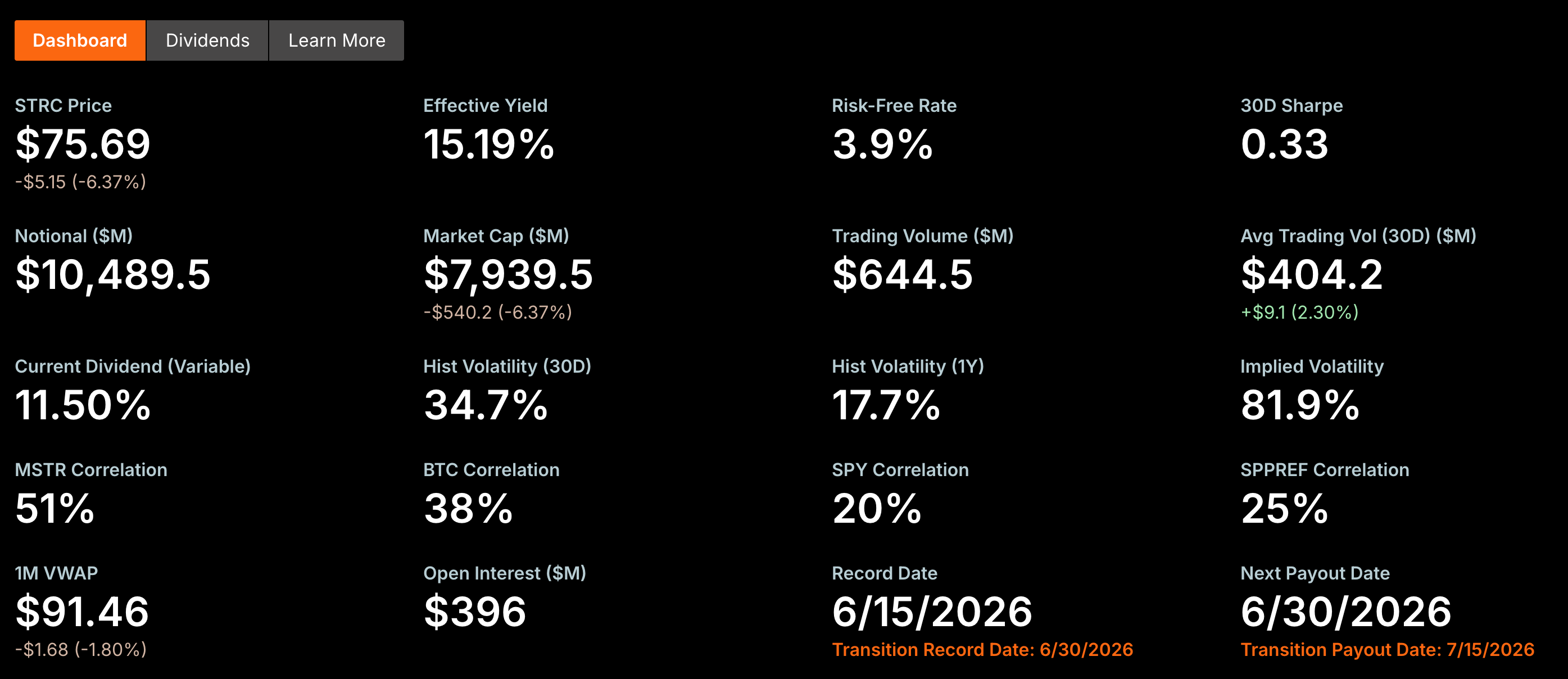
The de-pegging of Strategy's preferred stock STRC is accelerating. On June 26, STRC broke below $80 for the first time, hitting a low of $73.62 before closing at $75.69, a nearly 25% deviation from its $100 target par value. Michael Saylor once hailed STRC as 'an AI-designed product,' and it was considered Strategy's most cost-effective and efficient funding instrument. As a perpetual preferred stock, STRC does not dilute common equity, has no maturity, and only requires fixed dividend payments. Strategy's business model relies on a perpetual cycle: raise capital via financial instruments → buy Bitcoin → strengthen market expectations → raise more capital. STRC was the critical gear in this flywheel. However, with the secondary market price far below par, no investor would subscribe to new STRC issuances at near $100, effectively shutting down this funding channel.
Heavy Cash Dividend Burden, Cash Covers Less Than a Year
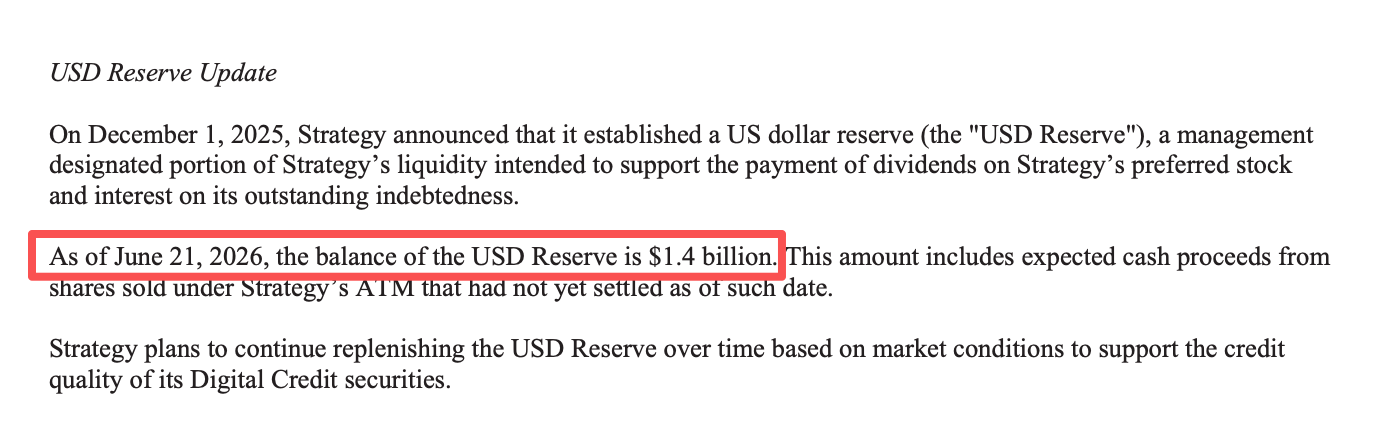
STRC's outstanding issuance has reached approximately $10.49 billion, with a current dividend rate of 11.5%, implying annual cash dividend payments exceeding $1.2 billion. Including other preferred stocks such as STRD, STRK, and STRF, total annual cash dividend obligations rise to ~$1.7 billion. According to Strategy's common stock offering filing on June 21, the company's cash reserves stood at roughly $1.4 billion. At this level, cash on hand barely covers one year of preferred dividend payments. To maintain its business model and avoid dividend payment defaults, Strategy urgently needs additional capital. Theoretically, only three funding avenues remain: common stock issuance, further debt issuance, and Bitcoin sales.
Each Funding Route Has Drawbacks: Common Stock Dilutes BTC Per Share
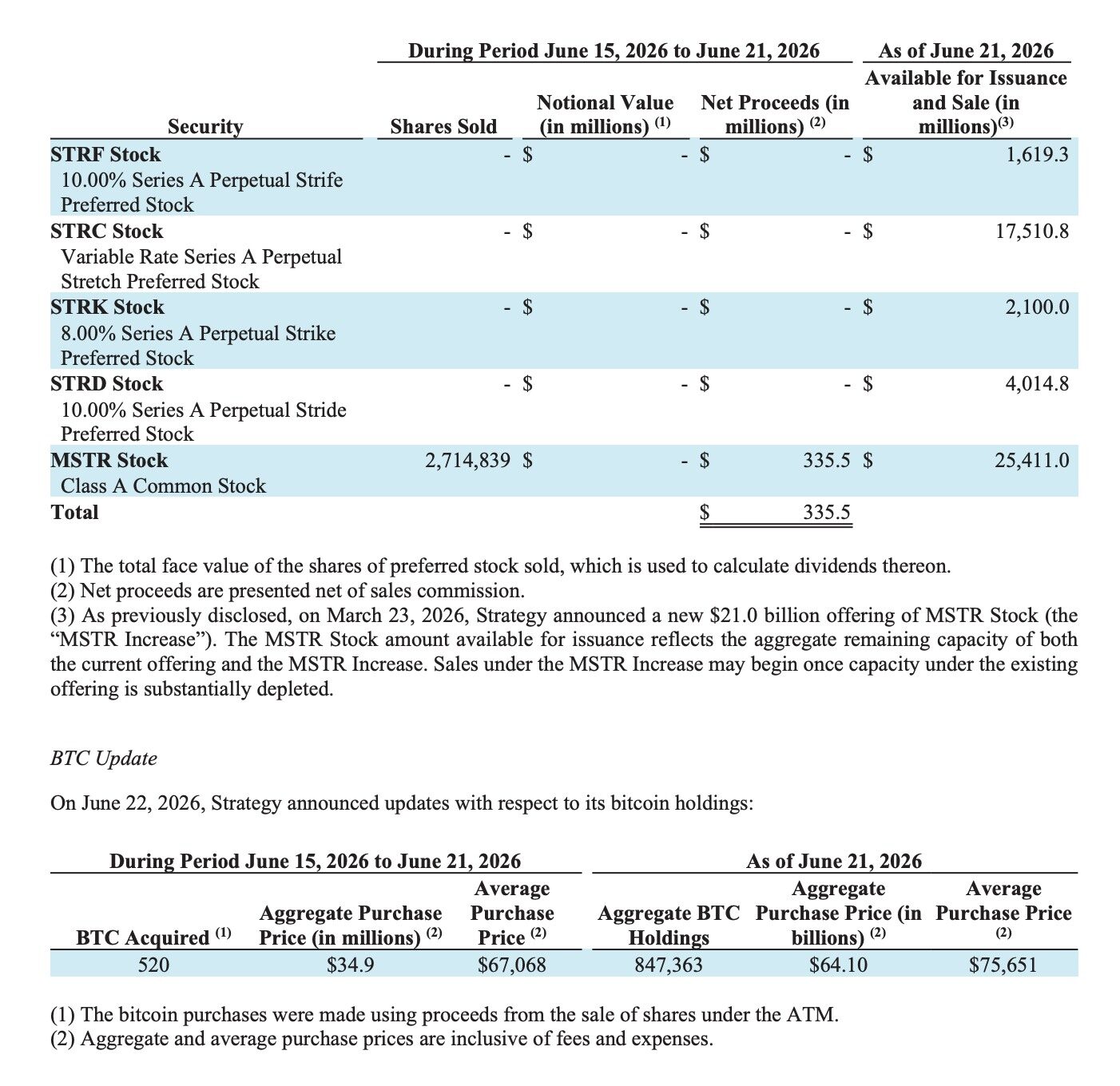
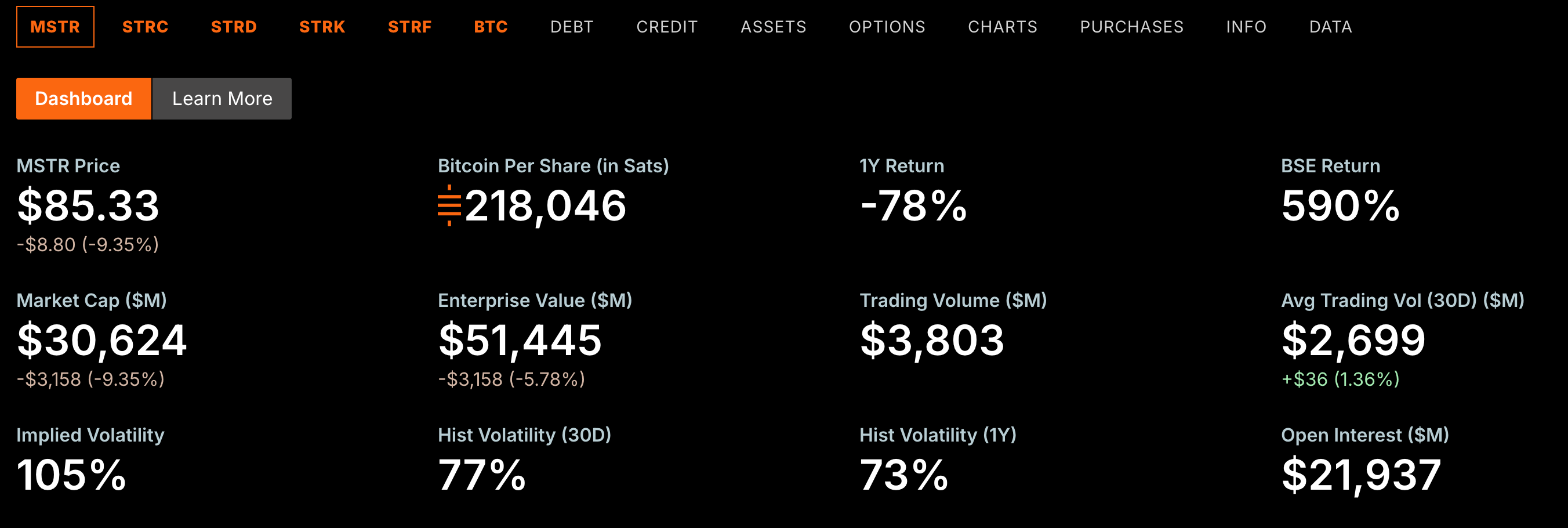
Common stock issuance is the most direct path but comes with significant costs. Since June, Strategy has relied on its ATM program for three consecutive weeks. In the most recent offering (June 22), Strategy sold 2,714,839 MSTR shares, raising $335.5 million, but used only $34.9 million to purchase 520 BTC (about 10% of the proceeds). The remaining funds were used to replenish cash reserves. As a result, BTC per share dropped from its peak of 220,900 sats to 218,046 sats, diluting common shareholders. Issuing more bonds would increase financial leverage and strain already tight cash flows. Selling Bitcoin, while providing immediate liquidity, carries enormous risk: Strategy holds 847,363 BTC (approximately 4% of total circulating supply, valued at over $50.7 billion), and any significant sale could trigger a market cascade.
Without STRC's Return to Par, the Bull Market's Foundation Shakes
For years, Strategy has been the most important marginal buyer of Bitcoin, with its weekly purchases underpinning market confidence. Now, the persistent STRC deviation forces Strategy to divert common stock proceeds primarily to cash reserves rather than Bitcoin purchases. This means the most consistent institutional buying pressure is fading. Worse, if common stock dilution continues to erode BTC per share, the premium valuation of MSTR could collapse, pushing Strategy toward selling Bitcoin as a last resort. Strategy has already hinted at this possibility. From diminishing buy demand to the emergence of potential sell pressure, Strategy has transformed from Bitcoin's biggest cheerleader into a sword hanging over the market. Whether STRC can recover to near $100 is now a decisive factor for the continuation of the Bitcoin bull market. If the deviation persists, the market will lose its most stable source of institutional capital, threatening the entire bullish narrative.