

STRC De-pegging Intensifies, Preferred Stock Financing Channel in Trouble
Strategy's perpetual preferred stock STRC continued its decline. During U.S. trading on June 26, STRC broke below the $80 level for the first time, hitting an intraday low of $73.62 before closing at $75.69 — a de-pegging of nearly 25% from its $100 target par value. This marks a sharp deterioration from the 11% de-pegging seen the previous week, severely undermining the effectiveness of this financing tool.
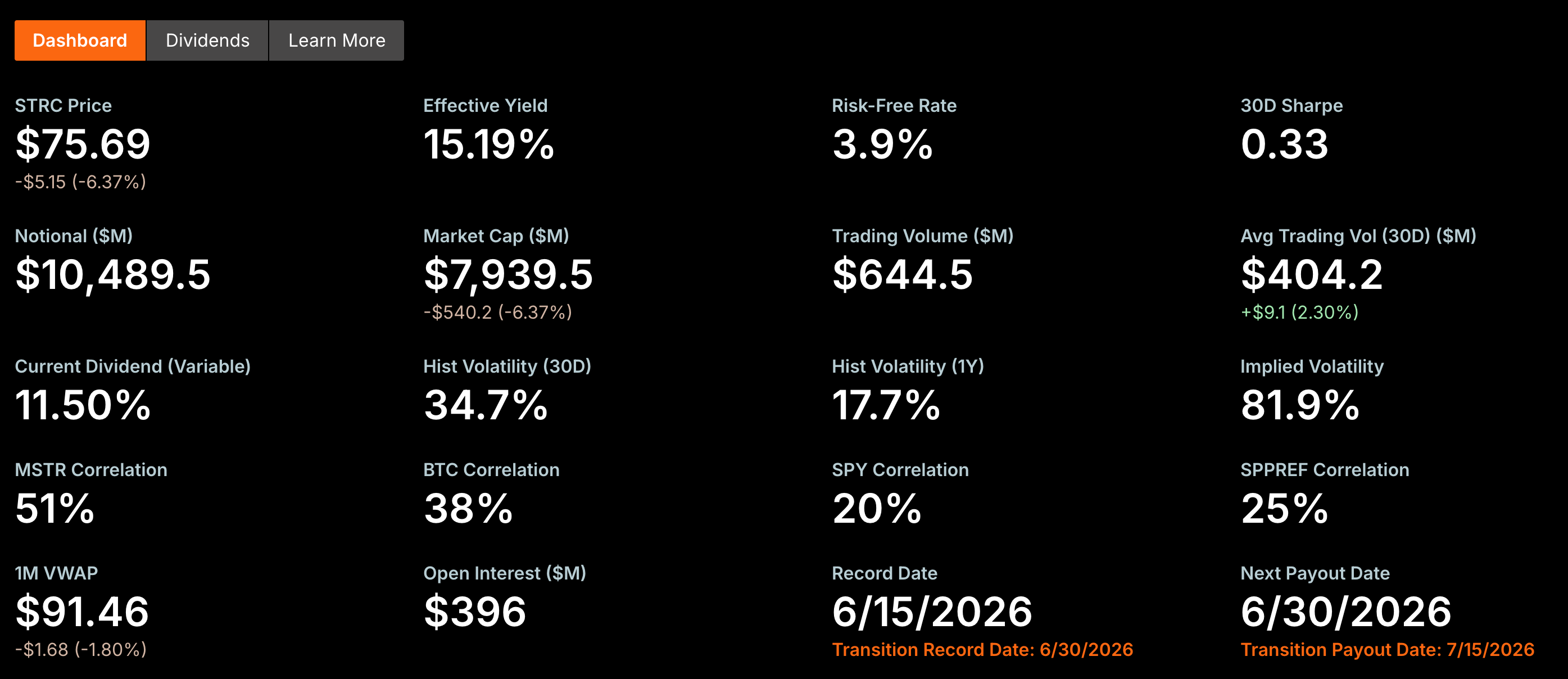
STRC was designed as Strategy's cheapest and most efficient funding source. The company's business model relies on continuous financing to buy Bitcoin, creating a positive flywheel of "finance → buy Bitcoin → reinforce market expectations → refinance." As a perpetual preferred stock, STRC has no maturity, does not dilute common shareholders, and requires only fixed dividend payments. Michael Saylor once called it "an AI-designed product." However, with the secondary market price far below par, investors would never pay near $100 to participate in new issuances, effectively blocking this channel.
Massive Dividend Pressure: Cash Covers Less Than One Year
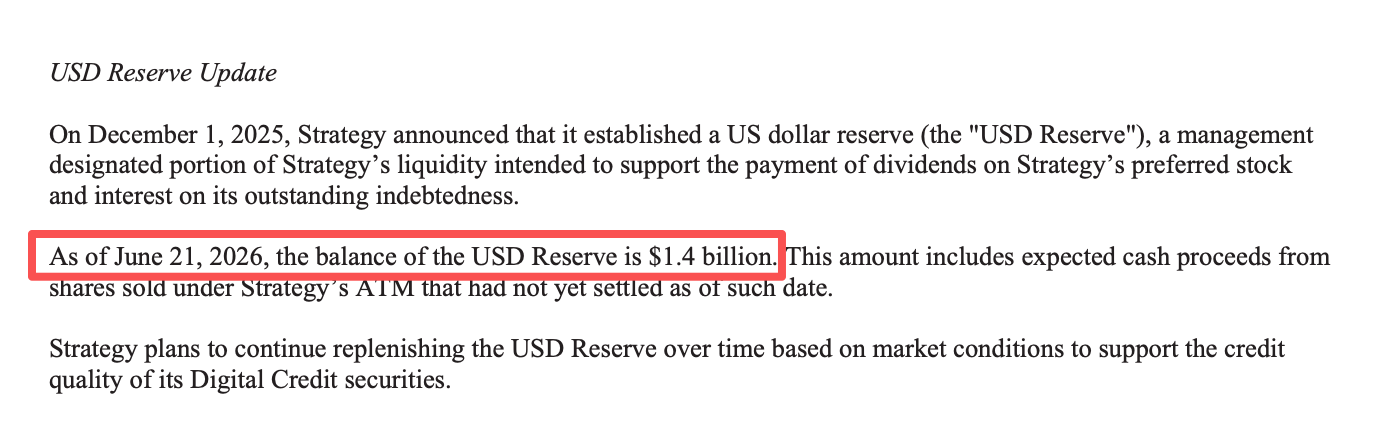
Beyond its financing function, STRC carries a heavy cash dividend burden. According to Strategy's official data, total STRC issuance has reached approximately $10.49 billion with a current dividend yield of 11.5%, equating to over $1.2 billion in annual dividends. Combined with other preferred stocks (STRD, STRK, STRF), total annual dividend obligations approach $1.7 billion. The company disclosed cash reserves of only about $1.4 billion in its June 21 common stock filing — enough to cover less than one year of preferred dividends. Without restored financing ability, Strategy faces dividend payment default risk.
In this situation, Strategy has only three feasible paths to raise cash: issuing common stock, issuing more debt, or selling Bitcoin. Each comes with significant costs.
Common Stock Financing: Diluting Shareholders, Buying Fewer Bitcoins
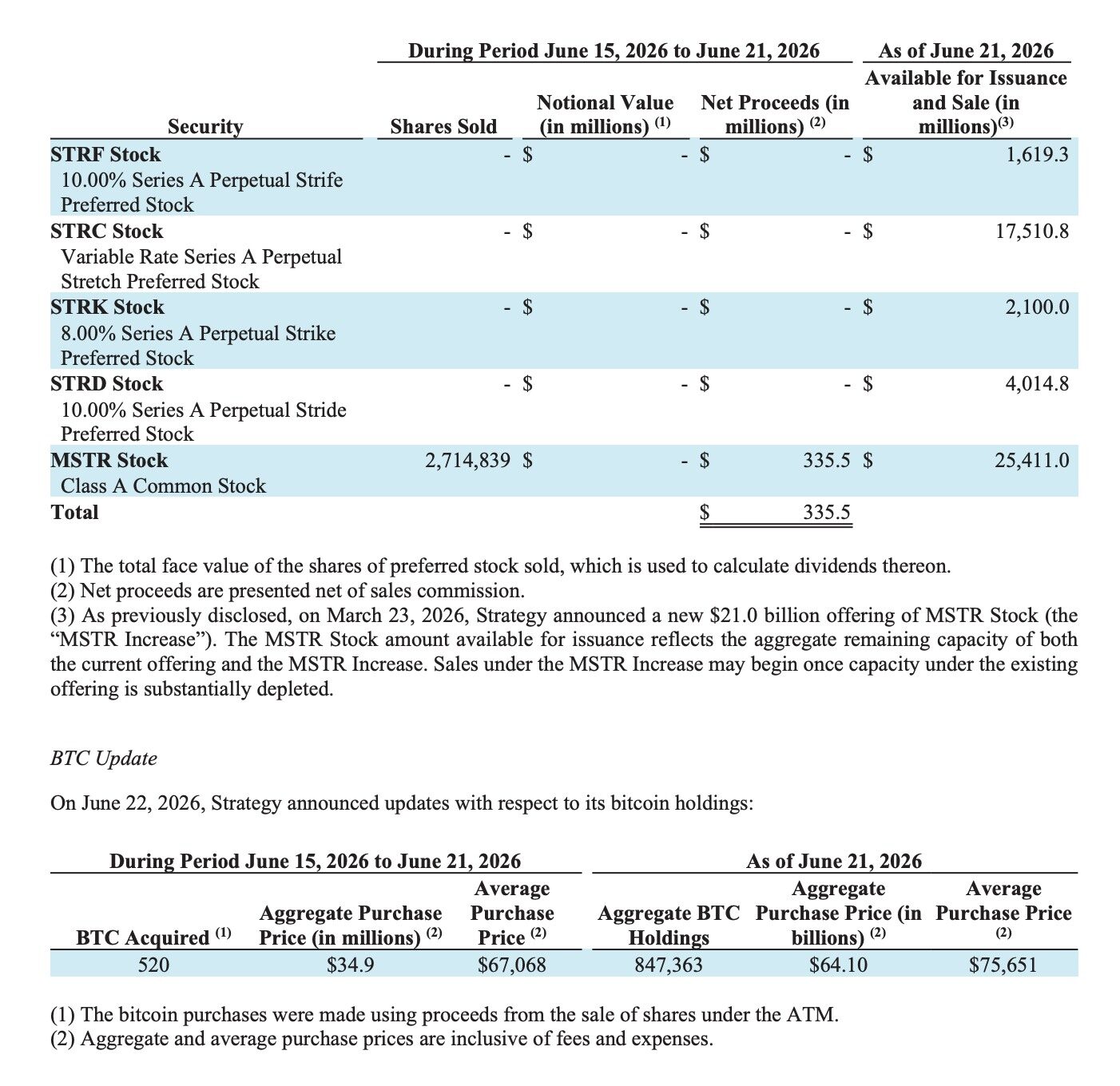
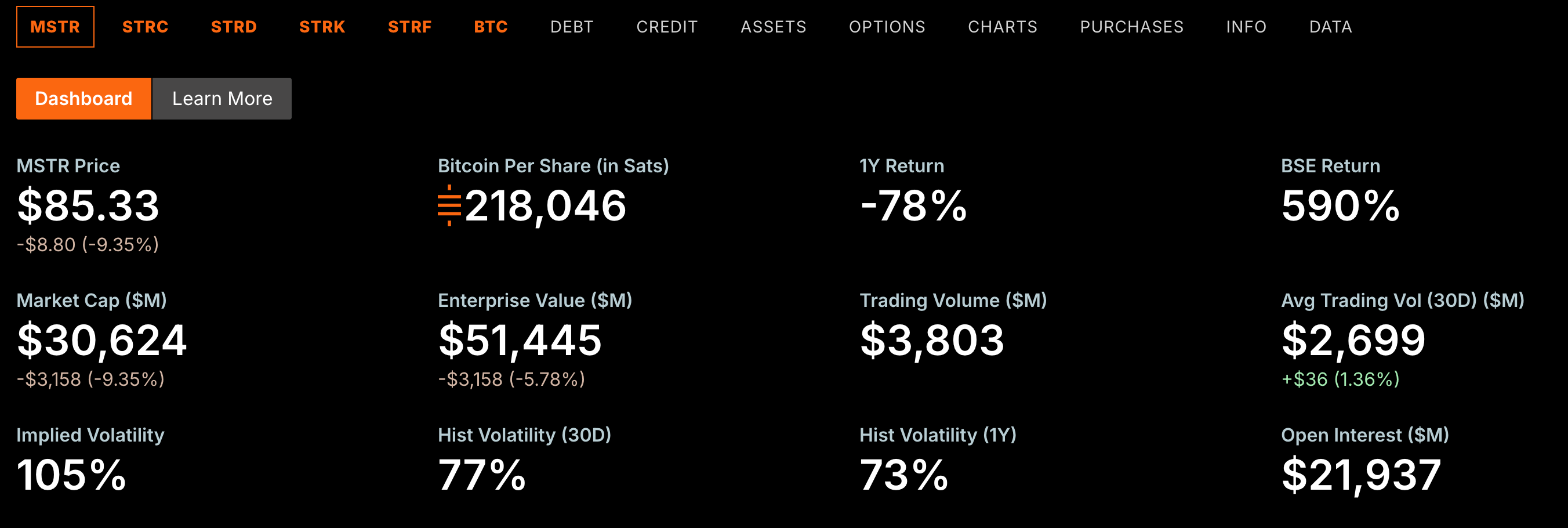
Since June, Strategy has conducted three consecutive weeks of common stock ATM (At-the-Market Offering) placements. The latest filing (June 22 8-K) reveals the dilemma: the company sold 2,714,839 shares of MSTR common stock, raising $335.5 million, but purchased only 520 BTC (costing $34.9 million — just ~10% of proceeds). The remaining funds were used to replenish cash reserves. As a result, MSTR's BTC per share has declined from a peak of 220,900 Sats to 218,046 Sats, continuously diluting common shareholders.
Previously, the virtuous cycle involved using financing to buy more BTC, increasing BTC per share and supporting MSTR's premium. Now, most common stock proceeds no longer flow into Bitcoin, reversing the flywheel logic. Continued reliance on common stock issuance will erode BTC per share, potentially undermining the very foundation of MSTR's premium and Strategy's valuation.

Selling Bitcoin: The Most Dangerous Option, A Sword Over the Market
In response to dividend pressure, Strategy's official X account remarked that its "massive Bitcoin reserve covers 32 years of dividends," hinting at possible use of its BTC holdings. Earlier in June, Strategy made its first-ever sale of 32 BTC, calling it an "active market desensitization test." As the largest single Bitcoin holder with 847,363 BTC (~4% of circulating supply), any selling could trigger cascading market reactions. If Strategy increases selling, it would inflict severe damage on Bitcoin's price, which is already fragile.

In summary, STRC's persistent de-pegging has transformed Strategy from the largest marginal buyer into a potential largest seller. For the same financing scale, the actual new buying pressure entering the Bitcoin market is shrinking while sell-side risk accumulates. If STRC cannot re-peg, Bitcoin will lose its most consistent and reliable institutional capital inflow from the past few years, potentially derailing the bull market.

Conclusion: STRC Re-pegging Is a Prerequisite for Bitcoin's Bull Run
As the largest institutional Bitcoin holder and historically most aggressive buyer, Strategy's financing engine health is directly tied to Bitcoin market liquidity. STRC's de-pegging is not just a company-specific financial crisis but a potential inflection point for Bitcoin's capital inflows. Only when STRC stabilizes near $100 and the preferred stock channel reopens can Strategy resume its Bitcoin purchasing cycle. Otherwise, the Bitcoin bull market faces a fundamental existential threat.