

STRC Depeg Worsens, Closes Strategy's Cheapest Fundraising Channel
Strategy's preferred stock STRC continued its sharp decline, breaking below $80 for the first time on June 27, hitting an intraday low of $73.62 before closing at $75.69. At this level, STRC has depegged approximately 25% from its $100 target par value. This marks the second consecutive week of accelerated decline, following a previous drop to $89 reported by Odaily.
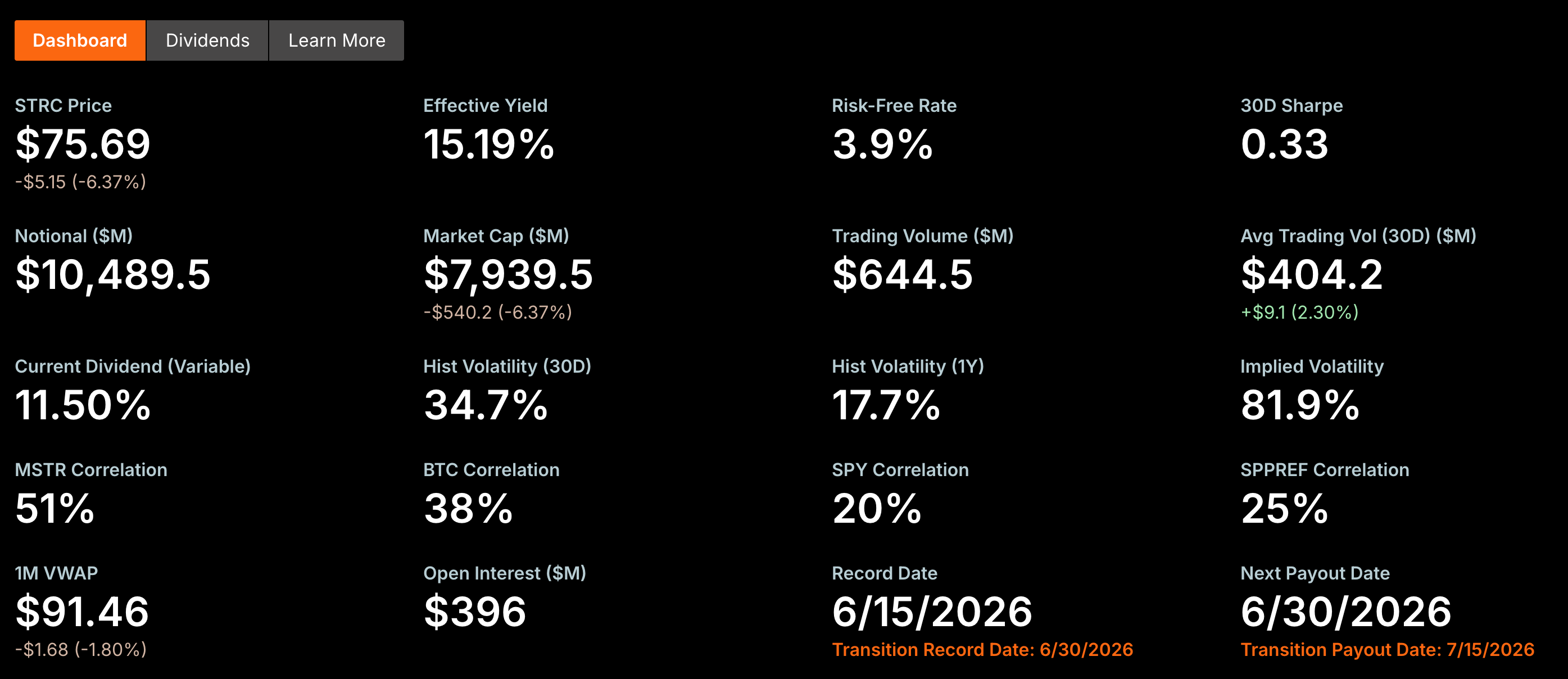
STRC was hailed by Michael Saylor as an "AI-designed perfect instrument." As a perpetual preferred share with no maturity and no dilution of common equity, it was Strategy's lowest-cost, most efficient fundraising tool. However, when secondary market prices fall well below par, investors have no incentive to subscribe to new STRC offerings near $100. This effectively shuts down the fundraising pipeline.
Cash Reserve Only Covers Less Than One Year of Dividends
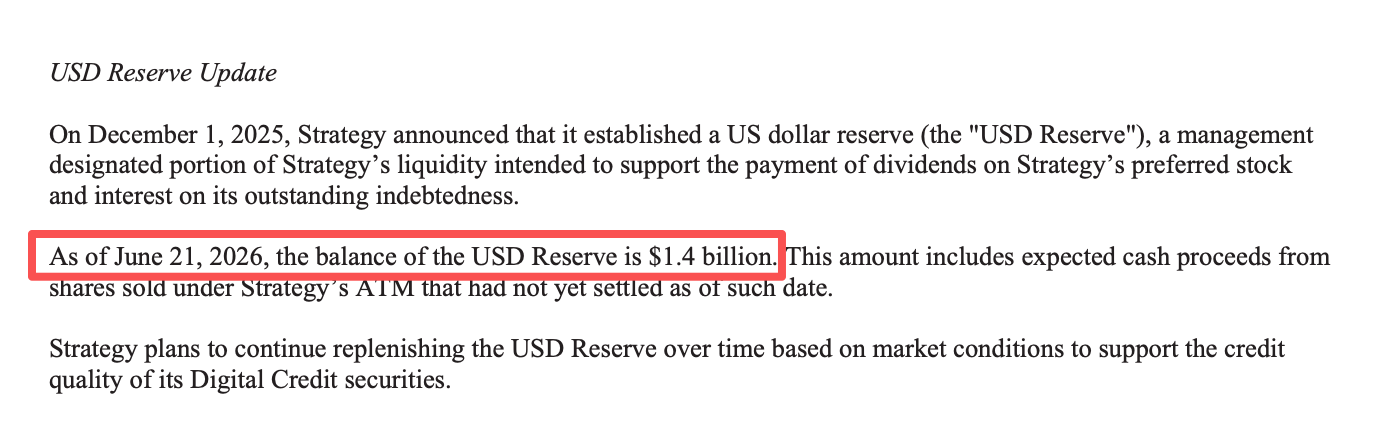
According to the latest disclosures, STRC outstanding amounts to approximately $10.49 billion, with a current dividend yield of 11.5%, implying annual dividend payments of over $1.2 billion. When combined with other preferred issues (STRD, STRK, STRF), total annual cash dividend obligations reach approximately $1.7 billion. Strategy's cash reserve, as reported in its June 21 common stock filing, stood at roughly $1.4 billion — sufficient for less than one year of preferred dividend payments alone, excluding other operating expenses.
The company must urgently raise capital to avoid dividend payment default, which would severely damage its business model credibility.
Three Fundraising Options: Common Stock, Debt, or Selling BTC
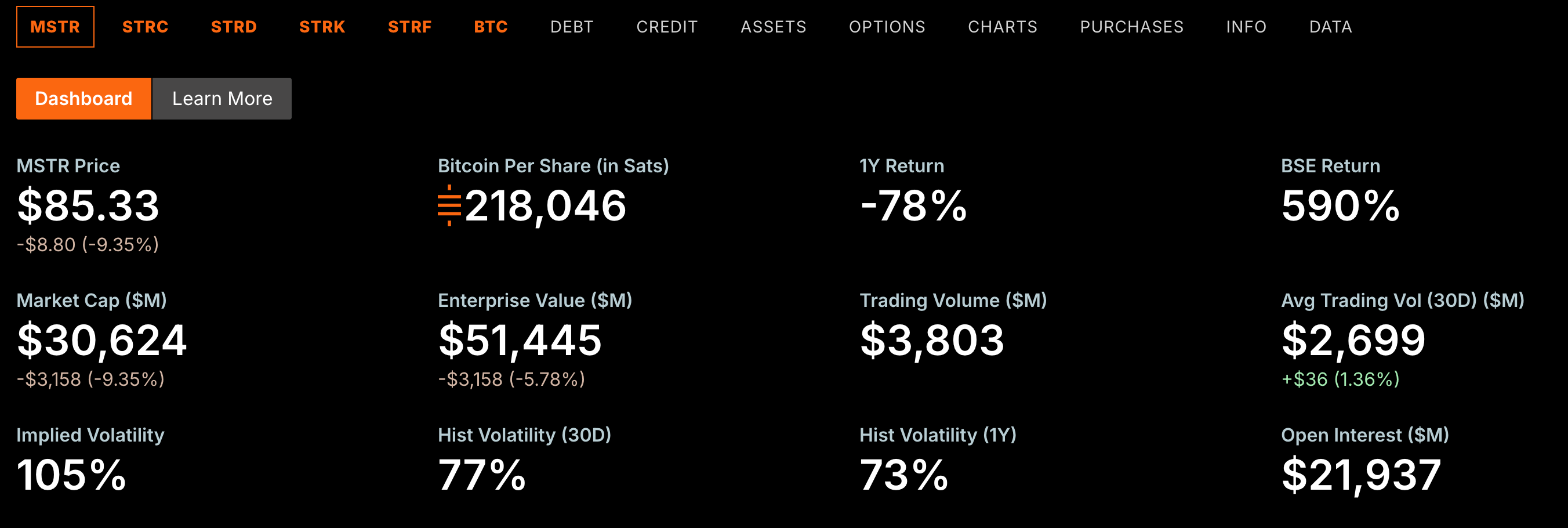
Theoretically, Strategy has only three fundraising avenues: Issuing common stock. Through its ATM program, the company can sell MSTR shares continuously, but this dilutes BTC per share. Latest data shows BTC per share has already dropped from a peak of 220,900 sats to 218,046 sats. Issuing debt. Interest and principal payments are rigid; increasing debt amid declining cash and rising dividends would increase financial burden. Selling Bitcoin. Strategy hinted it could cover 32 years of dividends with its BTC reserves, but selling just 32 BTC in early June triggered a sharp market dip. Large-scale selling would devastate Bitcoin price.
All three options are more expensive than before. The previous virtuous cycle of 'raise capital → buy BTC → higher market expectation → raise more capital' has broken.

Common Stock Financing Pivot: Funds Now for Cash Reserves, Not Bitcoin Buying
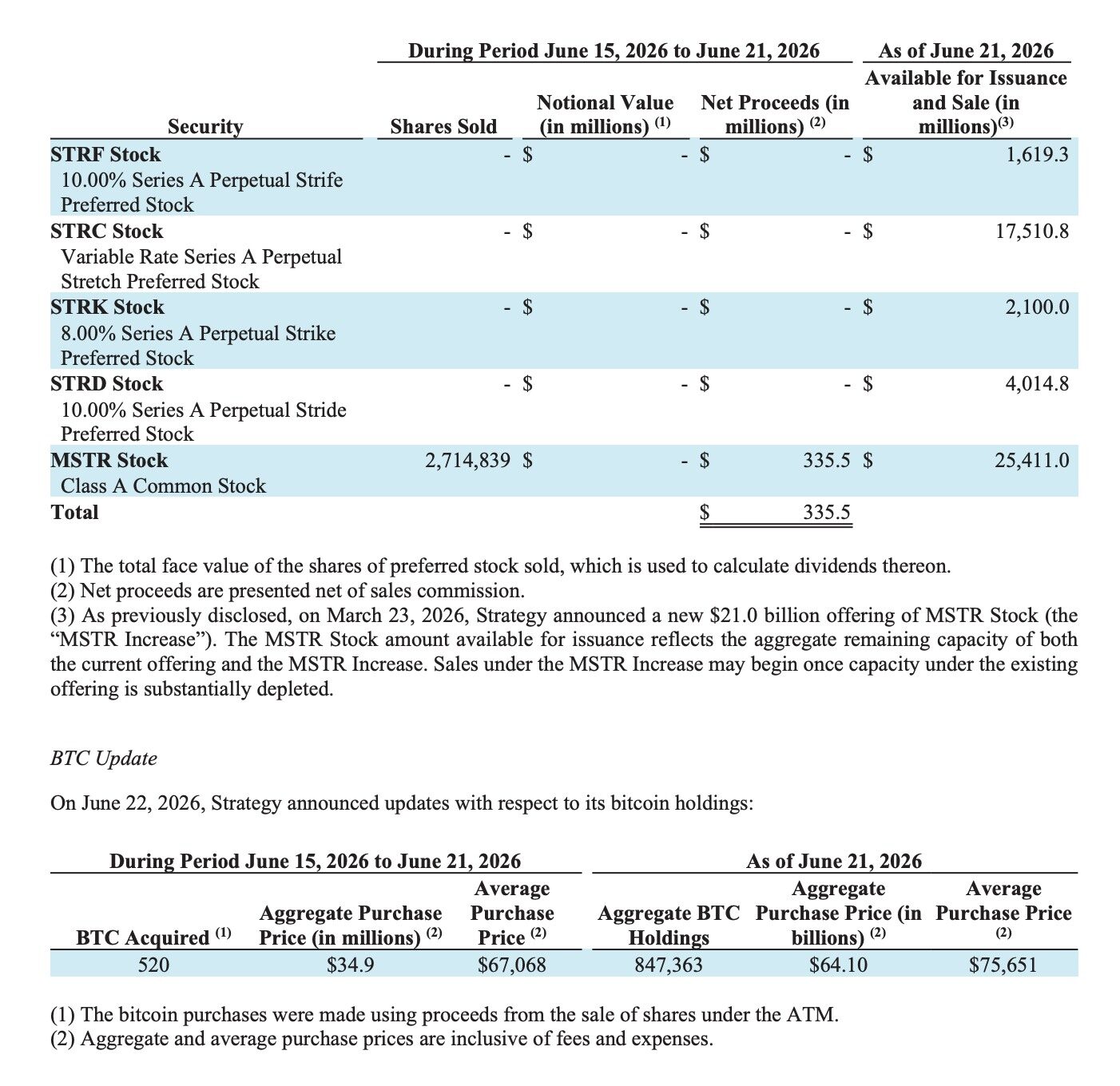
Since June, Strategy has relied on common stock ATM for three consecutive weeks. The latest 8-K filing (June 22) reveals the company sold 2,714,839 MSTR shares in one week, raising $335.5 million. Shocking the market, only $34.9 million (about 10%) was used to purchase 520 BTC. The remaining ~$300 million went to bolster cash reserves, lifting them from ~$1.1 billion to ~$1.4 billion.
This marks a fundamental shift: financing is now used to preserve cash flow rather than accumulate Bitcoin. Common equity is diluted without proportional BTC growth. If this continues, BTC per share will further decline, undermining the premium that MSTR commands.

If STRC Stays Depegged, Bitcoin's Largest Institutional Buyer May Become Its Greatest Threat
Strategy currently holds 847,363 BTC, representing ~4% of circulating supply and valued at over $50.7 billion. It is the most important marginal buyer in Bitcoin markets. However, if STRC remains depegged indefinitely, the preferred-stock tap stays closed; common stock proceeds are diverted to cash needs; BTC buying slows to a trickle. In a worst-case scenario, over-dilution could force the company to sell BTC — transforming the largest institutional holder into the largest potential seller.

As the market increasingly fears: unless STRC returns to its $100 peg, the foundations of Bitcoin's bull market are shaky. This macro variable is rapidly becoming the greatest systemic risk, yet the market has not fully priced it in.