

The de-peg of Strategy’s preferred stock STRC is worsening. During U.S. trading on June 26, STRC breached $80 for the first time, hitting an intraday low of $73.62 before closing at $75.69—a nearly 25% discount to its $100 par value. This follows an earlier analysis of the de-peg’s causes, but the market has yet to fully grasp the severity: STRC’s persistent deviation threatens to dismantle Strategy’s entire funding flywheel, with dire consequences for Bitcoin.
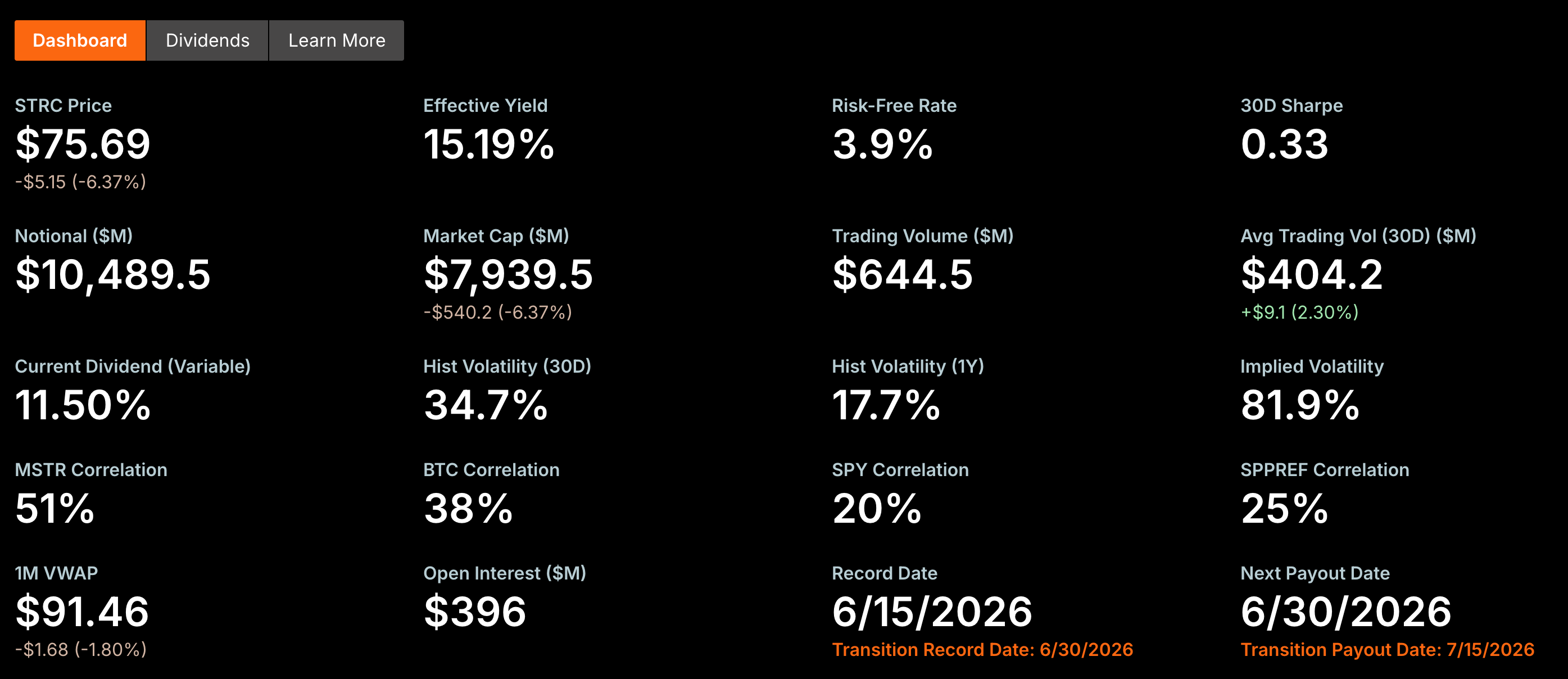
What is STRC? Strategy’s Cheapest Funding Machine
STRC is a perpetual preferred stock designed by Strategy to trade around $100 by dynamically adjusting its dividend rate (similar to algorithmic stablecoins). If the secondary market price remains near $100, the company can continuously issue new STRCs at near-par value, raising funds to buy Bitcoin. Compared to common equity (which dilutes existing shareholders) or convertible bonds (which carry maturity and repayment obligations), STRC has no maturity, no dilution of common shareholders, and only requires fixed dividend payments. It is widely considered Strategy’s most capital-efficient funding tool.
As of the latest disclosures, STRC has raised approximately $10.49 billion in total issuance, with a current dividend yield of 11.5%. This implies annual cash dividend obligations of over $1.2 billion from STRC alone. Including other preferred shares such as STRD, STRK, and STRF, total annual dividend payments rise to about $1.7 billion.
The Fatal Consequence: Best Funding Channel Blocked
STRC’s core value lies in its ability to raise funds continuously, but this depends on the price staying near $100. With STRC trading at $75, no rational investor would subscribe to new STRCs at $100—they can simply buy the same security cheaper in the secondary market. Thus, the STRC funding channel is essentially sealed.
Strategy now faces two unpalatable options: dramatically increase the dividend rate to attract capital (but evidence shows limited appeal) or accept issuance at a discount (breaking the $100 peg). Either way, the funding machine grinds with increasing friction.
Cash Crunch: Reserves Cover Less Than One Year of Dividends
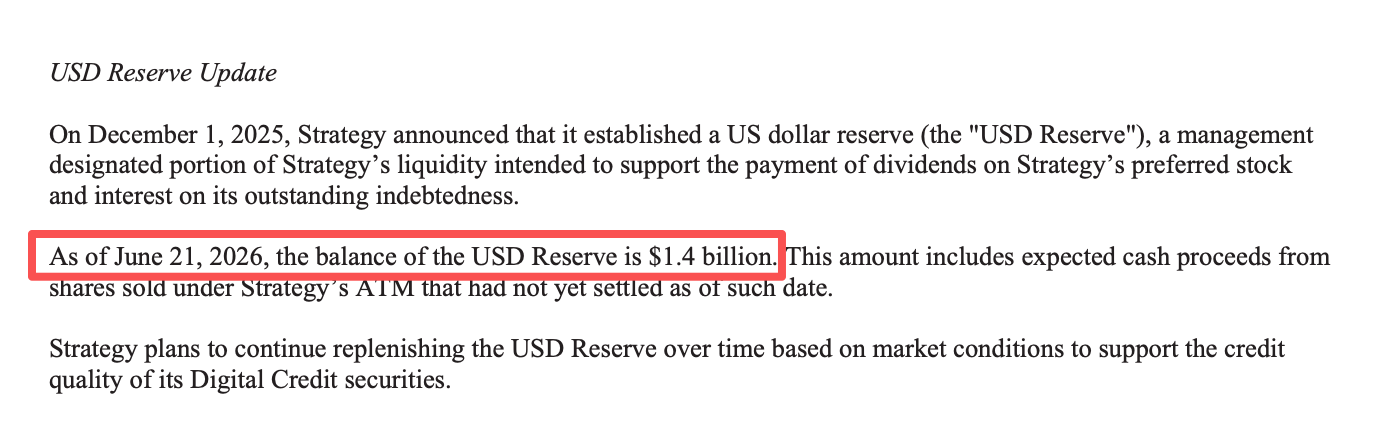
In its June 21 common stock filing, Strategy disclosed cash reserves of approximately $1.4 billion. Against $1.7 billion in annual preferred dividends, this cash cushion covers less than 12 months. Whether to sustain its Bitcoin accumulation flywheel or avoid dividend default, the company urgently needs capital.
Three Possible Funding Paths, All Costly
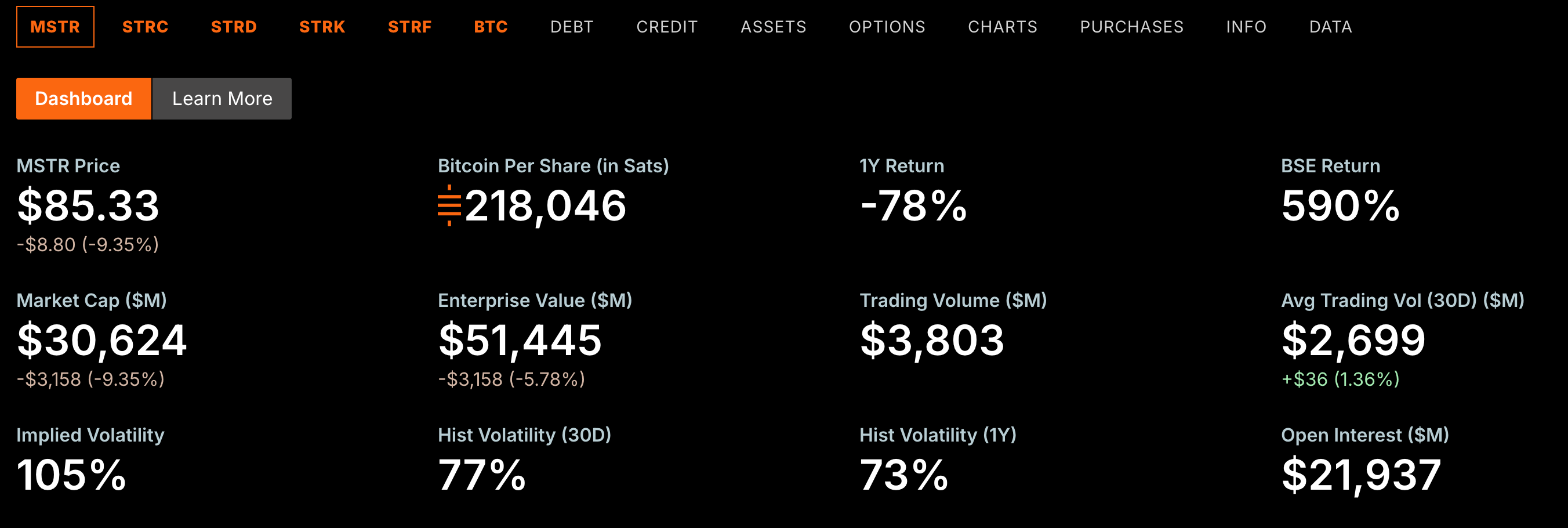
Path 1: Common Stock Issuance. The most immediate route via At-the-Market (ATM) offerings. However, each issuance increases the share count, diluting BTC-per-share if Bitcoin buying cannot keep pace. Data shows MSTR’s BTC-per-share has declined from a peak of 220,900 sats to 218,046 sats.

Path 2: More Debt Issuance. Strategy has historically used convertible bonds, but with declining cash reserves and rising dividends, additional debt would worsen its balance sheet and limit future flexibility.
Path 3: Selling Bitcoin. The fastest way to generate cash. Strategy’s official X account stated its Bitcoin holdings could cover 32 years of dividends, but this month’s sale of just 32 BTC caused a sharp market drop. As the largest single BTC holder with 847,363 BTC (~4% of circulating supply), any significant sale would severely pressure Bitcoin’s price.

The Common Stock Trap: Dwindling BTC Purchases
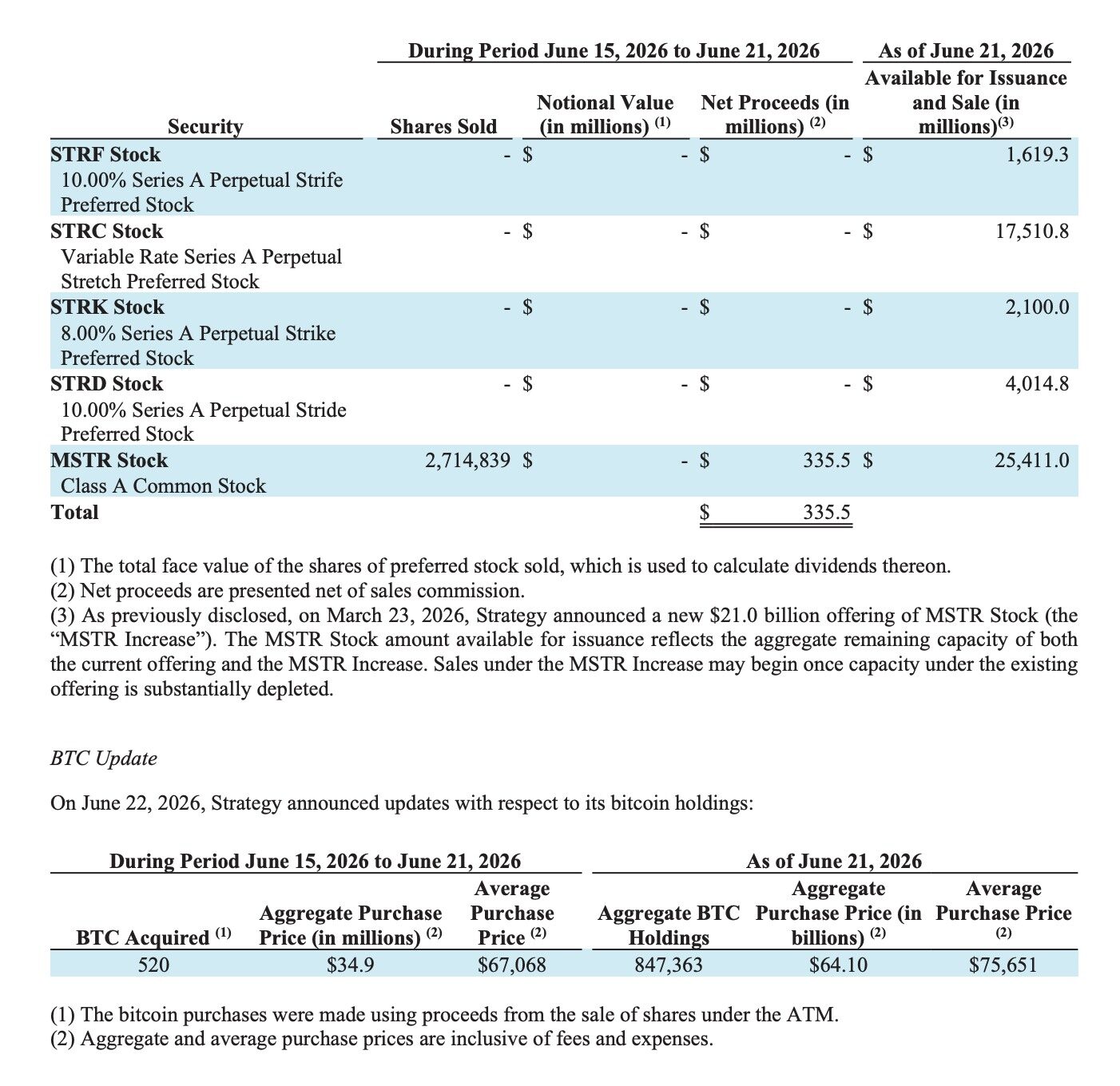
Strategy has relied on common stock ATM offerings for three consecutive weeks. The latest 8-K filing (June 22) shows the company sold 2,714,839 MSTR shares in one week, raising $335.5 million. Yet it bought only 520 BTC (cost $34.9 million), with the remaining ~$300 million used to replenish cash reserves. In other words, only about 10% of proceeds went to Bitcoin accumulation.
This model is unsustainable. Strategy’s historical flywheel was “raise → buy BTC → reinforce expectations → raise again.” Its high valuation is predicated on common shareholders expecting ever-increasing BTC per share. When most of the ATM proceeds no longer buy Bitcoin but instead shore up cash, the flywheel stalls. If BTC-per-share continues to decline, MSTR’s premium will erode, potentially forcing further cuts in Bitcoin buying—or even outright sales of its stack.

From being Bitcoin’s most reliable institutional buyer, Strategy is gradually morphing into a latent seller. The de-peg of STRC is the critical variable that will determine whether this sword falls on the crypto market.