

STRC Depegging Worsens, Price Sinks to $75
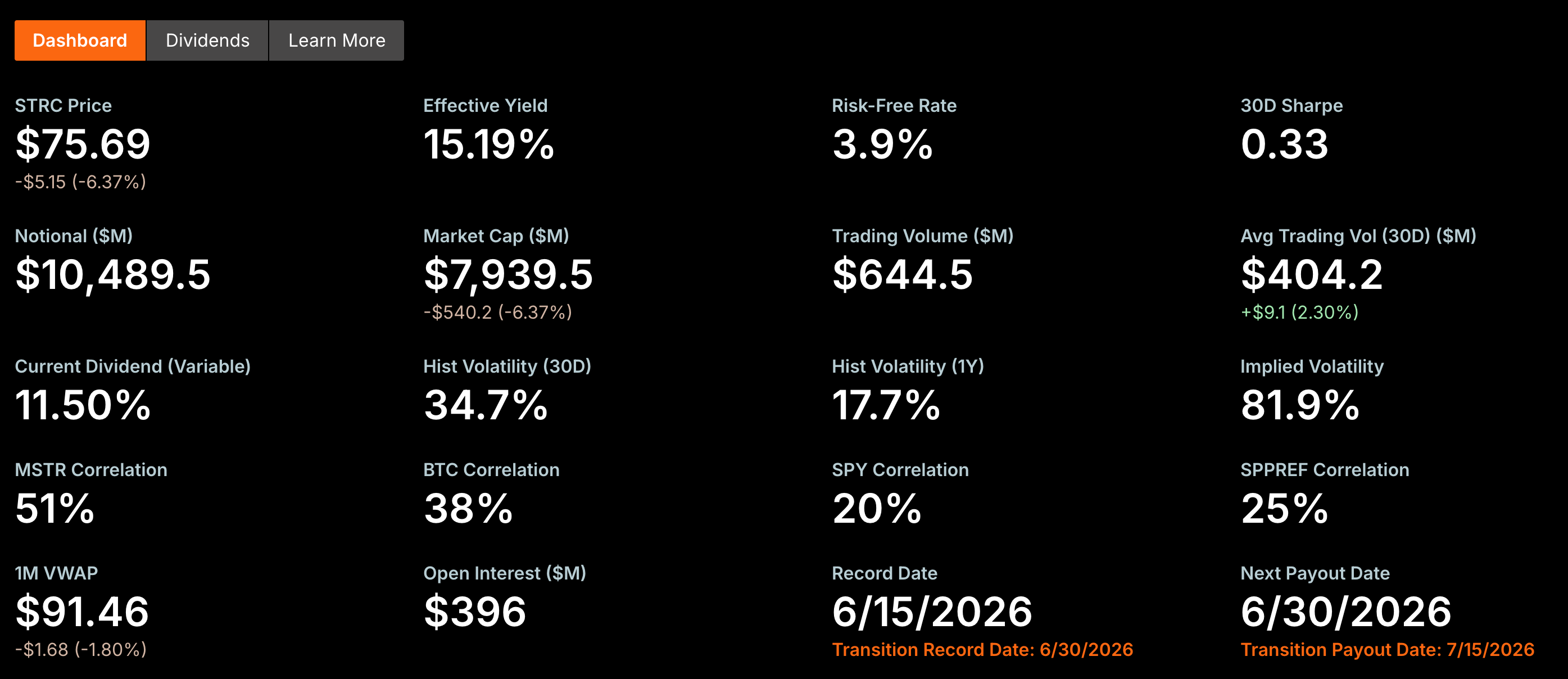
The de-anchoring of Strategy's (formerly MicroStrategy) preferred stock STRC is accelerating. During U.S. trading hours on June 25, STRC traded below $80 for the first time, hitting a low of $73.62 before closing at $75.69—a discount of nearly 25% from its $100 par value. Just a week earlier, the discount was 11%, implying a rapid deterioration in investor appetite for the security.
STRC is a perpetual preferred stock designed by Michael Saylor, who famously called it an "AI-designed product." Unlike common equity, STRC does not dilute common shareholders and has no maturity date; the company only needs to pay a fixed dividend. It was engineered to trade near $100 through dynamic dividend rate adjustments, allowing Strategy to issue new shares at par to fund continuous Bitcoin purchases. This mechanism was central to Strategy's flywheel: raise cash → buy BTC → strengthen market expectations → raise more cash.
Funding Channel Blocked, Cash Crunch Looms
The persistent depegging essentially shuts down this funding channel. No rational investor would subscribe to new STRC at ~$100 when the same security trades at $75 on the secondary market. Although Strategy could raise the dividend rate to attract buyers, the effectiveness is limited. The larger problem is the cash burden: STRC outstanding has reached approximately $10.49 billion, carrying an 11.5% dividend rate, implying annual cash dividend obligations of over $1.2 billion. When combined with other preferred issues (STRD, STRK, STRF), total preferred dividend obligations exceed $1.7 billion per year.
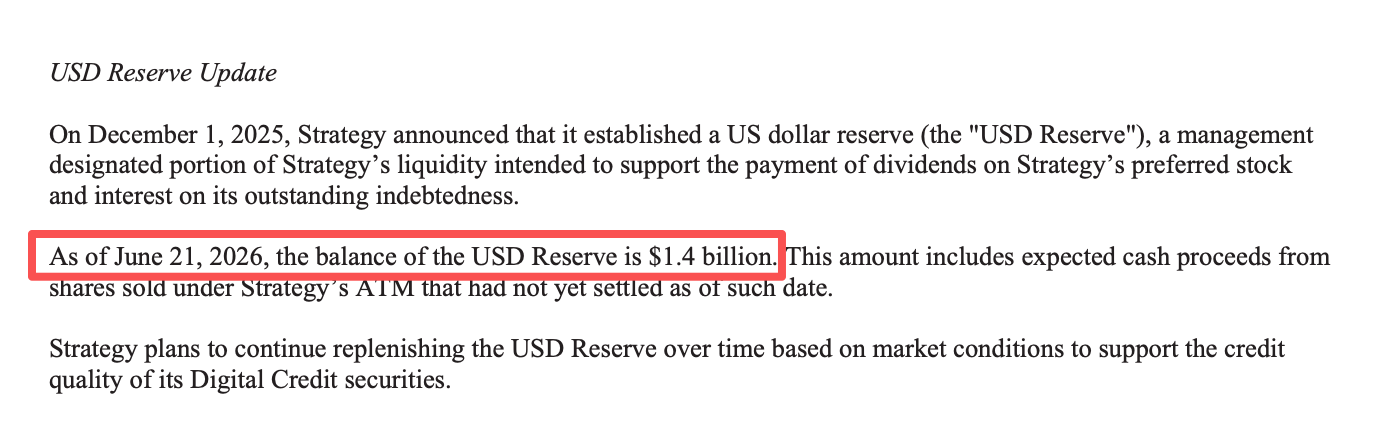
According to Strategy's 8-K filing on June 21, the company's cash and cash equivalents stood at about $1.4 billion. At that level, the cash reserve covers less than one year of preferred dividend payments. Without new funding, Strategy faces a serious risk of dividend default.
Three Remaining Options, All Costly
To bridge the cash gap, Strategy has three theoretical paths:
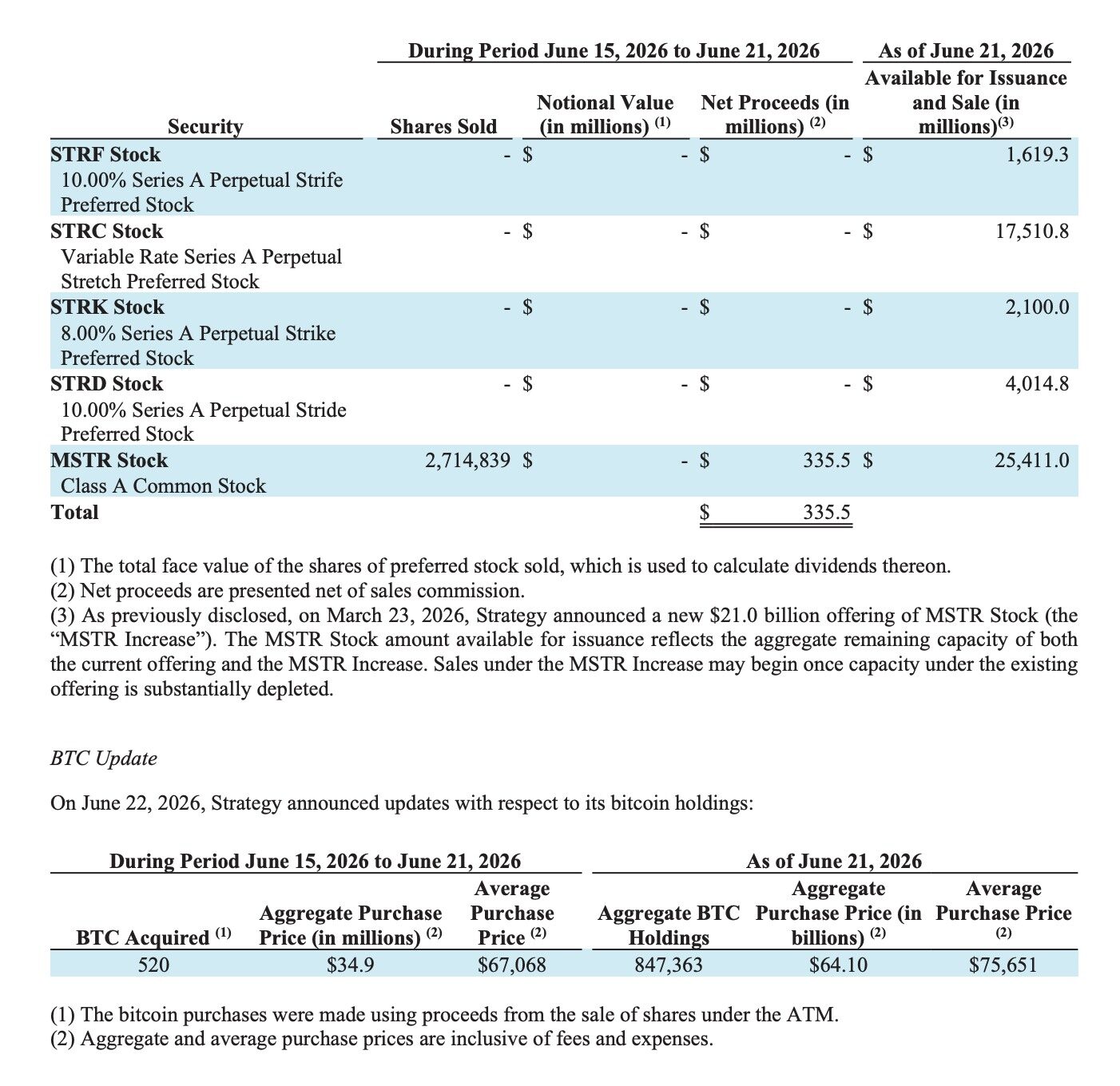
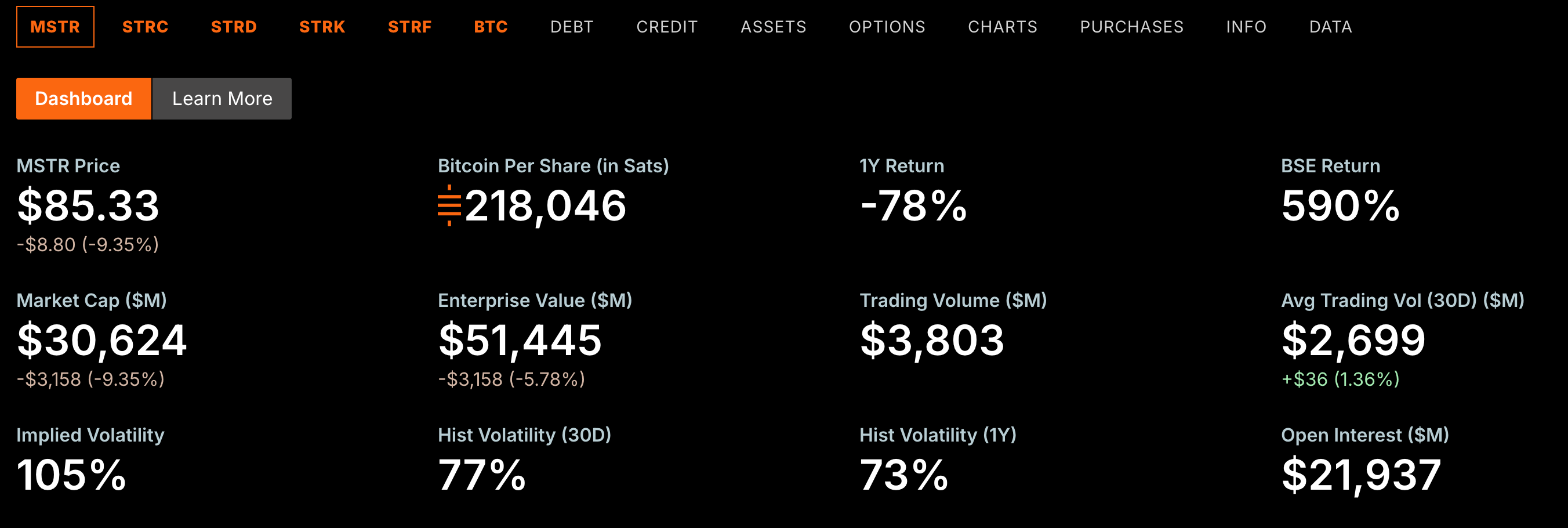
- Common Stock ATM Offerings: Strategy has been active here since June, selling MSTR shares into the market. In the week ending June 22, it sold 2,714,839 shares, raising $335.5 million. However, only $34.9 million (about 10%) was used to buy 520 BTC at an average price of ~$67,068; the rest went to boost cash reserves from ~$1.1 billion to ~$1.4 billion. The cost is dilution: BTC per share has dropped from a peak of 220,900 sats to 218,046 sats. If dilution outpaces BTC accumulation, MSTR's premium over NAV could erode.
- Debt Issuance: Strategy has used convertible bonds extensively in the past. But debt carries mandatory interest and principal repayment. With cash already tight, increasing debt would compound financial stress and reduce future flexibility.
- Selling Bitcoin: Strategy holds 847,363 BTC (worth over $50.7 billion, ~4% of circulating supply). On June 4, the company sold 32 BTC, its first-ever BTC sale, triggering a sharp market drop. Saylor framed it as a "market desensitization test" and said they would buy more later. But any further sales could spook the market, and if BTC price falls, the value of the reserve shrinks accordingly, potentially forcing more sales.
Flywheel Stalls as Common Stock Becomes Main Funding Source
Given the current constraints, Strategy appears to have chosen common stock ATM as its primary funding vehicle. But this shifts the flywheel logic. In the past, new capital was almost entirely deployed into BTC, increasing BTC per share and validating the premium. Now, the majority of proceeds are diverted to cash reserves. As MSTR shares multiply without proportional BTC accumulation, per-share BTC declines, undermining the very narrative that supports the premium.

If STRC remains unpegged for an extended period, Strategy may have no choice but to continue diluting common shareholders to meet dividend obligations, further squeezing BTC purchases. The virtuous cycle has become a vicious cycle.

From Marginal Buyer to Overhang: A Market Turning Point
For years, Strategy has been the most consistent institutional buyer of Bitcoin, with weekly Saylor purchases a market fixture. That dynamic is now fading. The same funding engine that once drove constant buy pressure is now struggling to maintain its flywheel, and in the worst case, could reverse into selling.

Investors should watch STRC price recovery closely. If STRC cannot regain its $100 peg—or even stabilize—Strategy's preferred equity channel stays closed, forcing the company to rely on dilutive common equity or potentially liquidate part of its BTC stash. The largest marginal buyer of Bitcoin is becoming the largest potential overhang. That is why the fate of STRC may well determine whether Bitcoin's next bull run can begin in earnest.