
STRC Depegs Below $80, Down 25% from Par Value
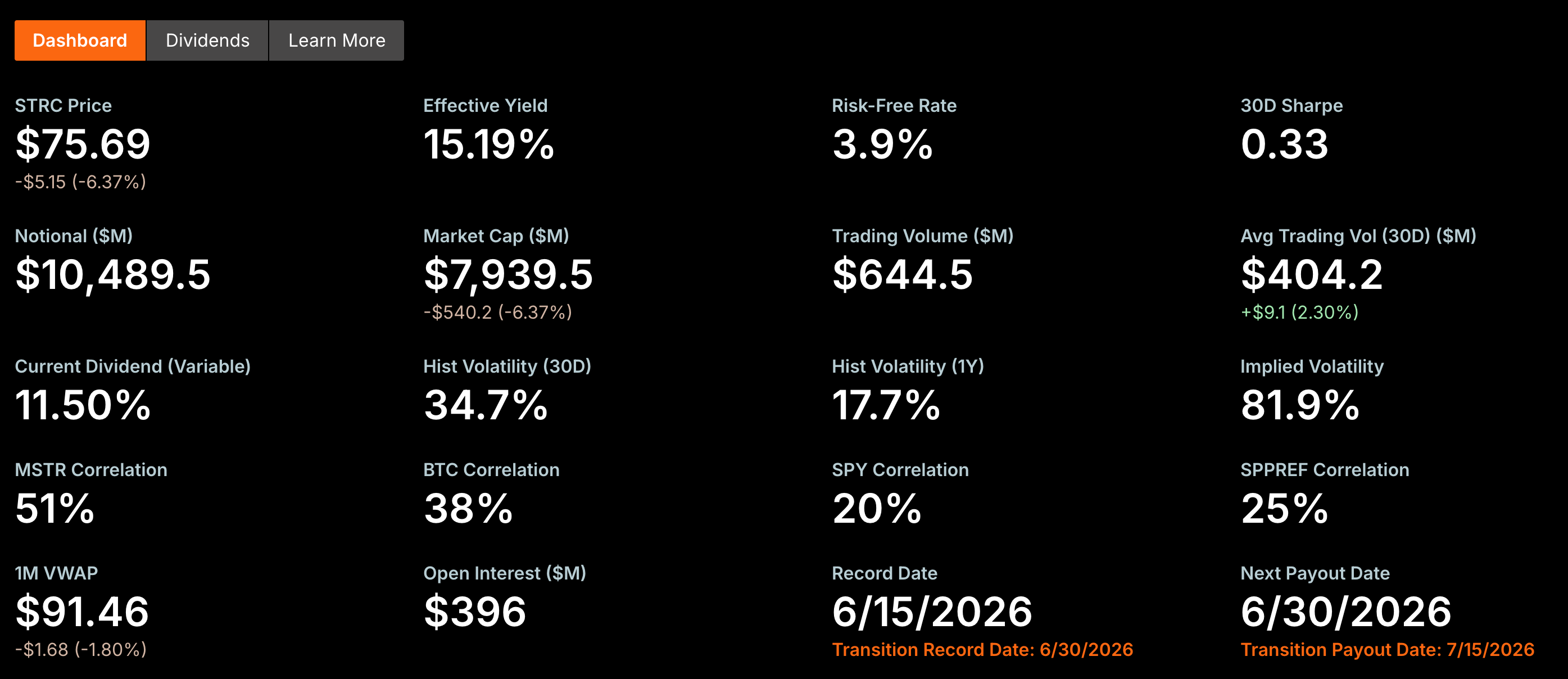
Strategy's preferred share STRC has continued its sharp decline. On June 27 during U.S. trading hours, STRC broke below $80 for the first time, hitting a low of $73.62 before closing at $75.69. This represents a depeg of nearly 25% from its $100 par value. The situation has worsened significantly from just a week earlier when the depeg was only 11%, raising serious concerns about the sustainability of Strategy's business model.
What is STRC? Strategy's Cheapest and Most Efficient Funding Vehicle
STRC is a perpetual preferred stock with no maturity date. It pays a fixed dividend but does not dilute common shareholders. Strategy's core business model relies on a continuous cycle of raising capital, buying Bitcoin, strengthening market expectations, and repeating the process. STRC was considered the most "perfect" tool in this flywheel, and Michael Saylor even claimed it was "designed by AI, not humans." The instrument was designed to trade around $100 via dynamic dividend adjustments. However, when the secondary market price falls below par, new issuance at par becomes impossible—effectively blocking the funding channel.
Funding Channel Blocked: Dividend Pressure Mounts, Annual Payout Exceeds $1.2 Billion
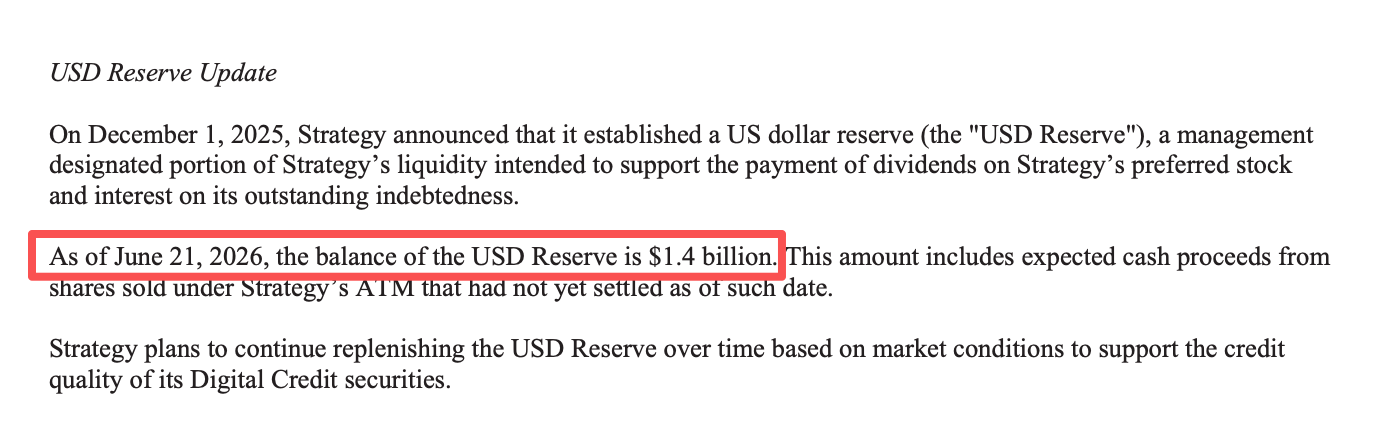
As of the latest disclosure, STRC's outstanding issuance is approximately $10.49 billion with a dividend yield of 11.5%, resulting in annual dividend payments of over $1.2 billion. Including other preferred shares (STRD, STRK, STRF), Strategy's total annual dividend obligations rise to approximately $1.7 billion. However, the company's cash reserves stand at only about $1.4 billion (per its June 21 common stock filing), insufficient to cover even one year of preferred dividends. Whether to sustain its business model or avoid dividend defaults, Strategy urgently needs more capital.
Three Paths to Raise Cash—All Costly
Theoretically, three options exist:
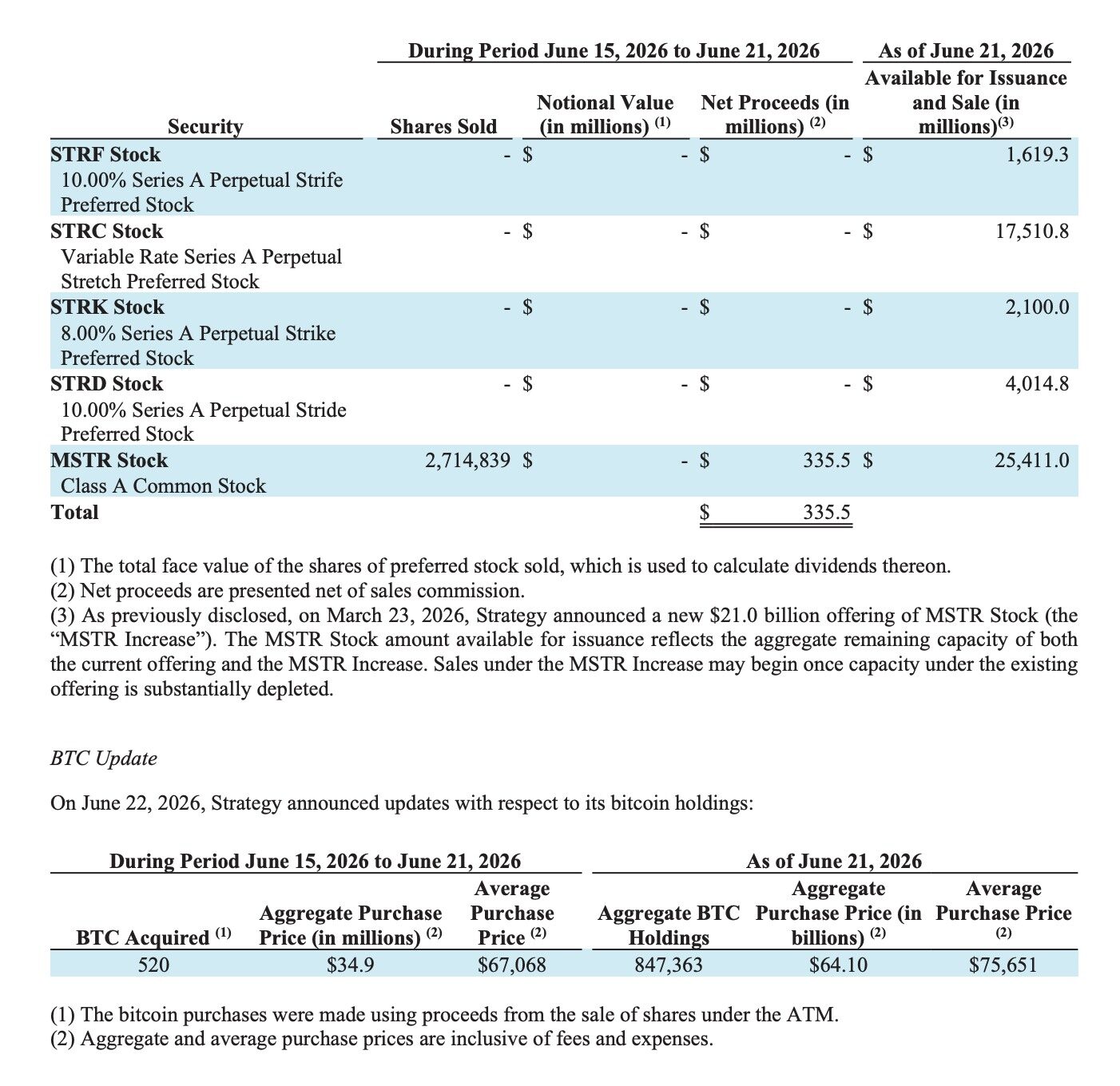
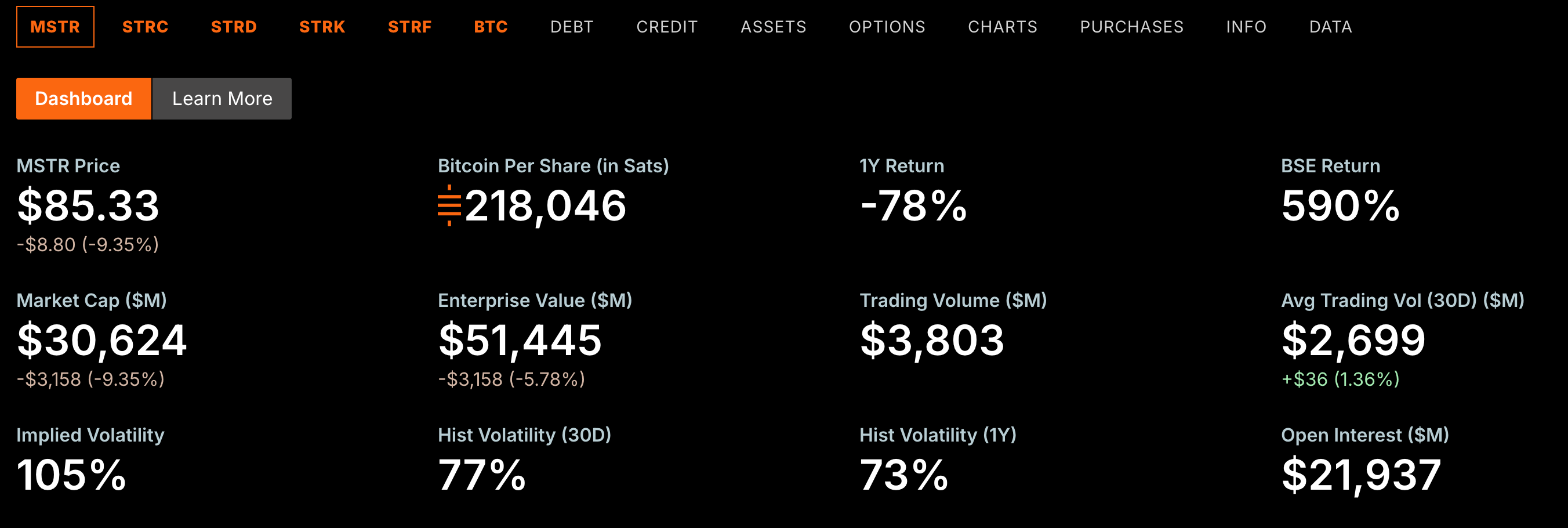
- Issuing Common Stock—the most direct approach now, but repeated dilutions erode per-share Bitcoin value. In the week ending June 22, Strategy sold 2,714,839 MSTR shares for $335.5 million, but bought only 520 BTC for $34.9 million, using the rest to replenish cash. Per-share Bitcoin holdings have fallen from a peak of 220,900 sats to 218,046 sats.
- Issuing More Debt—bond interest and principal are rigid obligations. With shrinking cash and rising dividends, additional debt would strain finances further and limit future flexibility.
- Selling Bitcoin—Strategy has hinted its Bitcoin stash could cover 32 years of dividends, but its first sale of 32 BTC earlier this month triggered a sharp market drop. Larger sales would pressure the already fragile BTC price and erode its own reserve asset value.

Strategy's Current Moves: Common Stock Dilution Cannot Replace STRC, Buying Power Fades
Since June, Strategy has relied on common stock ATM offerings for three consecutive weeks. However, most of the proceeds have gone to cash reserves rather than Bitcoin purchases. As dilution accelerates, MSTR's premium—the foundation of Strategy's market valuation—may come under threat. Strategy historically has been the single largest marginal buyer of Bitcoin, holding 847,363 BTC (~4% of circulating supply). But with lower capital efficiency, the true buying pressure entering the Bitcoin market has diminished. If STRC cannot return to par in the long term, Strategy may be forced to sell Bitcoin—transforming from the biggest buyer into a looming overhang seller, a knife hanging over Bitcoin's price.