
STRC Breaks Below $80, De-Peg Worsens to Nearly 25%
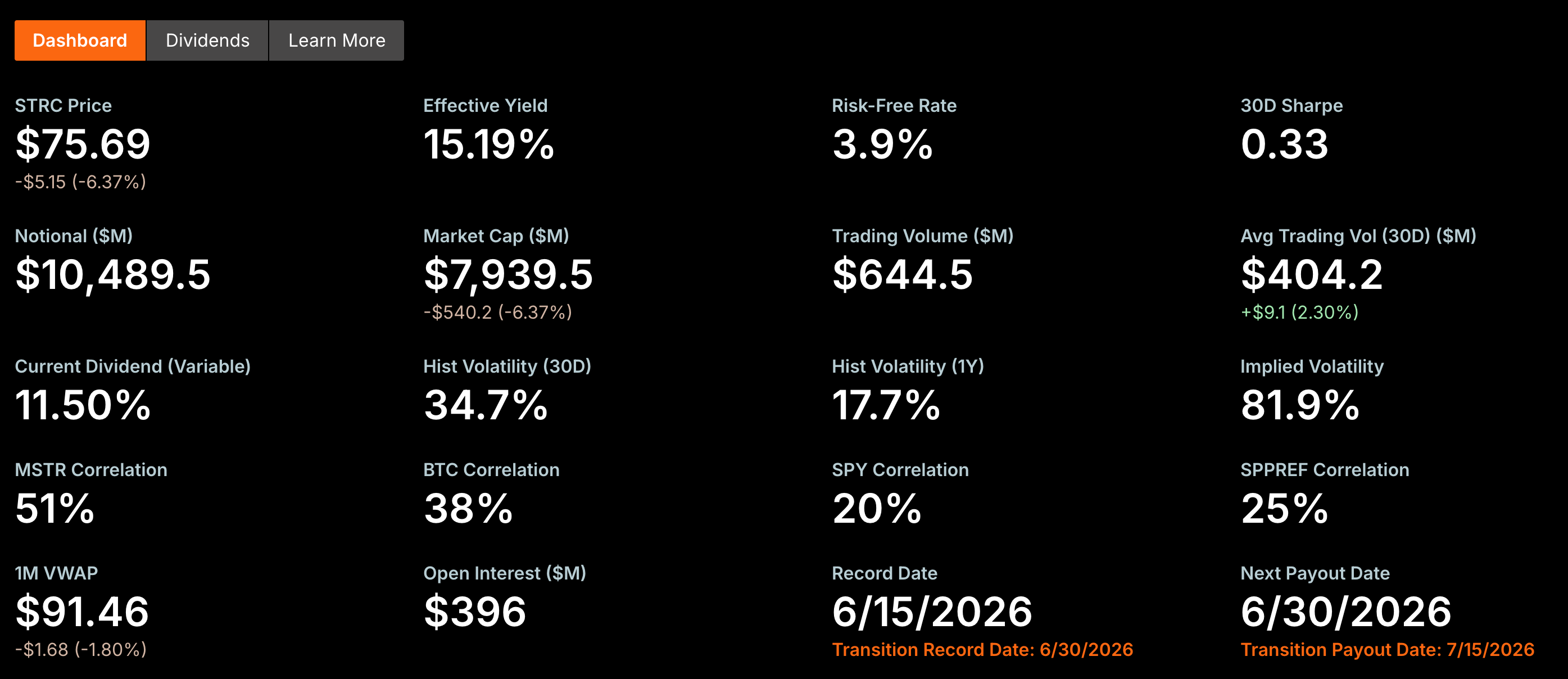
Strategy's preferred stock (STRC) suffered another sharp decline on Tuesday, breaching the $80 mark for the first time and hitting an intraday low of $73.62. It closed at $75.69, representing a nearly 25% discount to its $100 par value. The severe de-peg effectively blocks Strategy from issuing new STRC shares near par, shutting down what was once its cheapest and most efficient funding channel.
Why STRC Was Strategy's Most Critical Funding Tool
STRC is a perpetual preferred stock with no maturity and no dilution to common shareholders—only a fixed dividend. Michael Saylor once boasted that STRC was "designed by AI." In Strategy's business model, STRC served as the lowest-cost, highest-efficiency source of capital: the company would issue new shares near $100, use proceeds to buy Bitcoin, thereby reinforcing market expectations and enabling further financing rounds. This flywheel depended entirely on STRC trading around par. Now that STRC trades at a deep discount, no rational investor would subscribe to new issuances at $100, rendering this funding channel effectively closed.
Massive Dividend Obligations Crush Cash Reserves
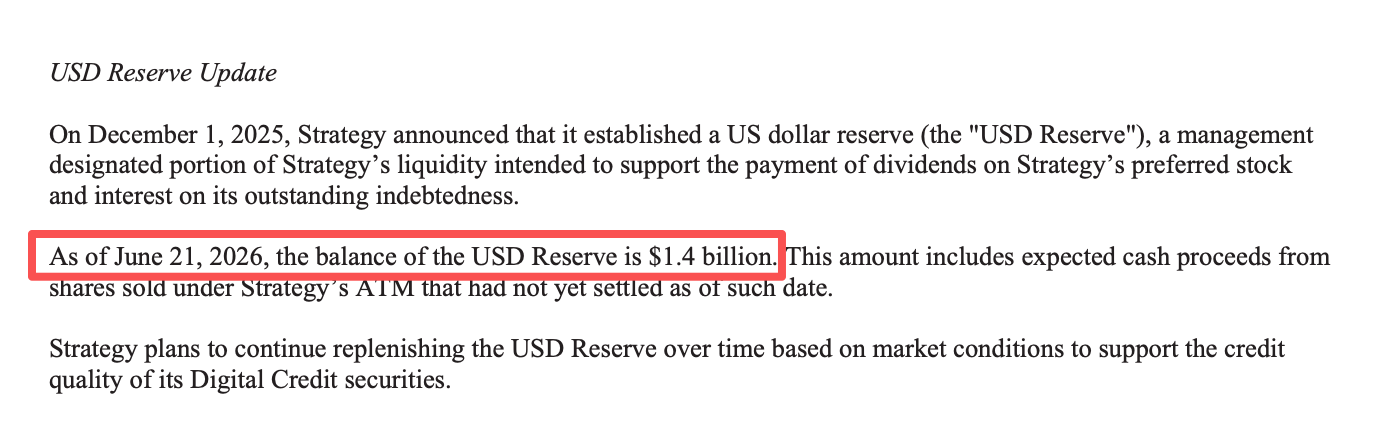
Beyond its broken funding mechanism, STRC imposes a heavy cash dividend burden. As of the latest disclosure, outstanding STRC totals approximately $10.49 billion, with an annual dividend rate of 11.5%, translating to over $1.2 billion in cash dividend payments per year. Including other preferreds (STRD, STRK, STRF), total annual cash dividends reach approximately $1.7 billion. Strategy's cash reserves, reported at about $1.4 billion in a June 21 common stock filing, cover less than one year of preferred dividend obligations alone.
Three Ways to Raise Cash—All Double-Edged Swords
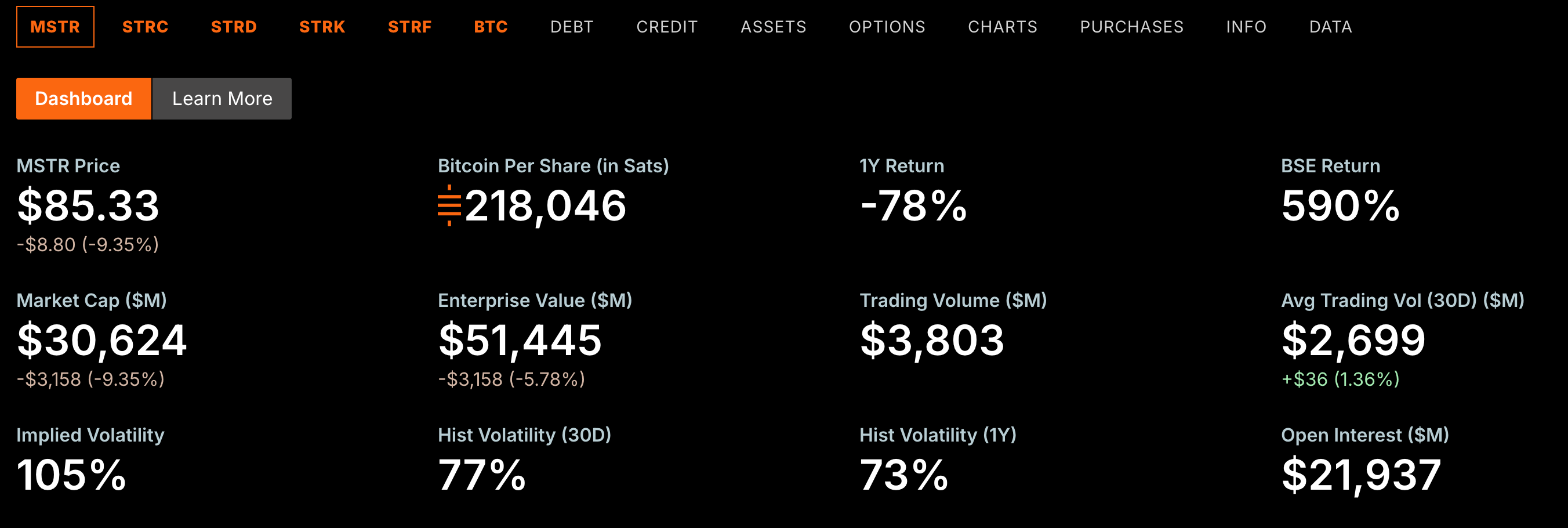
With STRC funding stalled, Strategy has three theoretical options. First, issue common stock. This is the most direct route, but continued dilution drags down BTC per share already fallen from a peak of 220,900 sats to 218,046 sats. Second, issue more debt. However, bonds carry rigid interest and principal repayment obligations, exacerbating financial strain when cash is tight. Third, sell Bitcoin. This would replenish cash quickly but is extremely dangerous. Earlier this month, Strategy sold just 32 BTC, triggering a sharp short-term selloff in Bitcoin. Any larger liquidation could hammer BTC prices, undermining the very asset that underpins Strategy's valuation.

Common Stock ATM: Funds No Longer Going to Bitcoin
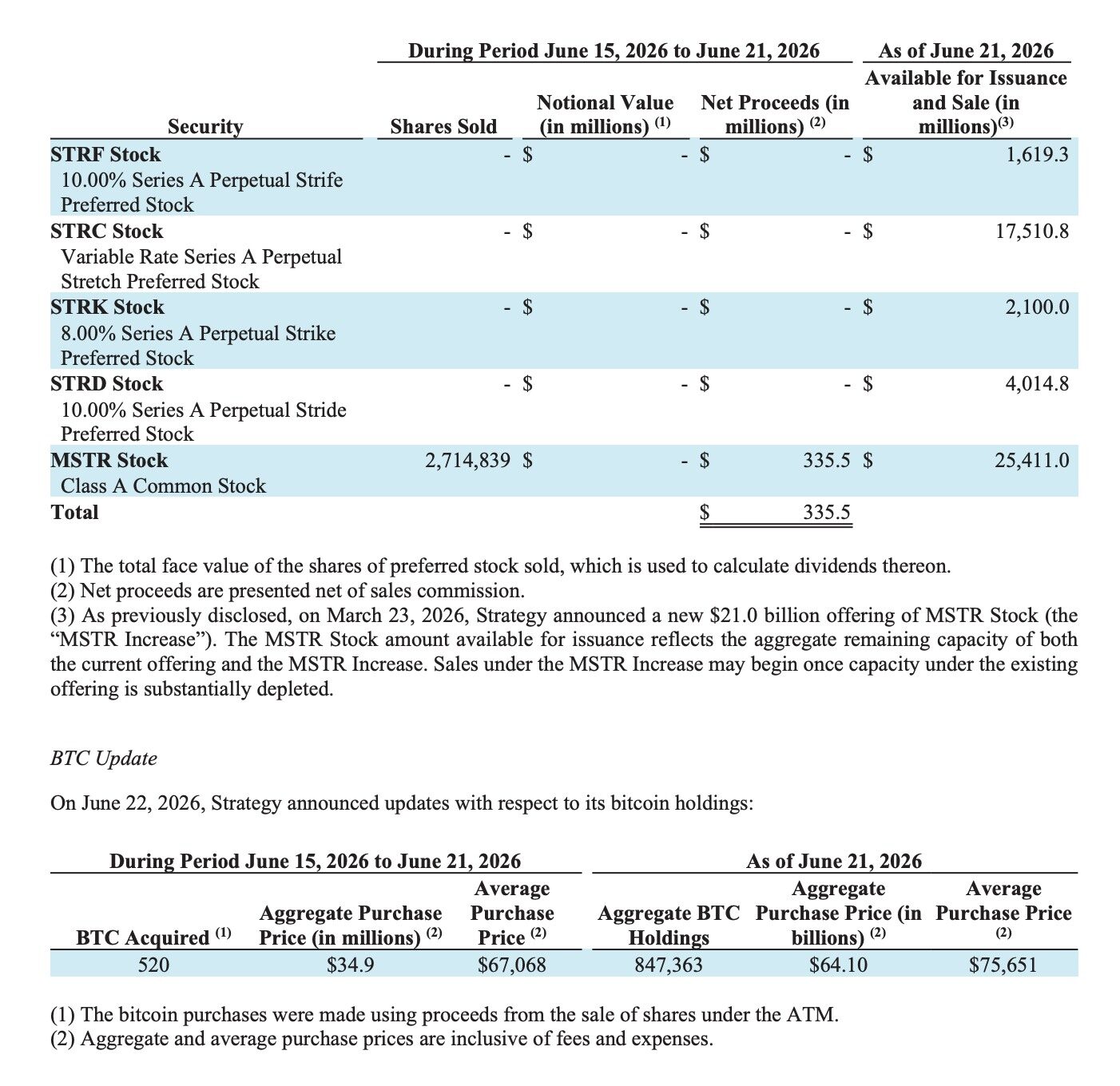
Strategy appears to have chosen the first path. Since June, it has conducted three consecutive weekly ATM offerings of MSTR common stock. The latest 8-K filing reveals that the company sold 2,714,839 shares for $335.5 million, but purchased only 520 BTC for $34.9 million—about 10% of the proceeds. The rest was used to boost cash reserves from ~$1.1 billion to ~$1.4 billion. This marks a fundamental shift: a similar financing scale now injects far less new demand into the Bitcoin market.

The Largest Marginal Buyer Is Becoming a Potential Seller
Strategy holds 847,363 BTC (approximately 4% of circulating supply, worth over $50.7 billion) and has historically been the most important marginal buyer of Bitcoin. But now, the bulk of its common stock proceeds goes to cash reserves rather than BTC. If STRC remains de-pegged long-term, Strategy will be forced to rely on dilutive equity financing indefinitely, and may eventually need to sell Bitcoin. This could transform Strategy from Bitcoin's biggest supporter into a persistent overhang. The de-peg of STRC is no longer just a corporate finance issue—it has become a critical variable for the sustainability of the Bitcoin bull market.