

STRC Depegs Further, Most Efficient Funding Channel Blocked
Strategy's perpetual preferred stock STRC has continued its depeg, falling below $80 for the first time on June 26, touching a low of $73.62 and closing at $75.69—nearly 25% below its $100 target par value. STRC was designed as Strategy's cheapest and most efficient fundraising tool, with the company able to issue new shares near par value to raise capital for Bitcoin purchases. When the secondary market price drops significantly below par, no investor would participate in new issuances at $100, effectively shutting down the channel.
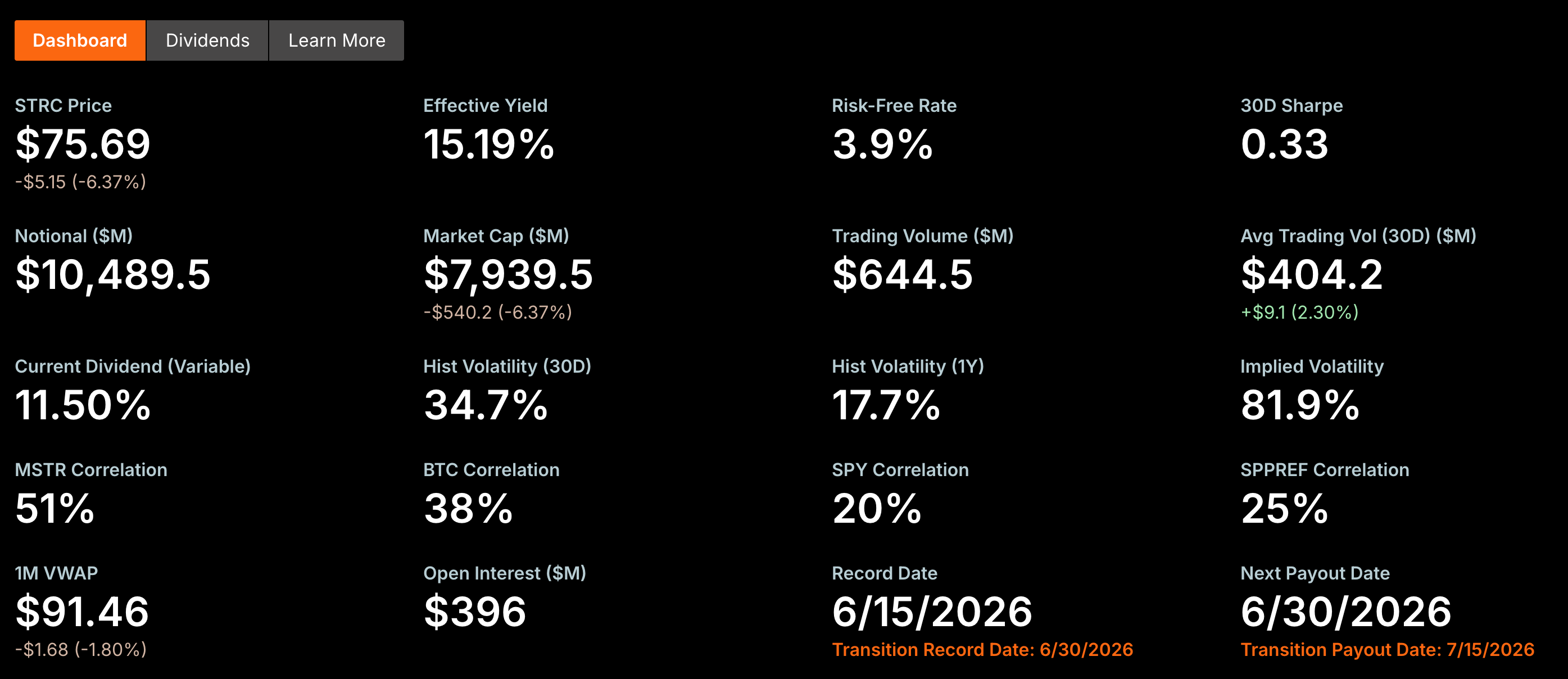
STRC carries no maturity and does not dilute common shareholders, requiring only fixed dividend payments. Strategy had attempted to maintain the price around $100 by dynamically adjusting the dividend rate (similar to algorithmic stablecoin mechanisms), but the current 11.5% dividend rate has failed to attract buyers, signaling eroding market confidence in the instrument.
Annual Dividend Burden Exceeds $1.2B, Cash Covers Less Than One Year
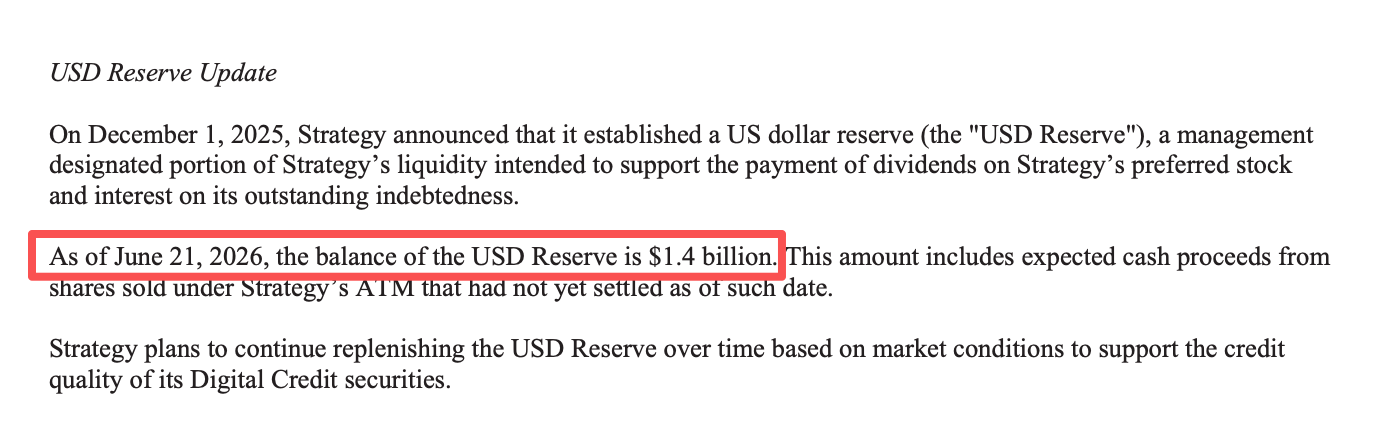
According to the latest official disclosure, STRC's issuance size has reached approximately $10.49 billion with an 11.5% dividend rate, translating to over $1.2 billion in annual cash dividend payments. When including other preferred stocks such as STRD, STRK, and STRF, total dividend obligations rise to approximately $1.7 billion. In its June 21 common stock offering filing, Strategy reported cash reserves of about $1.4 billion—barely enough to cover one year of preferred dividend payments. With the funding channel blocked, cash pressure has become a Sword of Damocles.
To avoid dividend default, Strategy urgently needs more capital. Theoretically, only three paths remain: issuing common stock, issuing more debt, or selling Bitcoin.
Three Paths to Cash: Dilution, Debt Burden, or Bitcoin Fire Sale
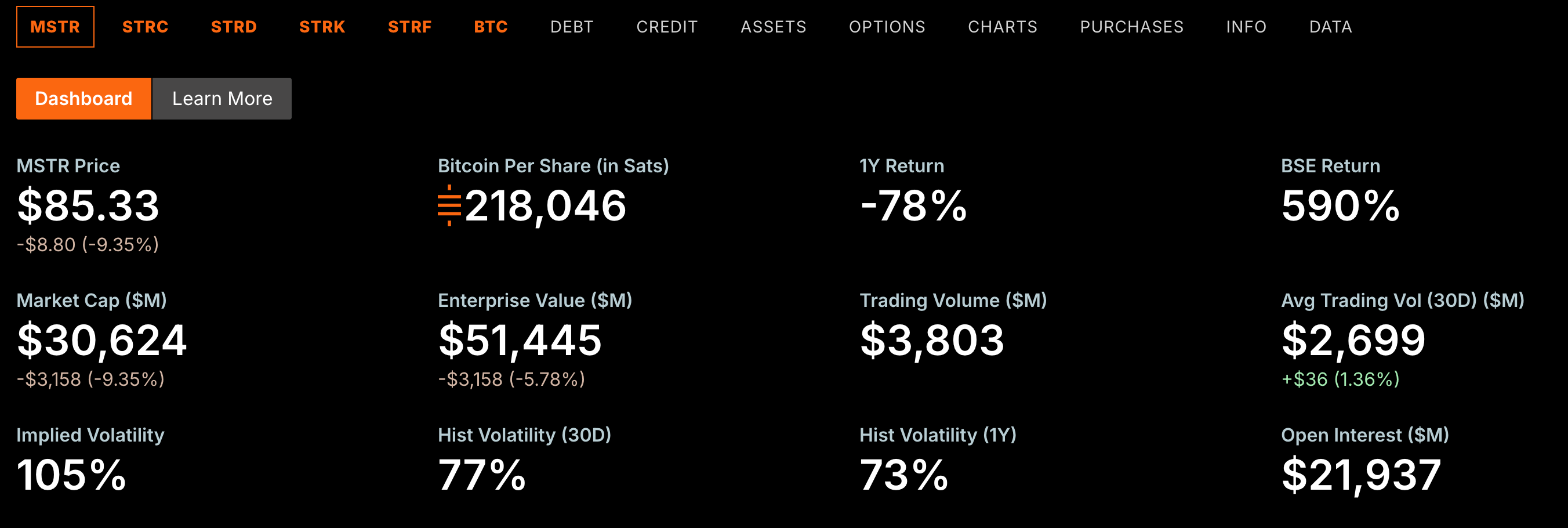
Issuing common stock is the most direct route. Through the ATM facility, Strategy can continuously sell MSTR common shares, but at the cost of increasing share count and diluting Bitcoin per share (BTC Per Share). Official data shows this metric has dropped from a peak of 220,900 Sats to 218,046 Sats, eroding common shareholder value.
Issuing more debt would further strain the balance sheet. Bond interest and principal payments are rigid obligations, and with cash reserves declining and dividend expenses rising, expanding debt would compress future financing capacity and risk credit downgrades.
Selling Bitcoin is the fastest way to raise cash. Strategy's official X account claimed its Bitcoin holdings could cover 32 years of dividends, but the sale of just 32 BTC earlier this month (framed as a "market desensitization test") caused a sharp price drop. As the largest single holder with 847,363 BTC (approx. 4% of circulating supply, valued at over $50.7 billion), any significant sell-off would devastatingly impact Bitcoin prices.

Common Stock Flywheel Falters: New Buying Not Flowing into BTC
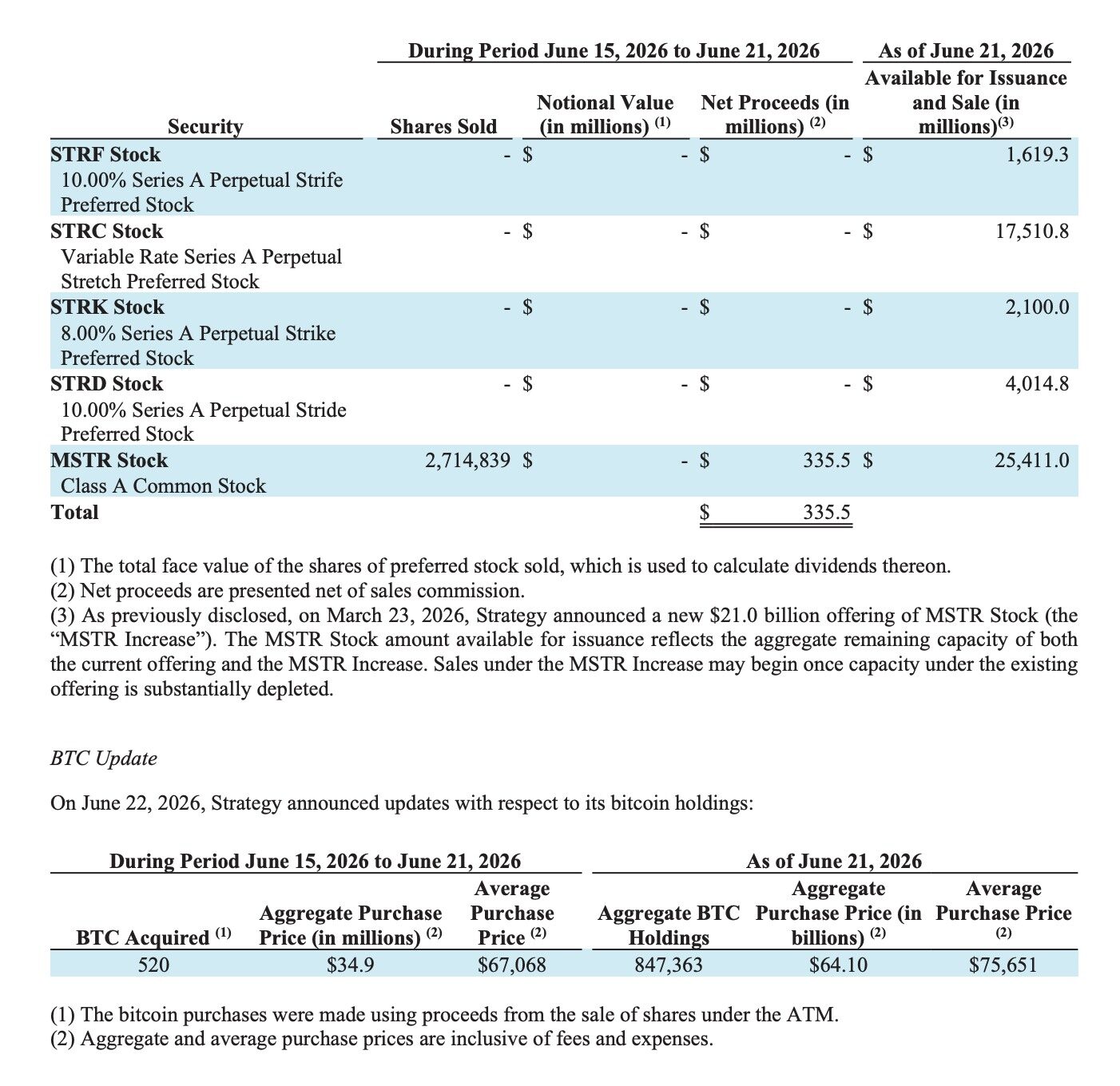
Strategy's recent actions reveal its chosen path: three consecutive weeks of common stock ATM fundraising since June. The latest 8-K filing on June 22 shows the company sold 2,714,839 MSTR shares in one week, raising $335.5 million. However, it purchased only 520 BTC during the same period (costing $34.9 million at an average price of $67,068). Only about 10% of the raised funds went into Bitcoin; the rest replenished cash reserves, increasing cash from ~$1.1B to $1.4B.

This model eases short-term cash pressure but cannot replace STRC long-term. Strategy's core business flywheel is "raise funds → buy BTC → strengthen market expectations → raise more funds → buy more BTC." Market confidence in MSTR's premium relies on continuously growing Bitcoin per share. Now common stock issuance is eroding that metric, reversing the flywheel logic.
From Marginal Buyer to Overhanging Sword: The Biggest Variable for Bitcoin
Over the past few years, Strategy has been Bitcoin's most important marginal buyer, with steady weekly purchases supporting price upward expectations. That dynamic is changing: common stock proceeds are now primarily used to replenish cash rather than buy Bitcoin, meaning the same fundraising scale delivers less new buying pressure to the market. If STRC remains depegged for an extended period, this situation will persist, potentially forcing Strategy to cut Bitcoin purchases further or even become a seller.

The transition from reliable marginal buyer to potential seller represents a fundamental shift. STRC's re-pegging is not just a corporate finance issue—it determines whether Bitcoin's largest institutional buying engine continues to run. If that engine stalls, the market loses its most predictable demand source, and the bullish case for Bitcoin faces a serious structural challenge.