
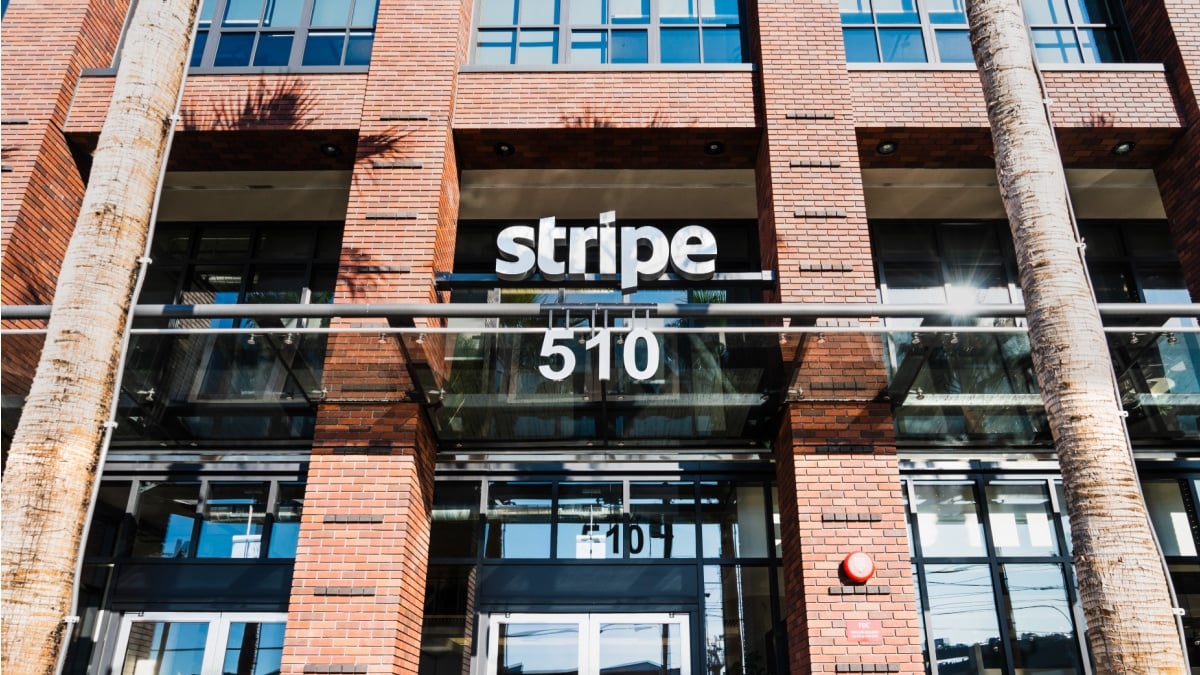
Stripe’s stablecoin strategy is starting to read like a single system rather than a series of unrelated bets.
Over the past 18 months, the company has made five moves that line up around the same end state: it acquired stablecoin infrastructure firm Bridge at an $1.1 billion premium in late 2024, bought embedded wallet provider Privy in June 2025, co-incubated payments-focused Layer 1 blockchain Tempo with Paradigm in September 2025, joined more than 140 institutions to launch the OUSD stablecoin alliance on June 30, 2026, and then, on July 15, 2026, teamed up with private equity firm Advent International to offer $53.4 billion for PayPal.
Put side by side, those steps sketch out something larger than a payments feature. They point to an effort to assemble issuance, wallet infrastructure, settlement rails, distribution, and revenue capture into one stablecoin stack.
The logic behind Stripe’s $53.4 billion offer for PayPal
Stripe and Advent International offered to acquire PayPal for $60.50 per share, valuing the company at more than $53.4 billion. The article says the bid represented a 28% premium to PayPal’s previous closing price, and PayPal shares jumped about 17% that day. If completed, it would be the largest fintech M&A deal on record.
What would Stripe actually be buying? The article breaks the answer into three parts.
First, consumer distribution. Stripe is deeply entrenched on the merchant side, while PayPal’s Venmo gives it a direct foothold in peer-to-peer consumer payments. That would fill a gap Stripe has long had: it built strong merchant infrastructure but never owned a large consumer relationship. PayPal has about 440 million active accounts globally and processed roughly $1.8 trillion in payments in 2025, according to the article.
Second, a stablecoin distribution network. Stripe and PayPal are described as two of the most important mainstream financial companies bringing stablecoins into traditional payment rails. PayPal already has PYUSD in market. If Stripe were to complete the acquisition, PYUSD’s existing user base and compliance framework would move inside the stablecoin system Stripe is building.
Third, timing. The article argues that PayPal is in a strategic trough. Early in 2026, the company issued disappointing earnings guidance and projected an adjusted profit decline in the single-digit percentage range for the full year. It also changed CEOs that year, with HP’s Enrique Lores taking over. Citi analysts said investors remain skeptical even as PayPal spends heavily to revive growth because “previous transformation efforts have failed to reverse the company’s slowing trend.” In that framing, valuation pressure and strategic uncertainty create an opening for a buyer.
Why Advent matters
Under the proposal, Stripe and Advent would own PayPal equally, with no plan to break the company up.
The article assigns Advent two roles. One is financial: sharing the burden of bank financing that could reach $50 billion. The other is operational: bringing in a sponsor with deep experience in fintech dealmaking and integration. Stripe, at its core, is still described as an engineering-led company, and large-scale integration of a legacy financial platform is not presented as one of its natural strengths.
Tempo: a settlement chain built for payments
Tempo sits near the center of Stripe’s stablecoin thesis.
On Sept. 4, 2025, Stripe and Paradigm co-incubated Tempo, a Layer 1 blockchain built specifically for payment use cases. Tempo is structured as an independent company, with Stripe and Paradigm as initial investors, and is led by Paradigm co-founder Matt Huang.
According to the article, the chain is targeting throughput of more than 100,000 transactions per second and sub-second finality so it can support payment volumes at Stripe’s global scale. This is not presented as a general-purpose public chain. It is being built from the ground up as stablecoin settlement infrastructure, with predictable fees, compliance hooks designed for regulated payment activity, and throughput tuned for payment workloads rather than broad smart-contract use.
Tempo’s permissionless blockchain is also expected to include a decentralized exchange optimized for stablecoins. UBS, Mastercard, and Kalshi have joined as “design partners.”
Tempo disclosed a $500 million financing round at a $5 billion valuation in October 2025, then went live in March 2026. The article frames its role as solving the “last mile” for stablecoin payments. Stablecoins can move value, but commercial-scale payment flows still need dedicated settlement rails.
In Stripe’s envisioned setup, when its merchants accept USDC, settlement would occur on Tempo rather than on general-purpose chains such as Ethereum or Solana. That would give Stripe much tighter control over the transaction stack underneath its payment flows.
OUSD and a different way to split stablecoin economics
On June 30, 2026, an independent company called Open Standard launched Open USD, or OUSD, with more than 140 initial partners spanning payments, finance, asset management, banking, crypto-native firms, and technology and retail platforms.
The article lists participants including Stripe, Visa, Mastercard, American Express, BlackRock, BNY, DBS, Standard Chartered, BBVA, Coinbase, Aave, MetaMask, Morpho, Solana, Google, Shopify, and DoorDash.
The central claim is that OUSD changes not just which stablecoin is used, but how the economics are shared.
Under the current model, users hold USDT or USDC while the yield on reserve assets, typically U.S. Treasuries, accrues to the issuer. The article says that in the high-rate period of 2024 and 2025, that model generated net profit of more than $10 billion a year for Tether, while other ecosystem participants received none of it.
OUSD flips that arrangement. The article says most reserve income will be returned to participating partners, with only a small management fee deducted. Enterprise minting and redemption are free, and there is no supply cap. In effect, income that had previously been concentrated at the issuer level is distributed across the alliance.
Tether and Circle, the two largest stablecoin issuers, are notably absent from the group.
Stripe’s role in OUSD
Stripe has formally named OUSD as the default stablecoin for businesses on its platform. Coinbase has also confirmed that OUSD will come to Base and other chains later this year. OUSD is also set to deploy on Tempo and other Layer 1 networks.
That arrangement closes a key loop in the strategy outlined by the article: merchants on Stripe use OUSD, settlement happens on Tempo and other supported chains, and reserve yield flows back to Stripe and alliance members. Issuance, distribution, settlement, and monetization begin to reinforce each other inside one structure.
How the five moves fit together
Viewed as a sequence, Stripe’s path becomes clearer.
- Bridge acquisition in 2024: secure stablecoin issuance and cross-border routing. The article says Bridge solved how stablecoins move, allowing Stripe to accept USDC payments in more than 70 countries and settle in local currency.
- Privy acquisition in 2025: add the wallet layer. Privy solved how users hold and use stablecoins, giving Stripe in-house capability at the account and wallet level.
- Tempo incubation in 2025: build a dedicated settlement rail for payments. Tempo answers the question of where settlement happens.
- OUSD launch in June 2026: rewrite the revenue split around stablecoins. OUSD addresses who issues the asset and how economics are shared.
- PayPal bid in July 2026: gain consumer reach and scale. PayPal answers who will use the system at mass-market scale.
From that perspective, Bridge, Privy, Tempo, OUSD, and PayPal are not isolated assets. They are different layers of one architecture. Bridge handles flow and routing. Privy covers custody and user interaction. Tempo provides settlement. OUSD changes the incentive structure. PayPal adds consumer access and broad distribution.
What this could mean for the stablecoin market
Tether: not the first target, but not immune over time
The article argues that Tether’s moat still rests on deep penetration in offshore markets and user habit. OUSD is aimed first at enterprise payments, a field that overlaps less with USDT’s core use in exchanges and crypto-native trading. Still, if OUSD builds enough density among business users, the path from enterprise adoption to broader retail use may not stay closed.
Circle: the pressure looks more immediate
According to the article, Circle shares fell 17.55% on the day the OUSD news broke, extending the one-month drop to 39%. Former Messari analyst Sam Raskin said OUSD’s model could pose a serious challenge to USDC and force Circle to expand revenue-sharing agreements, find new partners, or shift toward other business lines. The reason is straightforward in the article’s framing: USDC already has a meaningful institutional and enterprise user base, which is exactly where OUSD is aiming.
PYUSD: its future would depend on integration
If Stripe acquires PayPal, PYUSD’s role would come down to post-deal integration. The article outlines two possibilities. One is that PYUSD is replaced by OUSD. The other is that PYUSD and OUSD operate in parallel and both serve PayPal’s 440 million active accounts. Either path would accelerate OUSD distribution.
Crypto-native Layer 1s such as Solana and Ethereum: competition and coexistence
Tempo does not mean Stripe is abandoning Solana or Ethereum. The article says Stripe has confirmed Tempo will be offered as a settlement option alongside Solana, Ethereum, and Polygon. Even so, as Tempo matures, a larger share of commercial payment volume could migrate toward it. That creates tension between purpose-built payment infrastructure and the broader narrative around public chains.
Banks: the least discussed threat may run deepest
The article also notes that Stripe acquired Orum and Metronome in 2025. Orum provides bank real-time payments and multi-rail routing orchestration, while Metronome is a usage-based billing company.
In the article’s view, the end state of that bundle is not just more stablecoin usage. It is a full-stack infrastructure layer that can replace parts of traditional banking functions in cross-border settlement and account management. In plain terms, Stripe would be going after business traditionally handled by banks and by systems such as SWIFT, but with stablecoin economics underneath.
More than a payments product
The article closes by describing Stripe’s broader ambition as a “global money movement operating system.” In that model, Tempo is the pipe, OUSD is the currency moving through it, Bridge is the routing layer, Privy is the wallet layer, and PayPal is the distribution network.
It gives a hypothetical example: a business payment sent from Shanghai to Amsterdam could one day settle in OUSD on Tempo, use Bridge for fiat conversion, rely on Privy for account management, and reach the end user through PayPal’s network of 440 million active accounts. The payment would not pass through a traditional bank, would not rely on an existing stablecoin issuer, and would keep the interest economics inside the alliance.
Whether that system can actually be built remains unresolved. The article leaves three open questions: whether PayPal would accept the offer, whether OUSD can challenge USDT and USDC, and whether regulators would allow the broader structure to expand.
Still, the direction of travel is hard to miss. Stripe is trying to turn stablecoins from a payment feature into a closed-loop financial infrastructure stack.