Sentora2026-10-01 03:19:58Sentora’s RLUSD and PYUSD Morpho Vaults Show Heavy OutflowsTheDefiant reported that Sentora’s RLUSD and PYUSD vaults on Morpho saw sharp outflows, with the move occurring alongside a MetaMask staking incident. Based on Morpho’s latest snapshots cited in the source material, the RLUSD vault had about $8.46 million in available liquidity, while the PYUSD vault had roughly $2.38 million. The input provided for this item does not include a fuller account of the outflow size, a detailed timeline, or any direct explanation tying the liquidity changes to the MetaMask event beyond the headline framing. As a result, the available facts are limited to the reported outflows, the two vault names, the protocol involved, and the latest liquidity figures shown in Morpho’s snapshots.40
Sentora2026-09-29 14:10:13Sentora Seeks Aave V4 Markets With 50% Revenue Share for the DAOSentora is seeking to launch new markets on Aave V4, according to information cited by TheDefiant. The proposal covers an Ethereum instance that would support lending for RLUSD, PYUSD, and OUSD. It also includes a 50% revenue share for the Aave DAO. The available text indicates that Sentora would handle risk matters that sit outside the mandate of Aave’s risk service providers. No other operational details, timeline, or governance outcome were disclosed in the provided source material. The report centers on the structure of the proposed markets, the assets involved, and the division of responsibilities around risk oversight. Based on the source excerpt, the plan is framed around Aave V4, Ethereum-based lending markets, and a revenue-sharing arrangement tied to DAO participation.150
RLUSD2026-09-28 14:55:25RLUSD market cap rises to $2.491 billion, up more than 86% from the start of 2026Ripple’s stablecoin RLUSD has reached a new supply high, lifting its market capitalization to about $2.491 billion, according to BlockBeats. That marks growth of more than 86% from roughly $1.336 billion at the start of 2026. The token is now about $248 million behind PayPal USD (PYUSD), which stands near $2.739 billion. Recent weekly flows show the gap narrowing. RLUSD supply increased by about $112 million over the past week, while PYUSD fell by roughly $61 million over the same period. PYUSD started the year at around $3.531 billion, climbed to a peak of $4.214 billion on March 5, and has since dropped about 35% from that high. By issuance network, RLUSD on the XRP Ledger grew from $1.036 billion to $1.099 billion between Sept. 21 and Sept. 28, while Ethereum-based RLUSD rose from $1.343 billion to $1.392 billion. XRP Ledger now accounts for about 44% of RLUSD supply, with Ethereum making up about 56%. Even so, RLUSD remains a small part of the global stablecoin market, which is currently valued at about $306 billion.200
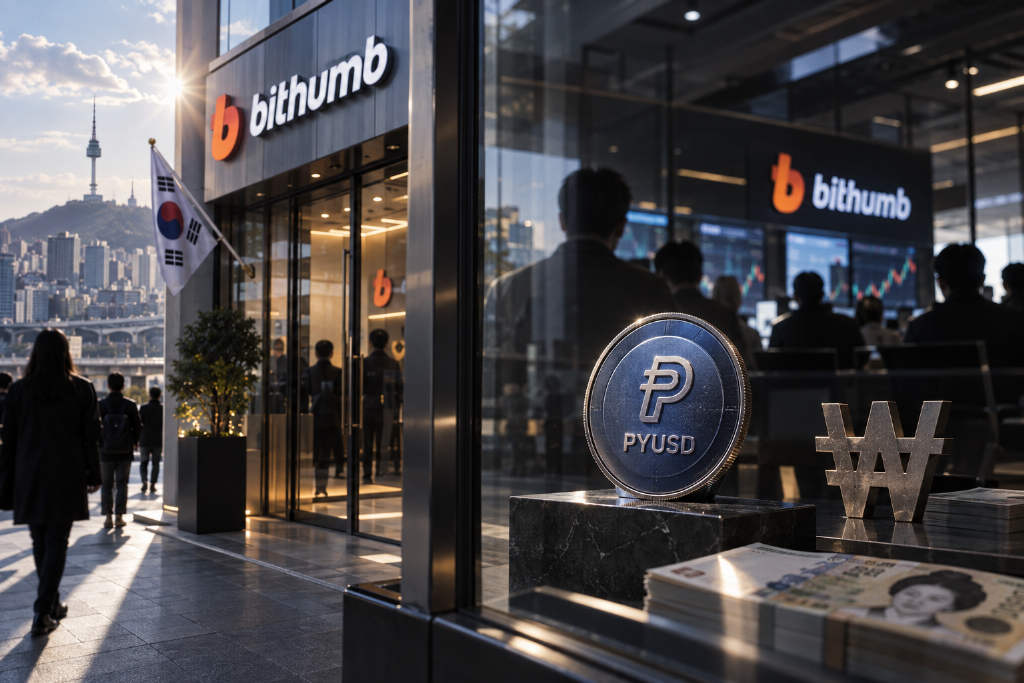
Bithumb2026-09-28 04:54:33Bithumb to list Quark.ai (Q) and PYUSDBithumb is set to add Quark.ai (Q) and PYUSD, according to an official announcement cited by Odaily. The brief notice only states that the exchange will list the two assets. It does not provide further details on the listing schedule, supported trading pairs, or deposit and withdrawal arrangements. The update was published as a 7x24 newsflash by Odaily on Sept. 28, 2026.200
Bithumb2026-09-28 04:52:51Bithumb to list PYUSD in KRW market, trading set to open at 15:00 local timeSouth Korean cryptocurrency exchange Bithumb will list PYUSD in its Korean won market, according to an official announcement cited by ChainCatcher. The exchange said trading is expected to open at 15:00 local time. The brief notice did not include additional listing details in the source text, such as deposit timing, withdrawal support, or specific trading rules. The update centers on the planned launch of PYUSD trading on Bithumb’s KRW market and the expected opening time released through the official notice.240
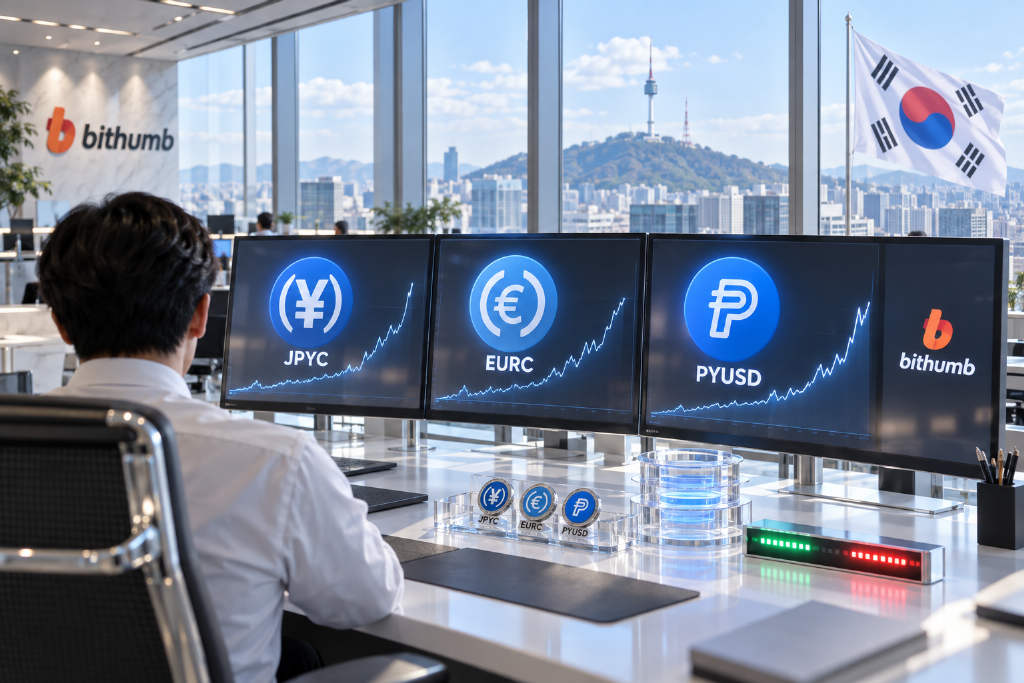
South Korea e2026-09-27 05:15:44Fiat-backed stablecoins see sharp price dislocations on South Korean exchangesFiat-backed stablecoins have recently traded at steep premiums on South Korean virtual asset exchanges, according to ChainCatcher. JPYC, a yen-linked stablecoin, rose as high as four times its reference price after listing. EURC, a euro stablecoin, surged more than 400% in a single day on Bithumb, while PYUSD, a U.S. dollar stablecoin, also showed a notable premium. The reported moves were attributed to thin circulating supply during the early listing stage combined with concentrated buying, rather than any issue tied to issuer reserves. Industry participants said reserve backing alone cannot prevent price distortion in the secondary market. They called for South Korea to build supporting mechanisms at the design stage of a won-denominated stablecoin framework, including safeguards for initial circulating supply, market maker and liquidity provider arrangements, disclosure of price deviation rates, and restrictions on market orders.250
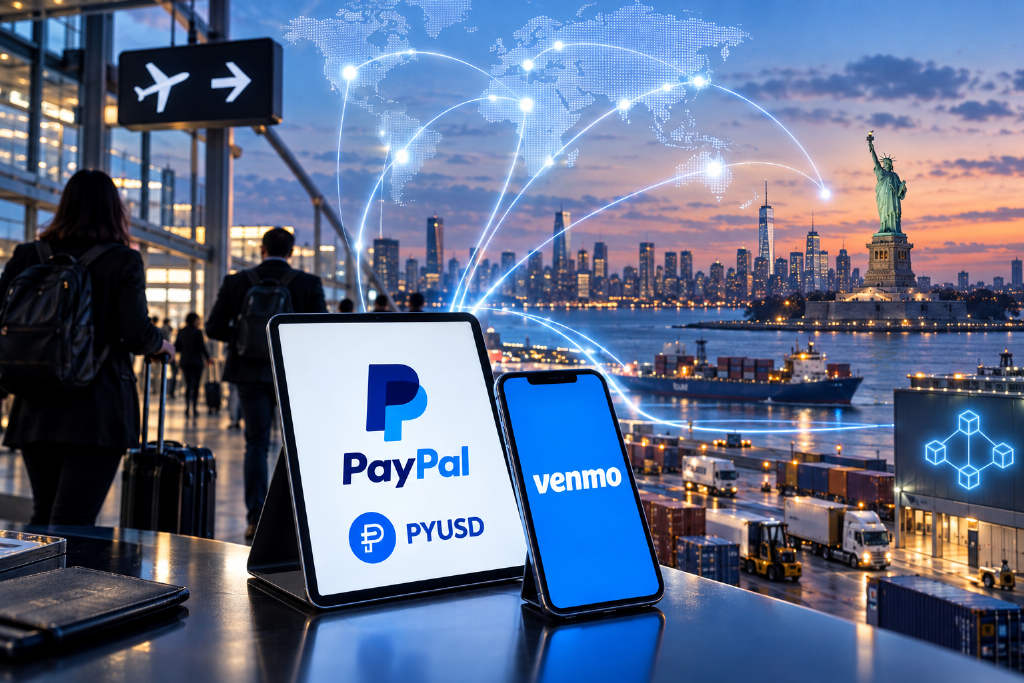
PayPal2026-09-25 16:05:33PayPal expands PYUSD to 70 markets worldwidePayPal has expanded its regulated stablecoin, PYUSD, to 70 new markets globally, according to Techub News, citing @EleanorTerrett. The rollout broadens the token’s reach across international payment channels and adds to PayPal’s push to place stablecoins into more practical payment use cases. PYUSD can be transferred between PayPal and Venmo wallets, and it is already supported by multiple exchanges, DeFi protocols, and Web3 applications. That existing support base gives the stablecoin a wider set of on- and off-platform touchpoints as PayPal extends availability. The stated focus of the expansion is cross-border payments and remittances. PayPal is positioning PYUSD as a tool to improve efficiency in those transactions while increasing stablecoin usage in global payment scenarios. No additional rollout details were disclosed in the source item.240
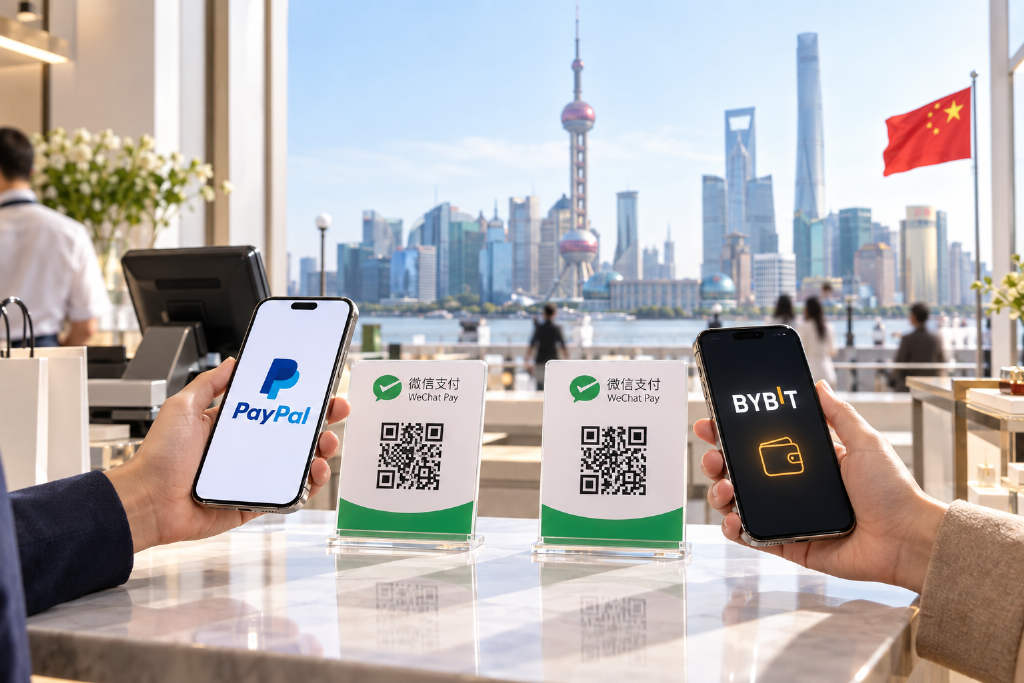
PayPal2026-09-20 10:12:44PayPal and Bybit take different routes to WeChat QR payments in mainland ChinaPayPal and Bybit are approaching WeChat Pay acceptance in mainland China through very different rails. On Aug. 19, PayPal said users can scan WeChat merchant QR codes in mainland China through the PayPal app. But according to remarks cited by Decrypt, the service does not rely on blockchain or tokenized assets, even though PayPal already supports PYUSD. Instead, merchants receive renminbi while users are charged in their local currency through conventional correspondent banking and foreign-exchange channels. Bybit, by contrast, has launched a page titled “Bybit Pay x WeChat Pay (Beta),” saying eligible users can scan WeChat merchant QR codes in mainland China and pay directly with crypto assets held in their accounts. Still, mainland China remains on Bybit’s list of restricted jurisdictions, which means the service is not open to mainland residents for registration or verification. As described in the source article, the current beta is effectively aimed at overseas users whose accounts are registered in supported regions and who then spend in mainland China, such as foreign visitors or overseas Chinese crypto holders.410