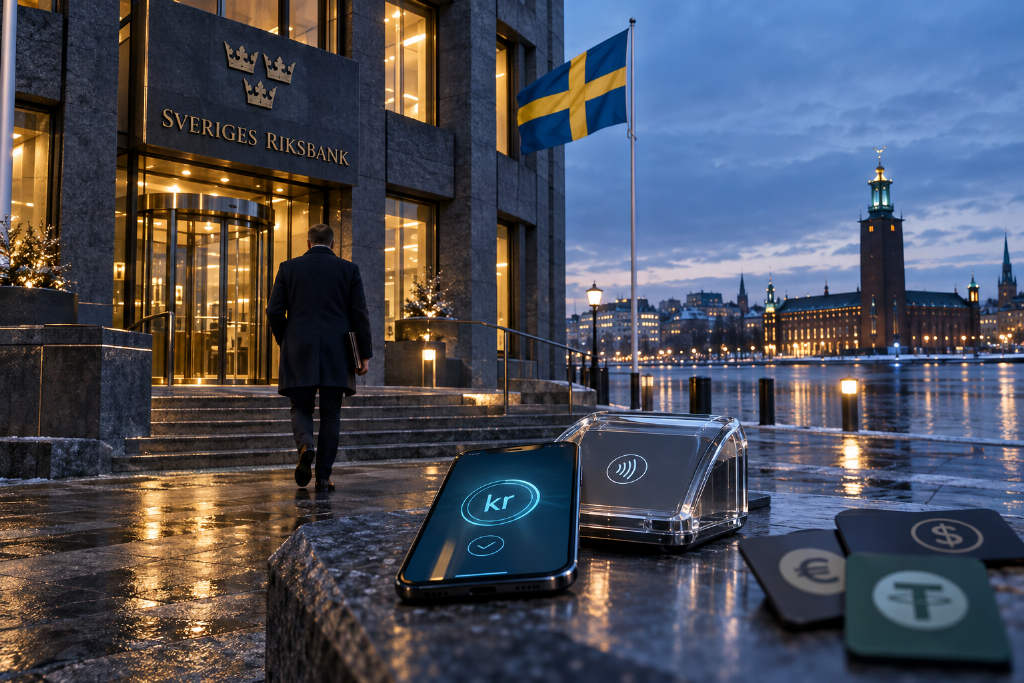
Sweden’s central bank, the Riksbank, has urged lawmakers to get legislation ready for a possible launch of the e-krona, pointing to two developments: the European Central Bank’s work on a digital euro and rising use of foreign-currency stablecoins. In a letter, the Riksbank said the ECB plans to begin a digital euro pilot in 2027 and could make it available to the public in 2029. The bank argued that if a payment system lacks a digital version of the national currency, its competitiveness could be weakened. It also said wider use of foreign-currency stablecoins, including dollar-pegged tokens, for payments in Sweden could put pressure on the use of the Swedish krona, though it sees the near-term risk as limited. The Riksbank estimates that launching an e-krona would take at least five years, not including the time required for legislative changes.
Sweden’s central bank, the Riksbank, has urged lawmakers to prepare legislation for a possible e-krona, according to ChainCatcher.
The bank cited two reasons: the European Central Bank’s push on the digital euro and growing use of foreign-currency stablecoins. In a letter, the Riksbank said the ECB plans to start a digital euro pilot in 2027 and could roll it out to the public in 2029.
The Riksbank said a payment system without a digital version of its domestic currency could see its competitiveness affected. It also said that foreign-currency stablecoins, including dollar-pegged tokens, if widely used for payments in Sweden, could put pressure on the use of the Swedish krona, although the short-term risk is limited.
The bank estimates that launching an e-krona would take at least five years, and that timeline does not include the time needed for legislative changes.
This article was originally published by Bit.Fan. For more cryptocurrency news and market insights, visit www.bit.fan. Disclaimer:
The market information, project data, and third-party content displayed on this platform are for industry information sharing only and do not constitute any form of investment advice or return commitment.
Cryptocurrency trading carries high risks. Users should fully assess their risk tolerance and make independent decisions. All profits, losses, and legal responsibilities are borne by the users themselves.