

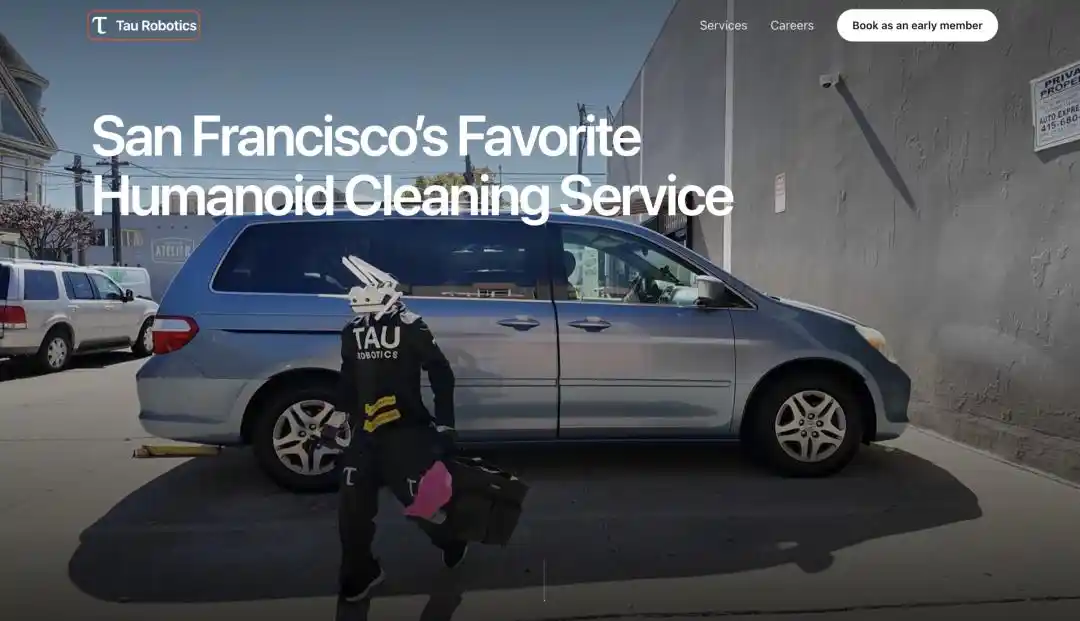
Tau Robotics, a U.S. robotics startup based in the San Francisco Bay Area, has started offering an invite-only humanoid home cleaning service in San Francisco. The company lists the service at $30 per hour.
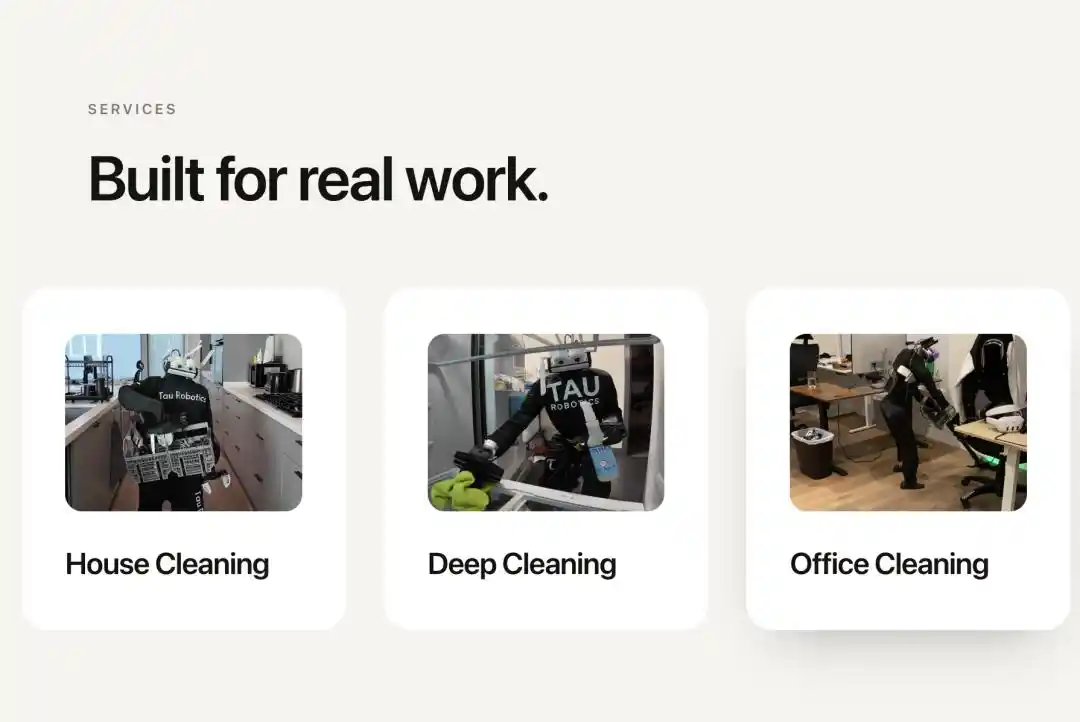
In videos highlighted by the source article, the humanoid is shown washing its own hands, dispensing soap, turning off the faucet, wiping with a cloth, mopping floors, spotting trash on the ground, bending down to pick it up, and carrying it to a trash can. The article noted that all of the demos were presented at 1x speed.
But the same report said the clips were teleoperated rather than fully autonomous. It described the setup as a practical shortcut at the current stage: use remote control to close the performance gap, get robots into real homes, and collect operational data from actual deployments.
Tau Robotics is an early-stage startup
According to the article, Tau Robotics was founded in 2024 and has a team of fewer than 10 people. The company is headquartered in the San Francisco Bay Area.
The report said Tau raised about $3 million in a pre-seed round in September 2024 and then stayed quiet until this latest launch centered on humanoid cleaning services. Its operating logic, as described in the piece, is not to begin with full autonomy, but to rely on teleoperation first, establish household deployments, and then build a data flywheel from those runs.
A roof-mounted antenna and three service robots
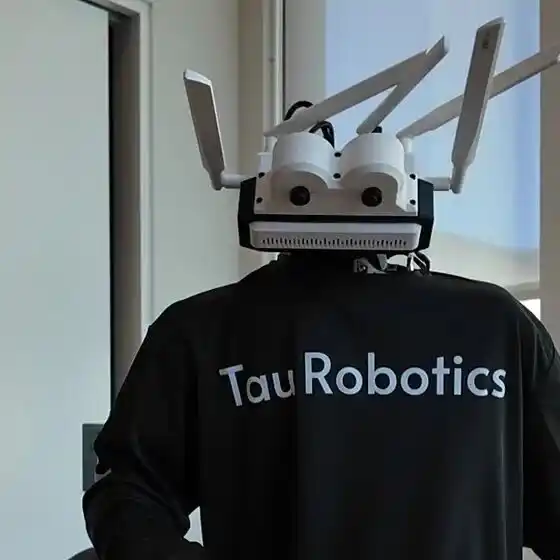
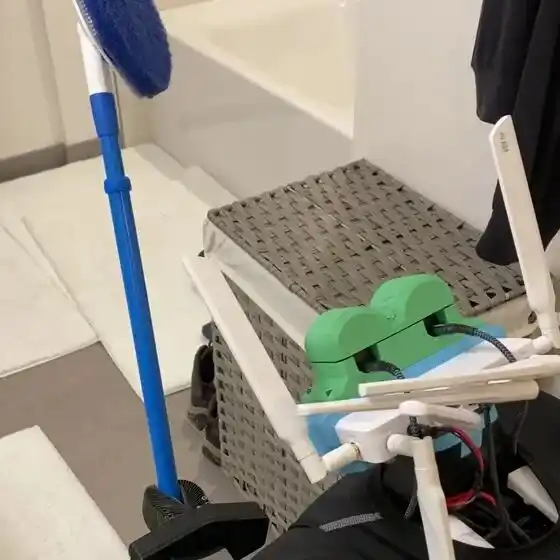
The robot’s appearance drew attention because of the device mounted on top of its head, which the article compared to a Wi‑Fi router. The company’s founder, cited in the piece, said the placement may look unusual but is the best location for the humanoid’s antenna.

Tau currently presents three humanoid “employees.”
- Chelsea focuses on kitchens and bathrooms, including sinks, counters, mirrors, tiles, and floors.
- Elon is positioned for recurring visits. After several sessions, it can remember where household items belong and return them after cleaning up.
- Tony is designed for deep cleaning, handling baseboards, tile grout, window tracks, under refrigerators, and behind washing machines.
The demos shown in the report include wiping tables, mopping floors, and taking out trash. Because the current system is teleoperated, the article argued that tasks a human can perform are, in principle, within reach of this model.
$30 an hour and questions about consumer demand
Pricing is a key part of the pitch. Tau’s rate is $30 per hour. The source article said that is relatively affordable by U.S. standards, adding that in-home cleaning by human workers can often cost $50 to $60 per hour.
That does not answer whether consumers will want the service. The article raised the question directly: will people pay $30 an hour to let a teleoperated humanoid with onboard monitoring enter their homes and clean? Technical feasibility and market acceptance are not the same thing.
Why home robotics remains difficult
The article said that after discussions with several embodied AI practitioners at WAIC last week, one shared view stood out: getting humanoid robots into homes is extremely hard. It also pointed to domestic attempts in China, including an earlier smart cleaning collaboration between Zibianliang and 58.com, as an example of household deployment. That effort, the report said, was criticized by some online commenters because a human cleaner still had to stay nearby while the robot worked.
The article’s framing was blunt. If embodied AI companies do not enter real-world scenarios first, they cannot gather the data they need. At the same time, it said, many companies in China are still prioritizing industrial settings, where environments are more controlled and data loops are easier to build.
The U.S. path can look different. The report said weaker manufacturing demand relative to China has encouraged some companies to start with home use cases instead. It cited 1X Neo, which drew attention last year with a concept built around teleoperated entry into the home.
In that framing, remote operation is a smart compromise. It keeps tasks moving while also collecting data, something the article likened to shadow mode in autonomous driving. Even so, it added that 1X Neo had still not reached formal large-scale delivery nine months after launch, making market reaction difficult to judge.
Why insist on a humanoid form
The article also examined a recurring question: why use a humanoid at home at all? Rather than repeating the standard claim that bipedal robots are better for unstructured environments, the piece shifted to the data and operation side.
It cited comments from Sudu, which argued that teleoperating a wheeled base while carrying out complex mobile manipulation is difficult. With a humanoid, by contrast, an operator can map actions through natural body intuition, lowering the barrier to control.
On that basis, the article suggested that Tau and 1X may be sticking with humanoid designs in large part because teleoperation works more naturally with that form factor.
Tau’s current service is invite-only. The source article said people in San Francisco can apply through the company’s website: https://www.tau-robotics.com/