


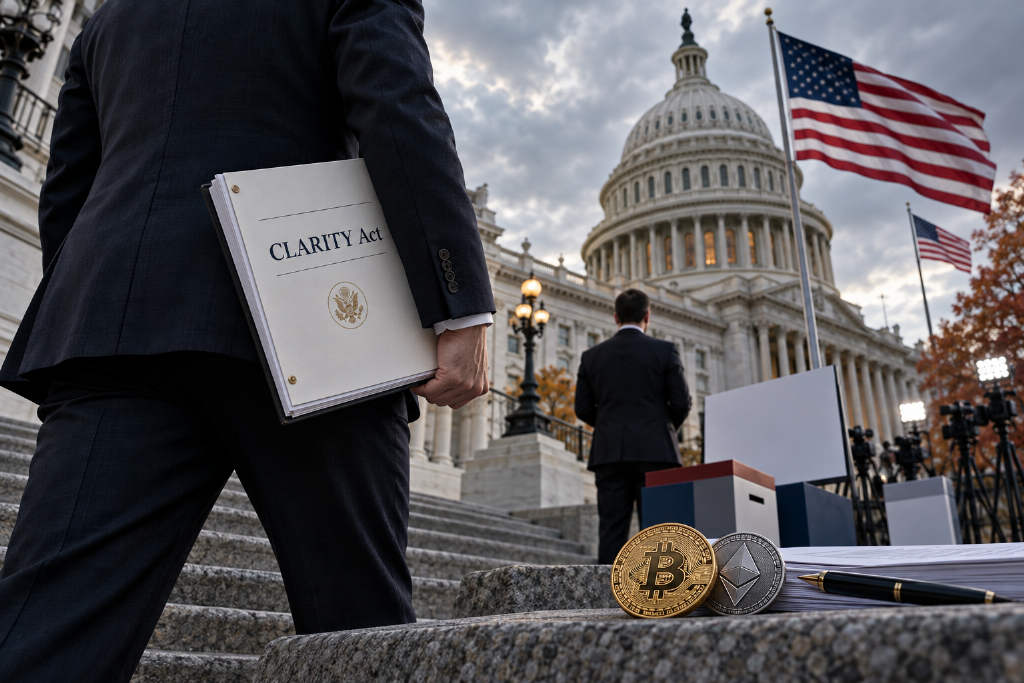
Washington’s crypto agenda could hinge on next week’s U.S. midterm elections, according to a TD Cowen policy note shared with Bitcoin Magazine. In the note, analyst Jaret Seiberg said the most likely election outcome may make it difficult for Congress to pass the CLARITY Act over the next two years.
The bill would establish rules for bitcoin and other digital assets. The report said the crypto industry has spent $176 million across more than 100 races in an effort to shape the outcome.
A Democratic sweep is seen as the most likely result
Prediction markets cited in the report give Democrats a 90% chance of winning the House and a 62% chance of winning the Senate. TD Cowen called that the most negative scenario for bitcoin and the broader crypto sector.
Under that outcome, Sen. Elizabeth Warren would become chair of the Senate Banking Committee. Seiberg described Warren as a crypto skeptic who has led opposition to the CLARITY Act, and said he expects her to carry out tough oversight of federal regulators.
At the same time, Warren would not be able to stop regulators from adopting policies that favor the industry. Seiberg said he expects President Trump to remain supportive of crypto, which means he would veto any bill that limits the authority of his regulators. Democrats, in that case, would not have enough votes to override a veto.
Under this scenario, policy changes are expected to center on tokenization, perpetual futures, and stablecoins.
A split Congress with Republicans holding the Senate
The second scenario would leave Democrats in control of the House while key Senate races remain close enough to break for Republicans. That would allow Sen. Tim Scott to keep the Banking Committee gavel.
TD Cowen said this would be a better outcome for bitcoin because Rep. Maxine Waters could trade support for parts of the market structure bill in exchange for investor protections and action on her other priorities.
In that setup, adverse legislation would be blocked from reaching the president’s desk.
A Republican sweep is least likely, but best for crypto policy
Kalshi gives Republicans a 10% chance of keeping the House and a 35% chance of keeping the Senate. TD Cowen said this is the best path for crypto policy, though the size of the margins would matter.
A wider Senate majority would improve the odds that leaders move the CLARITY Act in 2027 or 2028, and they could also try to revive it during the lame-duck session.
By contrast, a narrow majority would still leave the bill stalled, as Democrats continue to push ethics provisions that the president opposes.
The report added that bitcoin-related stocks tumbled when the Senate blocked the bill.
Where the CLARITY Act stands
The CLARITY Act would create federal rules for digital assets. The House passed its version in July 2025 by a 294-134 vote.
The Senate Banking Committee approved its own version in May 2026 by a 15-9 vote, with two Democrats joining Republicans.
On the Senate floor, a cloture vote failed 49-50 on Sept. 15.
Democrats want ethics language that would bar senior officials, including the president, from profiting from crypto ventures. Republicans and industry groups oppose those limits.
Stablecoin yield is another point of dispute. According to the report, each side blames the other for blocking progress, and the bill remains stuck.
The article first appeared in Bitcoin Magazine and was written by Micah Zimmerman.