
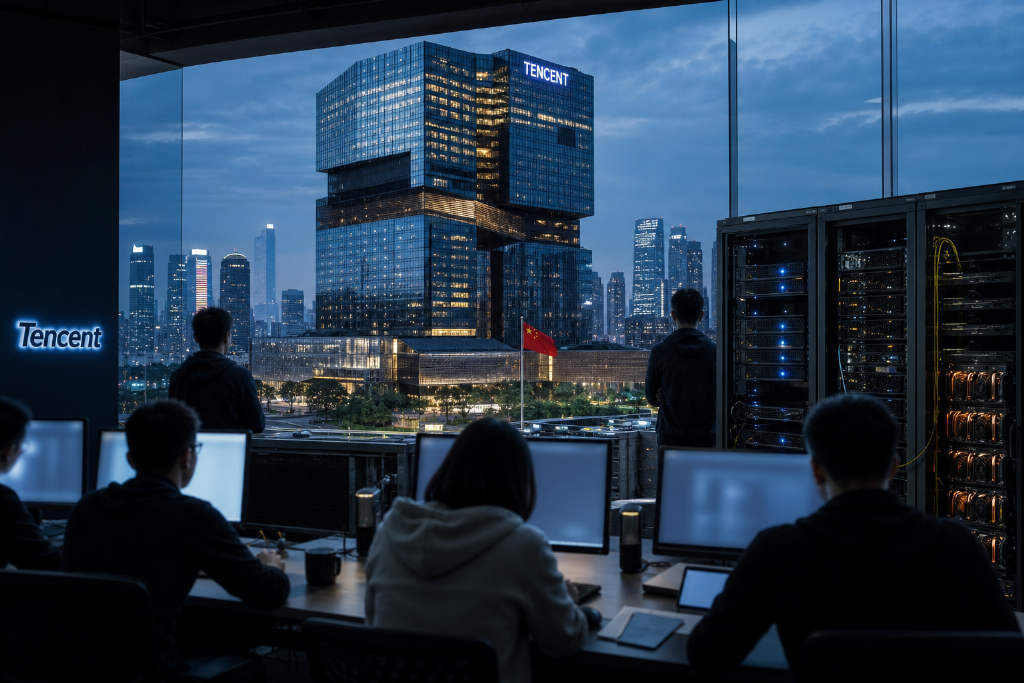
Tencent Senior Executive Vice President and Cloud and Smart Industries Group CEO Tang Daosheng has responded directly to criticism that the company has been slow in AI.
In a long post, Tang said Tencent has in fact felt internal anxiety, while rival companies built stronger momentum over the past few years. He also acknowledged a more concrete problem: Tencent’s overall computing power has been "seriously insufficient," a constraint that has already slowed training for the Hunyuan model and product development and had what he described as a relatively large impact.
Tang says AI is still in the opening stretch
Tang argued that the market may still be only in the first kilometer of an AI marathon, adding that lasting power matters more than getting off the line first. He also said the next-generation Hunyuan Hy4 will deliver more breakthroughs.
At the same time, he said Tencent cannot focus only on foundation models. In his framing, algorithms determine the upper bound, while engineering determines how quickly products can be shipped. Tencent’s biggest advantage, he said, comes from real-world use cases across WeChat-linked office tools, documents, meetings, and enterprise services.
He also revisited mistakes around Yuanbao, CodeBuddy, and WorkBuddy
Tang unusually used the post to review several missteps. He said Yuanbao spent heavily on promotion over the past year in an effort to grow users, but at the time "both the model and the product were not yet ready," and the outcome was not satisfactory.
He also said CodeBuddy and WorkBuddy were not the result of a pre-planned success path. DevTools ran at a loss for a long period early on and at one point nearly got cut. WorkBuddy later caught the Agent wave and rolled out more than 40 versions within three months of launch.
Tencent teams are already using AI to write code
Tang said teams are now using AI extensively for coding, while people mainly handle judgment, debugging, and quality control.
He added that the boundaries between product, development, and testing will become increasingly blurred, and that small teams using AI will be able to do work that previously required much larger groups.