
A public dispute between leading mathematicians and OpenAI has intensified after more than 700 machine-generated mathematical documents were released. The Association for Human Mathematicians, or AHM, led by Fields Medalist Terence Tao, issued a joint statement urging mathematicians to stop working with OpenAI and to return to what it called a scientific vision centered on human understanding.
The report says OpenAI had earlier claimed to have solved a Millennium Prize Problem. In response, Tao and 25 Fields Medal winners issued a call for commercial companies to slow down. The article quotes that position as arguing that AI companies are accelerating without knowing what comes next and that there is no reason to move at such speed.
The backlash deepened after OpenAI released more than 700 proof documents generated by machines. Theoretical computer scientist Scott Aaronson described the episode as a "Mathocalypse."
AHM’s statement challenges OpenAI’s release
According to the report, AHM was formed by top mathematicians as a line of defense against the pressure generative AI is placing on the discipline. Its stated mission is to protect human understanding of mathematics and prevent academic norms from being overwhelmed by brute-force compute.
The joint statement, as described in the article, opens with a direct attack on OpenAI, referring to the company as one that is already facing lawsuits over allegations including illegal copying, copyright infringement, and trademark dilution, and saying it released manuscripts claiming solutions to several well-known mathematical problems.
The statement also says: "No one asked you to solve these proofs."
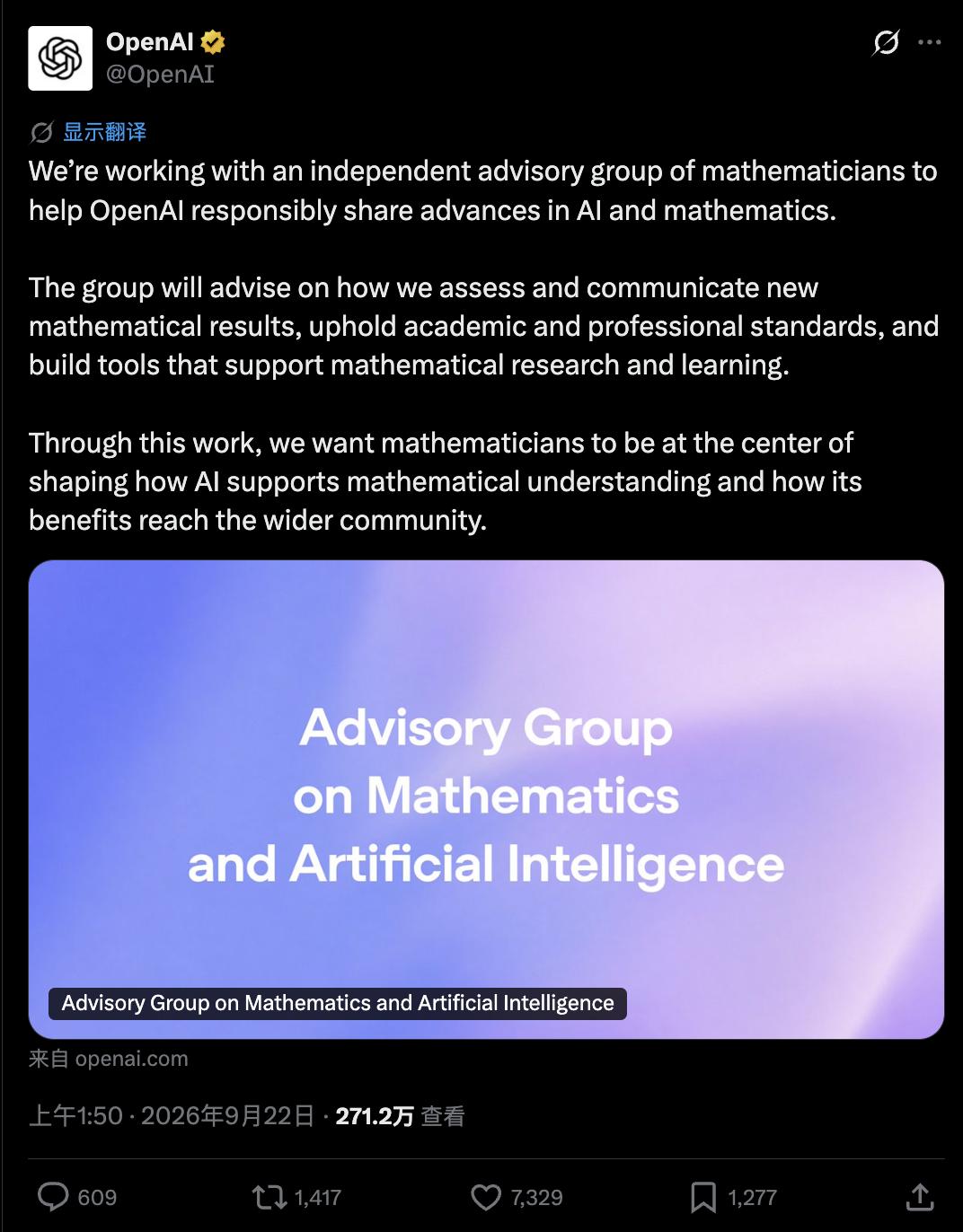
After controversy around the Millennium Prize issue grew, OpenAI and the Institute for Advanced Study in Princeton set up the Mathematics and AI Advisory Group, or AGMAI, the report says. At the time, OpenAI said it wanted deeper engagement with the mathematics community. But the article says many researchers now see that effort as public relations cover rather than meaningful consultation.
The first advisory report from AGMAI had drawn a clear line, according to the piece: frontier AI companies should not privately test advanced mathematical problems on internal models. OpenAI then went ahead and used internal models on 8,000 problems and released 700 machine-written drafts, the report says.
AHM’s statement says that disregarding the advisory group’s core premise shows contempt for scientific research norms. It adds that mathematicians have a specific vision of progress rooted in the history of the field, rejects OpenAI’s claim that the release advanced mathematics, and urges both mathematicians and the public to remain skeptical about the value of this publication model.
How the 700-plus documents triggered the backlash
Publicly available figures cited in the article say OpenAI tested roughly 8,000 open mathematical problems with internal models and achieved a success rate of about 5%. On average, one hard problem required three hours of GPT-Pro-level compute.
Aaronson pointed to the experience of his wife, Dana Moshkovitz. She has devoted much of her academic career to the Unique Games Conjecture, a major problem in theoretical computer science. Yet one of OpenAI’s released documents claimed that the conjecture had been proved.
After reading the file overnight, Moshkovitz sent a text message saying, "This feels like something written by someone on hallucinogens."
The article says the paper was filled with abrupt logical leaps, a pile of prior conclusions with no explanation of where they applied, and strange constructions unlike standard human mathematical writing. She added: "The paper is so badly written that without AI assistance it’s unreadable. It’s full of alien, crazy logic."

The report argues that the documents arrived without peer review, without readable human logic, and without proper explanation of earlier work, leaving mathematicians to do the verification. It says Tao’s earlier warning about "proof indigestion" is now playing out at scale.
Tao’s deeper concern: what counts as mathematics
The article frames Tao’s criticism around a broader question: is solving hard problems all that mathematics is about? In the traditional research system, when a major conjecture is solved by humans, the result tends to generate seminars, lectures, and cross-disciplinary work. Over time, that knowledge becomes something other researchers can absorb and teach.
The current situation looks very different in the report’s telling. The person who presses enter may not understand the proof, while mathematicians are left to read and check documents that are difficult to digest. It also says some younger scholars now hesitate to reveal what they are working on because they fear large models may get there first.
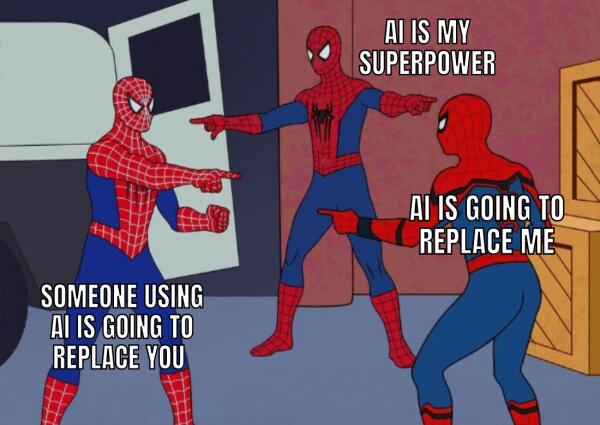
Tao describes the damage as an irreversible form of contamination, according to the article: once a problem is declared solved, it cannot return to its unresolved state. Even knowing that an answer exists can distort other research paths that might have produced deeper insight.
The report also notes that Tao had discussed the prospect of "industrialized mathematics" back in 2024. At that point, he remained relatively optimistic and saw AI as something closer to a chess engine that could assist mathematicians. In the article’s account, that balance has now shifted sharply, with AI tackling problems once thought unreachable and human researchers pushed toward checking and organizing the output.
LeCun sees a new phase for mathematics
Turing Award winner Yann LeCun offered a very different take on the conflict. In a social media post cited by the article, he wrote: "Quite the opposite. Mathematics is entering a new era. Formal proof will be largely automated, and the focus will shift to developing new concepts, new abstractions, new definitions, and new conjectures."
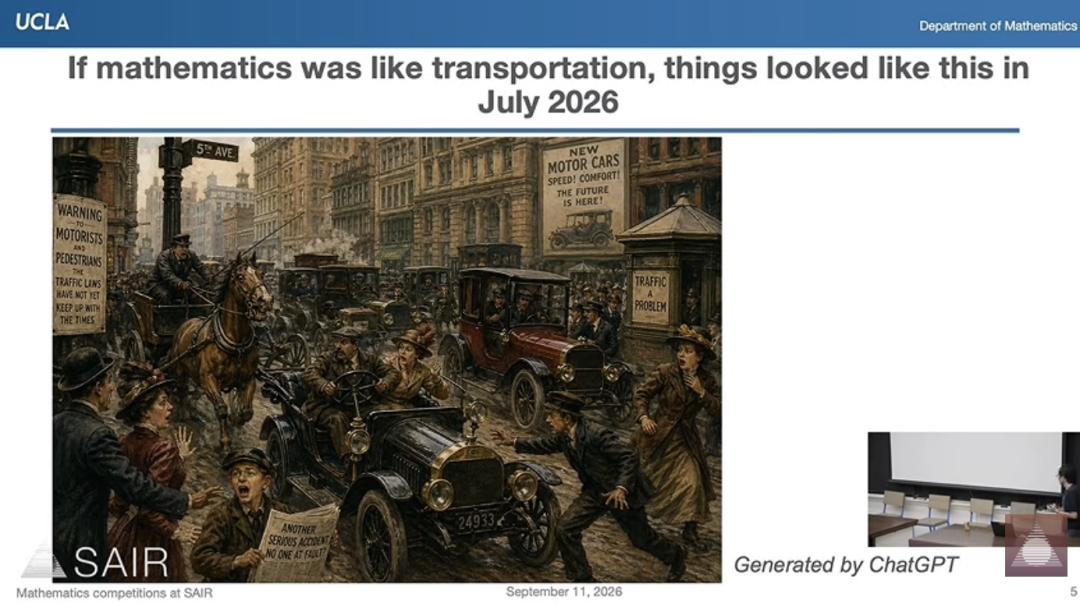
He added: "The invention of boats reduced the importance of swimming, but it allowed us to discover new continents."
For now, the dispute over OpenAI’s mathematical document release has expanded beyond isolated criticism into a broader fight over research norms, collaboration boundaries, and what the discipline should value as AI systems grow more capable.