
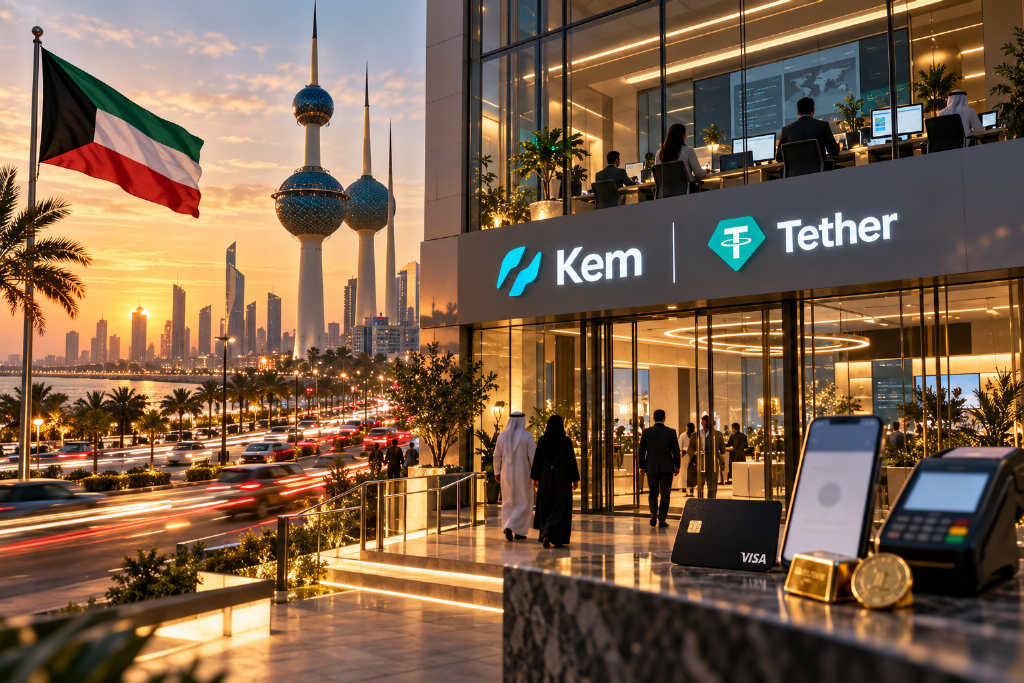
Tether’s $3 million investment in Kem was never a huge capital deployment by the stablecoin issuer’s standards. What made it stand out was the company on the receiving end: Kem was founded by four entrepreneurs born in the 2000s.
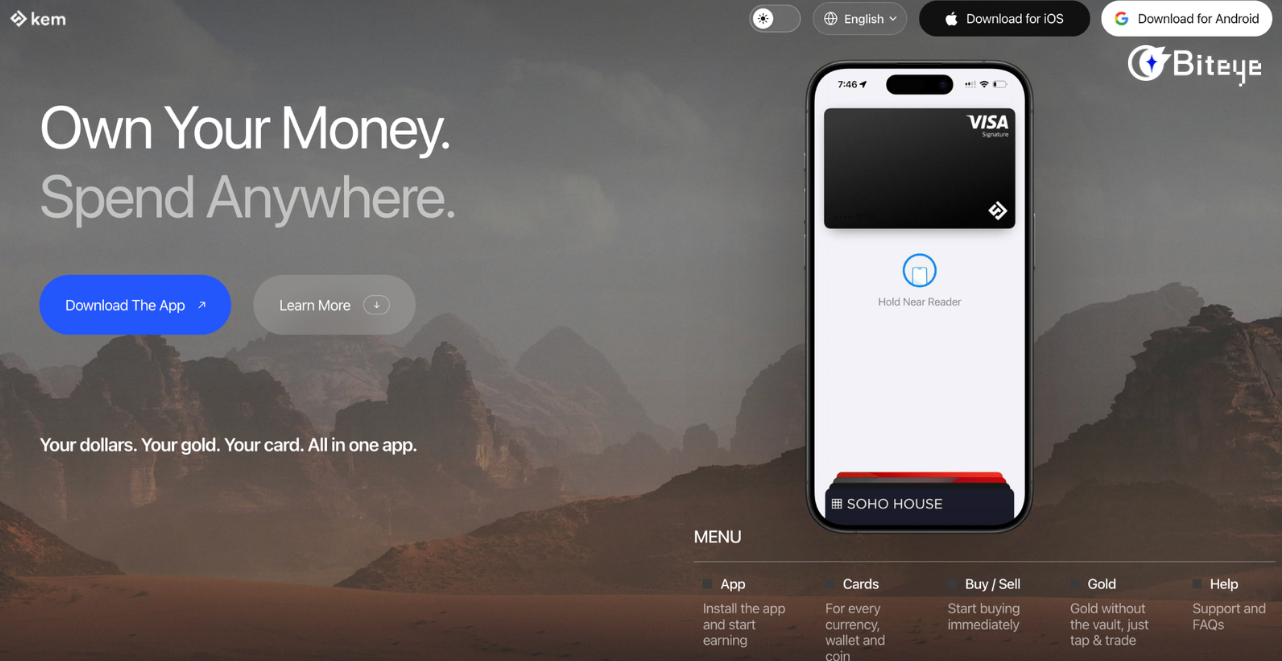
At the time of the investment, Kem was still early. It had a young team, a local foothold in the Middle East, and a business tied to traditional finance workflows that were highly regional and, at times, operationally granular. Two years later, the deal looks more interesting because Kem’s direction has lined up with one of the most important shifts in stablecoins: moving from issuance into everyday financial use.
Kem has grown beyond a crypto card app
The article argues that describing Kem simply as a U-card company understates what it has become. Founded in 2021 and headquartered in Kuwait, Kem positions itself as a next-generation fintech company for the GCC market. It started with local transfers, then expanded from a single-purpose payment tool into a financial super app serving both retail and business users.
By 2026, Kem had also been included in CNBC’s Top 500 fintech companies, according to the article.
For individual users, the app supports fiat and crypto on- and off-ramps, conversion into assets including USDT, allocation into Tether Gold (XAUT), savings functions, Visa card spending, and lifestyle services such as eSIM purchases and airport lounge access.
On the business side, Kem has been accelerating its B2B push. Kem Business allows merchants to accept USDT through checkout, payment links, and APIs. It also covers payroll, refunds, VAT and invoice management, reconciliation, and fund analytics.
Based on information provided by the Kem team, the platform has recorded more than 600,000 downloads across channels and created over 200,000 Tether Gold wallets, making it one of the leading retail distribution channels for XAUT globally.
Why Tether is pushing into everyday financial services
USDT solved the supply side of stablecoins early on. As issuance expanded, a different question became harder to ignore: where would all of those stablecoins actually be used?
For a long period, USDT remained concentrated in trading, on-chain transfers, and crypto-native activity. If stablecoins are to keep expanding their user base, they need to move into financial behavior that happens every day, including salaries, remittances, spending, and business settlement.

That is the backdrop for Tether’s downstream expansion in recent years.
From issuance to application
Tether’s earlier objective was straightforward: issue USDT, preserve liquidity, and maintain the dollar peg. As the market grew, issuance alone stopped being enough. The next stage was to place USDT inside payments, remittances, savings, and business settlement.
Only sustained use by ordinary users can turn scale and liquidity into a longer-lasting network effect. The article points to several investments that fit that logic: Oobit in consumer payments, XREX in cross-border B2B, Sorted Wallet in emerging markets, and Kem in the GCC consumer and business ecosystem.
The division of labor is clear. Tether provides the stablecoin and liquidity layer. Local products, banking rails, payment networks, and compliance capabilities are still needed to put USDT in front of end users.
Why the GCC matters
The article says Tether’s interest in the GCC is not based on unusually high crypto penetration. It is based on the region’s financial demand profile.
One defining feature of the GCC is its large expatriate population. Kuwait is cited as an example, with foreign residents accounting for close to 70% of the population. Across the Gulf, many residents come from India, Pakistan, the Philippines, and other Asian countries.
In 2025 alone, remittances sent home by expatriate workers in the Gulf reached about $161 billion, according to the article. For that population, monthly salary receipt, dollar conversion, remittance transfers, and cross-border spending are recurring needs.
At the same time, the GCC differs from many emerging markets. Income levels are relatively high, banking and payment infrastructure is more developed, and governments in the region have been advancing digital asset regulation. For a stablecoin company, that combination means real demand and a plausible path into mainstream finance through licenses, banking partnerships, and payment rails.
Why Tether chose Kem
When Tether invested in Kem, the market already had plenty of wallets, exchanges, and payment card products. The article says Kem likely stood out for three longer-term reasons: real local payment demand, a cross-cultural founding team, and the ability to connect crypto with traditional finance.

Payment demand came first
Many crypto projects start with technology and assets, then search for use cases. Kem took the reverse route. It addressed payment needs that users already had, then integrated stablecoins into that framework.
Most users do not stay with a product because it supports USDT. They care about whether transfers are fast, costs are low, and the service is easy to use. Once those basics are in place, stablecoins can move from being a crypto tool to becoming part of daily finance.
That is where Kem’s value sits for Tether. It does not need to re-educate the market or persuade users to understand stablecoins first. It can place USDT in the background as a settlement layer and embed it directly into existing payment, remittance, and spending flows.
A founding team shaped across regions
Kem’s four co-founders first met in high school in the United States, but their education and work experience spans China, the Middle East, the U.S., and Eastern Europe.
The article says that background fits the GCC market structure well. The region has a large expatriate base, and cross-border work, remittances, and overseas spending are common. The founders have also experienced the effects of war, currency depreciation, and financial restrictions firsthand.
Justin is quoted as saying that he had seen both the convenience of mobile payments in China and the way conflict or currency instability can quickly strip people of financial security in other places. For Kem, that cross-cultural exposure is presented as an advantage in understanding GCC users.
Experience across crypto and traditional finance
Kem’s team is not limited to crypto-native backgrounds. Members have worked at Sinovation Ventures, Target Global, MSA Capital, and PwC, with experience spanning venture capital, blockchain, and digital assurance. Its technical team also includes people from fintech companies such as Tinkoff Bank.
That matters because integrating USDT into everyday finance requires more than crypto knowledge. It involves payments, custody, KYC, fiat on- and off-ramps, and local regulation.
Kem is already working with Rain, Interlace, Fireblocks, Persona, Chainalysis, and Visa. For Tether, that suggests Kem understands not only crypto products but also the operational work needed to connect USDT to the GCC financial system.
Where Kem’s moat may come from
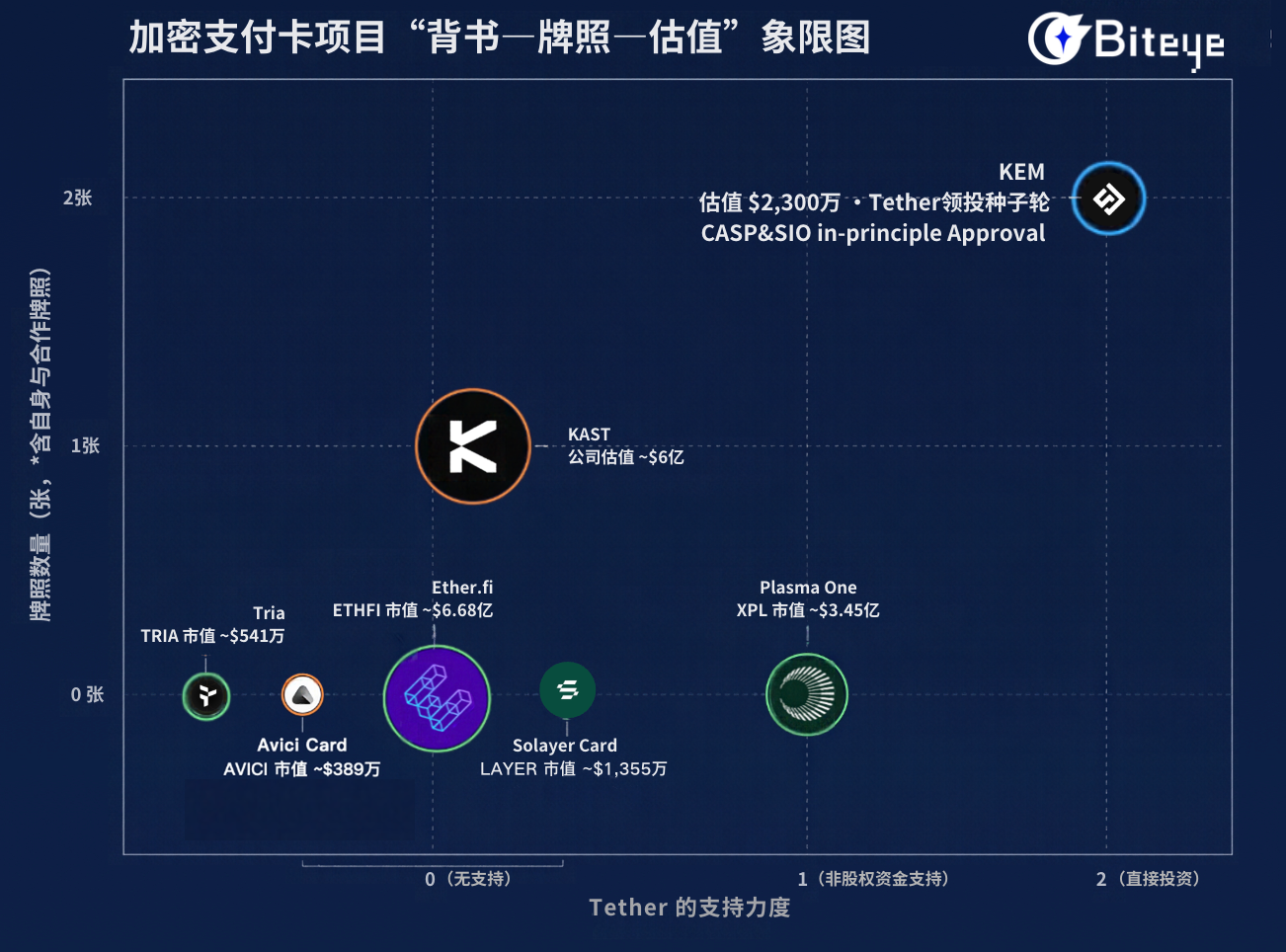
The crypto card segment is crowded. The article notes that RedotPay already has more than 8.5 million users across over 100 countries. In that context, a Visa card that can spend USDT is not enough on its own. The more important question is what Kem has built in the GCC that is harder to replicate.
Tether’s backing
In 2024, Tether invested directly in Kem and said it wanted to use the company to expand USDT usage in the Middle East. For an early-stage fintech company, that is more than funding. It is also a layer of brand recognition and trust that can lower the cost of introducing the company to users, banks, and other partners.
Licensing and local financial rails
Compared with app features or cashback campaigns, licenses, local banking relationships, and payment channels are harder to copy. Kem received in-principle approval in February this year from the Central Bank of Bahrain for both a Category 2 CASP license and an SIO license. It has also integrated payment, custody, and compliance services from Rain, Interlace, Fireblocks, Persona, and Chainalysis.
According to information provided by the team, the company is continuing to advance local banking channels and Visa-related partnerships.
From one card to a broader account system
Crypto cards on their own do not create strong user stickiness. Users can switch platforms easily over fees or rewards. Kem’s approach is to place more financial functions inside the same account: transfers, USDT, gold exposure, and spending on the consumer side, then collections, payroll, and treasury-style management on the business side.
As spending, savings, and transfers accumulate inside Kem, and as businesses begin using it for collections and salary payments, switching costs rise beyond the level of simply replacing one card with another.
Growth opportunities and the pressure ahead
Kem’s room for growth sits in both geography and business mix.
Geographically, its current strength is concentrated in the GCC. If its Bahrain licensing progress and local payment partnerships translate into execution, Saudi Arabia, the UAE, and Qatar could become natural next markets because they also have large expatriate populations and strong cross-border money movement.
On the business side, the bigger task is extending from retail into business services. Crypto cards tend to have thin margins, and users can move quickly when fees or rewards change. Merchant acquiring, payroll, cross-border payments, and enterprise APIs are more likely to produce recurring revenue. Kem has already started building in those areas, and whether it can scale them will shape its commercial profile.
The challenges are substantial. Once stablecoins move into salaries, corporate funds, and daily payments, the bar rises for licensing, KYC, custody, and local banking cooperation. Competition is also intensifying. The article names RedotPay and KAST among expanding crypto fintech players, while traditional fintech firms such as Revolut are also entering the Middle East.
The next thing Kem needs to prove is whether its current first-mover position in the GCC can be converted into durable advantages in licensing, distribution, and retention.
Tether is really betting on everyday stablecoins
The article’s conclusion is that Tether’s investment in these four young founders is, at its core, a bet on the trend of “Everyday Stablecoin.”
Tether CEO Paolo Ardoino said, “Our investment in Kem App perfectly aligns with our mission to advance financial freedom for all.”
Stablecoin competition used to center on issuance scale, trading liquidity, and exchange coverage. As the market matures, the battleground is widening into wealth management, asset allocation, payments, remittances, salaries, and business settlement.
Stablecoins are moving from being trading assets inside crypto into more concrete financial settings. In the article’s framing, Kem is one expression of that shift.
If Kem can keep proving the model in the GCC and replicate it in more markets, Tether may have backed more than a single company. It may have backed one possible entry point for stablecoins into the mass market.



