
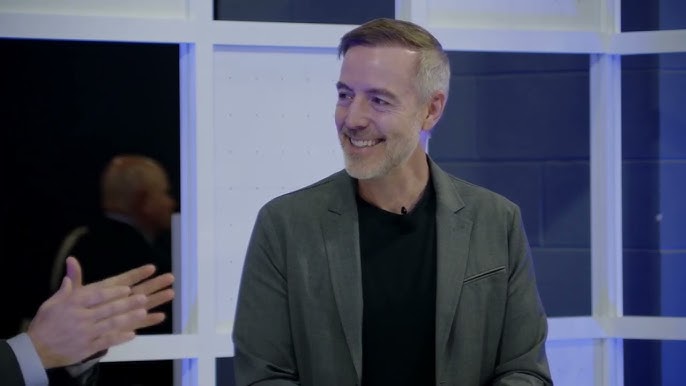
The co-founder of the world's largest stablecoin issuer, Tether, has publicly criticized the very product he helped create. Reeve Collins, speaking on the On the Margin podcast, called the current stablecoin model 'fundamentally broken' and presented his fix: the STBL protocol.
The 'Extraction Device' of Tether 1.0
Collins described Tether's business model bluntly: 'You give me a dollar, I give you a token.' The elegance is in its simplicity, but so is the problem. Tether takes user dollars, buys U.S. Treasuries yielding around 3-4%, and keeps all the interest. Users get a globally accessible dollar channel but zero asset returns. Collins called this a 'built-in extraction device' of stablecoin 1.0. STBL aims to dismantle it.
STBL Dual-Token: Spend Dollars, Earn Yield Simultaneously
The core of STBL is splitting the stablecoin into two. Users hold: a dollar stablecoin for daily transactions, a YLD yield token that accrues interest in the background, and a STBL governance token. The three form a complete structure so holders can spend dollars while earning, without choosing between 'use' and 'earn.'
On the asset side, Collins isn't just betting on Treasuries. He has partnered with Hamilton Lane's SCOPE fund, targeting 7-8% returns. Blended with Treasuries, users could net about 5% yield. The protocol mandates 80% of all yield returned to users, a structural reversal from Tether's current 0%.
'We're Not Asking You to Use Our Coin' — Open Infrastructure for Anyone
Collins deliberately distanced STBL from other players, calling out XRP: 'XRP is just a centralized company saying “please use my token.” STBL is a decentralized protocol. We don't say “use our coin” — we say “here's the tech, go build your own.”' He envisions banks, platforms, e-commerce ecosystems, even sports teams issuing their own branded stablecoins on STBL's base layer, choosing their own asset backing and yield parameters. His goal is to make stablecoin infrastructure a public utility: 'You don't care which power company supplies electricity. In the future, you won't care which bank processes the transfer.'
Collins also painted a future of AI agents: automated trading agents will route capital to the highest-yielding currency ecosystem — a sports team's coin offers discounts on home-game tickets, a gaming platform's coin boosts in-game purchases. Stablecoins evolve from 'tool' to 'arena.'
Iran's $400M Frozen, and the Regulatory Fork
On regulatory sensitivity, Collins cited a concrete case: about $400 million USDC was frozen in Iran. Dollar-backed stablecoins are, in legal terms, extensions of U.S. sovereignty — the U.S. government can reach in. 'It's absolutely becoming more centralized,' Collins said, 'and there will be an equilibrium point.'
He sees two diverging paths: the U.S. model via the GENIUS Act (enacted July 2025) — private-sector issuance under federal oversight with 1:1 asset backing; or the CBDC route — government-issued programmable money with auto tax deduction, instant freeze, and full surveillance. Collins' verdict on CBDCs: 'You'll have zero financial sovereignty... It becomes a surveillance state.'
Collins forecasts that by 2030, stablecoins will become the default form of money. STBL is his biggest bet on that judgment — a base layer on which anyone can build. Yet he acknowledges that market fatigue with yield+governance tokens and security concerns are real hurdles. And the liquidity moats built by Tether and Circle over years won't be easily breached by interest rebates alone.


