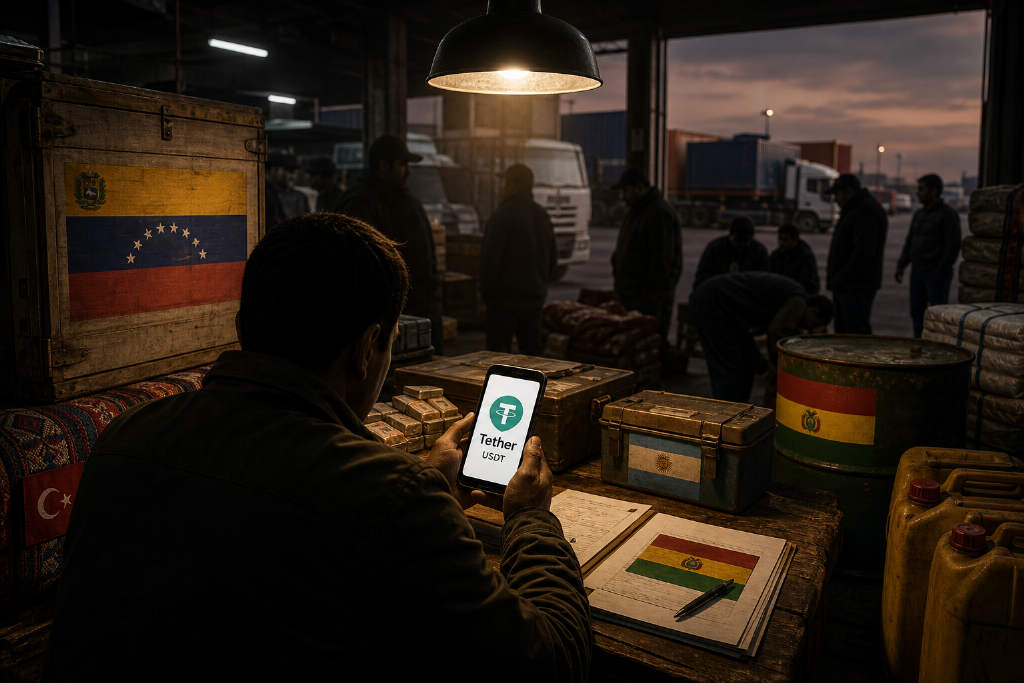
According to Criptonoticias, Tether Chief Executive Officer Paolo Ardoino said on Aug. 23 that USDT is seeing broader use in developing countries including Venezuela, Argentina, Bolivia, and Turkey. He said the stablecoin is being used for both domestic and cross-border trade, while also serving as a digital dollar and a store of value in places where local currencies are losing value quickly, access to U.S. cash is limited, or the financial system faces restrictions.
Ardoino pointed to several country-specific examples. In Venezuela, small and medium-sized businesses are using USDT to settle import and export transactions. In Bolivia, it has been used in commercial deals, including fuel purchases. In Argentina, USDT is widely used in the street economy and peer-to-peer markets for value preservation and exchange. In Turkey, residents are also turning to USDT as a way to cope with persistent inflation.
According to Criptonoticias, Tether CEO Paolo Ardoino said on Aug. 23 that USDT is being used more widely in developing countries such as Venezuela, Argentina, Bolivia, and Turkey, mainly for domestic and cross-border trade.
Ardoino said the token is also being used as a digital dollar and a store of value in cases where local currencies are depreciating rapidly, U.S. dollar cash is scarce, or the financial system is restricted.
Examples cited by Ardoino
He said small and medium-sized businesses in Venezuela are using USDT to settle import and export activity. In Bolivia, it has already been used in commercial transactions including fuel purchases. In Argentina, USDT is widely used in the street economy and peer-to-peer markets for hedging value and exchange. In Turkey, residents are also using USDT to deal with persistent inflation.
This article was originally published by Bit.Fan. For more cryptocurrency news and market insights, visit www.bit.fan. Disclaimer:
The market information, project data, and third-party content displayed on this platform are for industry information sharing only and do not constitute any form of investment advice or return commitment.
Cryptocurrency trading carries high risks. Users should fully assess their risk tolerance and make independent decisions. All profits, losses, and legal responsibilities are borne by the users themselves.