
Macro setup: inflation, rates and geopolitics drove the week
TRON’s latest weekly industry report said global macro markets in the July 13 to July 19, 2026 period were shaped by three main factors: softer U.S. inflation, changing expectations for major central-bank policy, and geopolitical risk.
According to the report, both U.S. June CPI and core CPI came in below market expectations. That added to the view that the Federal Reserve is likely to leave rates unchanged at its meeting at the end of July. The dollar index stayed elevated in a choppy range, U.S. Treasury yields moved lower, and sentiment toward global risk assets improved.
The report also said U.S. retail sales and employment data still pointed to economic resilience, while China’s second-quarter GDP and June economic data suggested a mild recovery remained in place. In that backdrop, the market’s expectation for a global economy that is slowing but not in recession became more entrenched.
At the same time, the report flagged rising tension in the Middle East as a source of pressure on international oil prices. That, it said, kept concerns alive that an energy rebound could push global inflation pressure higher again and lift demand for defensive positioning.
For the week of July 20 to July 26, 2026, the report said markets would focus on the first readings of U.S. July manufacturing and services PMI, initial jobless claims, leading economic indicators, and new home sales. Those releases are expected to feed directly into how traders assess the late-July Fed meeting and the policy path for the rest of the year.
The report laid out two broad scenarios. If U.S. data continues to show resilience, markets may return to a higher-for-longer rates trade, which could lift Treasury yields and the dollar again. If the data softens further, liquidity expectations could improve and provide support for risk assets. TRON’s report also said the Middle East situation, oil prices, and signals from the European Central Bank would remain key variables. Its baseline for the coming week was a mix of marginally better inflation, cautious monetary policy, and continuing geopolitical disruption.
Crypto market: Bitcoin bounced, then settled into a range
In crypto, the report described the week as a move from early weakness to recovery, followed by high-level consolidation. The softer-than-expected U.S. June CPI print improved the market’s view of Fed policy and helped risk appetite recover, pushing Bitcoin from around $62,500 at the start of the week to an intraday high near $65,000 by midweek.
That move later faded as geopolitical tension in the Middle East cooled risk appetite. Bitcoin pulled back and traded in a $63,000 to $64,000 range, with the report putting its weekly gain at about 2%. Ethereum rose alongside Bitcoin and then retraced, holding in a $3,500 to $3,650 band.
The report said spot ETF flows turned net positive again and stablecoin market capitalization continued to expand. Institutional risk appetite improved from the previous week. By sector, AI Agent, PayFi and RWA were relatively resilient, while high-beta meme tokens and altcoins more broadly continued to lag BTC.
Looking ahead to July 20 through July 26, the report said macro data, ETF flows and geopolitical risk would remain the main drivers. If the market keeps leaning into softer inflation and spot ETF inflows stay positive, Bitcoin could test the $65,000 to $66,000 resistance area again. A break there could open the way to roughly $67,000. If risk-off sentiment picks up or flows weaken again, the report said Bitcoin may revisit support in the $62,000 to $63,000 range.
For Ethereum, the report projected a range of $3,450 to $3,700. Capital, it said, is still likely to favor BTC and sectors with fundamental catalysts. RWA, stablecoin infrastructure, PayFi and AI-linked projects were singled out as areas likely to keep attracting attention, while smaller altcoins with weaker liquidity were flagged as vulnerable to delayed downside.
Hot sectors: capital kept shifting toward fundamentals
The report said this week’s sector focus stayed on RWA, stablecoin payments and PayFi, AI Agent, AI infrastructure, and on-chain derivatives through perpetual DEXs.
RWA remained a long-term institutional focus, supported by continued inflows and expansion in tokenized securities and on-chain Treasury products. Stablecoin payments and PayFi gained more traction as discussion around cross-border payments, AI Agent-driven automated payments, and on-chain settlement infrastructure intensified.
On AI, the report said the market is moving away from the idea-only phase centered on AI Agent narratives and toward areas with clearer real-world use, including AI payments, AI infrastructure and the broader agent economy. Commercial viability has become more important in how the market screens those projects.
Decentralized perpetual futures protocols also kept a high profile as trading volume and protocol revenue continued to grow. More broadly, the report said market capital was rotating out of short-lived meme narratives that lacked fundamentals and into sectors with real revenue, institutional adoption and infrastructure characteristics.
Project watch: Houdini Swap and cross-chain privacy routing
The first featured project in the report was Houdini Swap. TRON’s report said the protocol has raised $18 million led by Solana Strategies and described it as a non-custodial cross-chain swap aggregator.
Its model is built around integrating multiple liquidity sources, including decentralized exchanges, cross-chain solver networks and non-custodial exchange-service partners, then automatically selecting and coordinating the best execution path for each trade. The report stressed that Houdini does not operate an exchange, does not hold user funds, does not maintain pool balances, and does not act as a counterparty. Execution is handled by the underlying protocols and liquidity providers that appear in the route.
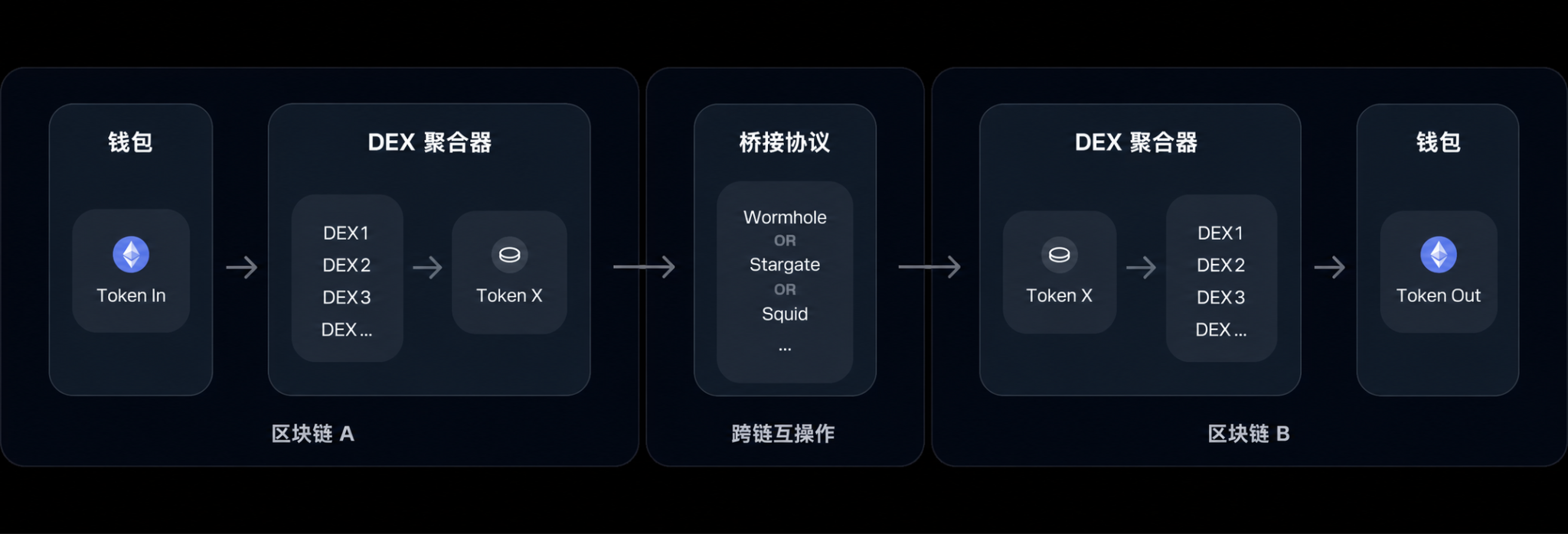
Depending on the route a user chooses, the system can optimize for lower cost, faster execution, or stronger on-chain privacy protection.
Private Swap
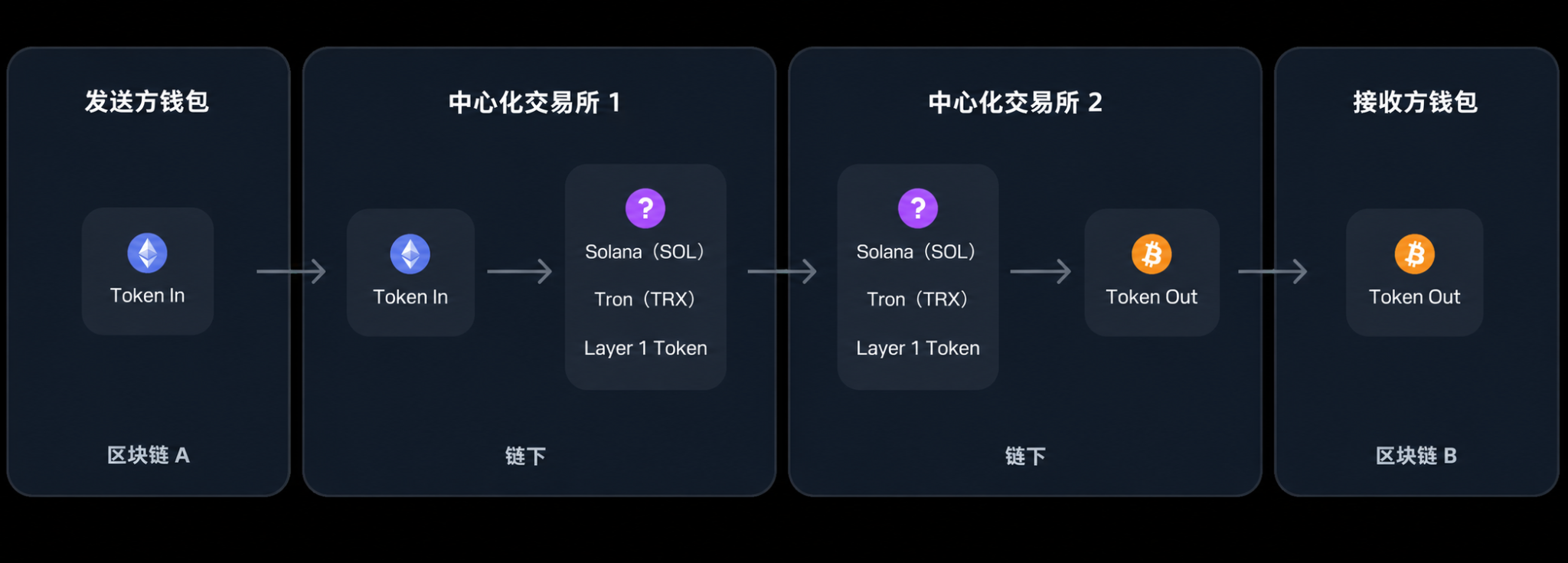
The report described Private Swap as Houdini’s flagship route and said it is designed for users who place the highest priority on transaction privacy. Instead of using a standard cross-chain path, the mechanism passes through two independent non-custodial exchange services and introduces a temporary Layer 1 intermediary asset to break the observable link between the sender and the recipient.
TRON’s report said Houdini has processed more than $1.5 billion in Private Swap volume to date and called it one of the most widely used compliant privacy tools in crypto.
Private Swap supports same-chain private swaps, such as USDC on Ethereum to USDC on Ethereum, where the asset and chain stay the same but the route is obscured. It also supports cross-chain private swaps, such as USDT on TRC20 to BTC, allowing privacy-focused conversion across assets and chains.
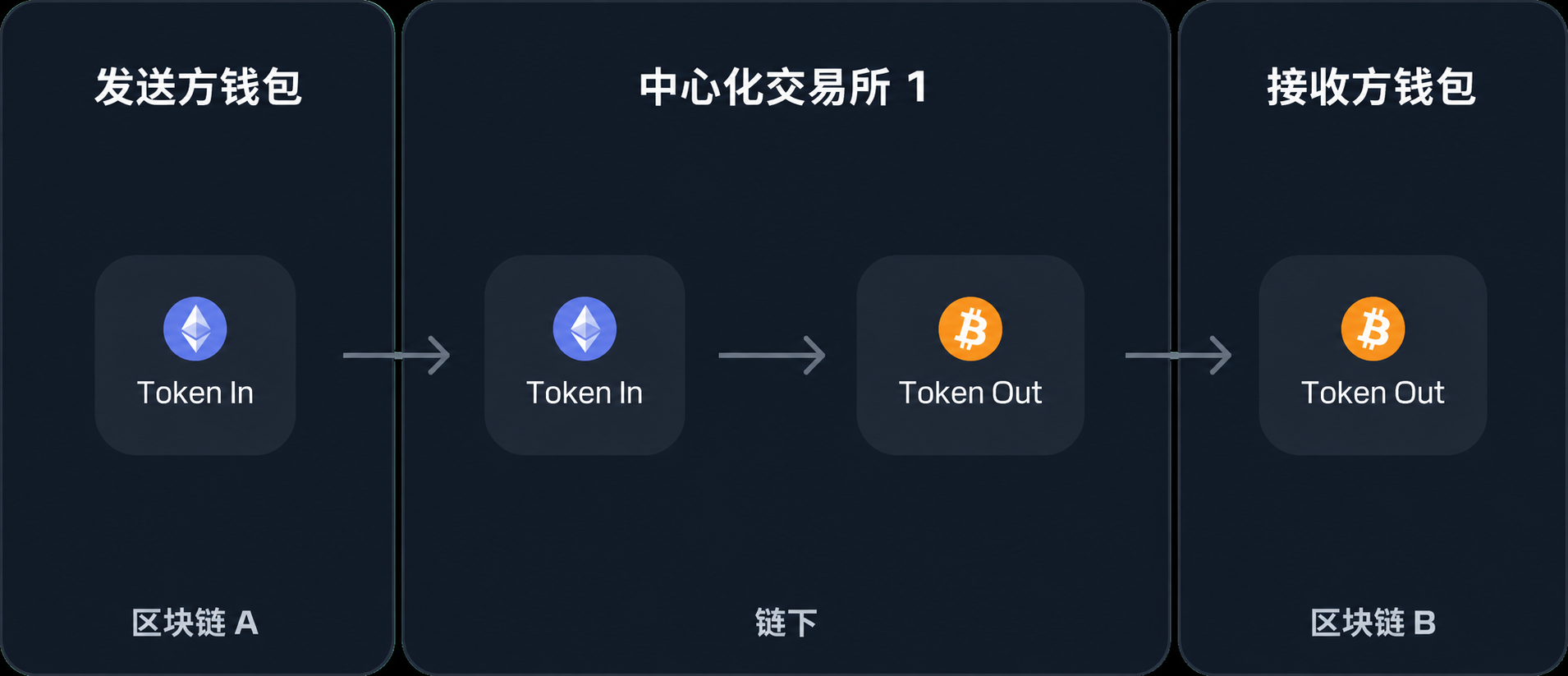
The mechanism is presented as a two-stage process. On the source chain, the user sends Token A from a wallet to a non-custodial exchange platform, where it is converted into a temporary privacy-oriented Layer 1 intermediary asset. That asset then moves to a second, fully independent non-custodial exchange platform, where it is converted into the target asset, Token B, and sent to the recipient address. By the time the funds reach the destination wallet, the report said there is no verifiable on-chain path connecting the original sending address with the final receiving address.
The report gave three reasons for that privacy claim: the sender and receiver do not appear in the same transaction path; there are no identifiable on-chain markers such as a fixed Houdini tag or a standardized routing footprint; and the anonymity set expands across the broader Web3 network because the second stage can occur on any chain, into any token, across more than 100 blockchains and thousands of supported assets.
No Wallet Connect mode
The report also covered Houdini’s No Wallet Connect Swap. In that mode, a user does not need to connect a wallet, sign a message or approve a transaction. Instead, the system generates a one-time deposit address. The user sends funds from any wallet or exchange account to that address, and the rest of the swap process is carried out automatically.
TRON’s report said the design reduces common crypto security risks because it removes Wallet Connect, Approve and Sign steps that are often targeted in phishing or malicious-approval attacks. It also places privacy at a midpoint between a regular on-chain swap and the full Private Swap route. Since it uses a single-path route rather than a two-stage privacy structure, the report said it is typically faster and cheaper than Private Swap.
The operational flow is straightforward: a user submits the desired asset swap, receives a dedicated one-time deposit address, funds that address from any source, and then the system completes the conversion through liquidity providers or exchange partners before delivering the destination asset to the specified recipient address.
On-chain DEX and bridge mode
Houdini also offers an on-chain DEX and bridge route. The report said this is one of its fastest and lowest-cost options and is aimed more at speed, best price and transparent on-chain execution than at maximum privacy.
In this mode, Houdini aggregates liquidity across DEXs, bridges, cross-chain swap protocols and intent-routing networks to find the best execution path. The report said the system can query more than 20 major protocols and aggregators, including Uniswap, Jupiter, SushiSwap, Mayan, ChainFlip and CowSwap.
Fees are included in the final quote before confirmation, covering protocol fees, bridge costs, routing fees and other possible charges. Users can see the final amount before signing. The process starts with the user entering the asset pair and amount, after which the system scans thousands of on-chain routes. The user connects a wallet to approve and sign, the route is executed, and the destination asset is sent directly to the wallet address chosen by the user.
In its assessment, the TRON report said Houdini Swap’s strength lies in addressing the privacy problem created by transparent on-chain activity. By using anonymous swap routing and cross-chain transfers, the protocol aims to hide fund origin, transaction path and destination address, improving both privacy and asset security. The report added that the product’s workflow is relatively simple for end users and does not require specialized privacy expertise.
It also listed the trade-offs. Privacy-focused protocols face heavier regulatory pressure by default, and some jurisdictions may subject anonymous transaction tools to stricter scrutiny. The privacy outcome also depends on liquidity, user activity and the depth of the anonymity pool. If network scale is limited, the anonymity set may be smaller and privacy protection weaker. Higher transaction costs, cross-chain complexity and more demanding audit requirements were also cited as common challenges.
Axis Protocol: a synthetic dollar backed by cross-asset arbitrage
The second project detailed in the report was Axis Protocol. TRON’s report said Axis has raised $5 million, led by Steakhouse Financial, Serotonin and Galaxy, with participation from OKX, GSR and FalconX.
The protocol was described as a synthetic dollar system where users deposit whitelisted collateral assets to mint a yield-bearing synthetic dollar. Yield is generated through cross-asset arbitrage strategies, which the report defined as capturing price differences across assets, markets or trading venues. The resulting income is distributed to stakers through a tokenized vault.
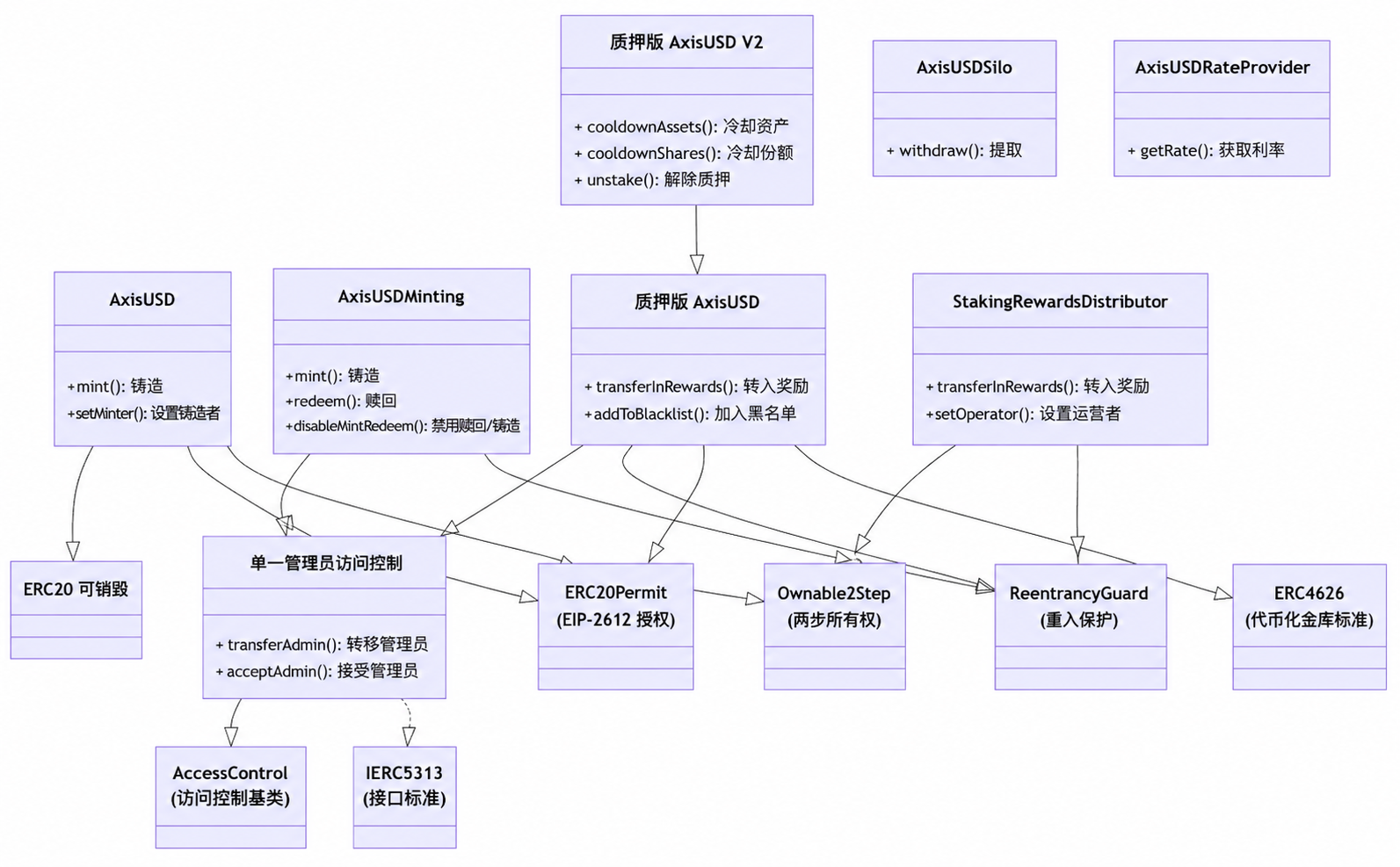
Three-layer architecture
The report framed Axis as a three-layer system designed to isolate issuance, collateral management and yield distribution so that risk in one module is less likely to spread across the whole protocol.
- Token layer: handles issuance and management of AxisUSD, also called USDx. The token follows the ERC-20 standard and supports minting and burning.
- Minting layer: represented by AxisUSDMinting, which manages the synthetic dollar lifecycle, including collateral intake, USDx minting, USDx redemption and the movement of escrowed assets.
- Staking layer: handles yield distribution and staking operations. The main components listed in the report were StakedAxisUSDV2, an ERC-4626 yield vault with configurable cooldown; AxisUSDSilo, which holds funds during the cooldown period; StakingRewardsDistributor, the rewards module; and AxisUSDRateProvider, which supplies exchange-rate data to external protocols.
The report said the three layers are structurally independent. A vulnerability in the staking layer would not directly compromise the minting system, and vice versa. USDx is the main asset linking the minting and staking layers.
Contracts, inheritance and access control
AxisUSD inherits from ERC20Burnable, ERC20Permit and Ownable2Step, giving it token burn support, permit-based approvals and two-step ownership transfer. AxisUSDMinting and StakedAxisUSD both inherit from SingleAdminAccessControl, which uses a single-admin model with a two-step admin transfer. The current admin retains permissions until the new admin formally accepts the role.
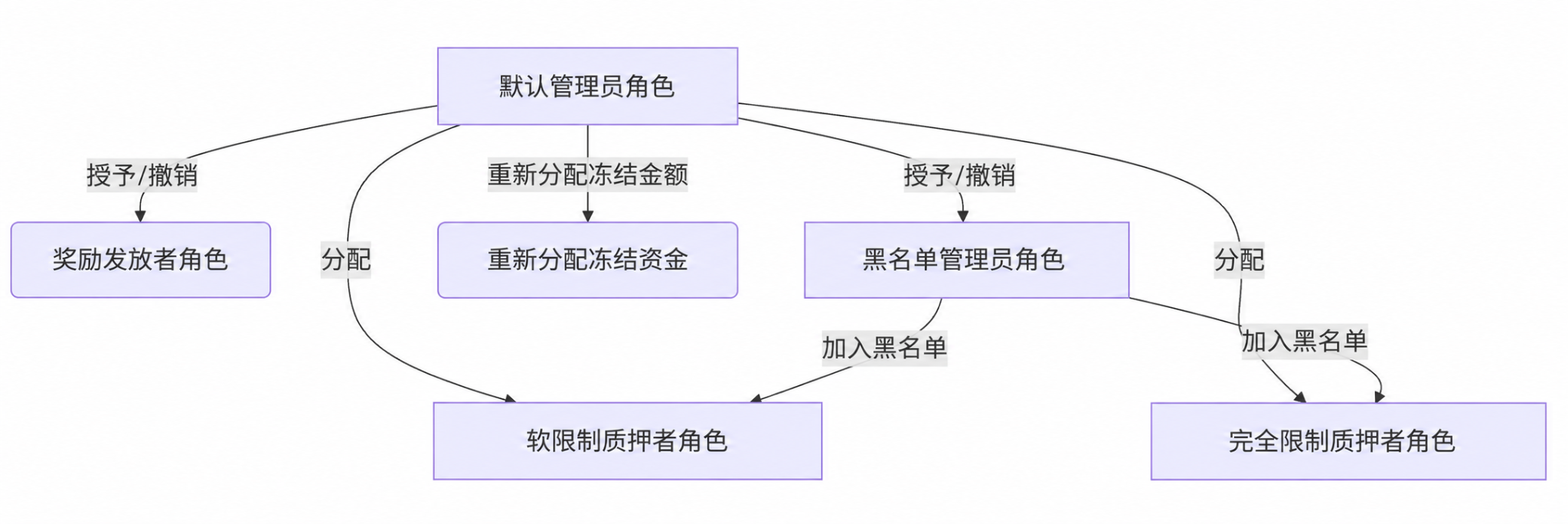
The report said the protocol uses two access-control systems overall, with SingleAdminAccessControl applied to AxisUSDMinting and StakedAxisUSDV2. It also highlighted several design choices: off-chain EIP-712 signed orders, route-based escrow architecture, an eight-hour reward-release mechanism, cooldown-based withdrawals, a dual blacklist system, minimum-share constraints, and a standalone rewards distributor. Together, those choices were presented as an attempt to balance security, liquidity, yield stability and risk management.
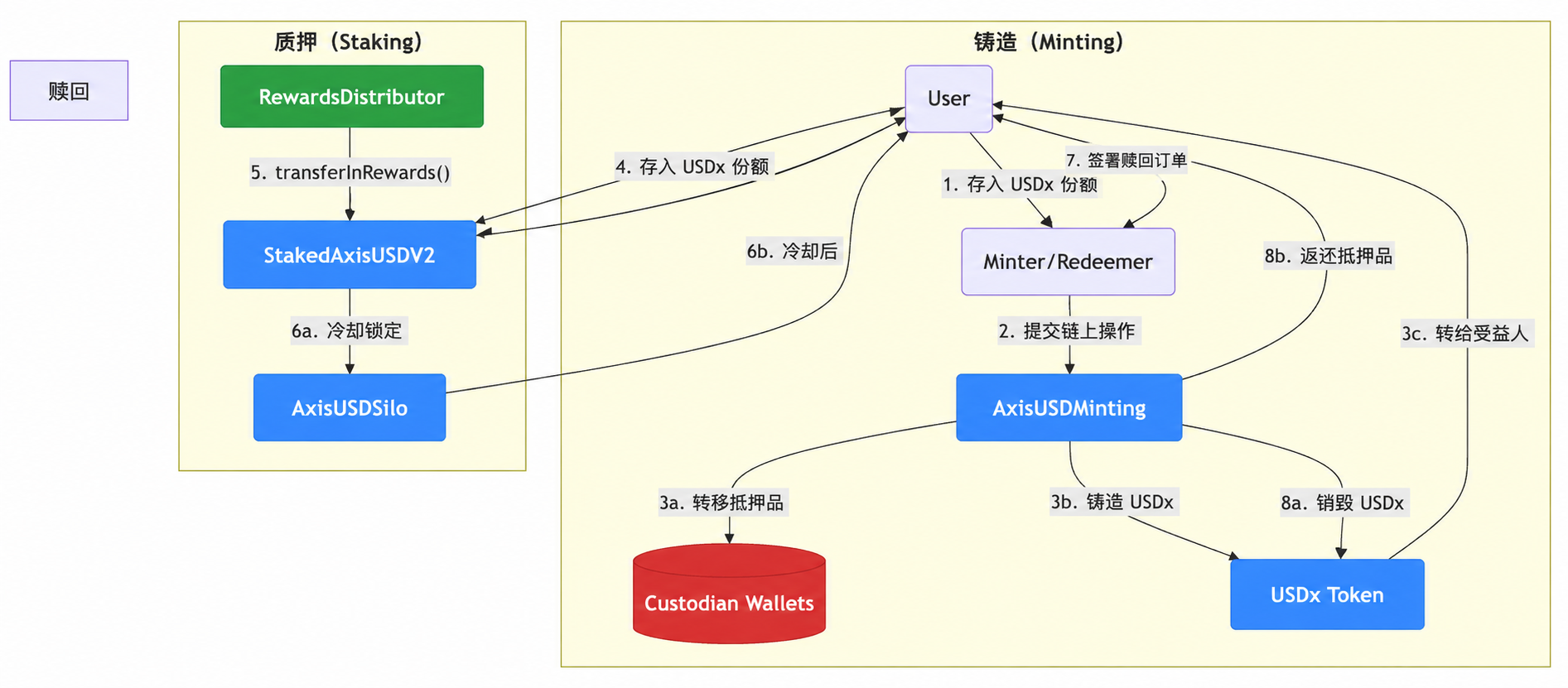
Four core fund flows
The report broke the capital flow into four paths.
- Mint: the user signs an EIP-712 mint order, supplies collateral, and the collateral moves into escrow while the system mints USDx to the user.
- Stake: the user deposits USDx into the yield vault and receives sUSDx as a share token. Rewards are injected over time and the value of sUSDx increases accordingly.
- Redeem: the user signs a redemption order, USDx is burned, and the corresponding collateral is returned.
- Cooldown: if cooldown is active, the user requests a withdrawal, the funds move into the Silo contract, and the withdrawal is completed after the cooldown period ends.
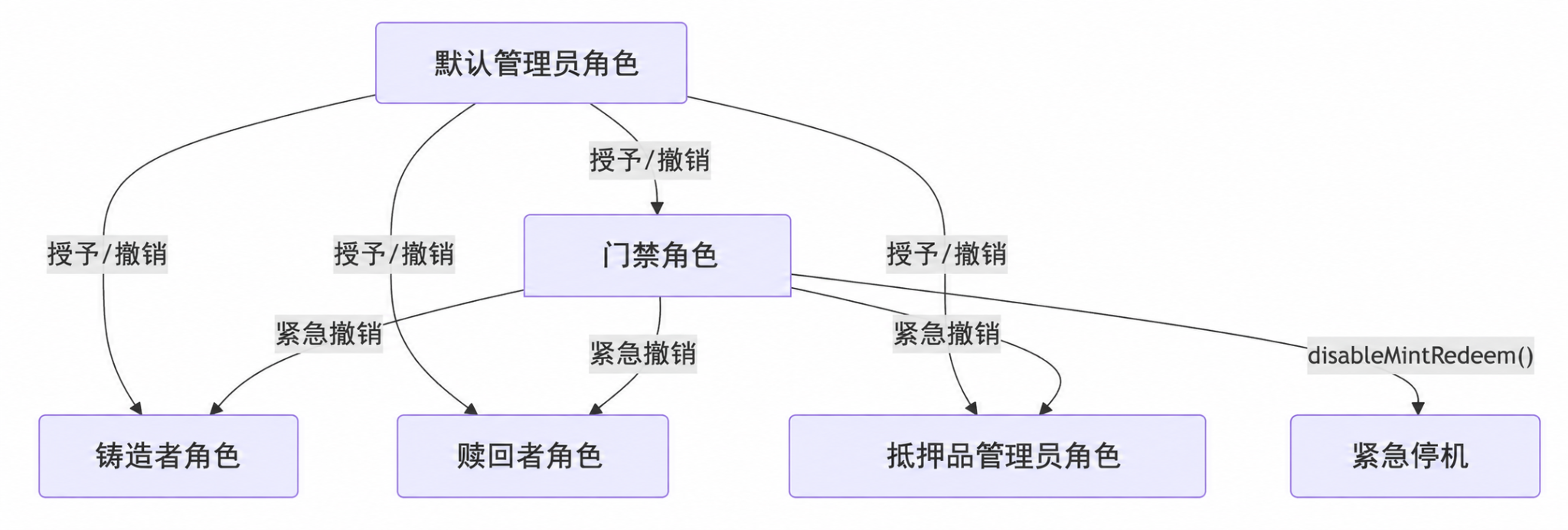
The report also described an emergency mode. If an account with the GATEKEEPER_ROLE calls disableMintRedeem(), minting and redemption stop, while staking and unstaking continue. Only the admin can re-enable the system.
Minting, redemption and reward release
For minting, the user first signs an EIP-712 order that includes collateral type, collateral amount and target USDx amount. An operator with the MINTER_ROLE then submits the order and specifies the escrow route. AxisUSDMinting pulls in the collateral, allocates it across multiple escrow accounts according to the route, and calls AxisUSD.mint() to issue USDx to the user.
For redemption, the user signs a redemption order and an actor with the REDEEMER_ROLE submits the on-chain request. The system then uses burnFrom() to destroy USDx and returns the corresponding collateral to the user.
On staking, the report said users deposit USDx into StakedAxisUSDV2 and receive sUSDx. Rewards are injected when StakingRewardsDistributor periodically calls transferInRewards(). The rewards are released linearly over eight hours and gradually reflected in the vault, increasing the exchange ratio between sUSDx and USDx. To withdraw, the user calls cooldownAssets() or cooldownShares(), waits for the cooldown period to expire, and then calls unstake().
Module dependencies
AxisUSD is the protocol’s core asset and is referenced by AxisUSDMinting, StakedAxisUSDV2, AxisUSDSilo and StakingRewardsDistributor, according to the report. When the vault is deployed, AxisUSDSilo is created automatically to manage cooldown-period funds. AxisUSDRateProvider reads vault state and supplies exchange-rate data to external protocols. StakingRewardsDistributor maintains an updatable reference to AxisUSDMinting, and the owner can update that address when needed.
TRON’s report said Axis stands out for tying the synthetic dollar model to cross-asset arbitrage and for using modular separation to reduce the effect of a failure in any one area. Its signed-order flow, escrow routing, cooldown withdrawals and reward-distribution schedule were presented as parts of a system built around operational control and liquidity management.
The report also made clear that the protocol’s stability and yield profile depend on the quality of collateral, the execution of the arbitrage strategy, and the protocol’s governance and permission structure. Changes in market conditions or weaker strategy performance could affect the product’s behavior.
Market data and macro calendar
In the market-data section, the report listed a spot BTC versus ETH price chart, but the body text did not include additional numerical detail beyond the BTC and ETH labels shown in that section.
For macro data review, the report said U.S. June CPI, PPI and retail sales pointed to inflation that still showed some resilience, while consumer demand remained on a moderate growth path. That reinforced the market’s soft-landing view. After the releases, expectations for an unchanged rate decision at the end-July FOMC meeting strengthened, though disagreement over the number of cuts this year remained. The Fed, the report said, continued to signal a higher-for-longer stance.
It also cited the Fed’s Beige Book and comments from multiple officials as evidence that growth has cooled somewhat while the labor market remains resilient and inflation is still short of the policy target. Markets are now in a waiting period ahead of the July FOMC meeting, with incoming data likely to shape views on the policy path.
The section on next week’s key releases was listed under the July 20 to July 26 heading, but the body did not provide further event-level detail there.
Policy: U.S.-UK stablecoin coordination and a digital euro pilot
On regulation, the report first pointed to the United States. On July 14, the U.S. Treasury and the UK Treasury jointly released recommendations under the Future of Financial Innovation and a related joint stablecoin statement, according to the report. The two sides explicitly backed the development of cross-border stablecoin activity, emphasized the role of the private sector in money and payments, and proposed reducing unnecessary regulatory friction between the U.S. and UK digital-asset markets while improving regulatory cooperation and clarity around tokenized finance.
The report said the significance lies in the shift from domestic rulemaking toward cross-border coordination. Over time, that could support gradual mutual recognition in stablecoin issuance, payments, reserve oversight and institutional market access standards.
It also said the U.S. CLARITY Act continued to move forward but saw no substantive legislative breakthrough this week. On July 16, the U.S. president and some senators discussed the bill and related conflict-of-interest issues. The legislation is meant to draw a clearer line between Securities and Exchange Commission and Commodity Futures Trading Commission oversight of digital assets, but it still faces a 60-vote hurdle in the Senate, partisan disagreement and the challenge of reconciling different versions. For that reason, the report characterized this week’s movement as political coordination and legislative push rather than passage or enactment.
For the UK, the report said London and Washington on July 14 confirmed that they would push ahead with cooperation in the cross-border stablecoin market. In the report’s reading, the UK is moving beyond the narrower task of building a domestic stablecoin framework and toward linking its market with the U.S. through regulatory cooperation. The joint statement backed active cross-border stablecoin activity and preserved a meaningful role for private stablecoins in payments. The report said that could benefit stablecoin issuers, payment firms and tokenized-asset platforms operating across both markets, though details on license recognition, reserve standards and consumer protection are still pending.
On Europe, the report said the European Central Bank on July 14 selected 36 payment service providers to take part in a digital euro pilot. Participants include banks and non-bank payment service providers. The pilot will be run by the ECB together with the central banks of 19 euro-area countries, with a 12-month real-world testing phase planned for the second half of 2027. Testing will cover online and offline person-to-person payments, in-store merchant payments and e-commerce transactions. The report said the pilot version will be close to the technical form proposed in the legislation, though it will not have legal-tender status during the pilot period.
That development, the report argued, shows the EU moving from rule design into technical and operational validation. While the digital euro is a central bank digital currency rather than a general crypto asset, its rollout will directly shape the competitive environment for stablecoins, digital payments and private on-chain payment tools in Europe.
The report ended with a disclaimer stating that markets involve risk, the article does not constitute investment advice, and readers should decide whether the opinions, views or conclusions fit their own circumstances before making investment decisions.