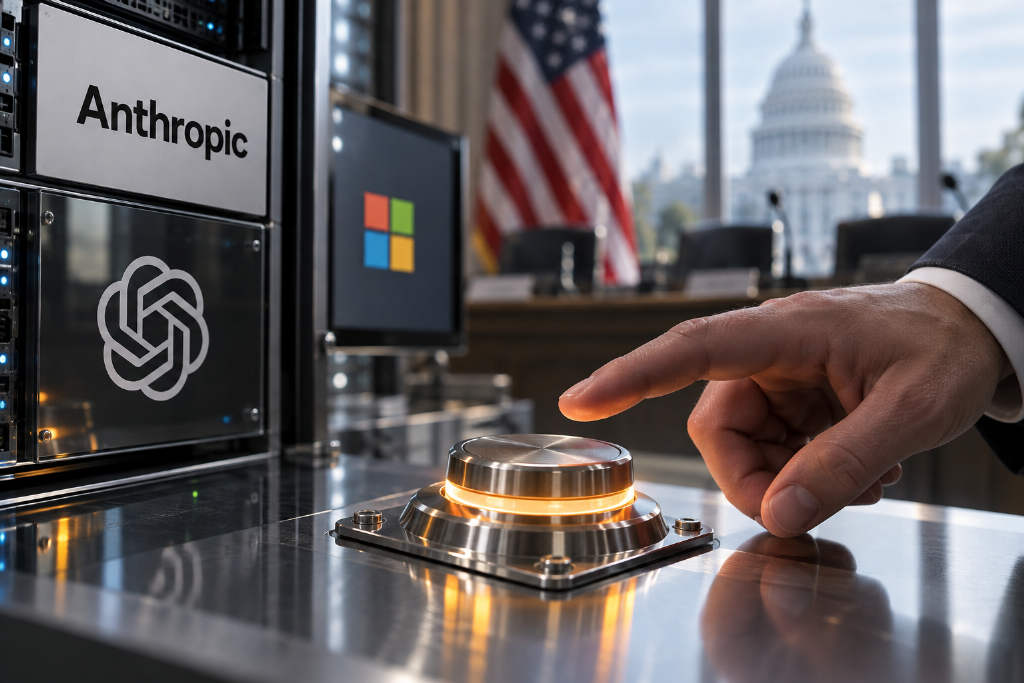
Trump administration stays cautious as AI leaders call for a slowdown

Trump administration stays cautious as AI leaders call for a slowdown

N
News Editor
2026-09-14 11:04:39
Pressure for tighter AI safeguards is building in the U.S., with Anthropic CEO Dario Amodei urging the government to slow AI development and let companies coordinate on safety standards without violating antitrust law. His position has drawn support from OpenAI CEO Sam Altman, Tesla CEO Elon Musk and Microsoft CEO Satya Nadella, all of whom have either backed the proposal or called for a more measured pace of development. The Trump administration has not embraced that approach. David Sacks, co-chair of the President's Council of Advisers on Science and Technology, said companies that see high risks in new models can slow down on their own, but should not ask the government to suspend antitrust enforcement. Trump framed the issue in geopolitical terms, saying the U.S. is ahead of China in AI and wants to keep that lead. House Speaker Mike Johnson also rejected the idea of Congress leading an emergency brake on the sector. OpenAI, for its part, said it is open to voluntary steps, including giving independent third-party evaluators employee-level internal access to assess AI products and safety practices and report incidents. Altman said the cost of slowing development would be worth paying and that competitive pressure should not justify reckless deployment.

As concerns over AI safety intensify, Anthropic CEO Dario Amodei has called on the U.S. government to slow the pace of AI development and allow AI companies to jointly set safety standards without running afoul of antitrust law.

The proposal has drawn support from several prominent tech executives. OpenAI CEO Sam Altman and Tesla CEO Elon Musk backed the idea, while Microsoft CEO Satya Nadella also called for tighter control over the speed of AI development.

White House remains wary of a government-led slowdown

The Trump administration has taken a cautious view of calls to slow the sector. David Sacks, co-chair of the President's Council of Advisers on Science and Technology, said AI companies that believe new models carry excessive risk can choose to slow their own work, but should not use that argument to ask the government to pause antitrust enforcement.

Trump stressed that the United States is currently ahead of China in AI. "Whoever wins AI wins everything," he said, adding that the U.S. should preserve that lead.

House Speaker Mike Johnson said Congress will not lead an "emergency brake" on AI. In his view, if companies such as OpenAI and Anthropic truly believe further development is too dangerous, they can stop on their own rather than wait for a government order. He also said Congress should not rush into an emergency pause order.

OpenAI says it is willing to adopt voluntary safeguards

At the same time, OpenAI said it is willing to take voluntary measures. Those steps include allowing independent third-party evaluators to receive employee-level internal access so they can assess AI products and safety practices and report incidents.

Altman said that although slowing the pace of AI development would come with costs, "it is worth paying that price," and that competitive pressure facing the United States should not be used as a reason for reckless development.

This article was originally published by Bit.Fan. For more cryptocurrency news and market insights, visit www.bit.fan.
6800

Disclaimer:

The market information, project data, and third-party content displayed on this platform are for industry information sharing only and do not constitute any form of investment advice or return commitment.

Cryptocurrency trading carries high risks. Users should fully assess their risk tolerance and make independent decisions. All profits, losses, and legal responsibilities are borne by the users themselves.