
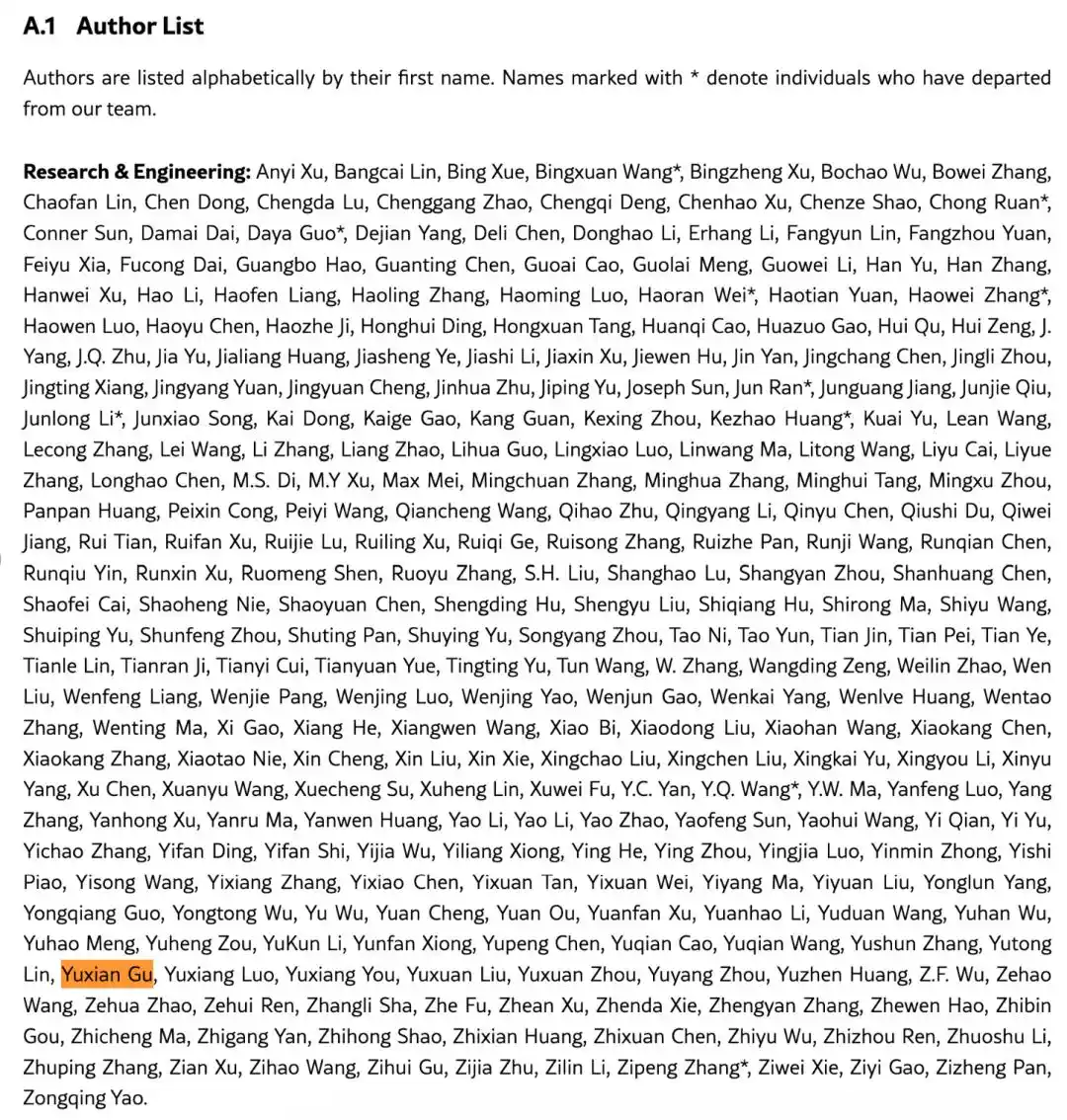
DeepSeek is expanding its team across algorithms, engineering, product, operations, data engineering, and corporate functions, and the company has now added another notable research hire. Publicly available information shows that Yuxian Gu, a 2021 PhD student at Tsinghua University and recipient of the 2025 Graduate Special Scholarship, has formally joined DeepSeek. His name had previously appeared on the author list of the DeepSeek V4 paper, while the official DeepSeek V4 release is expected to go live in the middle of this month.
Academic profile and research focus
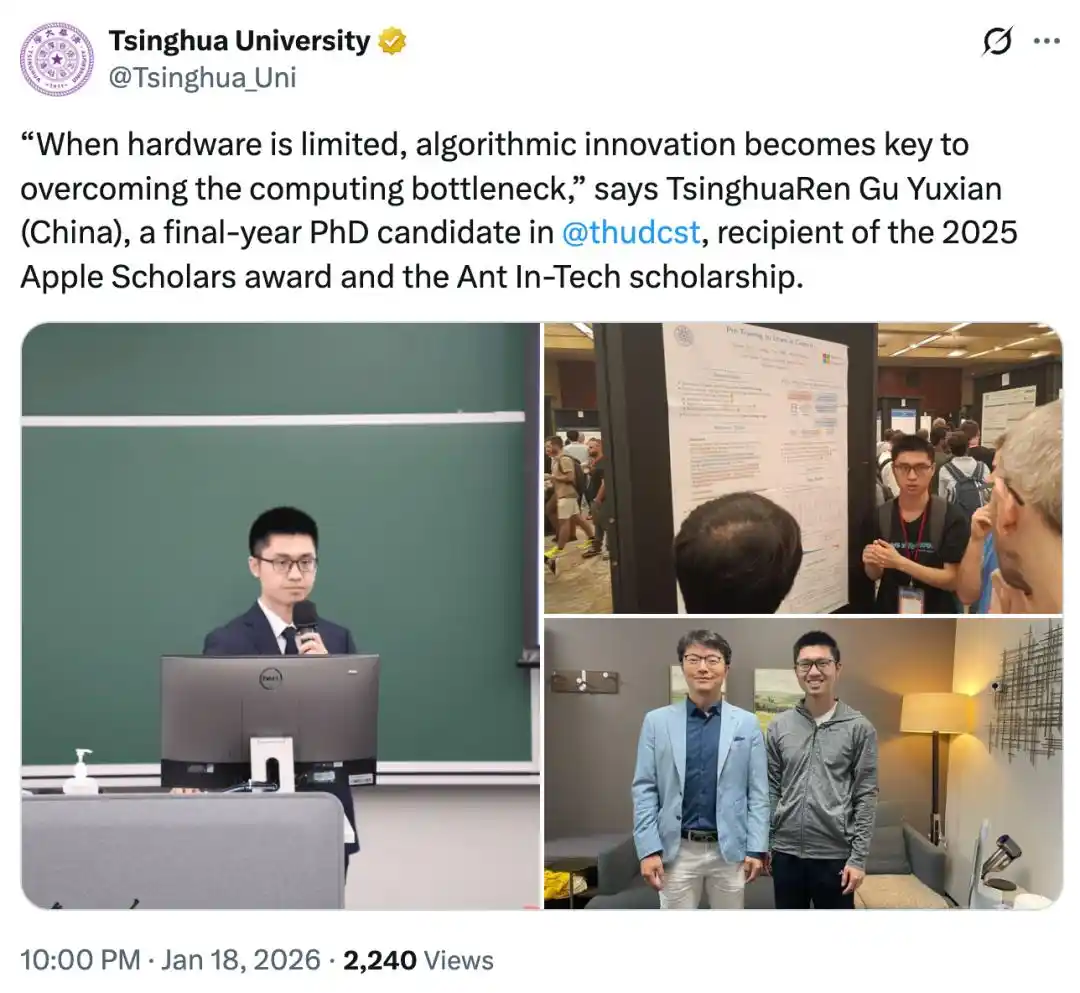
Gu is a graduating PhD candidate in the Department of Computer Science at Tsinghua University, where he also completed his undergraduate studies. He has worked with Professor Minlie Huang in Tsinghua’s Conversational AI (CoAI) group. In addition to the Tsinghua graduate special scholarship, he has also received the 2025 Apple Scholars in AI/ML PhD fellowship and the Ant In-Tech scholarship, according to the source material.
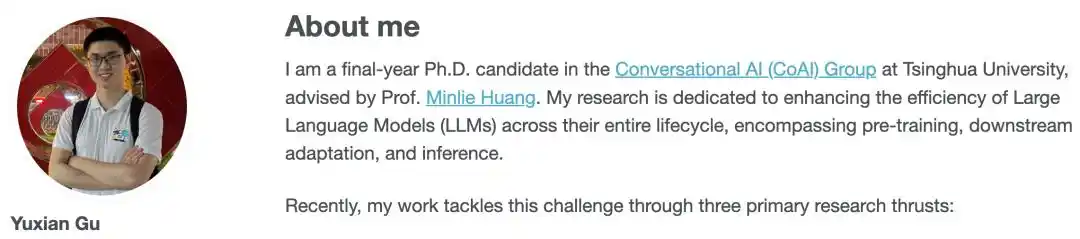
Gu has argued that when hardware resources are constrained, algorithmic innovation becomes the key lever for breaking through compute bottlenecks. That framing is consistent with the main thread of his work, which centers on boosting efficiency across the full lifecycle of large language models. His research spans pre-training, downstream adaptation, and inference, with recent work concentrated in three major directions:
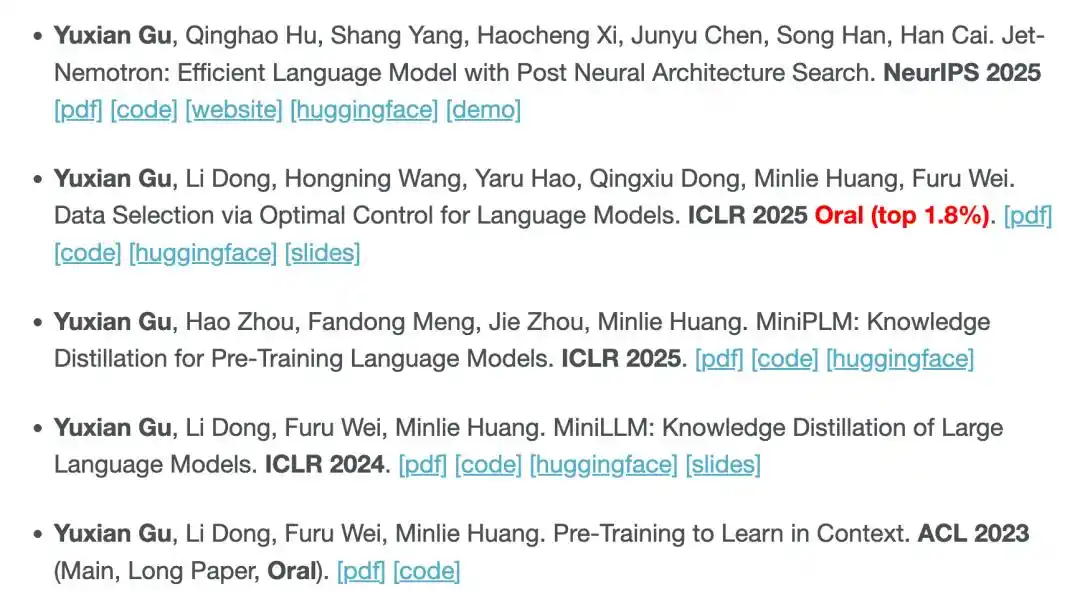
- Pre-training data selection: building theory and algorithms to improve data choice during model training, with representative work including PDS, Instruction Pre-training, and Learning Law.
- Knowledge distillation for model compression: designing methods to transfer capabilities from large models into smaller and easier-to-deploy models, including MiniLLM and MiniPLM.
- Efficient model architecture: exploring architectures that reduce compute cost while improving performance, including Jet-Nemotron.
Citation footprint and published work
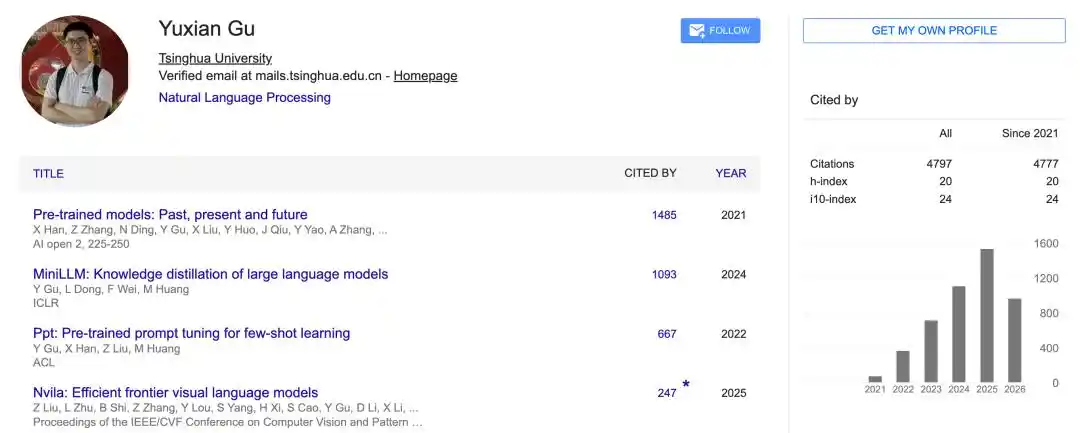
According to his Google Scholar profile cited in the article, Gu has accumulated nearly 5,000 citations. Two of his papers have each surpassed 1,000 citations: Pre-trained models: Past, present and future and MiniLLM: Knowledge distillation of large language models. He has also published multiple first-author papers at top international AI conferences including NeurIPS, ICLR, and ACL.
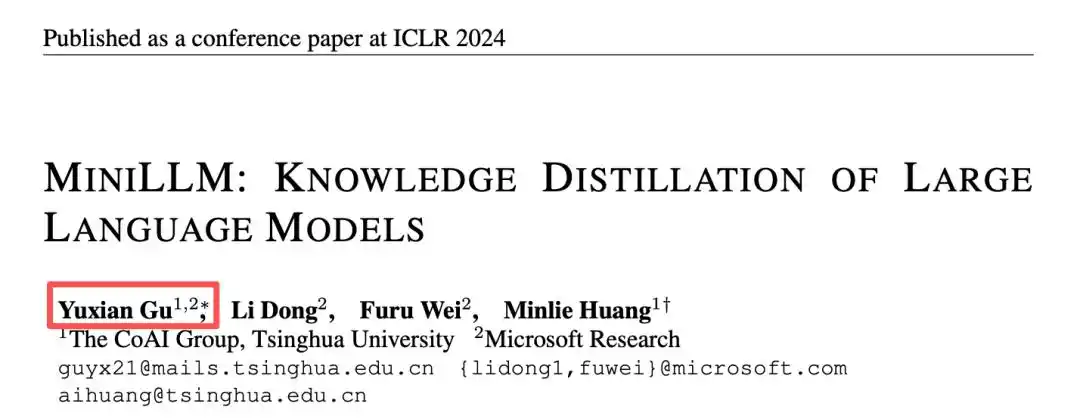
In the model compression track, Gu and collaborators proposed the MiniLLM approach in 2024. The method replaces the conventional forward Kullback-Leibler divergence objective in knowledge distillation with a reverse KLD objective, and then derives an efficient optimization scheme to train on that target. The source says experiments on instruction-following tasks showed that MiniLLM generated more accurate responses than baseline approaches, delivered better overall quality, reduced exposure bias, improved calibration, and performed better on long-form generation. The article further states that the method has been adopted by leading open-source communities and industry platforms linked to Google, Alibaba, and Nvidia.
Jet-Nemotron and the push for efficient inference
On the architecture side, Gu has also been associated with Jet-Nemotron, described in the source as a new family of hybrid-architecture language models. Two technical ideas were highlighted. The first is Post Neural Architecture Search, or PostNAS, a post-training architecture exploration and adaptive pipeline designed to work with arbitrary pre-trained Transformer models. The second is JetBlock, a novel linear attention module that the report says significantly outperforms prior designs such as Mamba2.
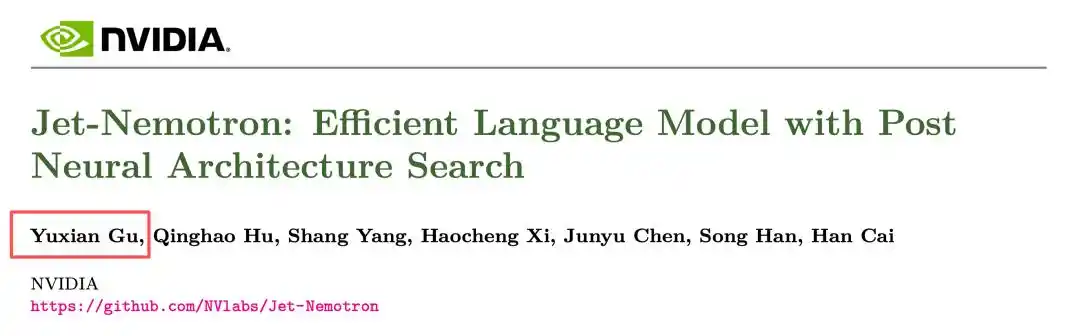
Based on the figures cited in the article, the 2B version of Jet-Nemotron outperformed open full-attention language models such as Qwen3, Qwen2.5, Gemma3, and Llama3.2 while also delivering major efficiency gains. On Nvidia H100 GPUs, under a 256K context length and maximum batch size setting, generation throughput reached up to 53.6x acceleration. The report also says that on MMLU and MMLU-Pro, Jet-Nemotron achieved higher accuracy than some larger MoE full-attention models, including DeepSeek-V3-Small and Moonlight.
As DeepSeek continues to reinforce its model research team and moves toward the formal launch of DeepSeek V4, Gu’s arrival adds expertise in efficiency optimization, model distillation, and architecture design. Based on the information disclosed so far, his prior research record aligns closely with DeepSeek’s ongoing push to improve model capability under real-world compute constraints.