
Three Key Numbers Define the Q2 Results
TSMC will hold its second-quarter earnings conference on July 16, 2026, at 14:00 Taiwan time, entering a quiet period from July 6 to 15. The focus of this earnings call goes far beyond simple revenue growth. As the world's largest semiconductor foundry, TSMC connects mobile chip clients like Apple and Qualcomm on one side, while serving AI accelerators, cloud custom chips, and high-performance computing demand on the other. Q2 results will directly address three questions: whether AI orders remain strong, whether the 2nm ramp-up is on track, and whether the near-66% gross margin can be sustained.
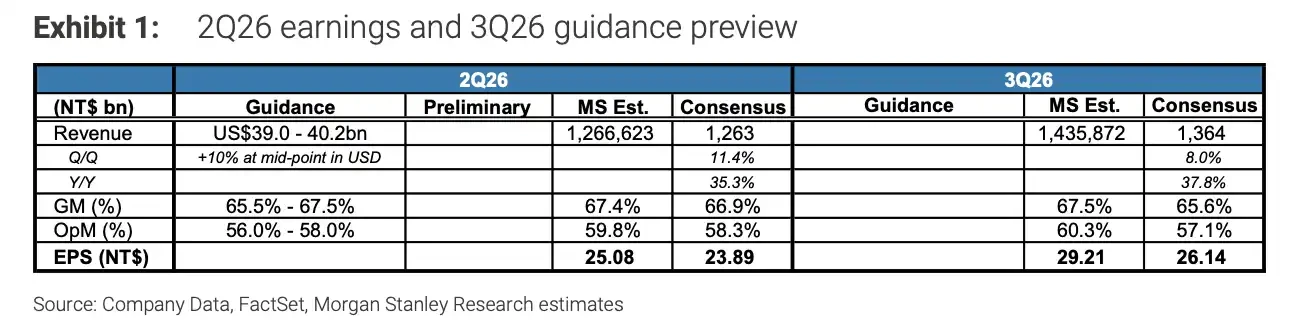
Q1 already delivered a strong report card: dollar revenue of $35.9 billion, gross margin of 66.2%, and operating margin of 58.1%. In NT dollar terms, revenue reached NT$1.134103 trillion, net profit NT$572.48 billion, EPS NT$22.08; revenue grew 35.1% YoY and net profit 58.3% YoY. Q2 guidance remains elevated: dollar revenue between $39.0B and $40.2B, gross margin 65.5%-67.5%. This means the market on July 16 will watch not just whether revenue falls within the guided range, but whether gross margin can hold above 65%.
AI/HPC Demand as the Gross Margin Anchor
TSMC's strongest growth engine remains AI and high-performance computing (HPC). Management described AI-related demand as 'extremely robust' on the Q1 call and raised 2026 dollar revenue growth guidance to over 30%. Revenue structure reinforces this view: HPC accounted for 61% of Q1 revenue, and 7nm and below advanced nodes contributed 74% of wafer revenue. While not directly equal to AI revenue share, it clearly shows that high-performance computing and advanced nodes are the revenue backbone.
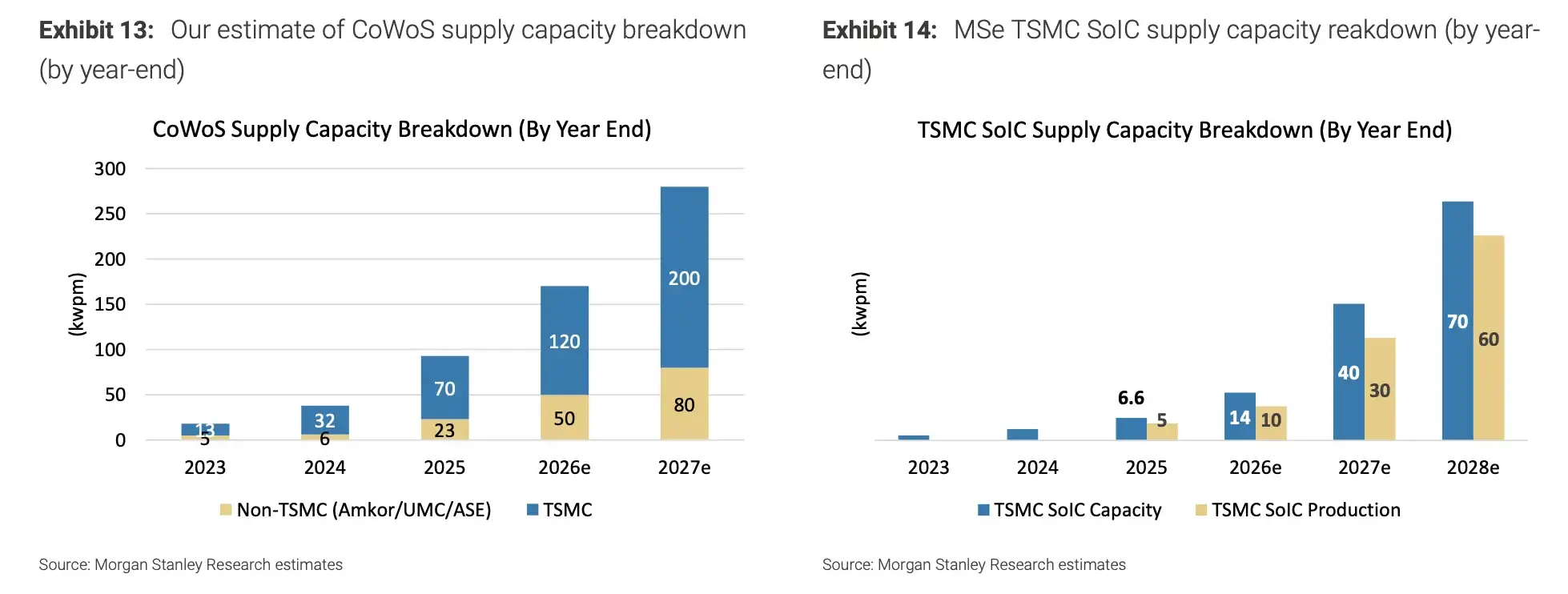
AI chip demand boosts not only order volume but also average chip value. AI accelerators and cloud custom chips are larger die, more complex to manufacture, and depend more on advanced processes and packaging, pushing up order value and keeping premium capacity tight. As long as AI CapEx continues expanding, TSMC can maintain high utilization and pricing power. However, TSMC typically does not name specific clients like Apple, Nvidia, or Qualcomm in earnings releases; investors must infer demand strength from revenue structure, CapEx, monthly revenue, and management commentary. Monthly revenue already signals strength: May 2026 revenue was NT$416.975 billion, +30.1% YoY; Jan-May cumulative revenue was +30.0% YoY.

CapEx Double-Edged Sword: Securing Future Orders Comes at a Cost
TSMC has set full-year 2026 CapEx toward the high end of its $52B-$56B range. This move indicates management sees not short-term order fluctuations but a long-term capacity gap driven by AI/HPC demand. Higher CapEx helps lock in future orders but also brings higher costs: advanced process lines require huge investment, and equipment and factory depreciation will gradually flow through to the P&L. Meanwhile, overseas fabs in the US, Japan, and Germany diversify geopolitical risk but add operational complexity and supply chain costs.

Thus, CapEx near the upper limit is a double-edged sword. When demand is strong, it represents TSMC expanding its lead; when demand cools, CapEx can quickly translate into gross margin pressure. That's why the market repeatedly probes gross margin: TSMC does not lack demand; the real divergence is whether these orders can continue to be delivered at high margins.
2nm Ramp-Up and the Second Half Outlook: The Next Gross Margin Test
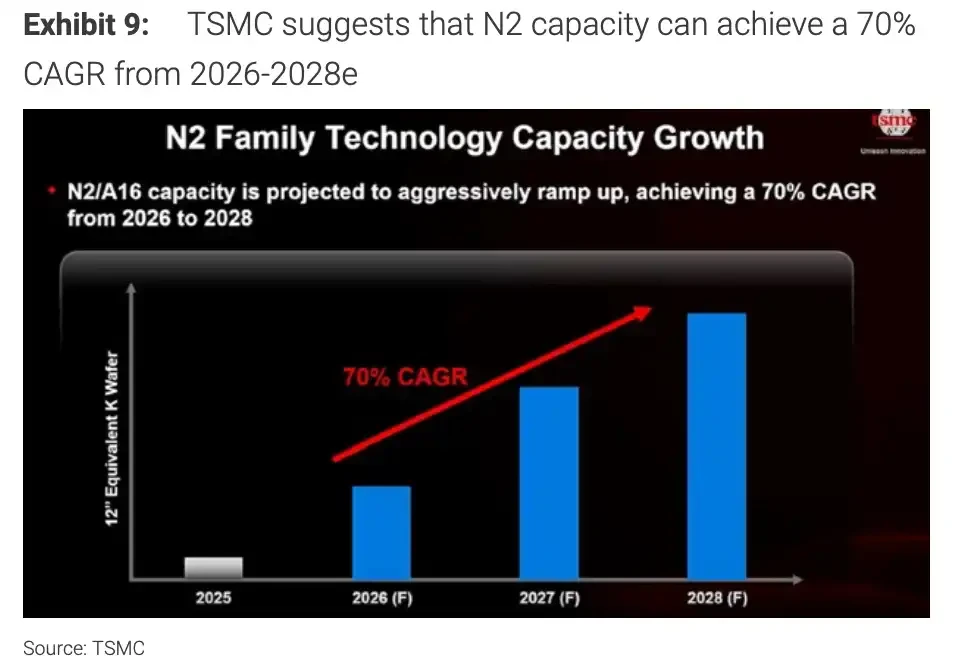
Beyond Q2 results, 2nm is the most important variable for TSMC's next few years. Management previously stated that N2 entered high-volume production in Q4 2025 and is ramping at multiple stages in Hsinchu and Kaohsiung, with demand from smartphones and HPC/AI. For customers, 2nm determines the performance frontier of next-generation flagship chips; for TSMC, 2nm determines future advanced-node pricing, capacity allocation, and gross margin levels. The market cares not whether 2nm has entered production, but how quickly supply can expand, whether yield improves as planned, and whether initial customer demand can cover the high capital investment. TSMC expects N2/A16 capacity to ramp rapidly from 2026 to 2028 with a CAGR of ~70%. If the 2nm ramp goes smoothly, TSMC can continue to control advanced node supply and pricing power; if yield or cost surprises to the downside, gross margin may suffer even as revenue grows.
The July 16 earnings call is not just about whether TSMC meets Q2 guidance. More importantly, management will describe H2 AI/HPC demand, advanced packaging capacity, 2nm ramp progress, CapEx plans, and gross margin outlook. If TSMC maintains a strong demand narrative and gross margin stays within the 65.5%-67.5% guided range, market confidence in the AI hardware supply chain will be supported. If management sends more cautious signals on orders or costs, investors will reassess how long the AI supply chain's high growth can last. TSMC's current strength comes from AI/HPC demand, tight advanced node supply, and high CapEx expansion, but the risks lie on the same chain: demand, pricing, yield, depreciation, and overseas execution. If any link falls short, the near-66% gross margin will be tested first.