CapEx

WuBlockchain
2026-09-06 11:53:20

CXMT’s DRAM share hits 10% as Foxconn sales climb and Iran oil risk grows

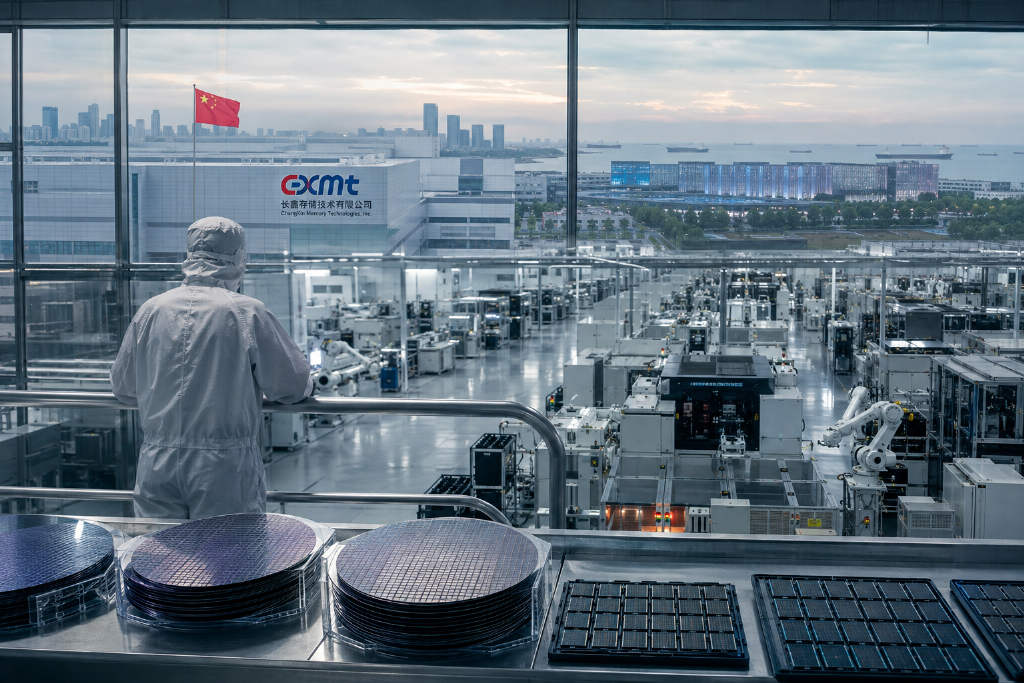
WuBlockchain’s WhiteLine Daily highlighted four developments shaping current market thinking around AI infrastructure and energy risk. Counterpoint Research said ChangXin Memory Technologies, or CXMT, lifted its global DRAM revenue share to 10% in the second quarter of 2026, up from 4% a year earlier and 8% in the first quarter, placing it fourth worldwide behind Samsung, SK Hynix, and Micron. The company’s interim report, released on Aug. 28, showed first-half revenue of 150.31 billion yuan, up 873.64% year over year, while net profit attributable to shareholders reached 77.605 billion yuan versus a 2.332 billion yuan loss a year earlier. Foxconn, meanwhile, reported August revenue of NT$921.77 billion, or about $29.1 billion, up 51.98% from a year earlier and the highest ever for the same month. It also said third-quarter visibility had improved and overall performance should beat market expectations. In India, Tata Consultancy Services said its AI data center unit HyperVault had secured 264 acres in Hyderabad for a campus that could scale to 1 GW, with up to 700 billion rupees, or about $7.4 billion, in investment. Separately, after the U.S. military said it struck three Iranian crude transport vessels on Sept. 5, concern over disruption around Kharg Island and the Strait of Hormuz pushed supply risk back into focus, with Brent previously rising to $96.28 a barrel and up about 7.6% for the week.
60
CXMT’s DRAM share hits 10% as Foxconn sales climb and Iran oil risk grows
data center c
2026-09-03 06:43:09

Social Graph VC: Data Center CapEx to Surpass $1 Trillion by 2026, CME to Launch GPU Futures

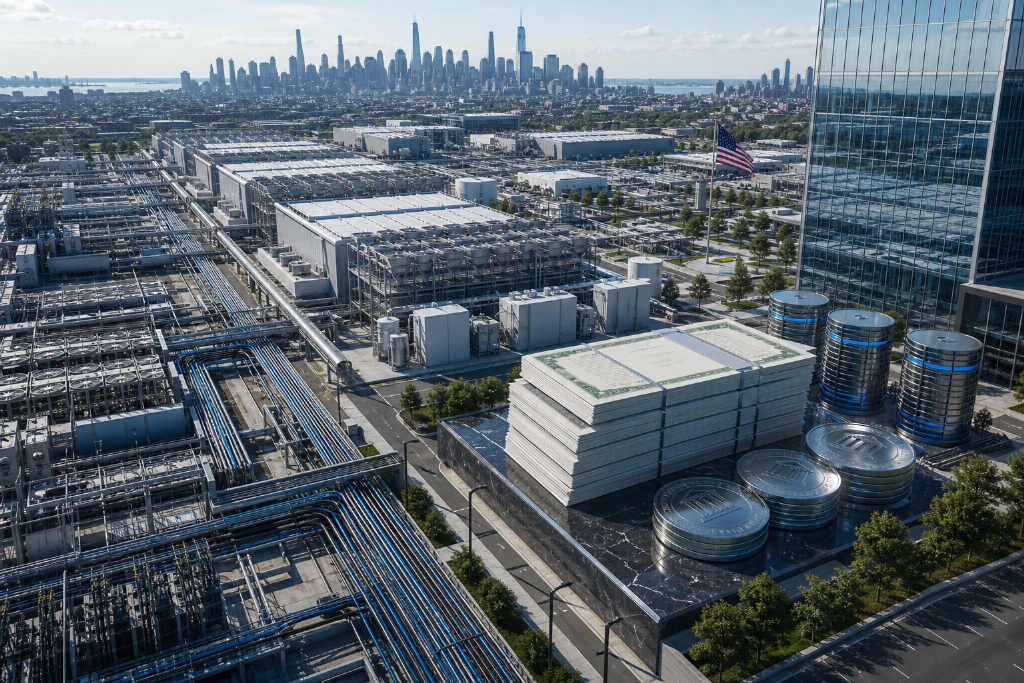
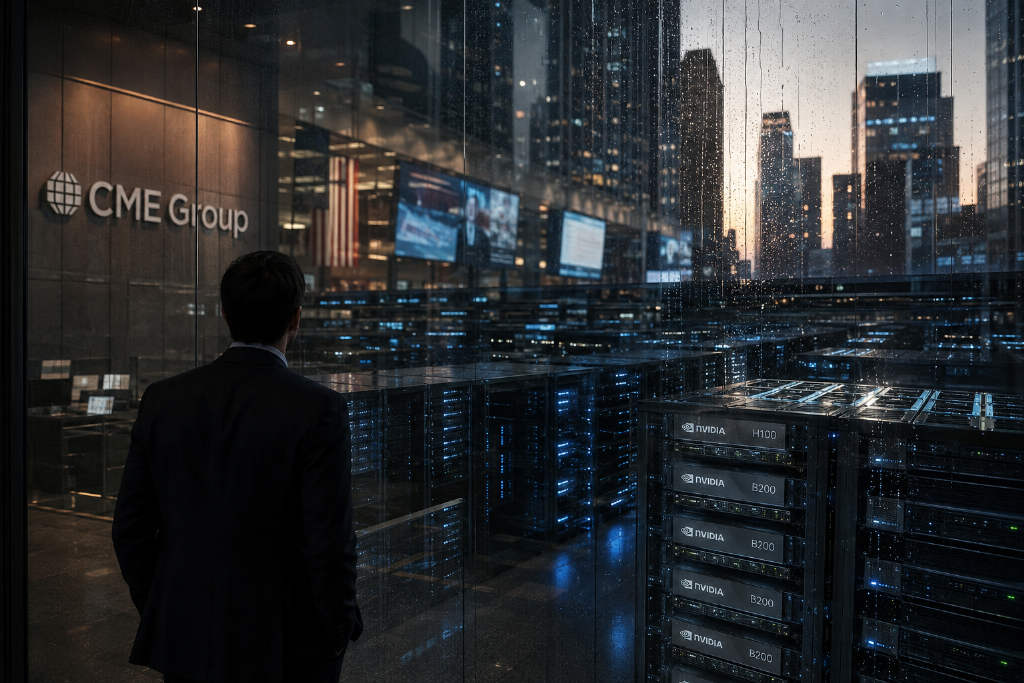
Venture capital firm Social Graph VC released a primer on the computing market, forecasting that data center capital expenditure will exceed $1 trillion in 2026, roughly double the combined spending of the four major hyperscale cloud providers in 2025. Jensen Huang predicts annual spending could reach $3-4 trillion by the end of the decade and $10 trillion by 2031. AI investment currently accounts for about 0.9% of global GDP, rising to 1.4% by 2028. The training costs for Fable 5 and GPT-5.6 are each around $120 billion, with power consumption below 2 GW. CME plans to list cash-settled H100 and B200 monthly lease futures on NYMEX on October 5, 2026, pending regulatory review, referencing the Silicon Data Index. ICE also announced GPU futures based on the Ornn Index.

90
Social Graph VC: Data Center CapEx to Surpass $1 Trillion by 2026, CME to Launch GPU Futures
Goldman Sachs
2026-09-01 02:54:24

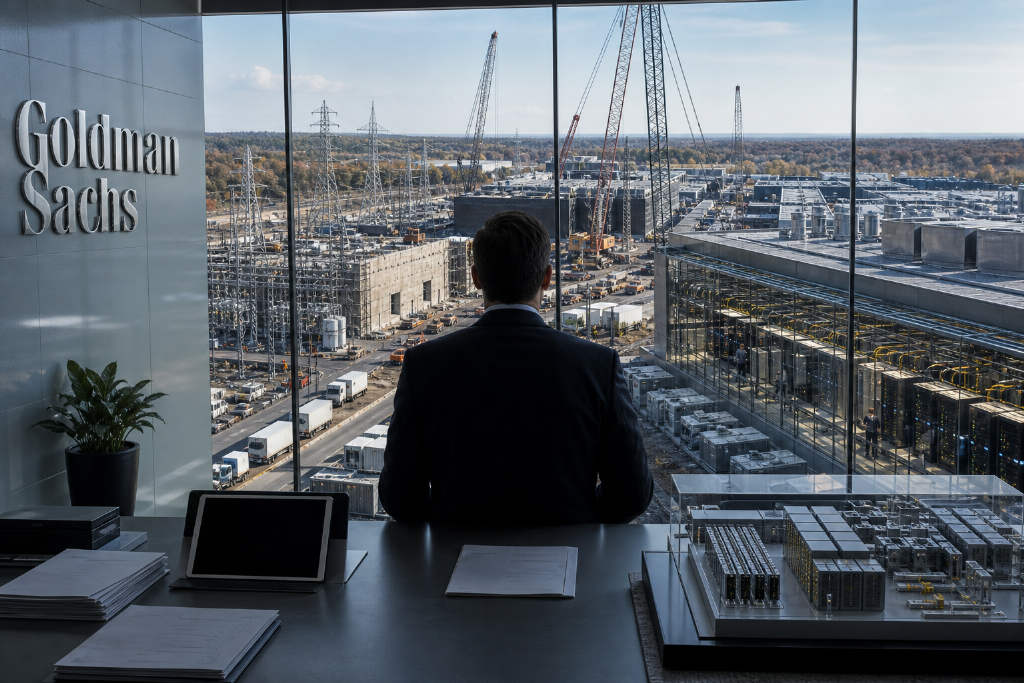
Goldman Sachs: AI Capex Shock Only Just Beginning, Supply-Demand Balance May Wait Until H1 2028

Goldman Sachs believes the market discussion over AI capital expenditure is far from over, and the supply-demand imbalance in AI infrastructure may not be resolved until the first half of 2028. According to a BlockBeats report on Sept. 1, the bank expects investors to keep seeing higher capex guidance in the coming years as large tech companies compete for computing power, land, electricity, and data center resources. Eric Sheridan, head of TMT research at Goldman Sachs, said the gap between AI computing demand and available supply remains pronounced, while storage prices, chip prices, and data center construction costs are all rising. The pressure points in the AI supply chain, he added, have moved beyond a pure GPU shortage to include memory, land, electricity, data center shells, and delivery lead times. The investment bank's comments suggest the capex shock has only just begun, and a balance between supply and demand in AI infrastructure may not arrive before the first half of 2028.

140
Goldman Sachs: AI Capex Shock Only Just Beginning, Supply-Demand Balance May Wait Until H1 2028
WuBlockchain
2026-08-28 12:10:25

WhiteLine Daily: Nvidia Reportedly Agrees to $12.9 Billion Hugging Face Deal as IREN Says 2026 Compute Is Nearly Sold Out

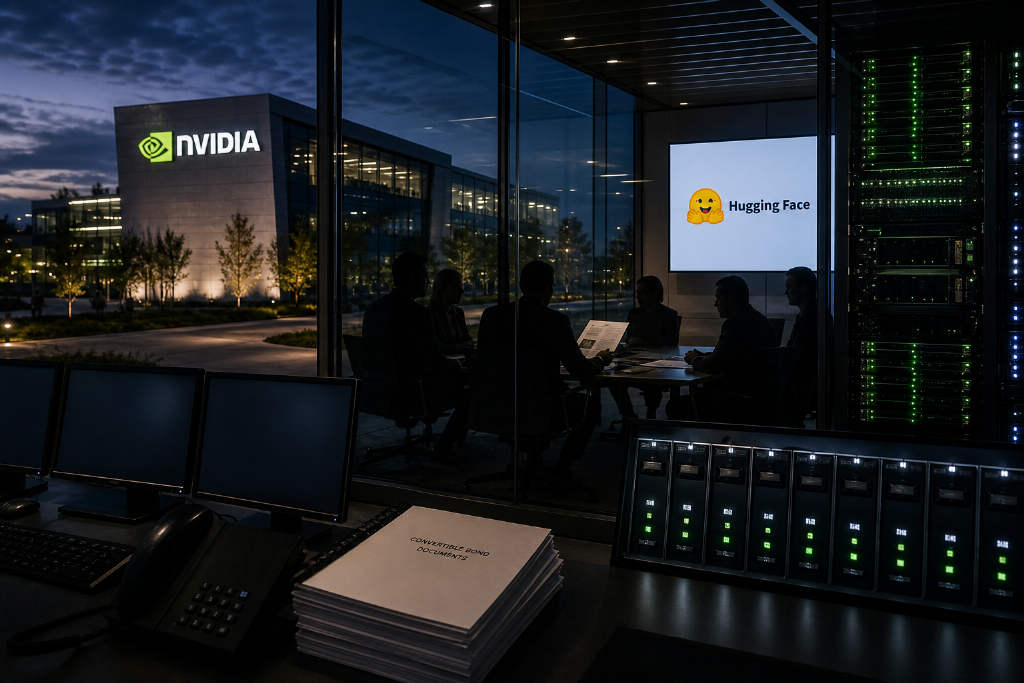
WuBlockchain’s WhiteLine Daily highlighted four AI-related developments shaping capital allocation and market expectations. The report said Nvidia has reportedly agreed to acquire open-source AI platform Hugging Face for $12.9 billion, citing The Information, though neither company has formally announced the transaction. Hugging Face is said to be generating about $150 million in annualized revenue, up from roughly $100 million two months earlier. The roundup also covered Marvell’s FY2027 second-quarter results. Revenue reached $2.739 billion, with data center revenue climbing 46% year over year to a record $2.172 billion. Even after Marvell raised its FY2027 and FY2028 revenue targets, the stock fell more than 6% in after-hours trading. Management said stronger revenue contribution from its expanded Google partnership is expected mainly in FY2029 and beyond. A third item focused on convertible debt markets. The Financial Times reported that global zero-coupon convertible issuance has reached $72 billion so far in 2026, close to the full-year 2025 record of $73 billion. WuBlockchain also noted IREN’s statement that its 2026 compute capacity is nearly sold out, representing $4 billion in contracted ARR, while warning that ARR should not be treated as the same as recognized GAAP revenue.

240
WhiteLine Daily: Nvidia Reportedly Agrees to $12.9 Billion Hugging Face Deal as IREN Says 2026 Compute Is Nearly Sold Out
OpenAI
2026-08-26 12:01:13

OpenAI posts first Jalapeño benchmark results as South Korean DRAM export prices jump 401%

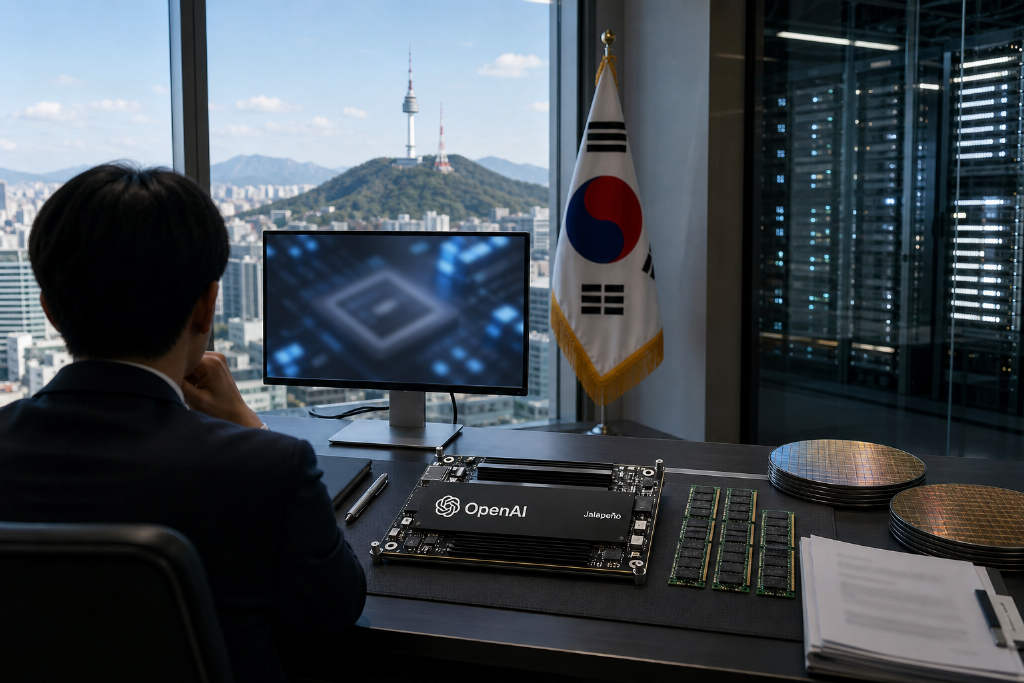
WuBlockchain’s WhiteLine Daily rounded up several developments across AI infrastructure and semiconductors. OpenAI released the first benchmark readout for its in-house inference chip, Jalapeño, and said peak throughput per watt was 1.5x to 1.9x higher than comparison systems across tests involving GPT-OSS 120B, DeepSeek R1 670B, and Kimi K2.5 1T, while end-to-end latency was 1.7x to 3.6x lower. SemiAnalysis said its team verified benchmark execution on site at OpenAI’s lab, though the performance figures themselves came from OpenAI. Separately, ChosunBiz, citing TRASS data, reported that South Korea’s DRAM export unit price for Aug. 1-20 reached $92,183 per kilogram, up 401% year over year, while export value rose 504.8% to $9.807 billion. Bloomberg, citing Morgan Stanley, said AI infrastructure-related commitments from five hyperscalers plus Nvidia and Broadcom have surpassed $3.1 trillion. Semtech also reported strong data center growth and projected another sequential increase in the third quarter.

330
OpenAI posts first Jalapeño benchmark results as South Korean DRAM export prices jump 401%
Fu Peng
2026-08-24 14:20:48

Fu Peng says AI trade has flipped as markets punish capital burn instead of rewarding expansion

Fu Peng said the market is now in a vacuum period where the thesis of a complete and viable AI commercial loop has yet to be proven or disproven, and that shift is changing how investors price companies. In his view, the earlier enthusiasm that rewarded heavy spending in the AI arms race has cooled, giving way to a framework that penalizes aggressive capital consumption. He pointed to the U.S. market’s punishment of Alphabet after free cash flow turned negative and the rotation toward Apple as a clear example of that change, adding that a similar pattern is now playing out among major Chinese internet companies. Fu said Alibaba’s capital expenditures surged this quarter, leading to continued net free cash flow outflows. If large AI computing and infrastructure spending cannot quickly produce profits on a comparable scale, he argued, the burden falls on offshore cash and raises fresh doubts about marginal returns on capital. Against a market that is already unconvinced about a full AI profit loop, he said that announcing large placements or convertible bond financing amounts to further shareholder dilution. Fu also cited Michael Burry’s reduction or exit from Alibaba and heavier positioning in JD.com as reflecting the same investor preference for companies with more restrained balance-sheet expansion, less pressure on free cash flow, and clearer buyback execution.

330
Fu Peng says AI trade has flipped as markets punish capital burn instead of rewarding expansion
WuBlockchain
2026-08-22 11:55:11

US AI-linked tech bond issuance hits $220 billion as credit spreads widen

WuBlockchain’s WhiteLine Daily said large US technology companies have issued about $220 billion in AI-related bonds so far this year through Aug. 10, up sharply from roughly $12.5 billion a year earlier. The report said big tech firms that had largely funded AI spending from internal cash flow are turning more heavily to debt markets to finance data centers and other infrastructure, and the added supply has started to push borrowing costs higher. Average spreads on tech corporate bonds have risen to 89 basis points, or 9 basis points above the broader US investment-grade market, according to the report. It added that some large new deals now need to offer higher yields to attract buyers. WhiteLine Daily’s takeaway was straightforward: AI capital expenditure has not run into a funding freeze, but money is getting more expensive. The report also highlighted other parts of the AI supply chain. Zayo expanded a long-term fiber supply agreement with Corning and plans to add about 24,000 kilometers of network by 2030, with more than 12,900 kilometers of long-haul fiber to be built with NVIDIA. In China, Eoptolink reported first-half revenue of 41.778 billion yuan and net profit attributable to shareholders of 13.651 billion yuan, while Yangtze Memory parent Changcun Holding saw its STAR Market IPO filing accepted, with a planned 33 billion yuan raise.

590
US AI-linked tech bond issuance hits $220 billion as credit spreads widen
AI infrastruc
2026-08-21 11:53:08

AI infrastructure trade shifts toward financing, ASIC expansion, and storage profit realization

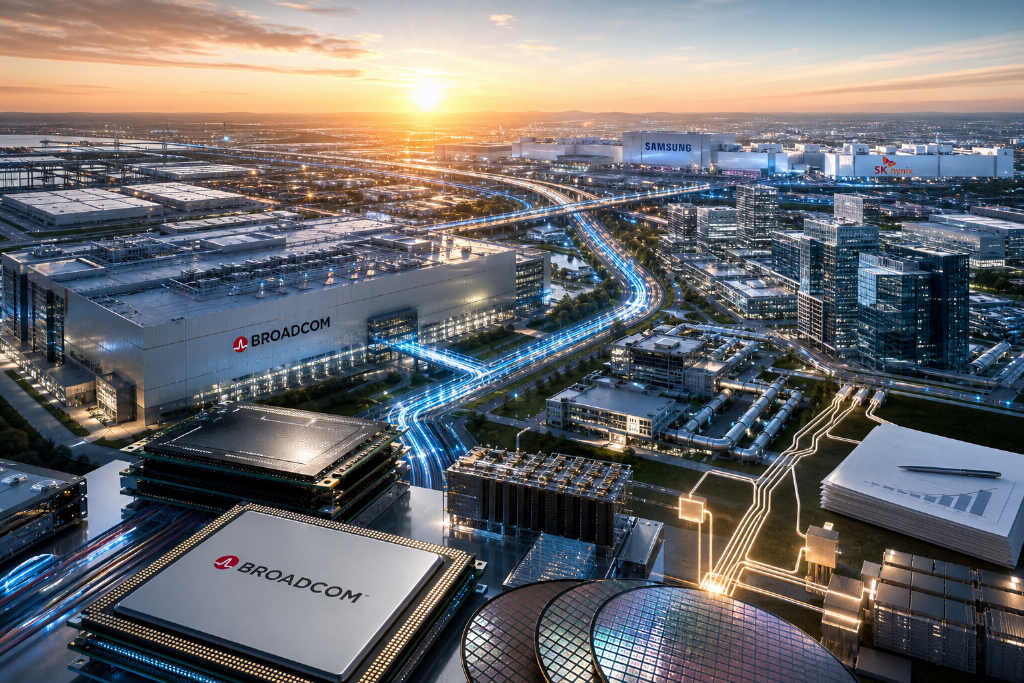
WuBlockchain’s WhiteLine Daily said the AI infrastructure theme is moving into a new phase defined by external financing, rising custom ASIC adoption, and profit realization at memory makers. Broadcom is in talks to raise more than $60 billion in debt through a special purpose vehicle to support computing buildouts for AI customers including Anthropic and OpenAI. Earlier financing arrangements with Blackstone and Apollo totaled $35 billion, with the first phase expected to add 1 GW of capacity for Anthropic and the broader platform targeting more than 20 GW by 2028. The report also highlighted Google’s expanded custom AI chip partnership with Marvell. Google received stock subscription rights in Marvell worth up to about $12.2 billion, and the deal could generate as much as roughly $120 billion in revenue for Marvell by fiscal 2033 if targets are met. In memory, Micron said it will invest $10 billion over the next decade in Boise, Idaho, on a new memory and AI research center. Samsung Electronics and SK Hynix were also cited as examples of AI memory demand translating into cash flow and larger shareholder returns.

480
AI infrastructure trade shifts toward financing, ASIC expansion, and storage profit realization