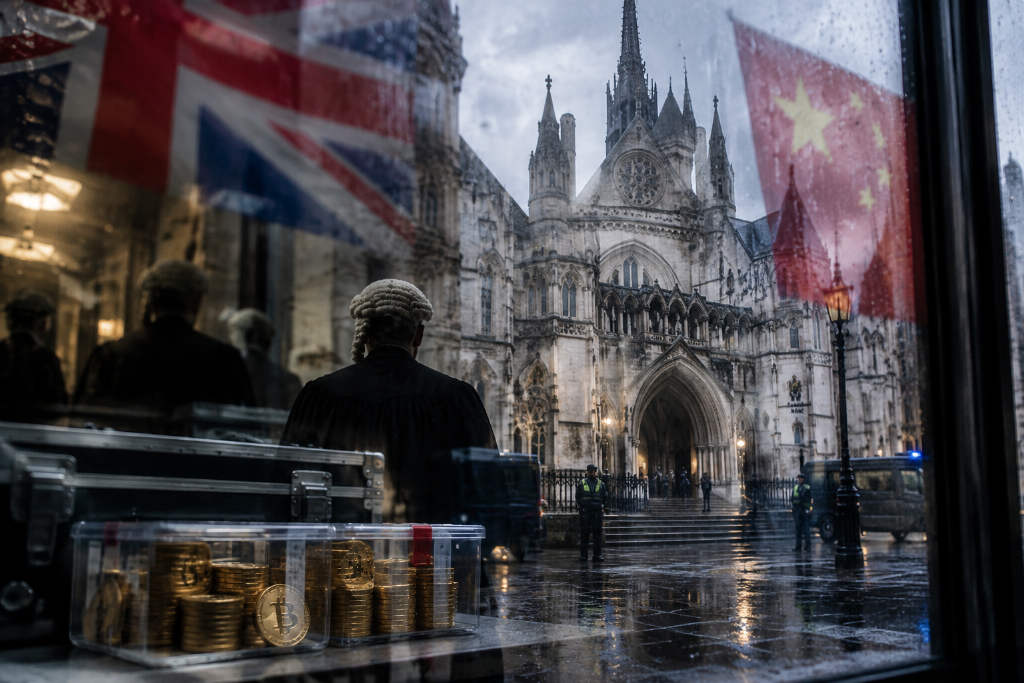
The UK government’s chances of keeping a seized 61,000 BTC stash improved after London’s High Court ruled on Monday that Chinese law should govern victims’ claims in the case tied to convicted fraudster Zhimin Qian.
Based on CoinGecko data, the Bitcoin is worth about $5 billion at a current price of roughly $83,200 per coin.
Judge says Chinese law governs the claims
Qian was jailed for more than 11 years last year after pleading guilty to fraud and money laundering charges linked to a Ponzi scheme that defrauded investors in China between 2014 and 2017.
According to the ruling, at least 128,409 investment contracts were entered into, and victims paid about RMB 40.2 billion, or roughly £4.1 billion. About RMB 34.1 billion of that total was paid back to some victims.
Thousands of victims have applied under the Proceeds of Crime Act, asking the court to declare that parts of the Bitcoin belong to them. Justice Mark Turner wrote that each applicant must show a proprietary interest in the coins, because the law does not create a broader compensation scheme for people who lost money to crime.
The Financial Times reported that English law had been viewed as materially more favorable to the victims because it could have allowed them to argue that the Bitcoin belonged to them.
Fraud, payments and contracts were all in China
Turner sided with the Director of Public Prosecutions, who leads the Crown Prosecution Service and brought the case. He found that the fraud, the victims’ payments, and the contracts all took place in China.
“The relevant damage occurred in China. The Applicants parted with their money in China,” he wrote.
Turner said he reached the same conclusion under each legal route he considered, finding that the governing law “is Chinese law.”
He also wrote that because the Bitcoin was bought in China, tracing the coins in England cannot revive any property rights the victims lost under Chinese law when that purchase took place.
Ownership of the Bitcoin is still unresolved
The ruling does not settle who ultimately keeps the Bitcoin. Turner wrote that questions about the content of Chinese law and how it will be proved are matters for a later stage.
Prosecutors have previously said victims could be compensated through a redress scheme run from China.
The Financial Times reported last year that unnamed Treasury officials had privately raised whether the seized Bitcoin, then worth around $7 billion at the time of Qian’s trial, could help fill a shortfall in the UK’s public finances.
Fieldfisher, the law firm representing the claimants, is pursuing an appeal, according to the Financial Times.
The Crown Prosecution Service said: “There will be a further hearing to determine the application of the law and if any of the victims are able to establish an interest in the bitcoin.”