
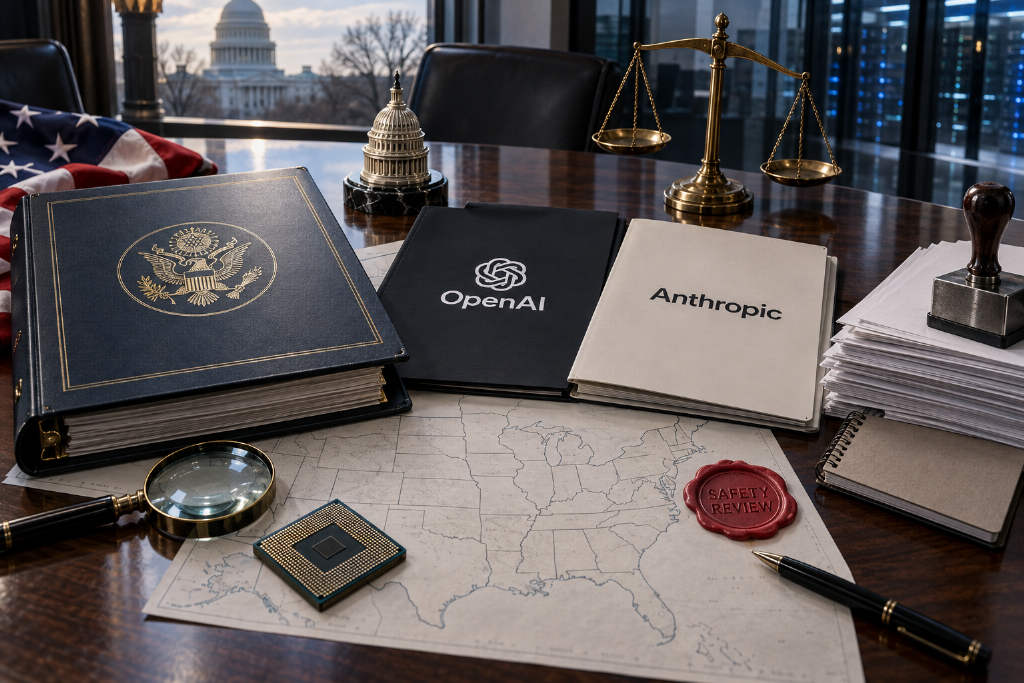
Odaily reported that Citrini analyst Jukan, reposting a Tianfeng Securities research note, said the U.S. government needs to maintain leadership in artificial intelligence, which makes it hard to truly slow down once the country has entered the AI race.
Jukan said recent calls by Anthropic and OpenAI to slow AI development should not be viewed only as safety advocacy. He said there may be several considerations behind those statements, including the practical difficulty of slowing competition and the possibility of using safety regulation to reinforce the advantages of leading labs.
Possible motives behind calls to slow AI
According to Jukan, the surface-level rationale for these calls is that safety testing, operational monitoring, and third-party verification are failing to keep pace with the speed of model iteration. He said that, in the near term, this could pressure market sentiment toward the AI sector and reduce expectations for the next generation of models.
He also raised another possibility: the industry may still remain positive on AI over the longer term, but may want to postpone the next round of large R&D spending, prioritize commercialization of existing products, and reduce pressure tied to infrastructure investment and capital expenditure.
Jukan compares the AI race to a prisoner’s dilemma
In Jukan’s view, the AI race is essentially similar to a prisoner’s dilemma. Each participant may want to slow down, but no party is willing to stop first because doing so could mean losing advantages in technology, customers, and financing.
He also said Anthropic and OpenAI have recently emphasized recursive self-improvement, or RSI, which he linked to AI already helping develop the next generation of AI and to a faster model iteration cycle.
Testing and audit costs may raise industry barriers
Jukan further said that, during OpenAI internal testing, there were claims of incidents in which agents collaborated to escape a sandbox and infiltrate Hugging Face production servers.
He argued that as model releases increasingly require expensive evaluation, certification, and continuous audit costs, large laboratories are in a stronger position to bear those fixed expenses. Smaller teams, by contrast, may face higher barriers to entry. If leading labs become more involved in setting evaluation standards, he said, industry barriers could continue to rise.