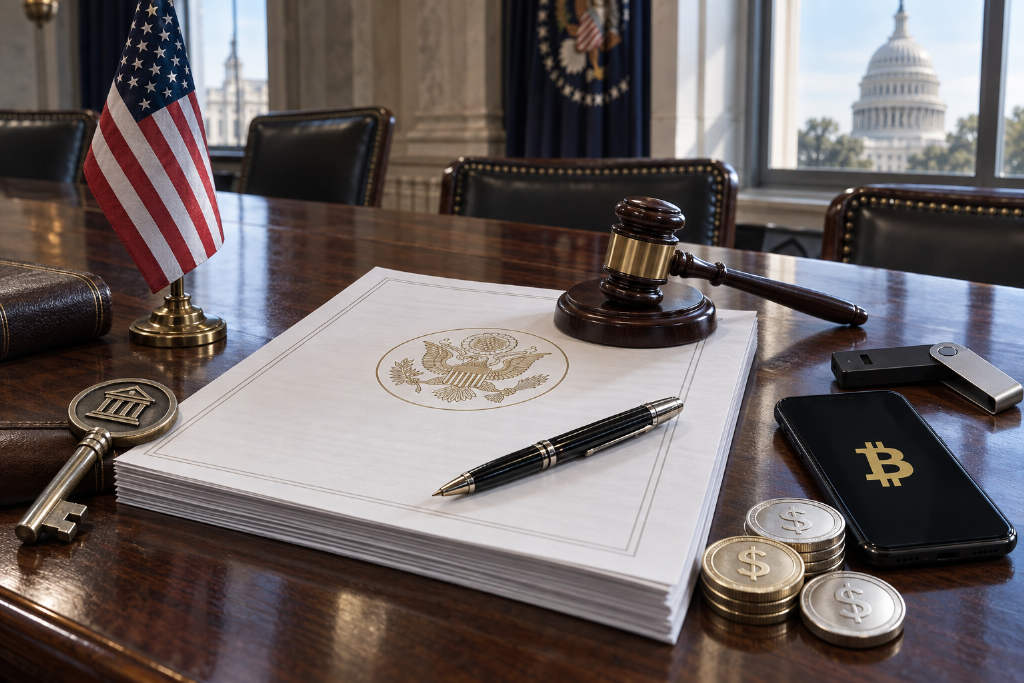
The U.S. Congress is reviewing a proposal that would allow banks to hold cryptocurrencies and issue stablecoins. According to Techub, citing Crypto Briefing, the measure is designed to give traditional financial institutions a clearer legal framework for participating in digital assets.
If approved, banks would be able to directly custody clients’ crypto assets and issue stablecoins pegged to fiat currencies such as the U.S. dollar. The proposal is framed as a step that could speed up institutional adoption of crypto by reducing legal uncertainty around how banks engage with the sector.
Techub said the measure could also affect the stability of the digital asset market and the valuation of assets including Bitcoin. The proposal is still under consideration in Congress.
U.S. Congress is considering a proposal that would allow banks to hold cryptocurrencies and issue stablecoins, according to Techub, which cited Crypto Briefing.
The proposal is intended to provide a clearer legal framework for traditional financial institutions entering the digital asset sector. Techub said that could accelerate institutional adoption of cryptocurrencies.
If passed, banks would be able to directly custody clients’ crypto assets and issue stablecoins pegged to fiat currencies such as the U.S. dollar. The proposal could also affect digital asset market stability and the valuation of assets including Bitcoin, according to the report.
This article was originally published by Bit.Fan. For more cryptocurrency news and market insights, visit www.bit.fan. Disclaimer:
The market information, project data, and third-party content displayed on this platform are for industry information sharing only and do not constitute any form of investment advice or return commitment.
Cryptocurrency trading carries high risks. Users should fully assess their risk tolerance and make independent decisions. All profits, losses, and legal responsibilities are borne by the users themselves.