

The U.S. 30-year Treasury yield briefly climbed to about 5.34% earlier this week, its highest level since 2007. Then Treasury Secretary Bessent stepped in. The Treasury said it would raise the size of certain buybacks for 10- to 30-year Treasuries from a previous cap of $2 billion to at least $4 billion per operation, with the larger purchases set to run from Sept. 9 through Nov. 4. After the announcement, the long end eased, the dollar weakened, and risk assets found some support.
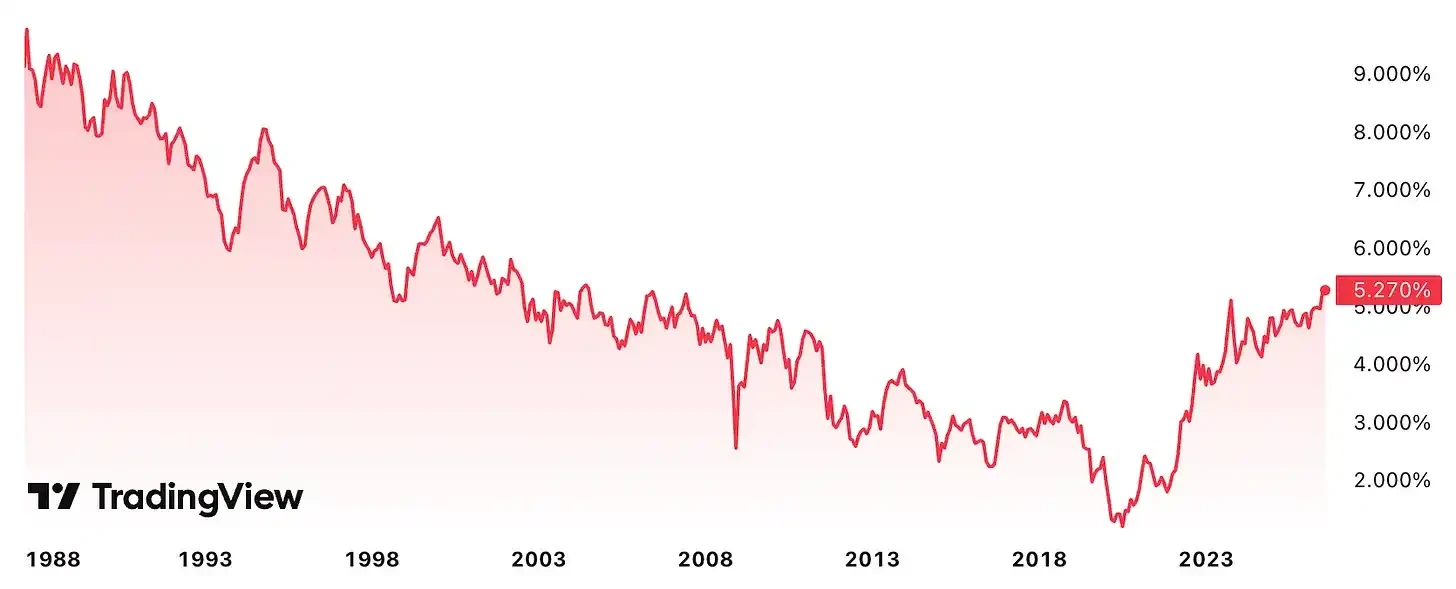
That sequence has pushed a bigger question into view: was this only a temporary liquidity repair for the bond market, or a sign that Washington’s stance toward long-end yields is starting to shift?
Inflation may not explain the whole move
In Trader Joe’s article, "Beware the Bond: Operation Twist is Back," the recent sell-off in long-dated Treasuries is not treated as a simple inflation story. Inflation is the most obvious explanation: if investors expect higher inflation to persist over time, they will demand more compensation to hold long-term government debt. But the piece argues that this is not enough to explain the full move.
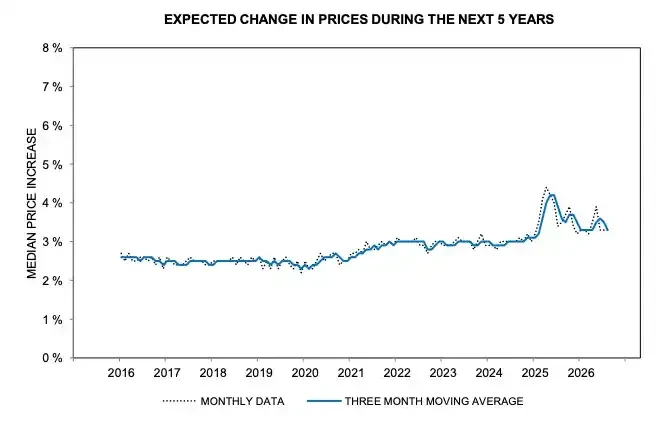
Consumer surveys do not yet show a clear break higher in long-run inflation expectations. The University of Michigan’s preliminary August survey showed one-year inflation expectations ticking up from 4.2% to 4.3%, while five-year inflation expectations held at 3.3%. In other words, short-term inflation concerns remain present, but a full unanchoring in long-term expectations is not the only explanation, and may not even be the most important one right now.
Long-term Treasury yields also reflect far more than expected policy rates and inflation. Growth, term premium, regulation, Treasury issuance needs, and the willingness of insurers, pensions, and overseas buyers to hold long-dated U.S. debt all shape pricing at the long end.
The article’s central point is that long-duration supply keeps growing while traditional demand has not expanded with it.
Issuance structure now matters as much as headline borrowing
Persistent U.S. fiscal deficits mean the Treasury still has to keep financing itself. Whether that financing comes through T-bills, intermediate notes, or 30-year bonds directly affects how much duration risk the market has to absorb.
If the Treasury leans more heavily on short-dated T-bills, that reduces the amount of long-duration supply the market needs to digest, easing pressure on long-end yields. If funding shifts toward 10-year, 20-year, and 30-year securities instead, private investors have to take on more duration, and long yields can face more upward pressure.
That is why the composition of issuance has started to look like a macro variable in its own right.
The short-end buffer is thinner than it used to be
The article notes that over the past several years, one major source of demand for newly issued T-bills came from money market funds reallocating cash from the Federal Reserve’s overnight reverse repo facility, or ON RRP. When bill yields became more attractive, cash could move out of RRP and into Treasuries without materially draining bank reserves.
That buffer is now close to exhausted. Federal Reserve data show ON RRP usage near zero on most trading days. At the same time, U.S. banking-system reserves were about $3.1 trillion as of mid-year.
Then came another drain. In the second half of 2025, a large rebuilding of the Treasury General Account, or TGA, pulled more liquidity from the banking system. Fed data showed that after the debt ceiling issue was resolved, the TGA balance increased by about $442 billion, while reserves fell noticeably.
This backdrop helps explain why the Fed ended quantitative tightening late in 2025. In October 2025, the central bank said it would stop shrinking its balance sheet from Dec. 1. In December, it also began Reserve Management Purchases, or RMP, buying short-dated U.S. Treasuries to keep banking-system reserves at what it described as an ample level.

Visually, that can resemble QE. The purpose is different. QE typically involves purchases of longer-dated Treasuries or mortgage-backed securities to push down long-term yields and loosen broad financial conditions. RMP is aimed mainly at short-dated securities such as T-bills, with the official goal of maintaining sufficient reserves and preserving control over short-end rates, not delivering macroeconomic stimulus. The Fed has also said RMP does not signal a shift in monetary-policy stance.
The concern raised in the piece is subtle but important. If the Treasury keeps increasing the share of short-term financing in order to reduce long-duration supply, and if the RRP buffer is already near empty, then new bill issuance may compete more directly with bank reserves. At that point, the Fed could be pushed into more reserve-management operations to maintain system liquidity. That would amount to a policy mix in which the Treasury tries to release less duration into the market while the Fed keeps reserve conditions stable at the front end.
Japan and AI are both changing the demand picture
The long end has another problem: who buys the bonds?
Japan has long been the most important overseas holder of U.S. Treasuries. Treasury International Capital data showed that as of June 2026, Japan held about $1.116 trillion in Treasuries, still the largest foreign holder, but down roughly 2.3% from May.
At the same time, long-dated Japanese government bond yields have been rising. For Japanese insurers, banks, and pension funds, the marginal appeal of long-dated U.S. Treasuries can fall if domestic bonds offer better yields, especially once dollar hedging costs are included.
That does not mean Japan must become a persistent large-scale seller of Treasuries. It does mean that one of the market’s long-standing structural buyers may no longer absorb U.S. duration as steadily as it once did.
The article identifies another competitor for long-duration capital: AI. Build-out across AI infrastructure is moving from an equity-market narrative into a credit-market one. Goldman Sachs research estimates that nearly $500 billion of debt has already been issued across the AI-related supply chain in 2026 so far, including about $194 billion from hyperscale cloud companies themselves. The maturity profile matters too. In the U.S. investment-grade credit market this year, roughly 40% of new issuance with maturities longer than 15 years has come from AI companies or AI-linked financing.
That leaves pensions and insurers with a broader menu. Instead of choosing only between 30-year Treasuries and other sovereign debt, they can also buy long-dated investment-grade bonds from large technology companies such as Amazon and Google, along with AI-related credit tied to data centers and infrastructure.
Under that framework, the pressure on Treasuries becomes easier to see: the Treasury has to sell more debt, while the pool of other long-duration assets competing for investor balance sheets is expanding quickly.
A Treasury version of Operation Twist?
That is the setting in which Bessent expanded long-dated Treasury buybacks.
The Treasury’s regular buyback program began in 2024. Officially, it serves two purposes: improving secondary-market liquidity and supporting cash management. The liquidity-support side focuses mainly on less-liquid older securities, or off-the-run Treasuries. By regularly acting as a potential buyer of those bonds, the Treasury aims to help dealers release inventory and improve trading conditions in older issues.
By design, this is not a QE-style tool created to suppress the 30-year yield. And even at at least $4 billion per operation, the scale remains small relative to a Treasury market worth more than $30 trillion. Reuters also noted that the market broadly sees the size as too limited to solve structural issues such as fiscal deficits and rising long-term supply.
But the article is less interested in scale than in reaction. In the past, the Treasury could stress that buybacks were simply a market-liquidity instrument. Now, with the 30-year yield rapidly approaching highs not seen in nearly two decades, the Treasury moved quickly to expand long-bond buybacks. That naturally leads investors to ask whether, if the long end becomes disorderly again, buybacks and issuance structure could be adjusted further.
That is why the article describes the move as a Treasury version of Operation Twist.
It also draws a clear distinction. Operation Twist is not about printing more money. Its core is a change in the maturity structure of public-sector bond holdings: selling short-dated debt and buying longer-dated debt to press down long-term interest rates. The best-known example came in 2011, when the Federal Reserve sold or allowed short-dated Treasuries to mature while purchasing an equal amount of 6- to 30-year Treasuries, extending the duration of its portfolio without expanding its balance sheet.
What is happening now is not the same operation. The Treasury is not conducting a strict sell-short, buy-long program like the Fed did in 2011, and the buyback expansion remains officially defined as a debt-management and liquidity tool. Still, from the perspective of net duration supply to the private market, there is a directional similarity: if the Treasury buys back more off-the-run long bonds while leaving more net financing pressure at the short end, the amount of duration private investors must absorb could fall on a relative basis.
That makes the "Treasury Operation Twist" label a market interpretation, not an established policy regime.
Watch the speed of the move, not just the level
What would make this framework matter more? The article suggests focusing less on a single red-line level for the 30-year yield and more on the pace of the rise. A 30-year yield at 5.2% versus 5.3% may not by itself force a policy response. But repeated jumps of around 10 basis points at a time would signal visible deterioration in trading conditions and demand, increasing the odds of further Treasury or Federal Reserve intervention.
The long end is also competing more directly with equities for capital. At the time the article was published, the nominal 30-year Treasury yield was around 5.2%, while the real yield on long-dated Treasury Inflation-Protected Securities, or TIPS, was close to 3%. By comparison, the S&P 500 earnings yield was about 3.8%.
Those figures are not directly interchangeable. An earnings yield is not a risk-free rate, and corporate earnings can rise or fall. Even so, the article argues that when long-dated real risk-free yields get this high, the opportunity cost imposed on equity valuations becomes harder to ignore.
The next variables to watch
In that sense, the significance of Bessent’s move is not merely that it pulled the 30-year yield back from above 5.3% to around 5.2%. It is that the market now has a fresh example of how the Treasury may respond when long-end yields rise quickly.
If the answer increasingly turns out to be that the Treasury will respond through buybacks and maturity management, then future moves in the dollar, U.S. equities, gold, and long-dated Treasuries may depend not only on the Federal Reserve’s reaction function, but on the Treasury’s as well.
The article also sets limits on that view. If the rise in long-end yields is mainly about a supply-demand imbalance in bonds, reducing the amount of duration the market has to absorb may ease the pressure. If inflation expectations start moving materially higher again, though, larger buybacks and heavier reliance on short-term financing could instead raise concern that policymakers are artificially loosening financial conditions.
So the key things to watch next are not only whether the Treasury expands buybacks again, but whether inflation expectations, long-term issuance structure, overseas demand, and the speed of yield moves start changing together. Only if those variables continue pointing in the same direction would Trader Joe’s broader claim gain stronger support: that the Treasury may be taking over part of the job of managing financial conditions at the long end.