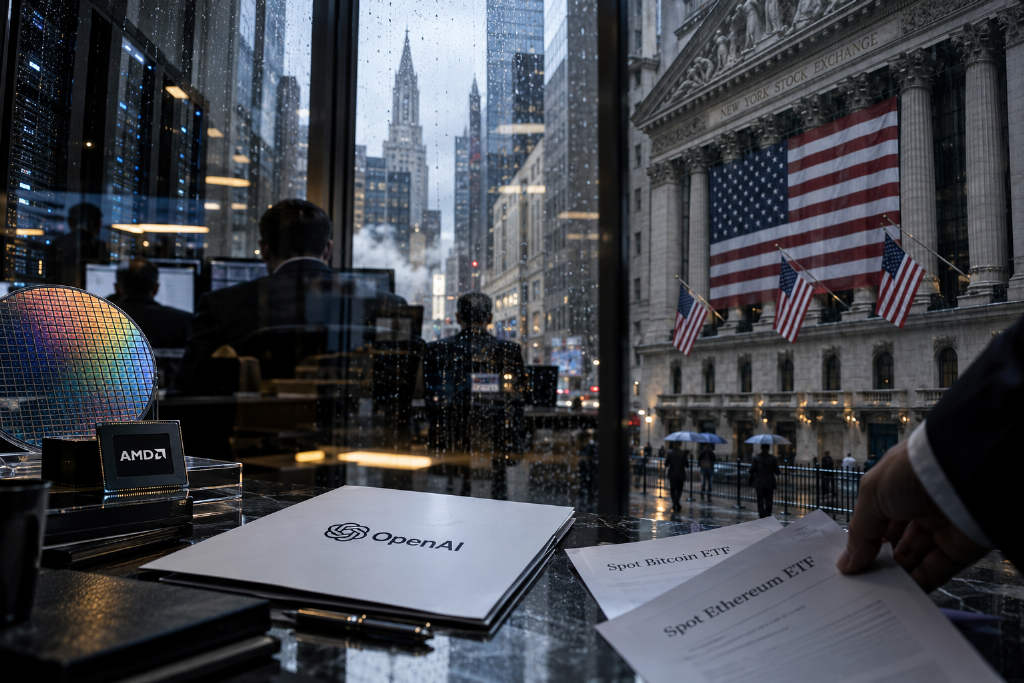
Premarket trading on Oct. 6 brought a mix of macro, semiconductor, AI financing, and crypto ETF headlines. Bridgewater Associates founder Ray Dalio said the United States could face a debt crisis within three years. AMD’s CEO said memory chip supply remains tight, while adding that supply is expected to rise sharply in 2027. On the financing side, a Wall Street banking group has launched a record $60 billion AI debt deal intended to fund chip leasing for Anthropic. Separately, OpenAI is in talks with an Abu Dhabi fund and BlackRock over a $30 billion fundraising round that would value the company at roughly $1.4 trillion before the investment. In crypto-related market data, U.S. spot Bitcoin ETFs recorded net outflows of $89.8 million yesterday, while spot Ether ETFs saw net outflows of $18.9 million.
According to BlockBeats, five items stood out in U.S. stock premarket trading on Tuesday, Oct. 6.
Key premarket developments
Bridgewater Associates founder Ray Dalio said the United States could face a debt crisis within three years.
AMD’s CEO said memory chip supply remains tight, with supply expected to increase sharply in 2027.
A Wall Street banking syndicate has launched a record $60 billion AI debt financing package aimed at funding chip leasing for Anthropic.
OpenAI is in talks with an Abu Dhabi fund and BlackRock on a $30 billion fundraising round, at a pre-money valuation of about $1.4 trillion.
In crypto ETF flows, U.S. spot Bitcoin ETFs posted net outflows of $89.8 million yesterday, while spot Ether ETFs recorded net outflows of $18.9 million.
This article was originally published by Bit.Fan. For more cryptocurrency news and market insights, visit www.bit.fan. Disclaimer:
The market information, project data, and third-party content displayed on this platform are for industry information sharing only and do not constitute any form of investment advice or return commitment.
Cryptocurrency trading carries high risks. Users should fully assess their risk tolerance and make independent decisions. All profits, losses, and legal responsibilities are borne by the users themselves.