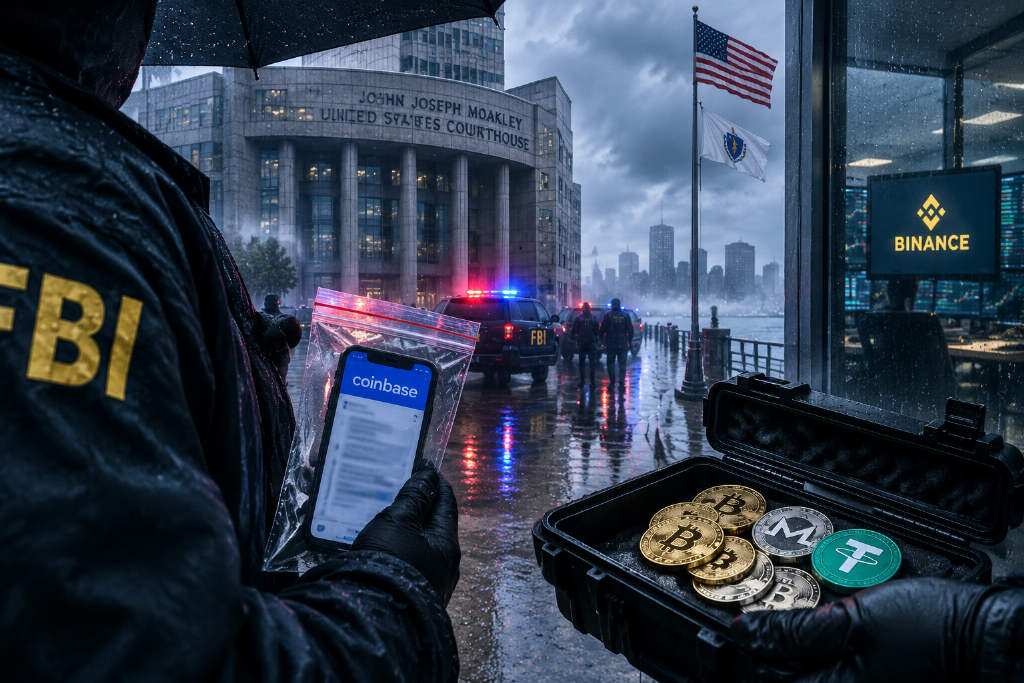
Federal prosecutors in Massachusetts filed a civil forfeiture complaint on Sept. 28 seeking to seize 110,300 USDT that had been taken from a Binance account, according to an Odaily report citing Bitcoin.com News. The case stems from phishing text messages that impersonated Coinbase and led to the theft of 33.7 BTC from a single Coinbase account held by a beneficiary and the beneficiary’s family trust. At the time, the stolen Bitcoin was worth about $900,000. Investigators said 11.2 of the stolen BTC was traced to the Binance account between June 5 and June 15, 2023, and was then quickly converted into Monero. When the FBI asked for the account to be frozen, it held about 758.55 XMR. Binance later transferred 110,300 USDT to a government-controlled wallet on Aug. 3, 2026. The filing is part of a civil forfeiture action rather than a criminal seizure announcement.
Federal prosecutors in Massachusetts filed a civil forfeiture complaint on Sept. 28 seeking to seize 110,300 USDT that had been seized from a Binance account.
The case involves phishing text messages that impersonated Coinbase. Those messages led to the theft of 33.7 BTC from a single Coinbase account belonging to a beneficiary and the beneficiary’s family trust. The Bitcoin was worth about $900,000 at the time.
Investigators said 11.2 of the stolen BTC was traced to the Binance account between June 5 and June 15, 2023. The funds were then quickly converted into Monero.
By the time the FBI requested that the account be frozen, it held about 758.55 XMR. Binance transferred 110,300 USDT to a government-controlled wallet on Aug. 3, 2026.
Bitcoin.com News reported the case.
This article was originally published by Bit.Fan. For more cryptocurrency news and market insights, visit www.bit.fan. Disclaimer:
The market information, project data, and third-party content displayed on this platform are for industry information sharing only and do not constitute any form of investment advice or return commitment.
Cryptocurrency trading carries high risks. Users should fully assess their risk tolerance and make independent decisions. All profits, losses, and legal responsibilities are borne by the users themselves.