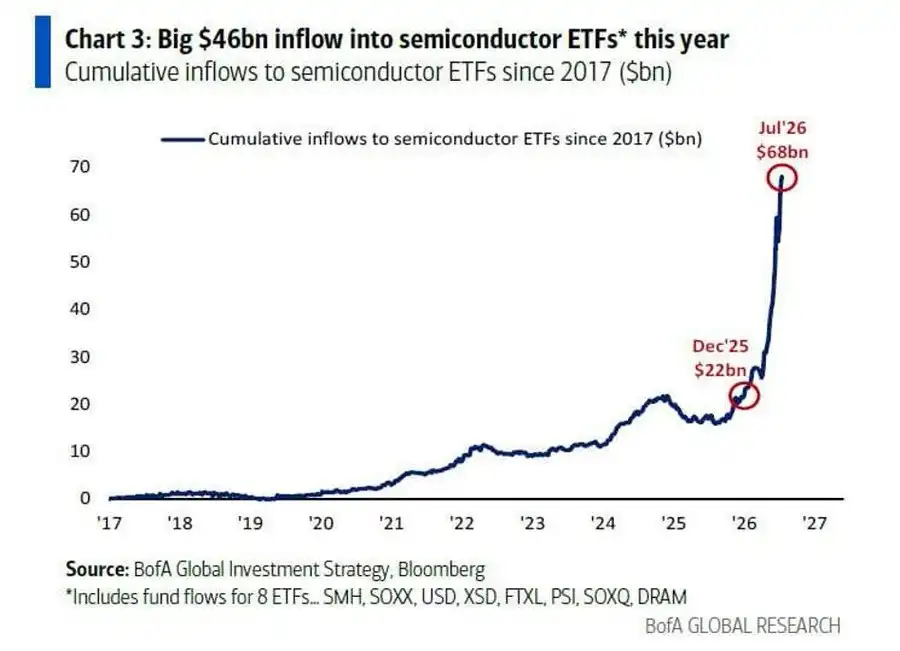
U.S. semiconductor exchange-traded funds have taken in more than $46 billion in 2026 as of July 19, putting the group on track for its largest annual inflow on record, according to BlockBeats. The year-to-date inflow equals 31% of total ETF assets under management, highlighting the scale of the move.
The report said net new money added this year is already more than double the total recorded between January 2017 and December 2025. With that, cumulative inflows into semiconductor ETFs since 2017 have climbed to a record $68 billion. Last week alone, the category attracted more than $2.3 billion.
BlockBeats added that investors have never previously committed this much capital to semiconductor ETFs. The figures point to an unusually strong pace of allocations into the sector in 2026, with inflows already reaching levels that stand out against the full history of the segment since 2017.
U.S. semiconductor exchange-traded funds have attracted more than $46 billion in inflows in 2026 so far, as of July 19, and are on pace to post the largest annual inflow ever recorded, according to BlockBeats.
That amount is equal to 31% of the group’s total assets under management. The report said the sum of new money added this year is already more than twice the total recorded from January 2017 through December 2025. Cumulative inflows into semiconductor ETFs since 2017 have now risen to a record $68 billion.
In the past week alone, semiconductor ETFs pulled in more than $2.3 billion. BlockBeats said investors have never before committed such a large amount of capital to semiconductor ETFs.
This article was originally published by Bit.Fan. For more cryptocurrency news and market insights, visit www.bit.fan. Disclaimer:
The market information, project data, and third-party content displayed on this platform are for industry information sharing only and do not constitute any form of investment advice or return commitment.
Cryptocurrency trading carries high risks. Users should fully assess their risk tolerance and make independent decisions. All profits, losses, and legal responsibilities are borne by the users themselves.